Proposition 9
Theorem
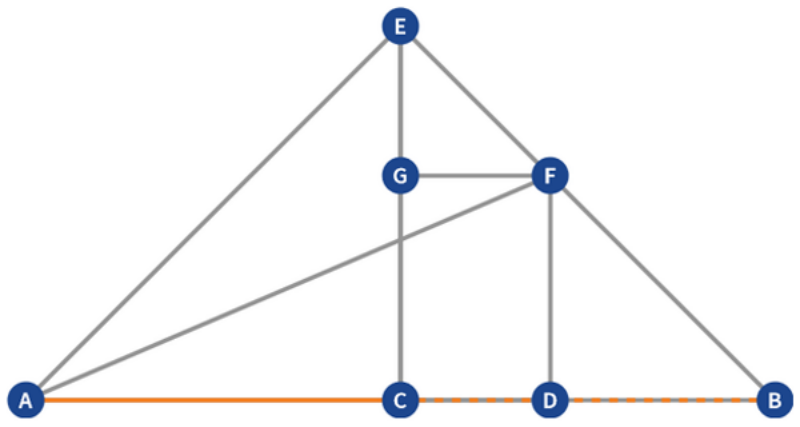
If a line AB is bisected at point C, and divided into two unequal parts at point D, then ᅵAD ᅵ2 + ᅵDB ᅵ2 = 2 ᅵAC ᅵ2 + 2 ᅵCD ᅵ2 .
Commentary
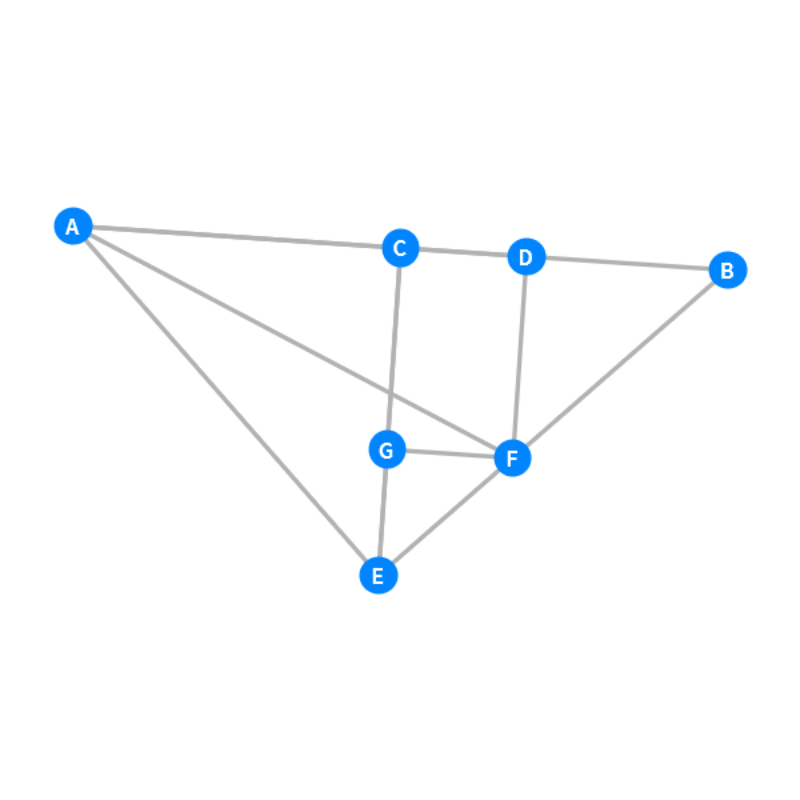
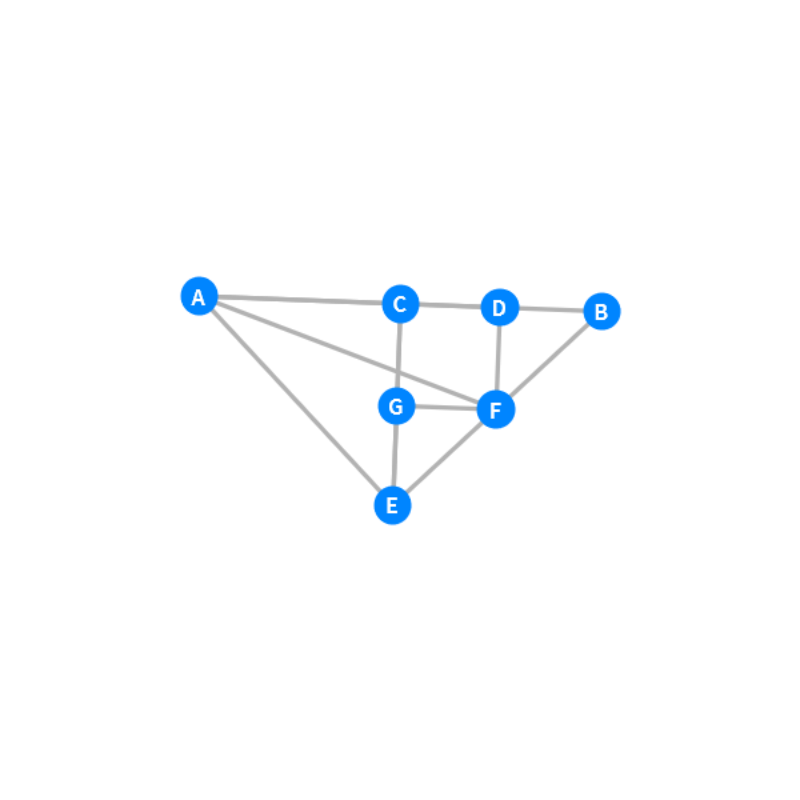
1. Let AB be the given line segment. Let C be the midpoint of AB , and let D be any point on CB .
2. Construct a lineCE that is perpendicular to AB and has the same length as AC . Connect AE and EB .
3. Find a point F onEB such that ◇CDFG is a rectangle with G on CE . Connect AF .
4. Five isosceles right triangles are constructed:△ACE , △BCE , △AEB , △EGF and △FDB . Two right triangles that are not isosceles are constructed: △ADF and △AEF .
5. Apply the Pythagorean Theorem to the right triangles so: in△ADF , ᅵAF ᅵ2 = ᅵAD ᅵ2 + ᅵDF ᅵ2 , in △AEF , ᅵAF ᅵ2 = ᅵAE ᅵ2 + ᅵEF ᅵ2 , in △ACE , ᅵAE ᅵ2 = ᅵAC ᅵ2 + ᅵCE ᅵ2 and in △EGF , ᅵEF ᅵ2 = ᅵEG ᅵ2 + ᅵGF ᅵ2 . With substitution of lines with the same length, the following equation is obtained: ᅵAD ᅵ2 + ᅵDB ᅵ2 = 2 ᅵAC ᅵ2 + 2 ᅵCD ᅵ2 .
6. This geometric relationship is similar to the next proposition, Book 2 Proposition 10, and can be expressed algebraically asx + y2 + x - y2 = 2 x2 + 2 y2 (where ᅵAC ᅵ = ᅵCE ᅵ = x and ᅵCD ᅵ = y ). This algebraic relationship is an interpretation of a commonly used polynomial identity.
2. Construct a line
3. Find a point F on
4. Five isosceles right triangles are constructed:
5. Apply the Pythagorean Theorem to the right triangles so: in
6. This geometric relationship is similar to the next proposition, Book 2 Proposition 10, and can be expressed algebraically as
Original statement
ἐὰν ϵὐθϵῖα γραμμὴ τμηθῇ ϵἰς ἴσα καὶ ἄνισα, τὰ ἀπὸ τῶν ἀνίσων τῆς ὅλης τμημάτων τϵτράγωνα διπλάσιά ἐστι τοῦ τϵ ἀπὸ τῆς ἡμισϵίας καὶ τοῦ ἀπὸ τῆς μϵταξὺ τῶν τομῶν τϵτραγώνου.
English translation
If a straight line is cut into equal and unequal segments, the squares on the unequal segments of the whole are double of the square on the half and of the square on the straight line between the points of section.