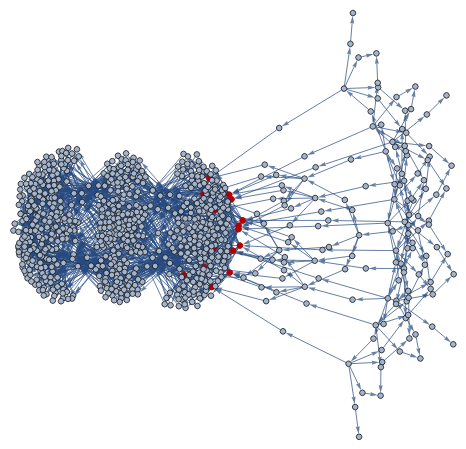
This project introduces the idea of a dynamic multiway system: a rule rewriting system that can have rules modified at an intermediate step. The objective is to simulate dynamic multiway systems that allow completion procedures to be introduced to the rule list at a specified stage, in order to explore the effects of the introduced completion on branchial graph density. To do this we develop a set of functionality to visualize the distribution of branchial density. We then develop a dynamic multiway function that allows the rewriting rule list to be modified at each evolution step of a multiway system. We then quantify the effect of various completion procedures on the branchial graph density distribution. We then propose directions for using the functionality developed to study quantum decoherence in the Wolfram Model.
Introduction
Motivation
The development of the tools demonstrated in this study were motivated by the Wolfram Model description of quantum measurement and decoherence. The Wolfram Model formalism draws an analogy between multiway rule-based rewriting systems and the evolution of the superposition of pure eigenstates in quantum mechanics. To conduct a “measurement”, observers may impose completion operations that induce equivalence between different states, imposing an abstract equivalence while maintaining the distinct identities of multiway states. This can be effectively interpreted as collapsing the multiway branches into a single thread of time. It has been shown that the geometry of the multiway evolution graph converges to that of a complex projective Hilbert space in the continuum limit. [1] A rigorous examination of quantum measurement and environmental decoherence would require a functionality in the Wolfram Language that can implement dynamic multiway systems, systems that allow completion procedures to be parameterized and implemented at a customizable stage of the multiway evolution. In addition, methods for analyzing branchial graph density are required to observe the effect these completion procedures have. In multiway systems, two microstates are said to be “entangled” if they share a common ancestor, which is represented by a shared edge between states on a branchial graph, a representation of the shared ancestry between states at a particular point in time of the evolution of the multiway system. Given this fact, branchial graph density can be understood intuitively as a proxy for degree of entanglement between particular subsystems within a multiway evolution. Localized subsystems can be Examining the effect of equivalence classes induced by observers and understand how these effects propogated over time and across branchial space (hence the term “branchial density diffusion”), will be essential to understanding decoherence and quantum measurement in the context of the Wolfram Model. This work seeks to provide a set of functional tools to broadly explore the effect of completions on the diffusion of density in branchial space .
Methods
Two sets of tools are developed: the first to analyze and visualize branchial graph density, the other to implement dynamic multiway systems by developing functions for custom rule updating and completion.
Density Measures
The density of a graph with n vertices is calculated as the ratio of number of edges (or links, or connections) in the graph to the maximum number of edges the graph can contain. Graph density that can be used as a measure of the connectivity of particular system.
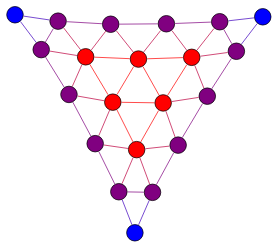
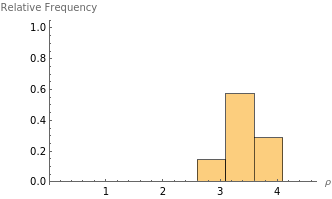
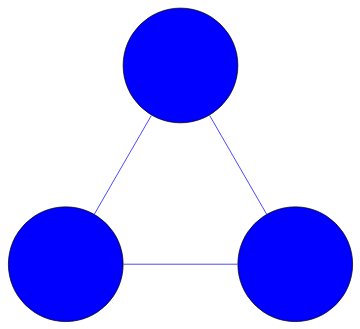
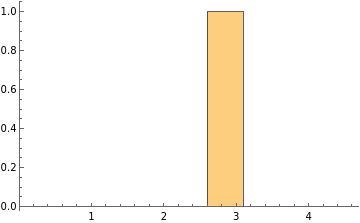
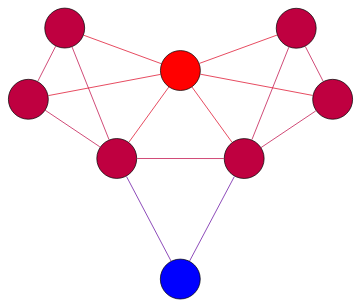
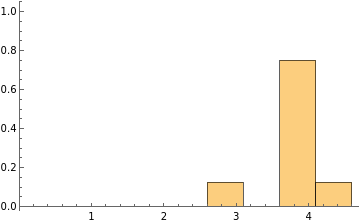
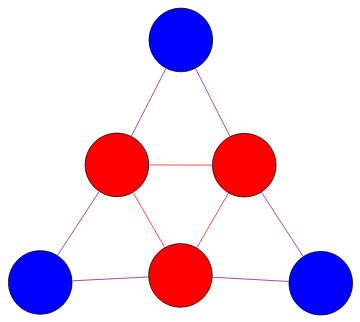
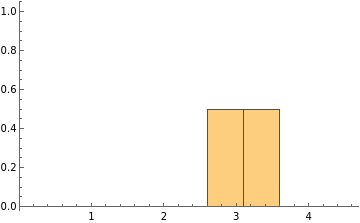
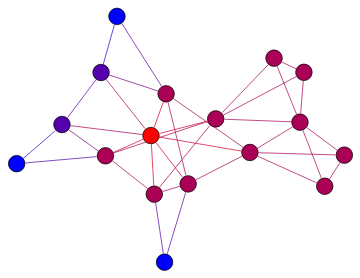
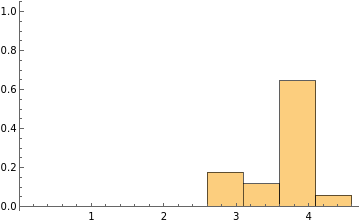
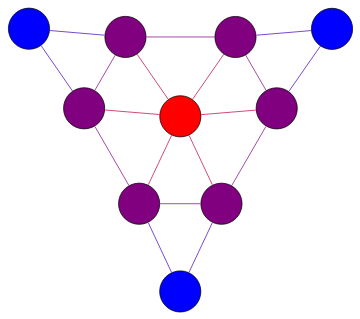
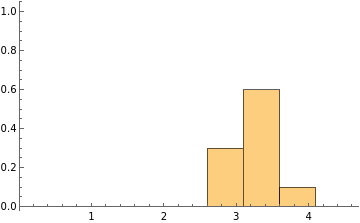
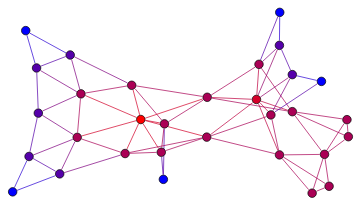
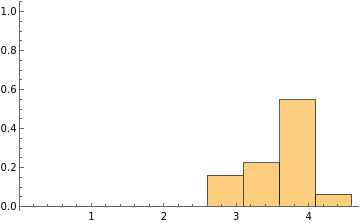
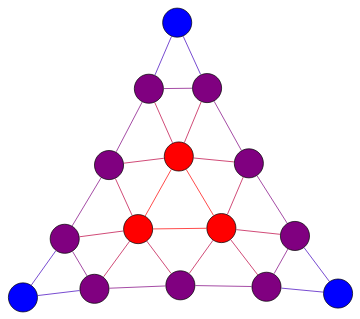
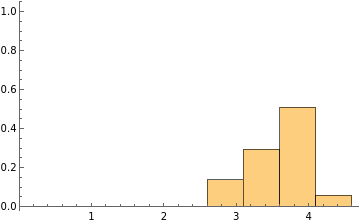
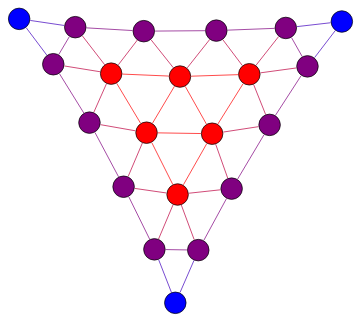
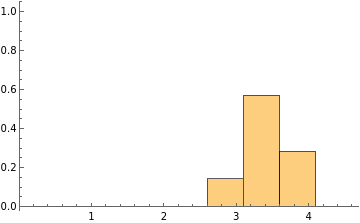
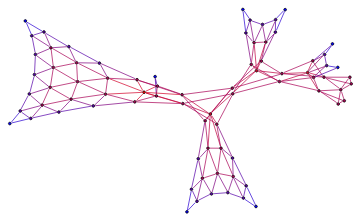
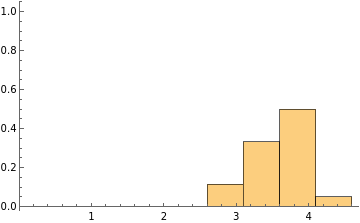
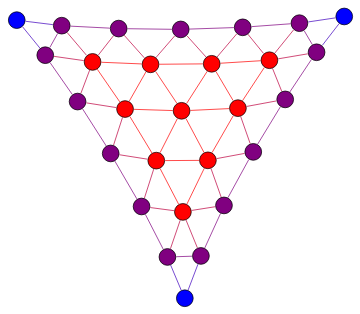
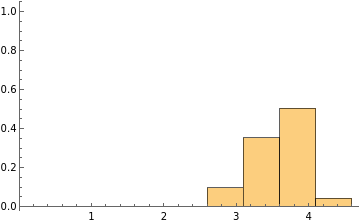
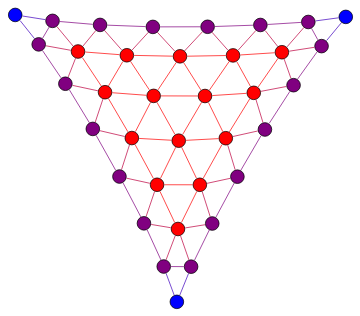
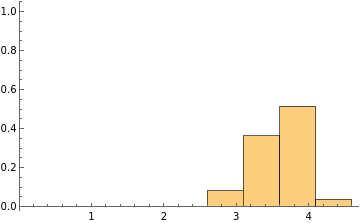
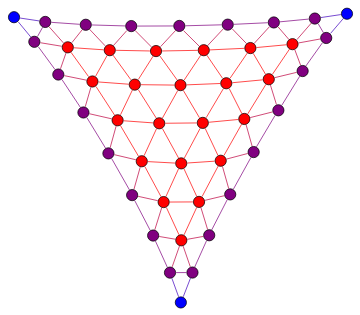
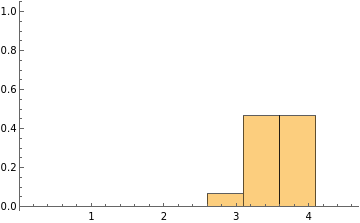
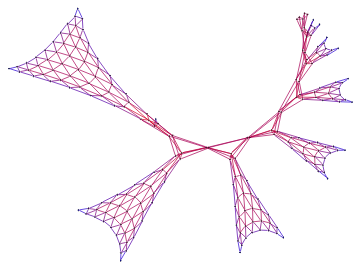
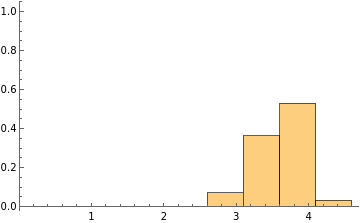
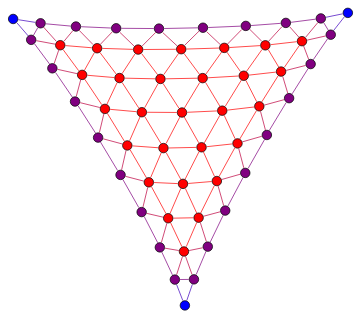
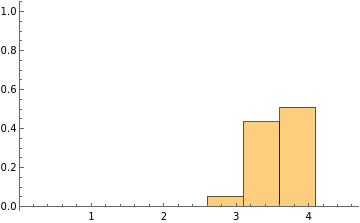
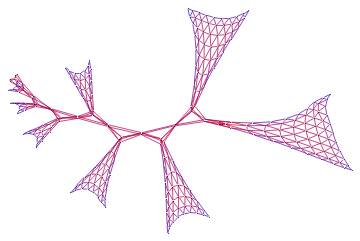
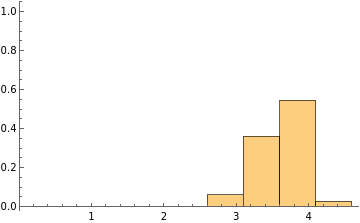
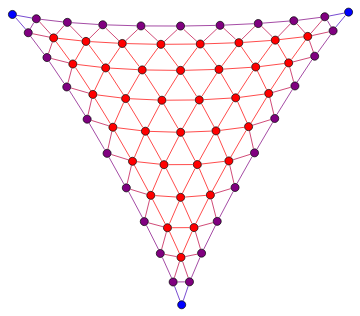
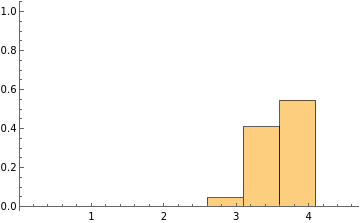
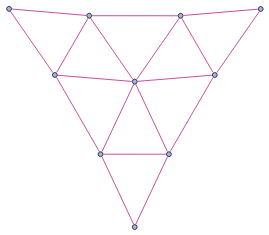
Figure 1 : Weighted density heat map (left) and corresponding histogram displaying density distribution (right.)
Dynamic Multiway Systems
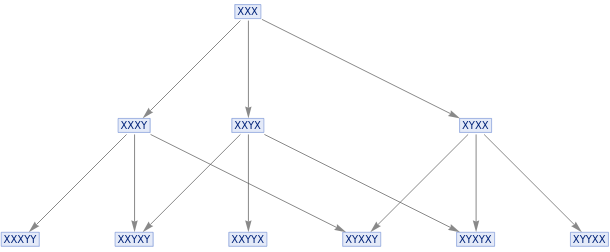
A typical multiway system in the Wolfram framework determines it’s rewriting system with a finite list of rewriting rules that are applied at every stage of a subsequent evolution:
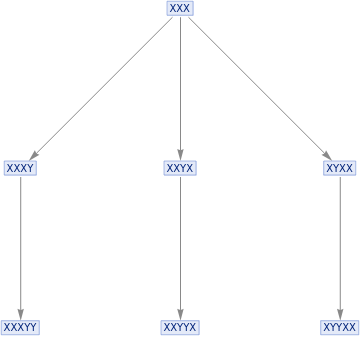
In a dynamic multiway system, the rules list for each step of the multiway graph must be specified, meaning that the rule list may be altered at any step:
Figure 3: Simple dynamic multiway system. Rules governing rewriting of steps 1 and 2 are different.
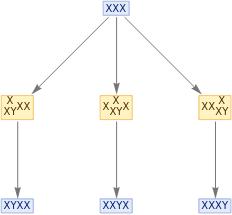
To generate the kind of completion processes that we are interested in studying, we would select a subset of states at a particular step that are the product of transformations restricted to a particular index of their parent state. For instance, selecting states formed as a result of string transformations localized in within the first index of the string for the first step of the multiway system in Figure 2 would result in the following selection:
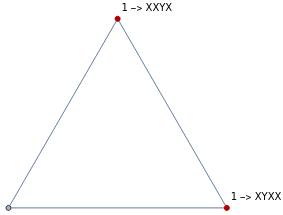
Figure 4: Events evolution graph with corresponding branchial graph. Note how selected states correspond to events where the string substitution occurred within 2 characters of the start of the original string.
Since we were interested in inducing equivalences in the selected states, rules are written such that there is a reciprocal completion between each pair of the chosen states. For instance, for the system above, the new rewriting rules will make an equivalence between the two selected states (highlighted in red), adding the rules {XYXX XXYX , XXYX XYXX} to each subsequent step of the dynamic multiway system.
Our function dynamicCompletion allows the user to automate this process, and compare how introducing completion rules effects the subsequent evolution of these multiway systems and their effect on branchial density.
Results
The states graph with and without the described completion can be compared below (original right image, with added completion rules left image).
Figure 5 : States graph for multiway system where completion rules are added (left) and states graph where rules are held constant (right)
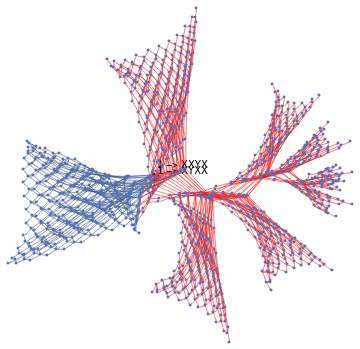
Figure 7: States graph of original multiway system (blue) is a distinct subgraph of the corresponding dynamic multiway states graph (red).
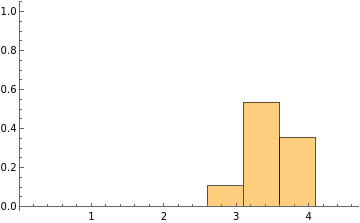
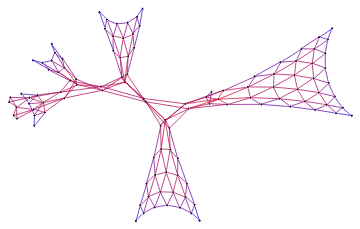
The evolution of the branchial density distribution for the dynamic and original branchial graphs can be observed below. The difference in density distribution is evident in the comparison:
,
,
,
,
,
,
,
,
,
,
,
,
,
,
,
,
,
,
,
,
,
,
,
,
,
,
,
,
,
,
,
,
,
,
,
,
,
,
,
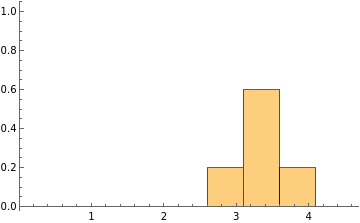
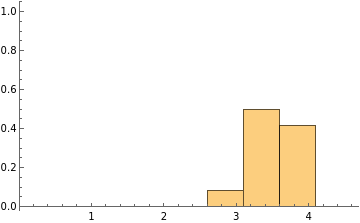
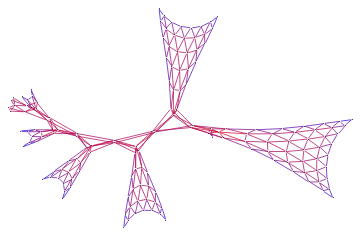
Figure 8 : Branchial density heat map and density distribution comparison for dynamic (left) and static (right) multiway system.
At each step, the original branchial graph forms an isomorphic subgraph of the branchial graph of the dynamic system.
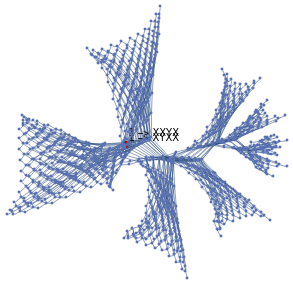
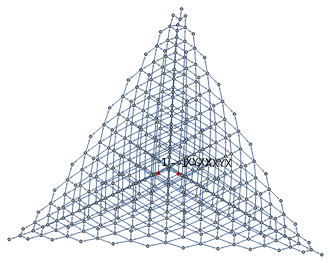
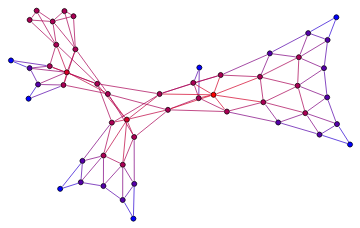
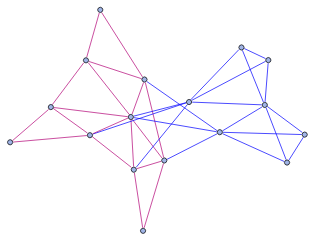
Figure 9 : Branchial graph from Figure 8 of original multiway system (left, pink) and dynamic multiway system with completion rules (right, blue). Observe that original branchial graph is an embedded subgraph in its dynamic multiway counterpart
Figure 10 : Ratio of selected to total states as a function of brachial graph step. Localization position is fixed at 1.
It appears that this ratio reaches an upper limit, where it includes most but not all states on a branchial state .
Other preliminary experiments are listed in Figures 11-12.
,
,
Figure 11 : Dynamic multiway system with a large initial string. From left to right, branchial graph with selected states, states graph of traditional multiway system, states graph with applied completion.
Figure 12 : Dynamic multiway system states graph that replaces rules with completion procedure rather than appends completion procedure to existing rules . Stages after replacement rules appear to be in an oscillatory pattern, due to the induced equivalences caused by the completion procedures.
Code
Conclusion and Future Work
In the Wolfram Model, because the observer is axiomatically taken to be a foliation embedded in the multiway system, implementing a way to simulate dynamic multiway systems provide opportunities to explore measurement and entanglement. Our selection and completion procedure will allow us to study observers that can be taken to be other subsystems, which hopefully would lead to examinations of continuous measurement in the Wolfram Model. The entanglement speed can be investigated as well using these new tools for assessing the dynamics of branchial density in these kinds of multiway systems.
In this project, we have provided a demonstration of a set of tools to represent dynamic multiway systems. To further develop this work, we can conduct a full parametric study investigating how different parameters and rules affect the development of these multiway systems.
Keywords
◼
Dynamic Multiway System
◼
Knuth BendixCompletion
◼
Branchial Graph Density
Acknowledgment
I would like to thank Stephen Wolfram for providing the opportunity to work on a project relevant to my PhD interests. I would like to thank my mentors, Yorick Zeschke and Jonathan Gorard, for being kind, helpful, and inspiring teachers and friends.
References
◼
[1]: Jonathan Gorard (2020): “Some quantum mechanical properties of the Wolfram Model”. ArXiv preprint available at: https://arxiv.org/abs/2004.14810
◼
[2] Stephen Wolfram (2020): A Class of Models with the Potential to Represent Fundamental Physics. Complex Syst. 29(2), doi:10.25088/complexsystems.29.2.107. Available at https: //www.complex-systems.com/abstracts/v29_i02_a01/