A Theory of Mechanism
A Theory of Mechanism
Theory of Novelty / Theory of Ideas / Theory of Motifs
Theory of Novelty / Theory of Ideas / Theory of Motifs
In[]:=
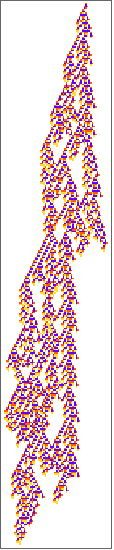
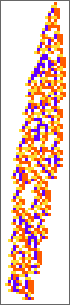
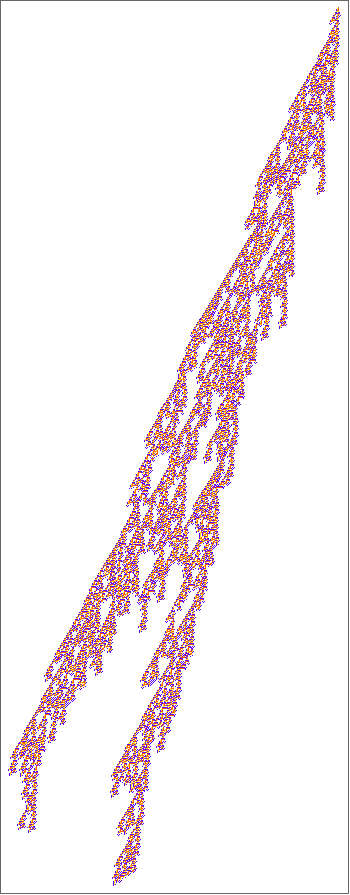
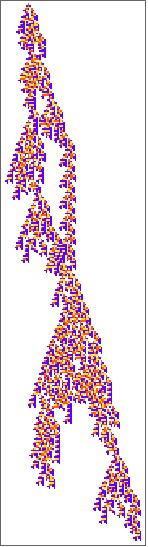
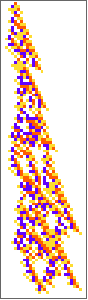
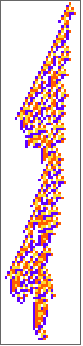
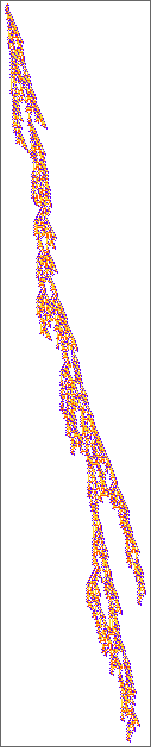
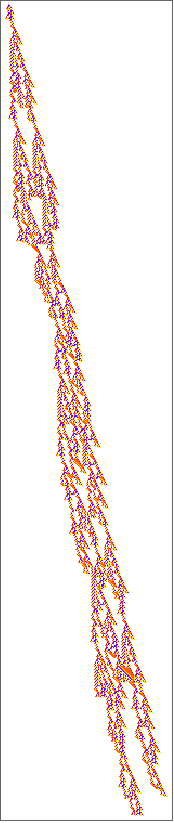
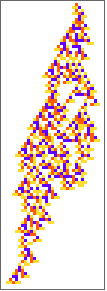
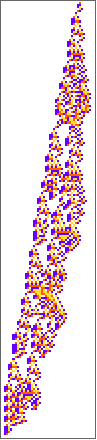
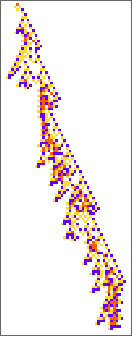
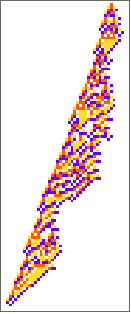
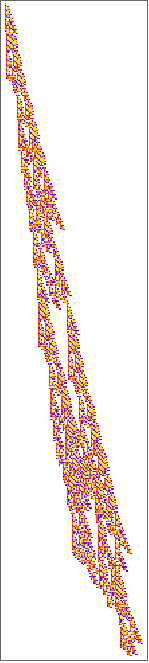
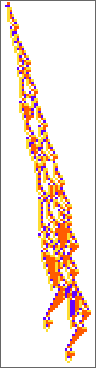
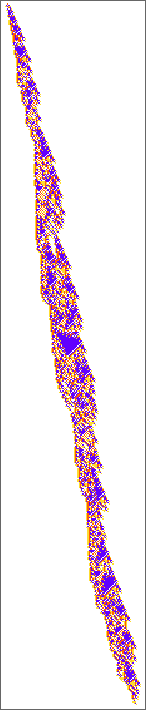
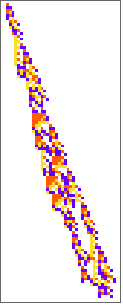
ParallelTable[ResourceFunction["AdaptiveCellularAutomaton"][<|"InitialRule"->{0,4,1},"MaxSteps"->1000,"AdaptiveIterations"->4000|>,"FinalState","Plot",RandomSeeding->32424+i],{i,100}]
Out[]=
,
,

,

,

,
,

,

,

,
,
,

,
,

,

,

,
,
,
,

,

,

,

,

,

,

,
,

,

,
,

,

,
,
,

,
,

,

,

,

,

,

,
,

,

,

,

,

,

,

,
,

,

,
,

,

,

,

,

,
,

,

,

,
,
,
,
,
,

,

,
,

,

,

,

,

,
,

,

,

,

,
,

,

,

,

,

,

,

,
,
,

,

,
,
,
,

,

,
,

What is the novelty metric?
What is the novelty metric?
Songs have “new ideas” when 5-note patches are different ...
What is the minimal program|computation that builds a piece of the pattern?
What is the minimal program|computation that builds a piece of the pattern?
What are the patches in which one can jump ahead?
Cf. snakes & ladders
What is the semantic space of the patterns?
What is the semantic space of the patterns?
These words get their “embedding-level meanings” through the contexts in which they occur
Core ruleset?
Core ruleset?
Inside a pocket of reducibility, there are probably fewer rules used .... Or at least the rules are used in the same relative configurations [“rule operon” | “ruleon” ] (e.g. R110 background)
E.g. if there’s a patch of fixed color, this is obviously true. Same with stripes
Rule density mask ... how many distinct rules are being used in this neighborhood
Does there exist a permutation of the rule cases such that the interesting reducible pieces of this are visibly blobs?
For each point, there is a growth rate of the number of rules one sees at distance r
How small a rule works in the local neighborhood?
A map of the diversity of rule use in a region....
A map of the diversity of rule use in a region....
In addition to counting the rule cases that are locally used .... one could ask how the set of rule cases used changes as one moves across the pattern