Disease Classification
Disease Classification
In[]:=
rrules={4201857261303,4201857263490,4201857263409,4201856731968};
In[]:=
Table[SeedRandom[2424+i];PlotDifferences2[CellularAutomaton[{#,3,1},{{1},0},{200,All}],PerturbedCAEvolution[{#,3,1},{{1},0},200,40->1],"Trim"->{2,None}],{i,30}]&/@{4201857261303,4201857263490,4201857263409,4201856731968}
Out[]=
,

,
,
,
,
,
,
,
,
,
,
,
,
,
,
,
,
,
,
,
,
,
,
,
,
,
,
,
,
,
,

,
,
,
,
,
,
,
,
,
,
,
,
,
,
,
,
,
,
,
,
,
,
,
,
,
,
,
,
,
,

,

,

,

,

,

,

,

,

,

,

,

,

,
,
,
,
,

,

,
,
,

,
,
,
,
,
,
,

,
,

,

,

,

,

,

,
,
,

,

,
,
,
,
,

,

,
,

,
,

,
,
,
,
,
,

,

,
,
In[]:=
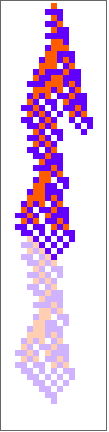
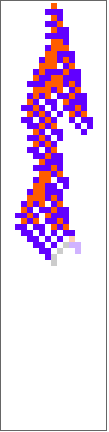
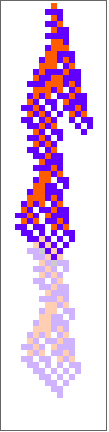
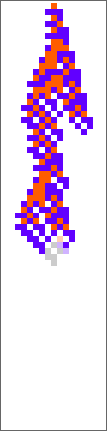
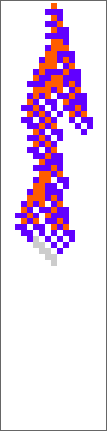
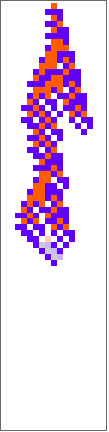
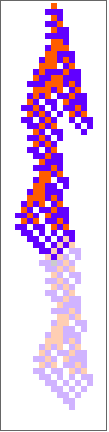
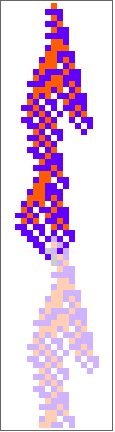
With[{ru=4201857263409},Table[SeedRandom[2424+i];PlotDifferences2[CellularAutomaton[{ru,3,1},{{1},0},{70,All}],PerturbedCAEvolution[{ru,3,1},{{1},0},70,40->1],"Trim"->{2,None}],{i,30}]]
Out[]=
,
,
,
,
,
,
,
,
,
,
,

,
,
,
,
,
,
,
,
,
,
,
,
,
,
,
,
,
,
In[]:=
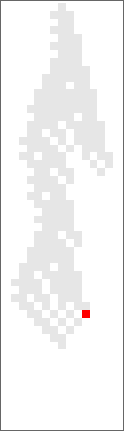
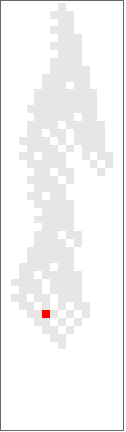
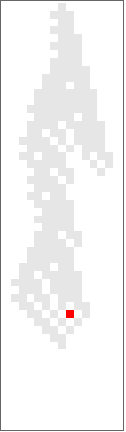
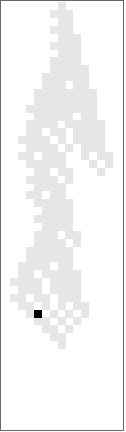
With[{ru=4201857263409},Table[SeedRandom[2424+i];HighlightPerturbations[Reap[PerturbedCAEvolution[{ru,3,1},{{1},0},70,40->1]][[2,1,1]]],{i,30}]]
Out[]=
,
,
,
,
,
,
,
,
,
,
,
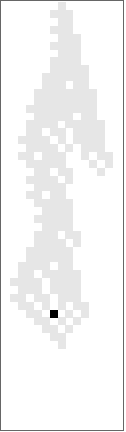
,
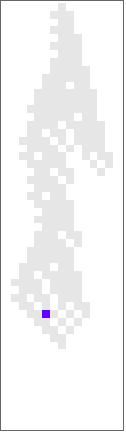
,
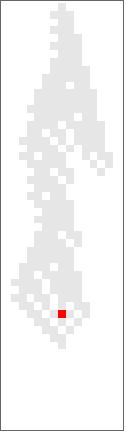
,
,
,
,
,
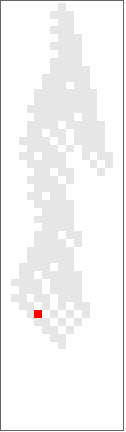
,
,
,
,
,
,
,
,
,
,
,
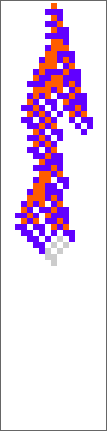
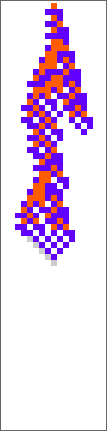
When it’s stretched to the limit, using all rule elements, it’s more likely fail completely when something is changed
When it’s stretched to the limit, using all rule elements, it’s more likely fail completely when something is changed
Is that a measure of redundancy? [I.e. can you use different cell values and get “the same results”]
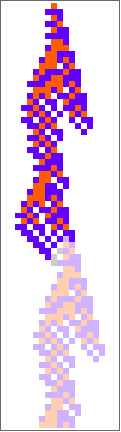
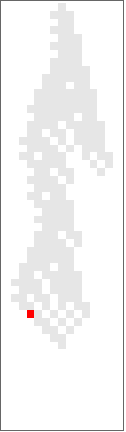
When do you see a region of change, with the same pattern all around it?
When do you see a region of change, with the same pattern all around it?
Once the change is healed across a whole row ... it will stay healed until there’s another perturbation [ in that case, it’s “masked” the perturbation ]
Therapies are like Maxwell’s demons (trying to put Humpty Dumpty together again...)
Therapies are like Maxwell’s demons (trying to put Humpty Dumpty together again...)
If the system is modular, maybe it’s like the Titanic, with “firewalls” in between parts
If the system is modular, maybe it’s like the Titanic, with “firewalls” in between parts
Does a periodic change in the fitness function lead to modularity?
(Long computation time + 8 GB)