In[]:=
With{ru={6006804516645,3,1}},GraphicsRowRulePlotCellularAutomaton[ru],ColorRules->["Colors"],MeshStyle->Opacity[.2],ImageSize->280,ArrayPlotArrayPad[CellularAutomaton[ru,{{1},0},94],{{0,0},{1,1}}],ColorRules->["Colors"],Mesh->True,MeshStyle->Opacity[.1],ImageSize->{165,Automatic},Spacings40
Out[]=

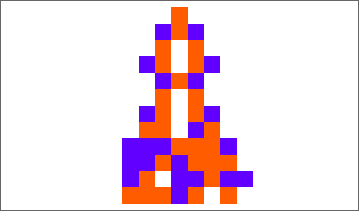
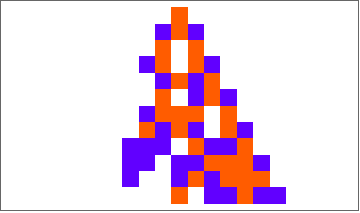
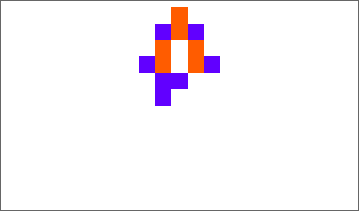
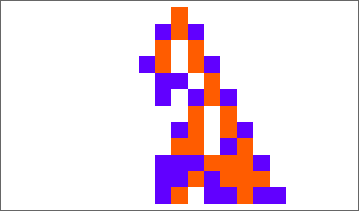
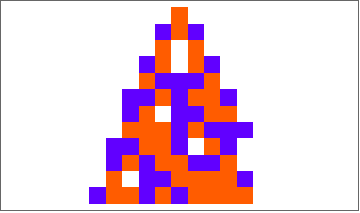
Perturb the organism; what “diseases” can it get?
Perturb the organism; what “diseases” can it get?
Can you give other perturbation that will “heal” it?
Can one evolve a rule that is resistant to perturbation?
Can one evolve a rule that is resistant to perturbation?
In[]:=
ArrayPlotArrayPad[CellularAutomaton[{6006804516645,3,1},{{1},0},120],{{0,0},{1,1}}],ColorRules->["Colors"],Mesh->True,MeshStyle->Opacity[.1],ImageSize->{165,Automatic}
Out[]=
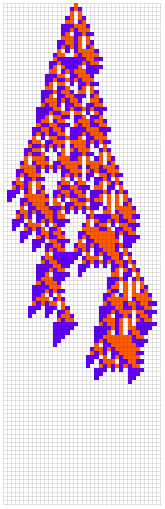
In[]:=
ArrayPlotArrayPad[CellularAutomaton[{6006804516645,3,1},{{1},0},100],{{0,0},{1,1}}],ColorRules->["Colors"],Mesh->True,MeshStyle->Opacity[.1],ImageSize->{165,Automatic}
Out[]=
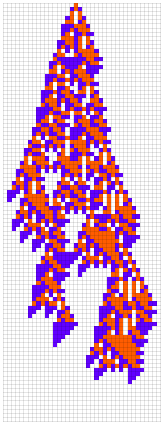
In[]:=
nonzeroRange[list_]:=Flatten[{FirstPosition[list,Except[0],Heads->False],1+Length[list]-FirstPosition[Reverse[list],Except[0],Heads->False]}]
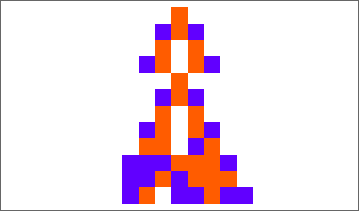
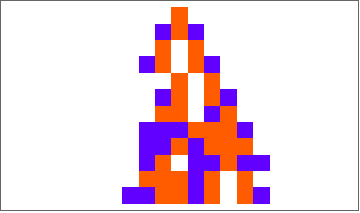
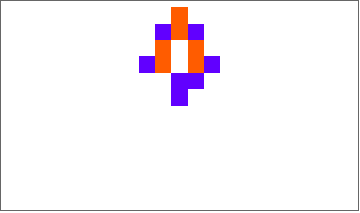
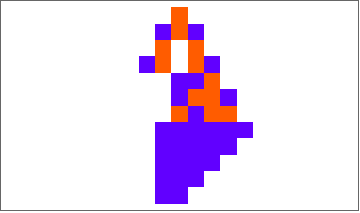
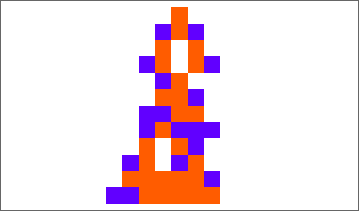
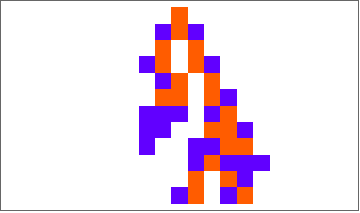
Perturbing any number of cells at time tp
In[]:=
perturbedCA[{rn_,k_,r_},init_,tp_,tot_]:=Module[{pat=CellularAutomaton[{rn,k,r},init,tp],row,range},row=Last[pat];range=nonzeroRange[row];Join[pat,CellularAutomaton[{rn,k,r},#,tot-tp]]&/@(Join[Take[row,range[[1]]-1],#,Drop[row,range[[2]]]]&/@Tuples[Complement[Range[0,k-1],{#}]&/@row[[Span@@range]]])]
In[]:=
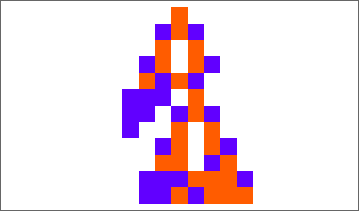
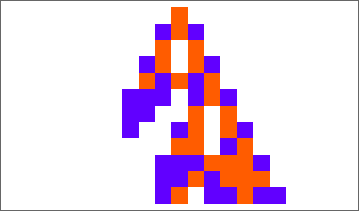
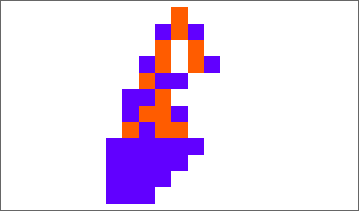
ArrayPlot#,ColorRules->["Colors"]&/@perturbedCA[{6006804516645,3,1},CenterArray[{1},21],3,10]
Out[]=
,
,
,
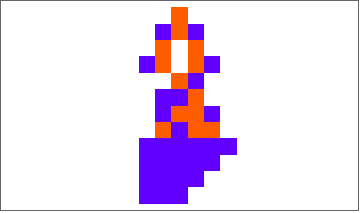
,
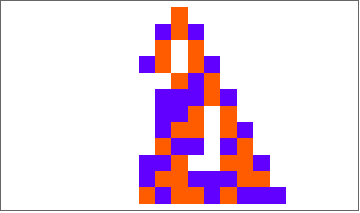
,
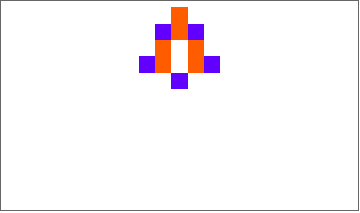
,
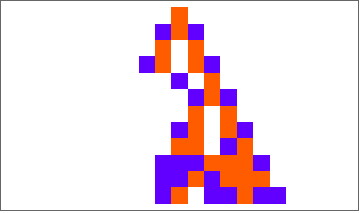
,
,
,
,
,
,
,
,
,
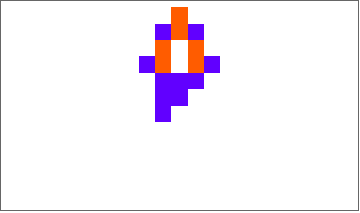
,
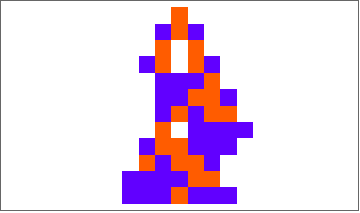
,
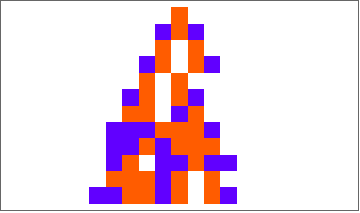
,
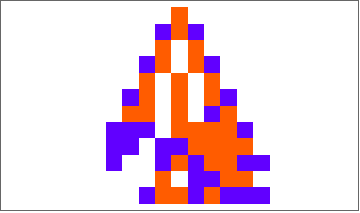
,
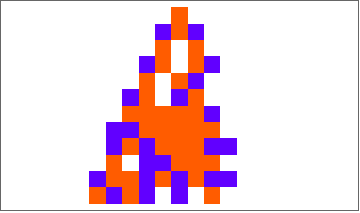
,
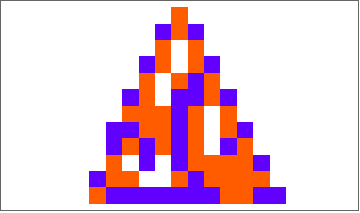
,
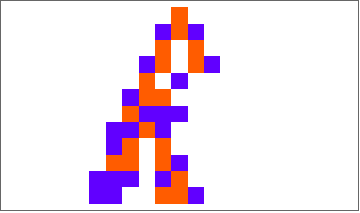
,
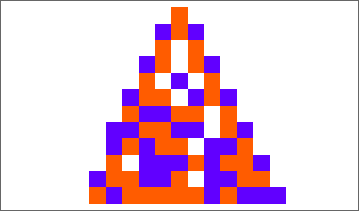
,
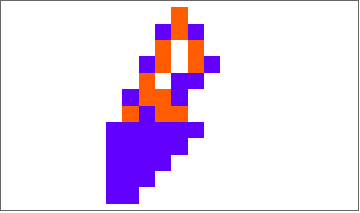
,
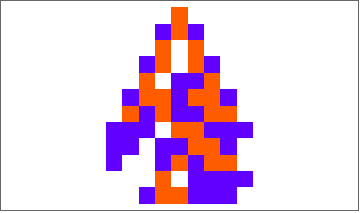
,
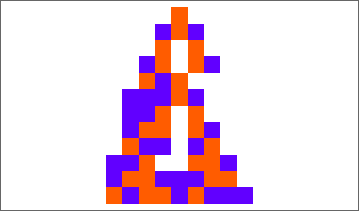
,
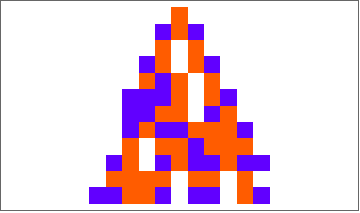
,
,
,
,

,
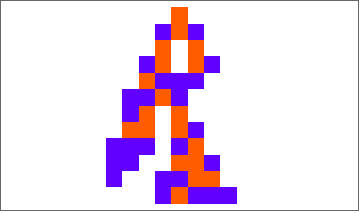
One-bit perturbation
Roadmap
Roadmap
Genetics
Genetics
Take various evolved systems
Disease
Disease
Visualize the effect of perturbation at different stages
[ Consider single-cell perturbations + multicell ] [ Consider perturbations at multiple timesteps ]
[Look at whether these are maximally evolved systems, or not] [ maximally evolved will probably be more sensitive ]
Measure the effect on lifetime of perturbations [ histogram ; change in “life expectancy” (aka mortality curves) ] [ e.g. plot mean life ; plot quantiles ; vs. various features of perturbations ]
Try to classify perturbations (e.g. feature space analysis) [ dendrograms ]
What is the cascade of perturbations at subsequent steps (progression of diseases) ( cascading failures ) [ simple plot: number of changed cells vs. time after perturbation ]
What effect on longevity do perturbation at different stages have? [ Could we get a mortality curve that is a Gompertz distribution? ] [ Materials/GompertzMakeham.nb : Casey Handmer ]
Therapy
Therapy
Is there a subsequent perturbation or pattern of perturbations that heals the system? [ ~ Maxwell’s demon ]
( “Fundamental problem of medicine is to beat CI” )
( “Fundamental problem of medicine is to beat CI” )
[ Is the best way to get back on track just to start again? ] [ Can longevity work, or is a new generation the only solution? ]
Pipeline : diagnosis [what features of the behavior tell us what therapy to use? ] ⟶ therapy
Enhancing health
Enhancing health
Can you make perturbations that will make the system live longer? (But not get a tumor)
[Larger genomes]
[Larger genomes]
Evolve for robustness [ i.e. have a fitness function that gets to a lifetime even if there are perturbations ]
How do genome variations affect “diseases”? [ Simplest case: look at different genomes with identical phenotypes. How do those different genomes because under perturbation? ]
[Perturbations of genomes] [BioEvol2-26-... ]
[Perturbations of genomes] [BioEvol2-26-... ]
Lifetime variation purely with perturbations to genome
[ Variations in other properties by varying genomes : are there Gaussian distributions? ]
Comparison items
Comparison items
ICD-10 tree
[ GoL configurations ]
Explainability / reductionism
Explainability / reductionism
Medical research practice
Medical research practice
[ Clinical trials ] try various therapies on various perturbations (/ genetic perturbations) on a sample ; then: what happens in a larger sample?
[If the outcomes were tightly constrained in the test, what does that imply for deployment?]
[If the outcomes were tightly constrained in the test, what does that imply for deployment?]
[ Theory of diagnosis ]
[ Failure of therapies ]
Can a therapy work on a large part of the population and fail on some ... or work for a while, and then fail
Large Genomes
Large Genomes
k=10
k=10
I.e. there’s enough “noncoding genome” that random mutations probably don’t matter