
Attempt to define spinor in the Wolfram Model

by José Manuel Rodríguez Caballero

Definition

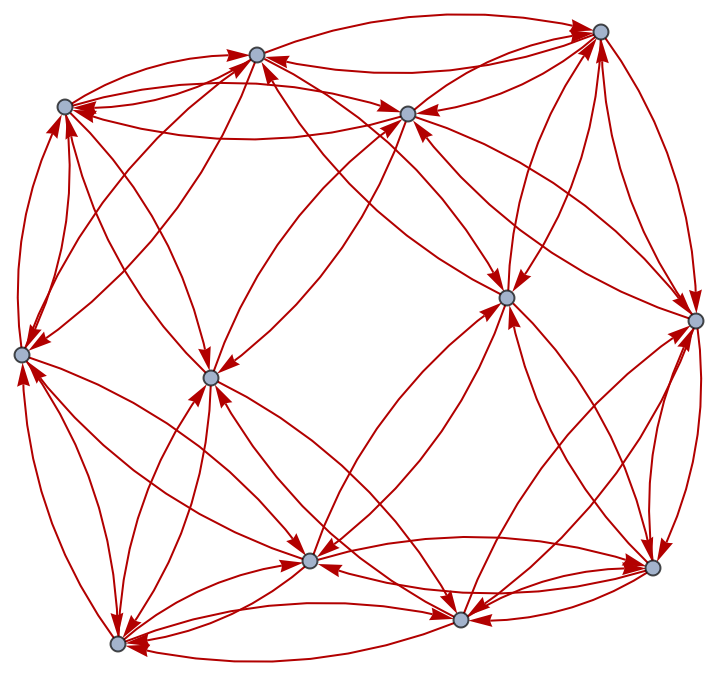
The square root of an undirected graph is the directed graph obtained by replacing any edge by a pair of opposite arrows between the corresponding vertices.
In[]:=
SqrtGraph[g_]:=Graph[VertexList[g],Flatten[{#[[1]]#[[2]],#[[2]]#[[1]]}&/@EdgeList[g]]]
A directed graph is a Wolfram spinor if and only if it is isomorphic to the square root of its corresponding undirected graph and its corresponding undirected graph is Eulerian.
In[]:=
WolframSpinorQ[g_]:=(IsomorphicGraphQ[g,SqrtGraph[#]])&&EulerianGraphQ[#]&[UndirectedGraph[g]]
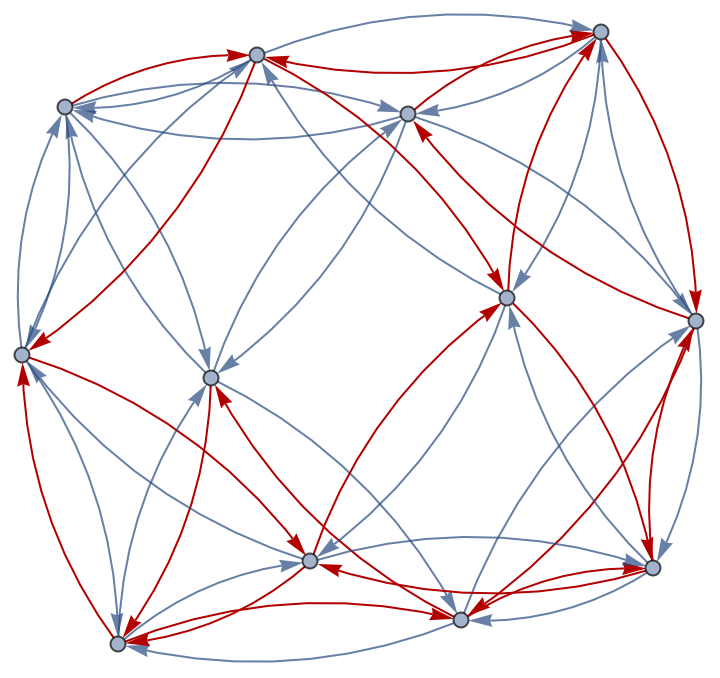
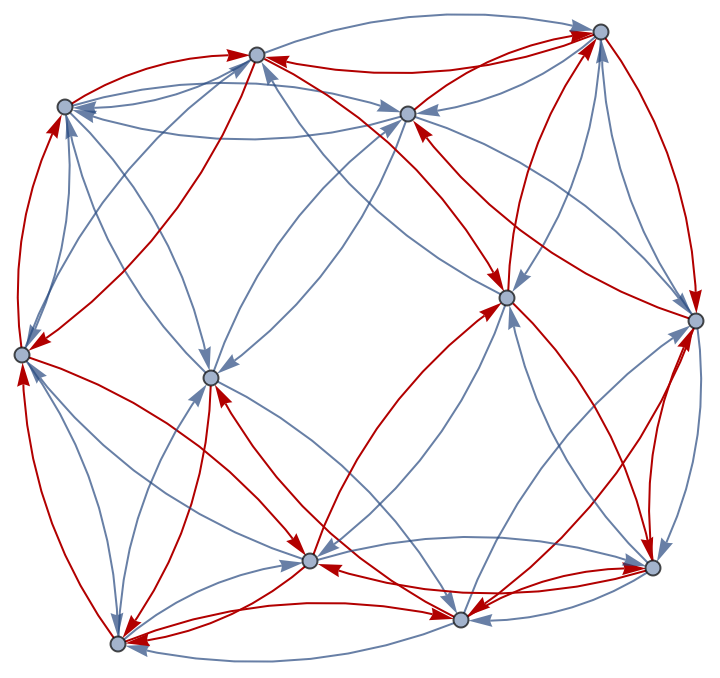
We define a rotation of a Wolfram spinor as a directed path, whose corresponding undirected path is an Eulerian path in the corresponding undirected graph. List of states of the Wolfram spinor after a rotation.
In[]:=
RotationSpinor[g_]:=Table[HighlightGraph[g, Part[#, 1 ;; i]], {i, Length[#]}] &[(#[[1]]#[[2]])&/@FindEulerianCycle[UndirectedGraph[g]][[1]]]
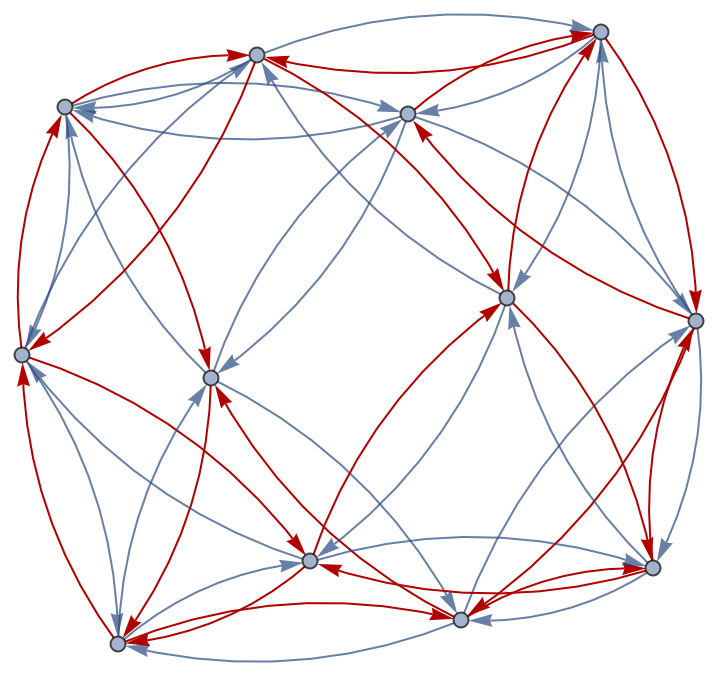
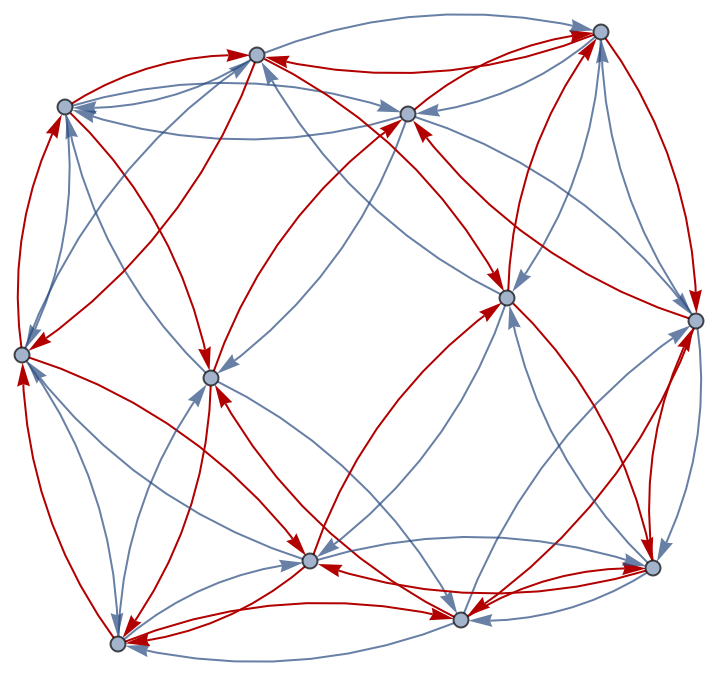
List of states of the Wolfram spinor after two rotations.
In[]:=
DoubleRotationSpinor[g_]:=Function[P,Table[HighlightGraph[g, Part[#, 1 ;; i]], {i, Length[#]}] &[(#[[1]]#[[2]])&/@Join[P,(#[[2]]#[[1]])&/@Reverse[P]]]][FindEulerianCycle[UndirectedGraph[g]][[1]]]

Example

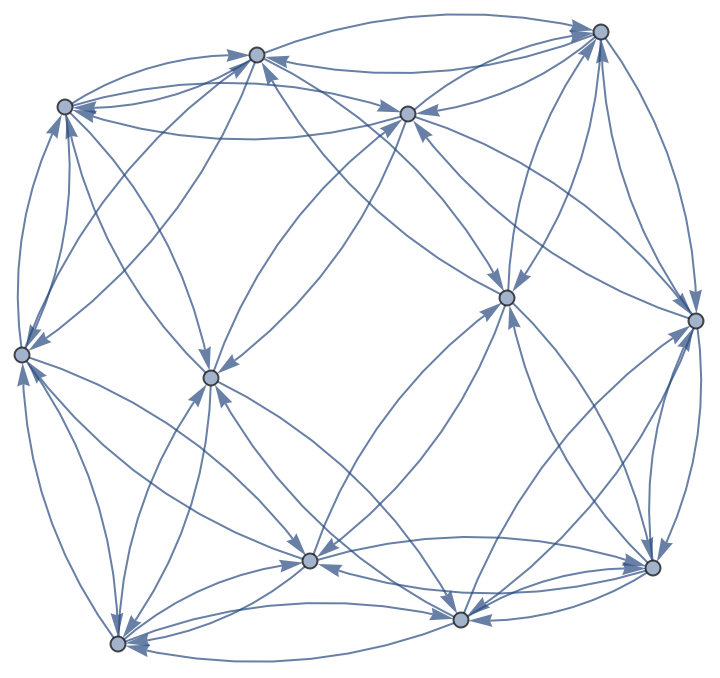
Example of Wolfram spinor.
In[]:=
g=SqrtGraph[UndirectedGraph[CayleyGraph[AlternatingGroup[4]]]]
Out[]=
Verification that this graph is indeed a Wolfram spinor.
In[]:=
WolframSpinorQ[g]
Out[]=
True
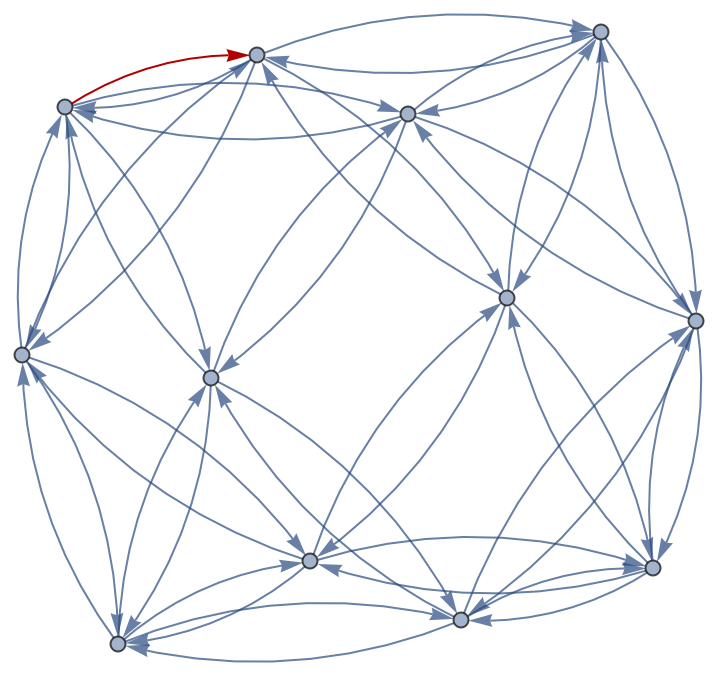
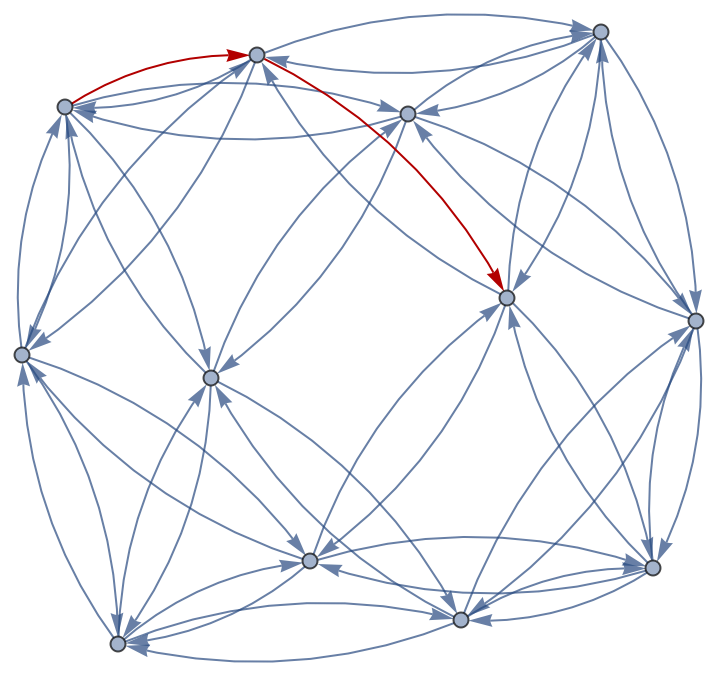
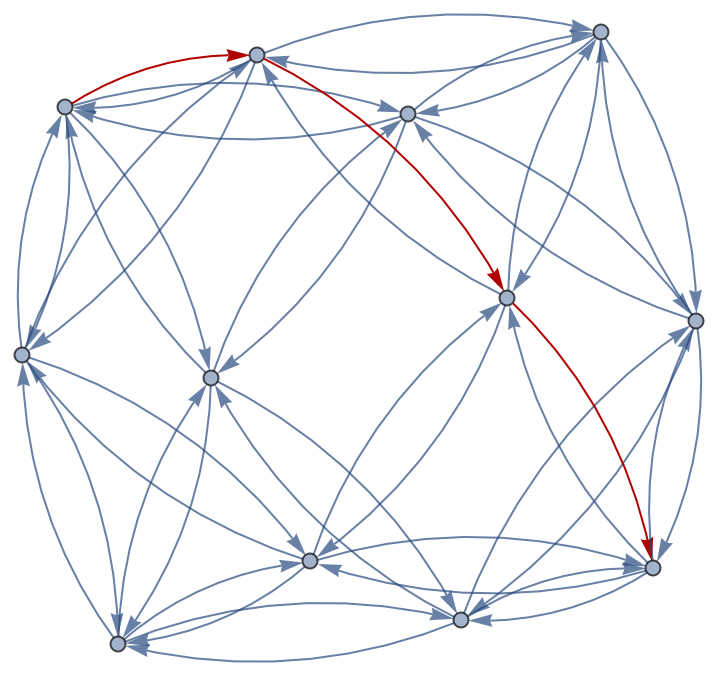
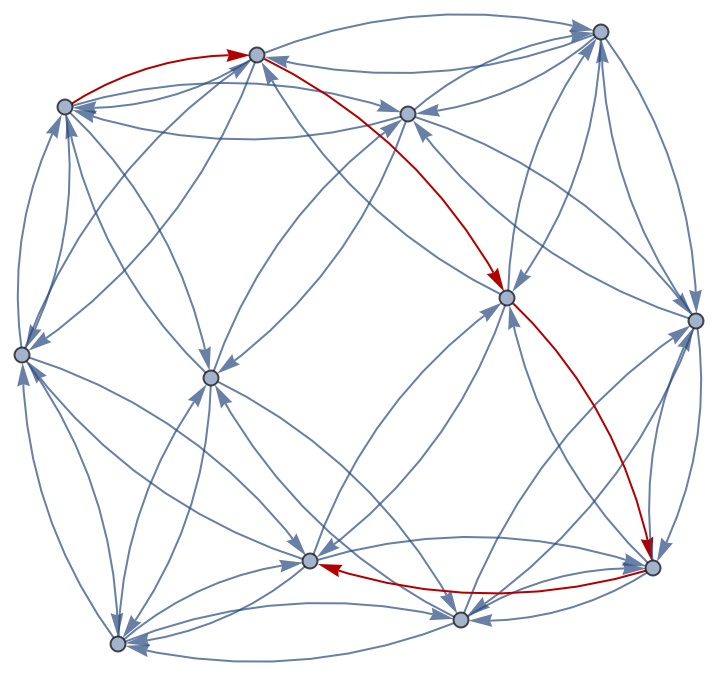
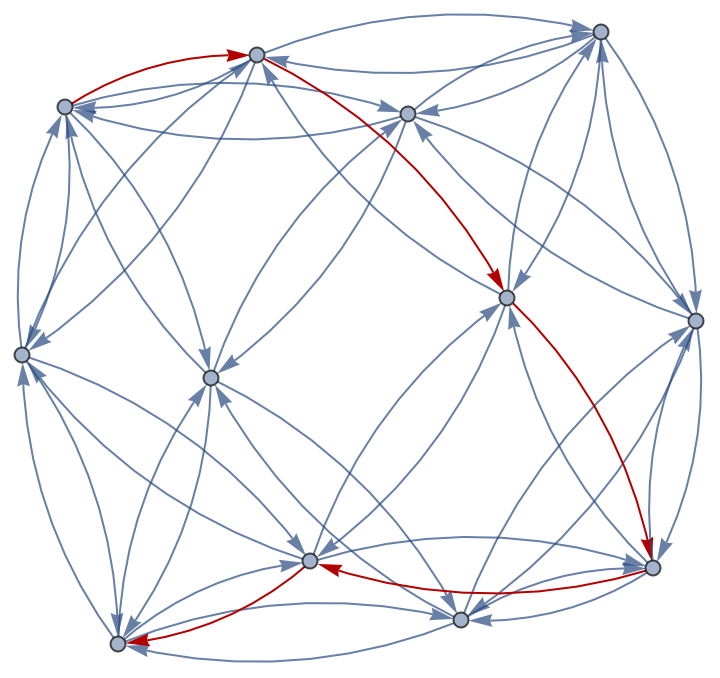
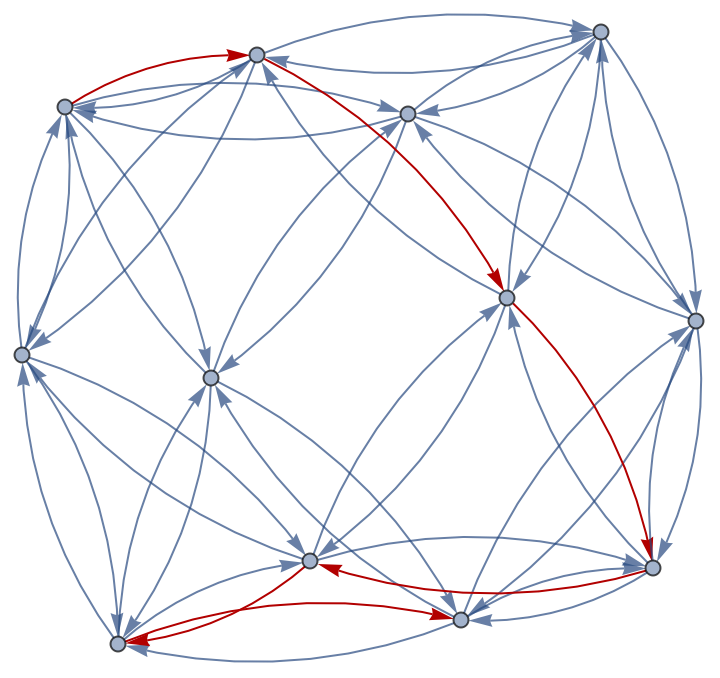
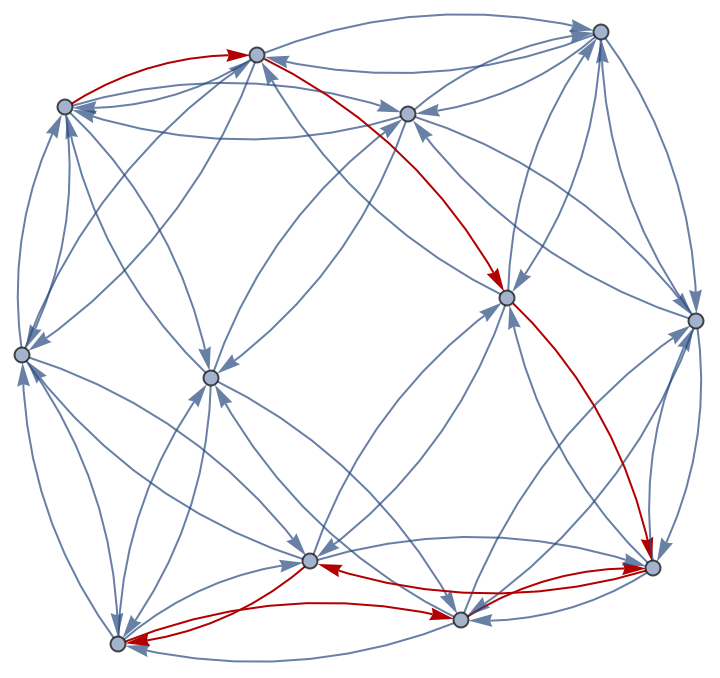
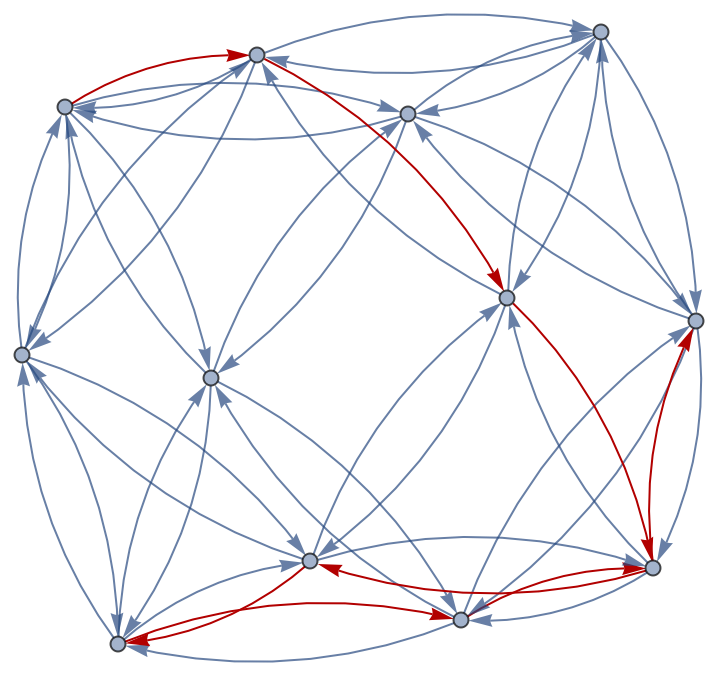
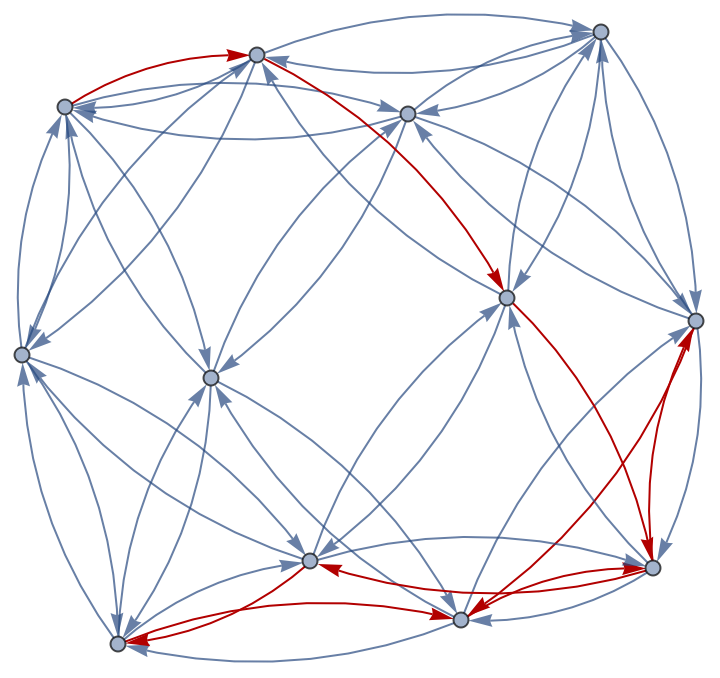
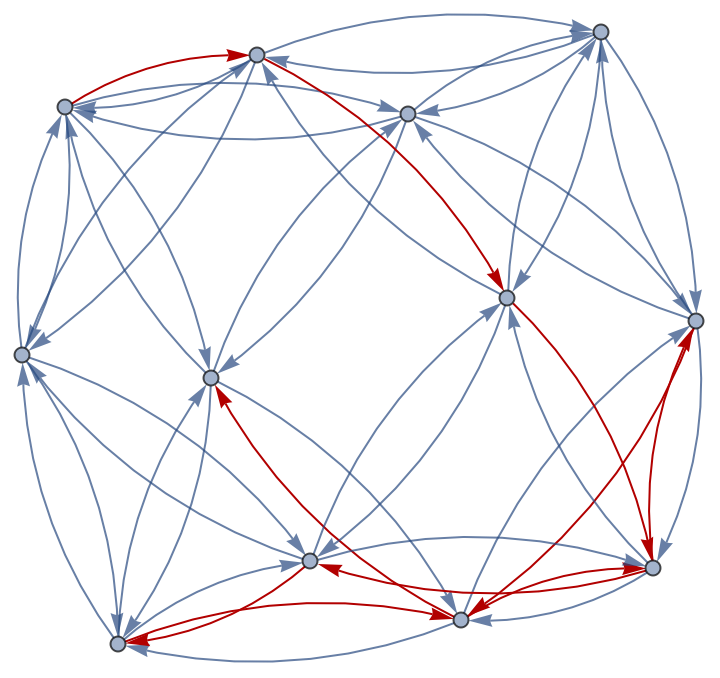
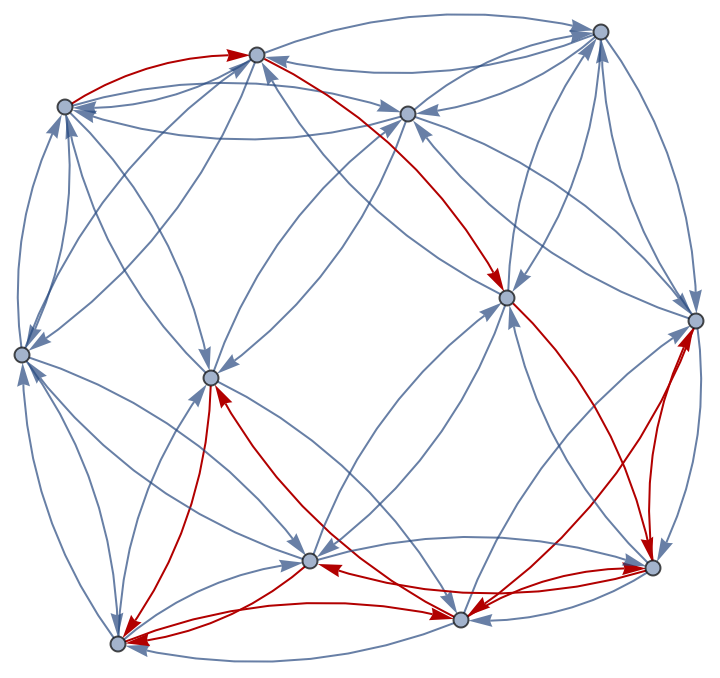
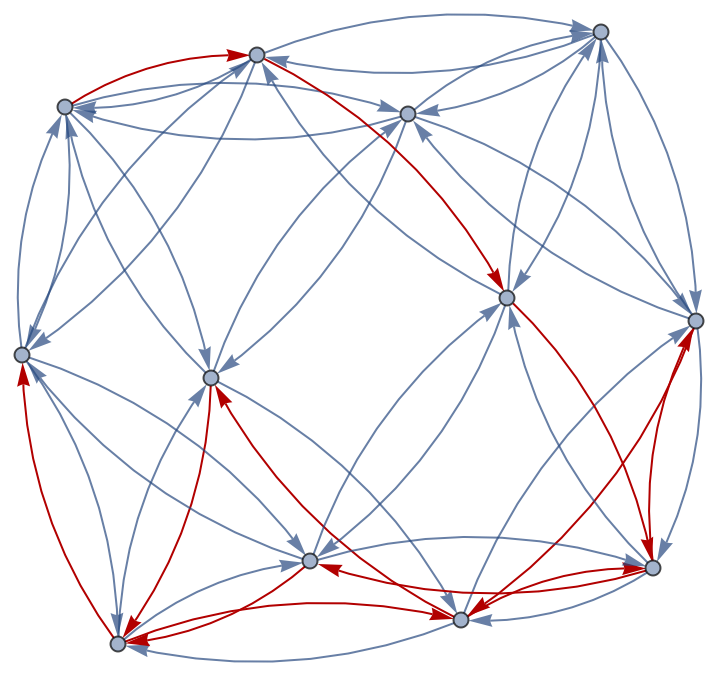
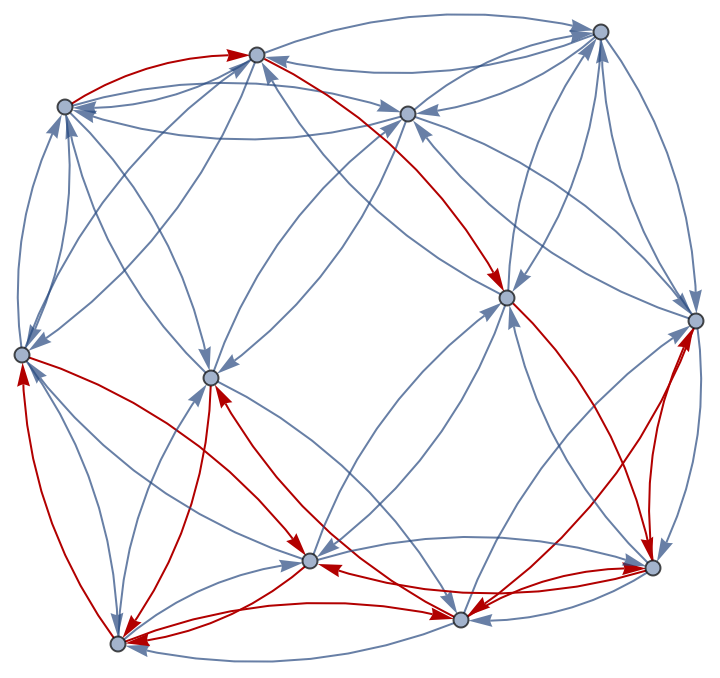
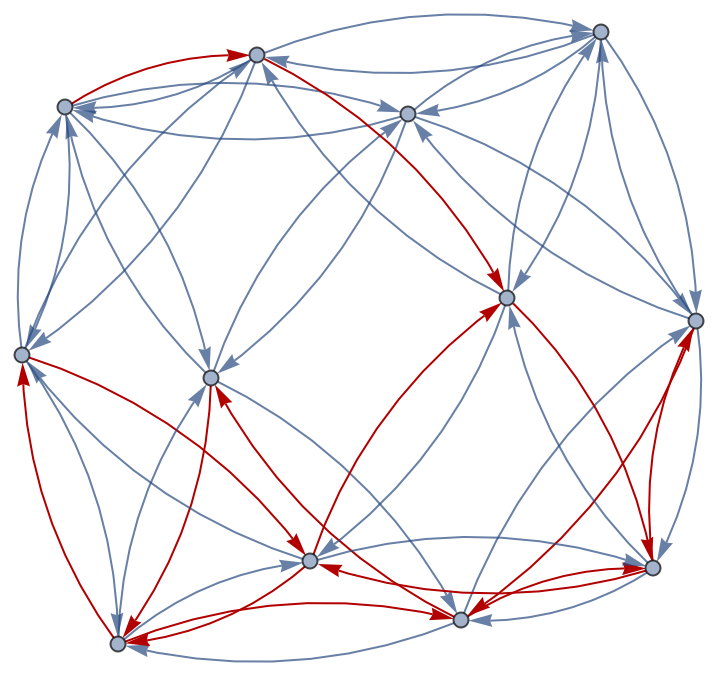
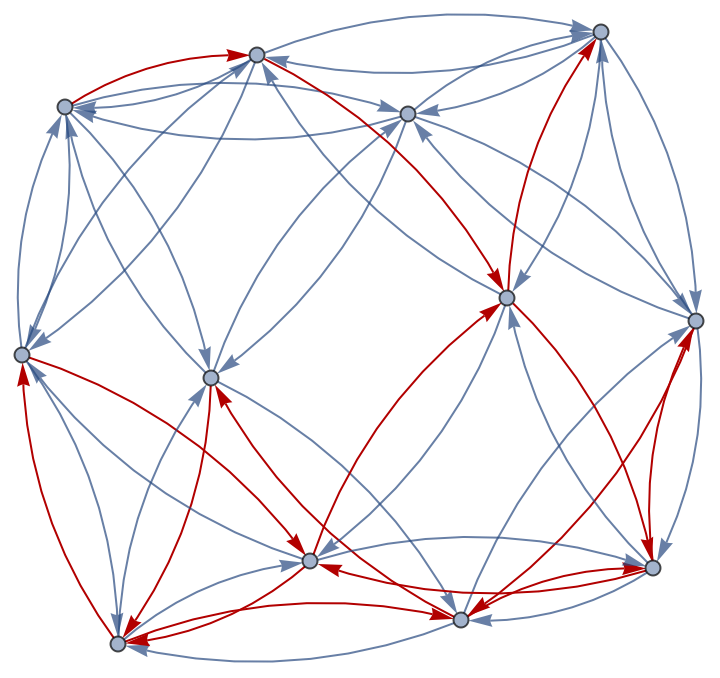
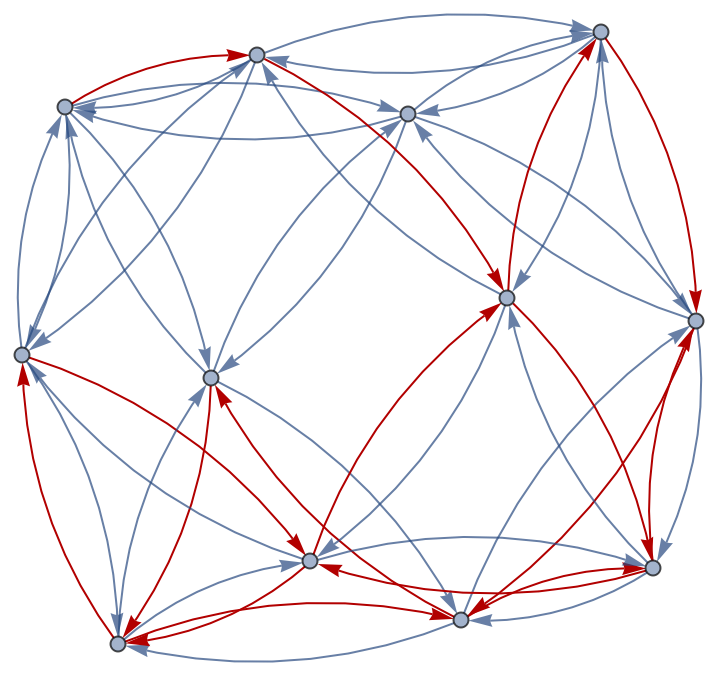
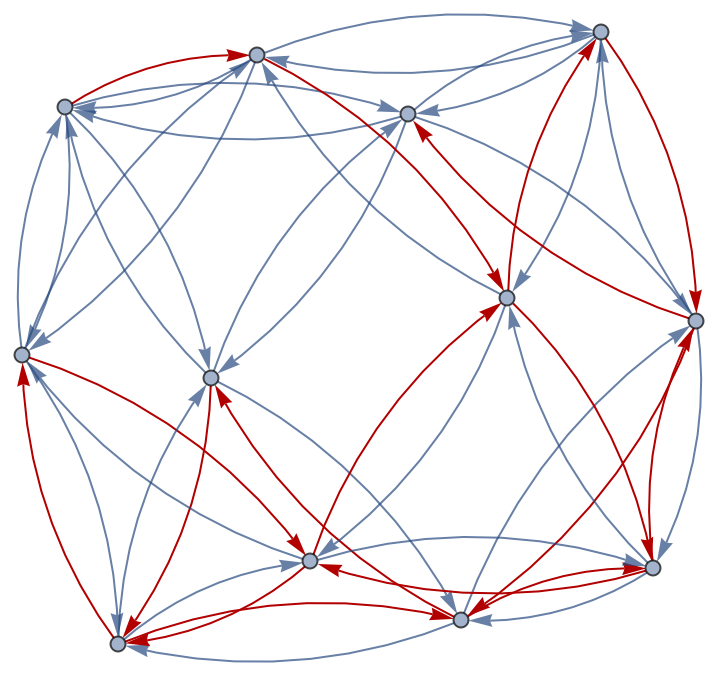
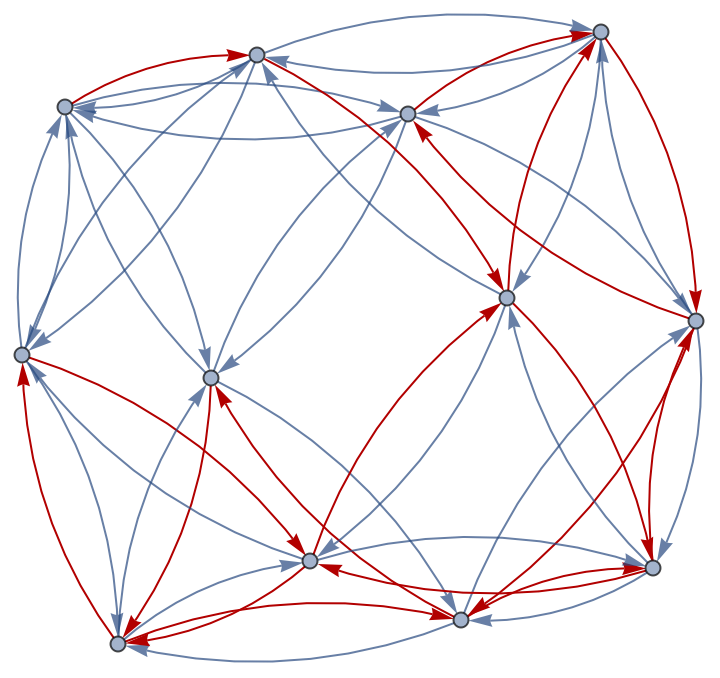
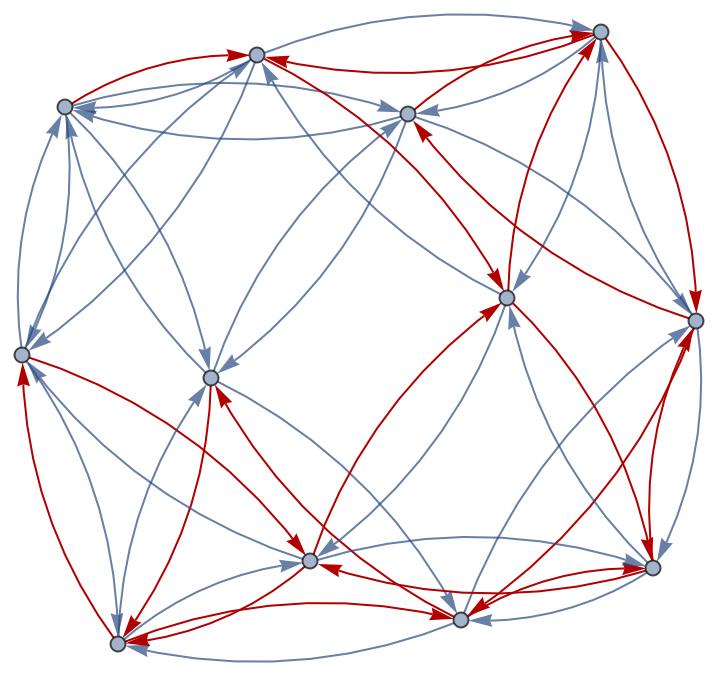
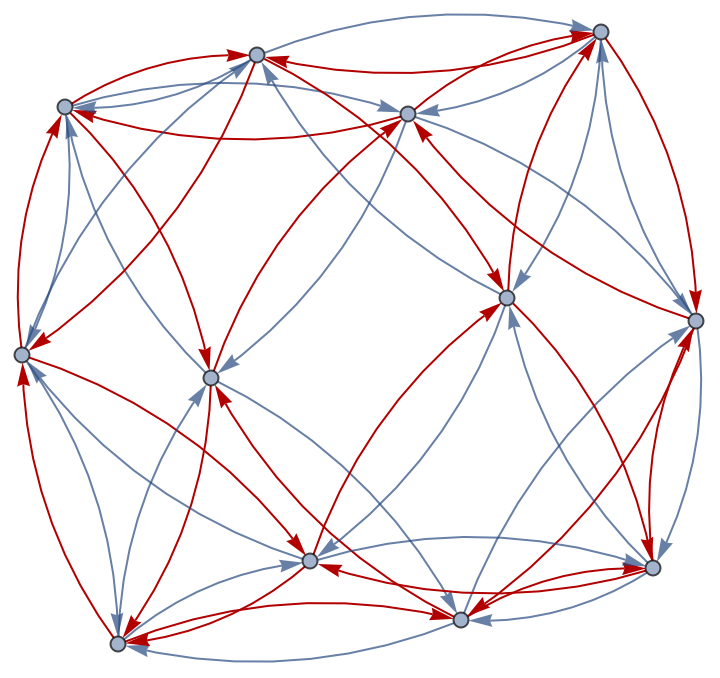
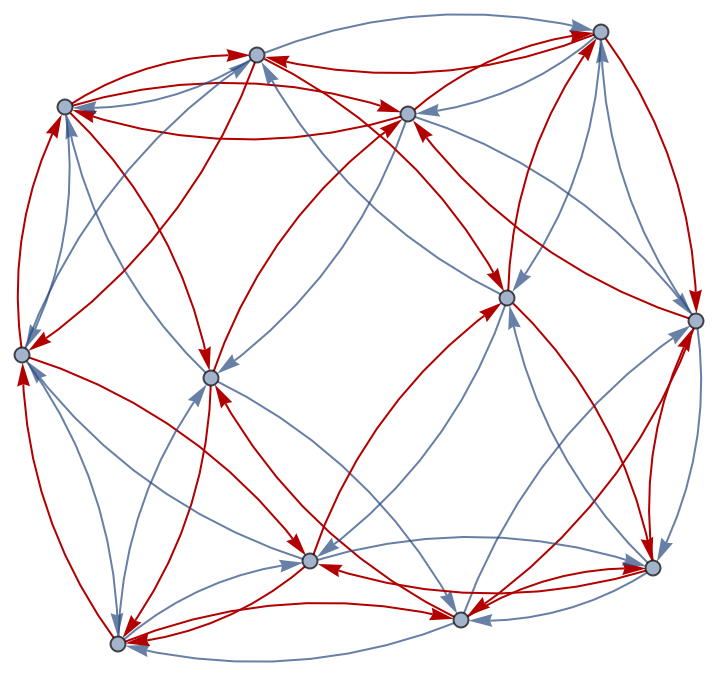
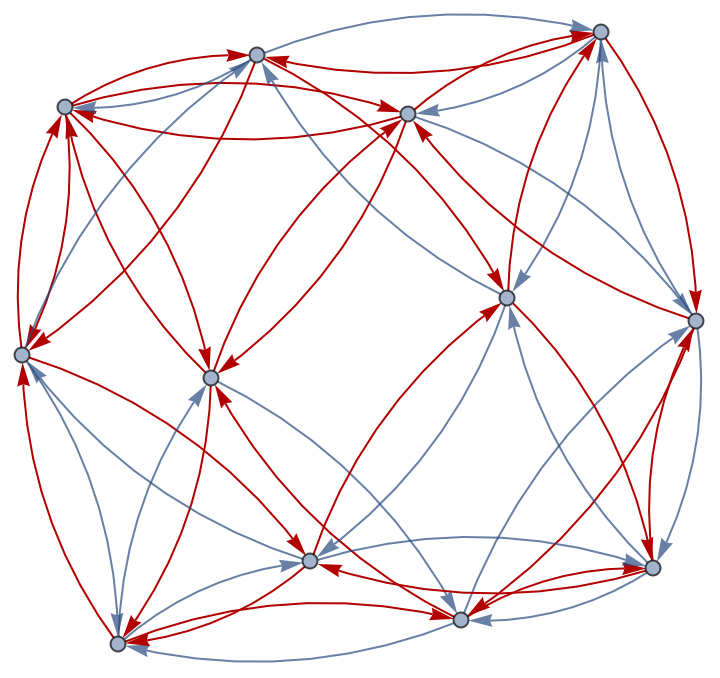
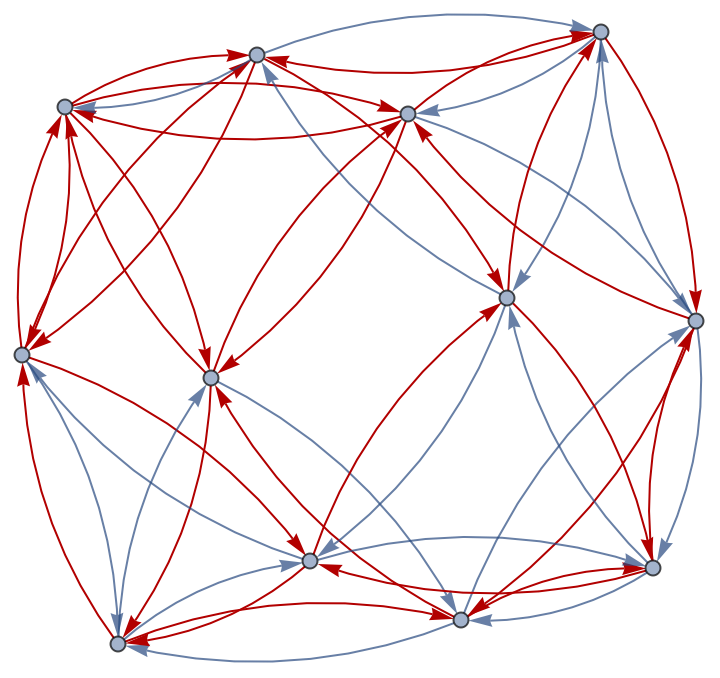
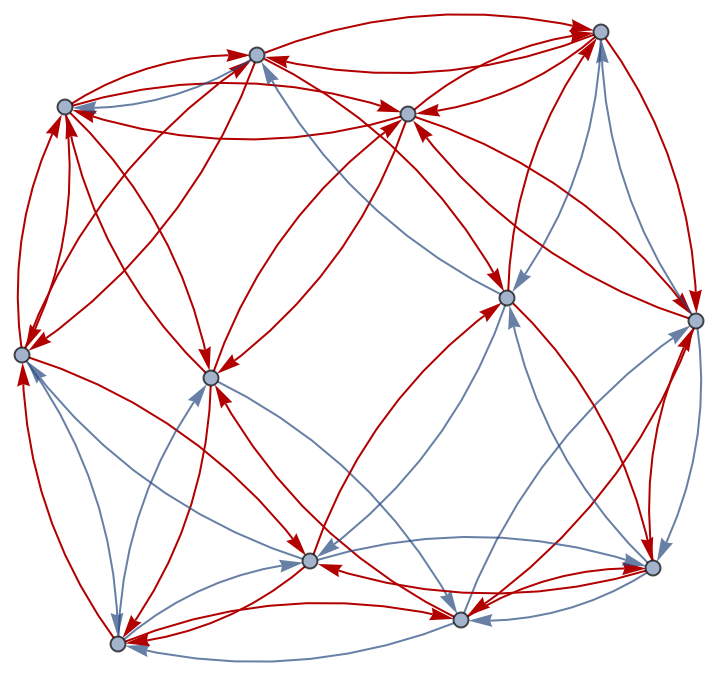
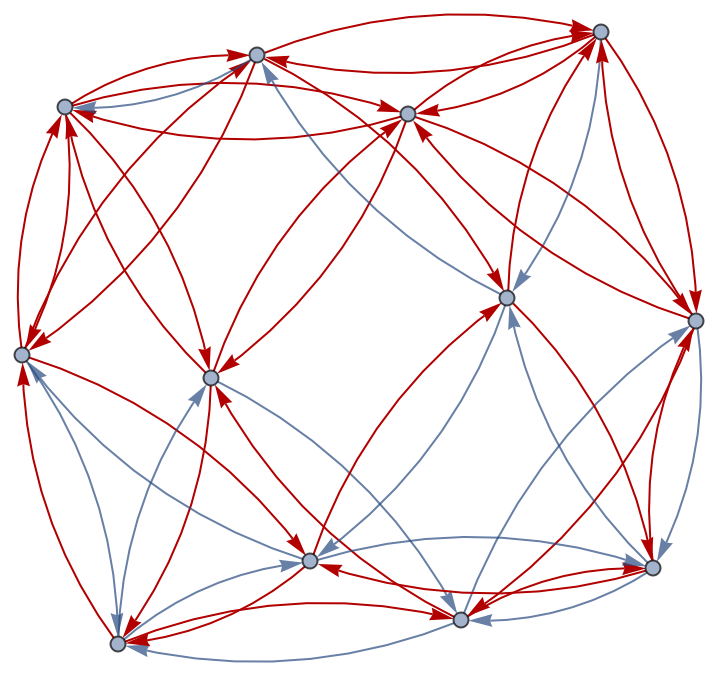
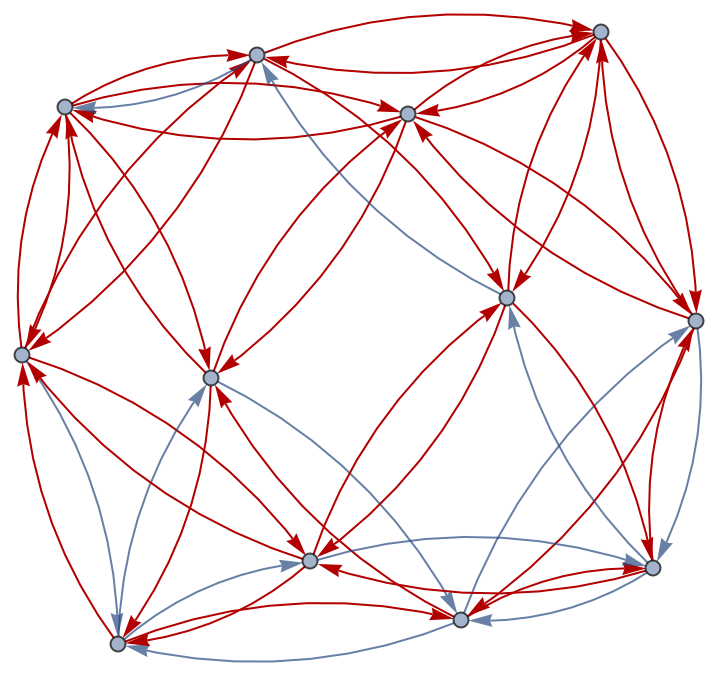
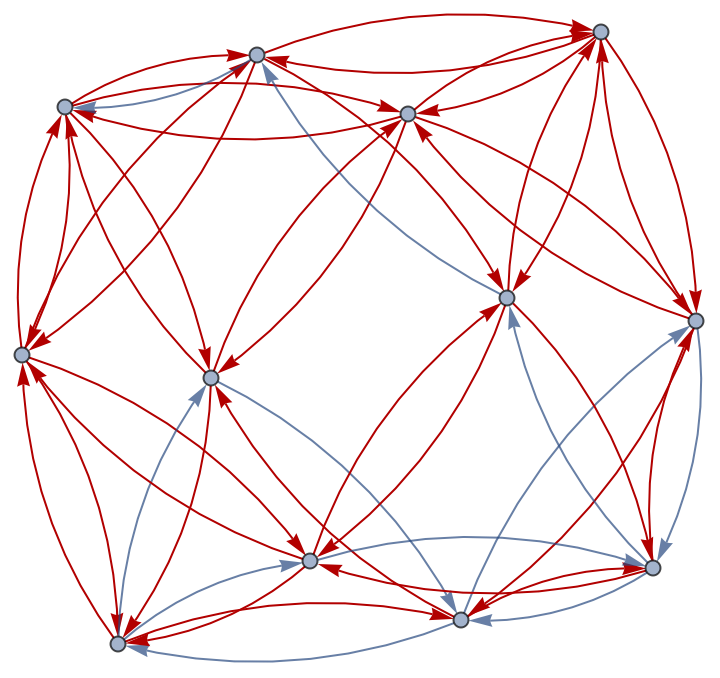
States of the Wolfram spinor after a rotation.
In[]:=
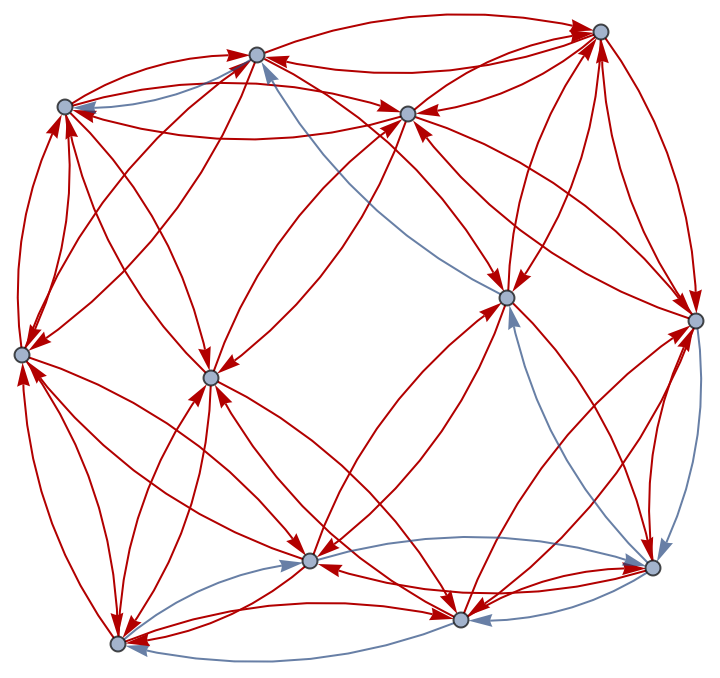
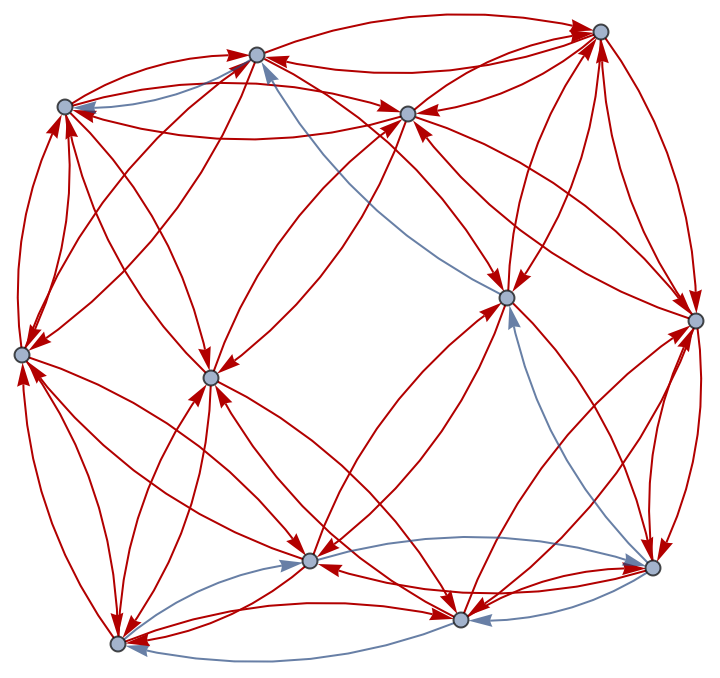
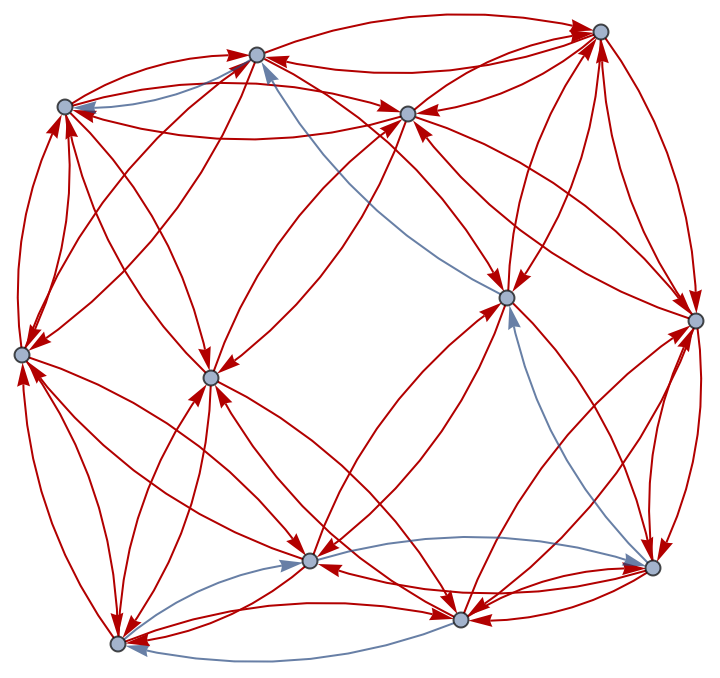
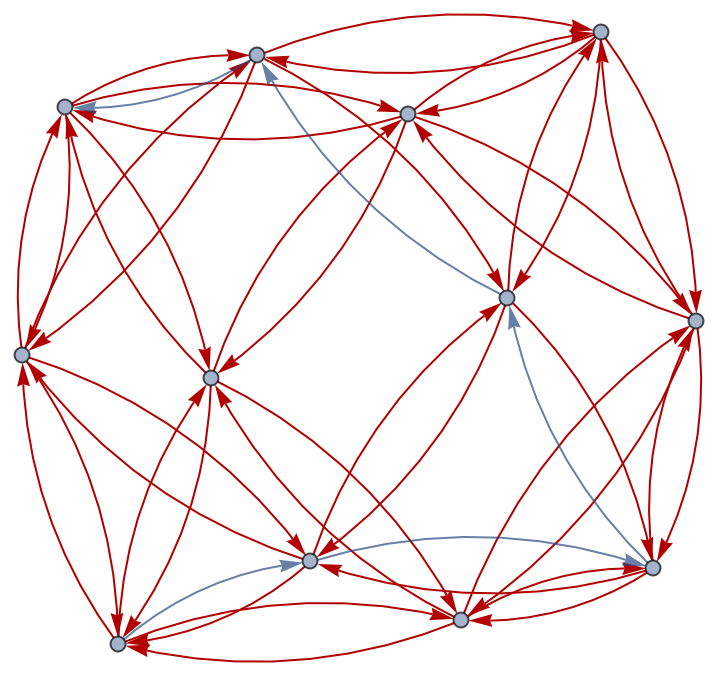
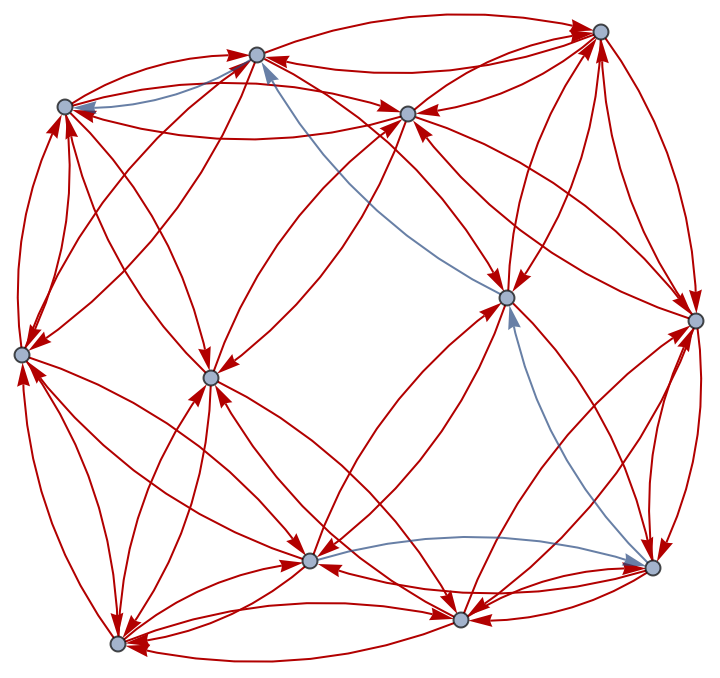
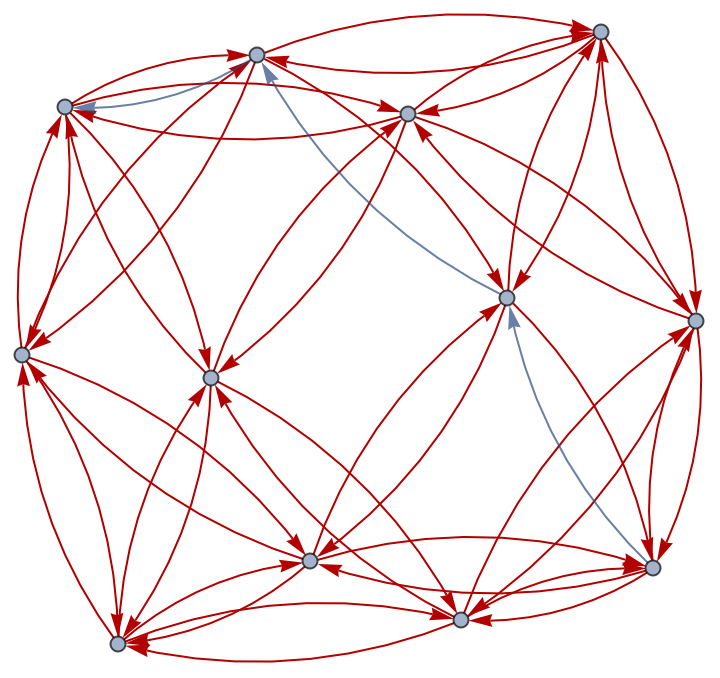
RotationSpinor[g]
Out[]=

,
,
,
,
,
,
,
,
,
,
,
,
,
,
,
,
,
,
,
,
,
,
,

​
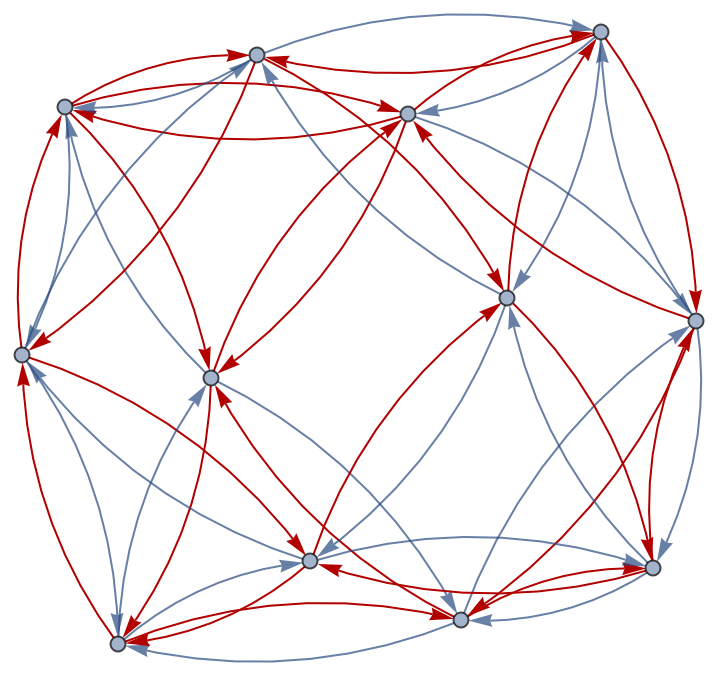
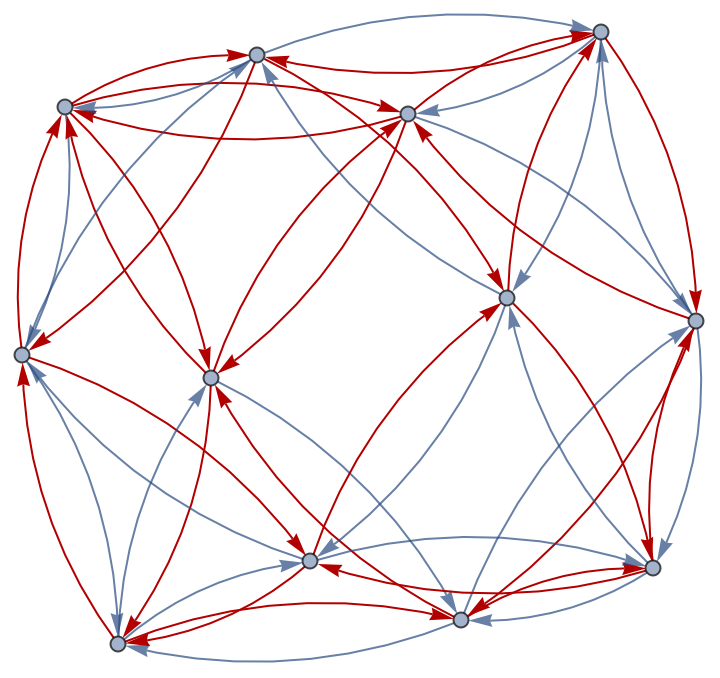
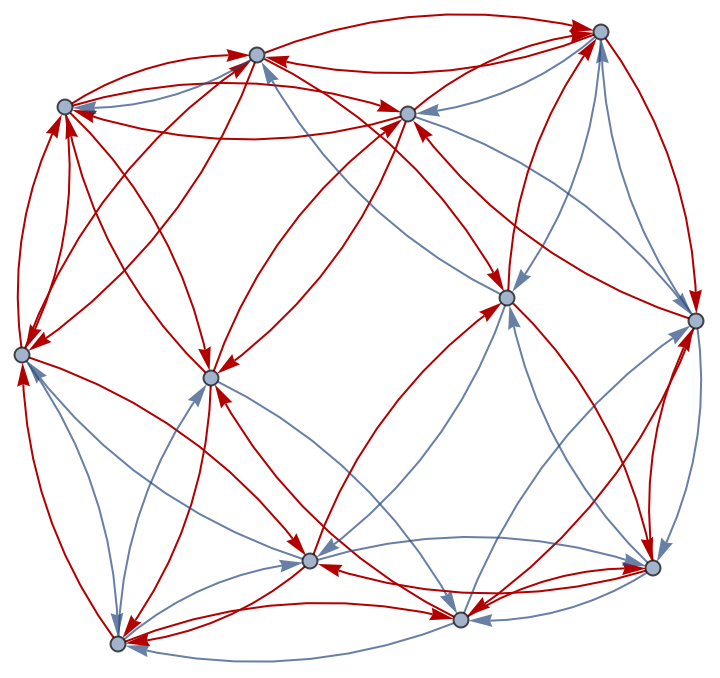
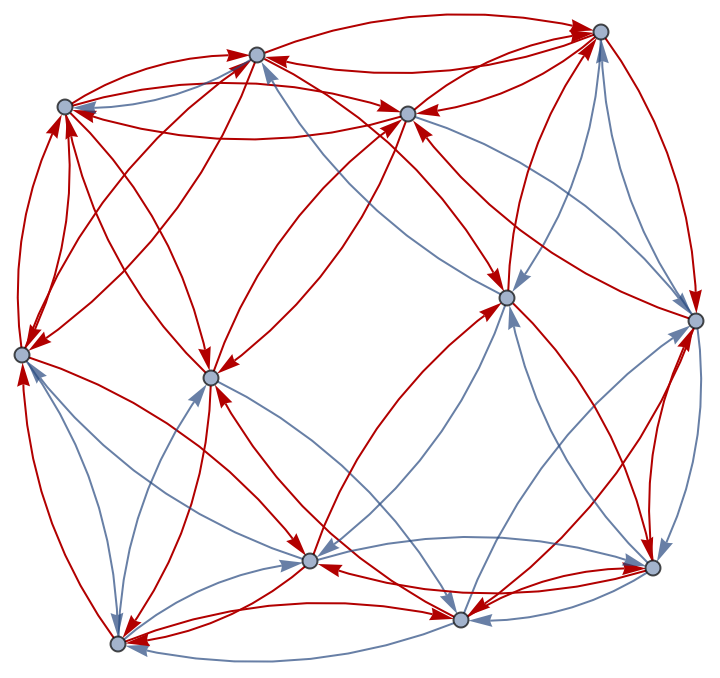
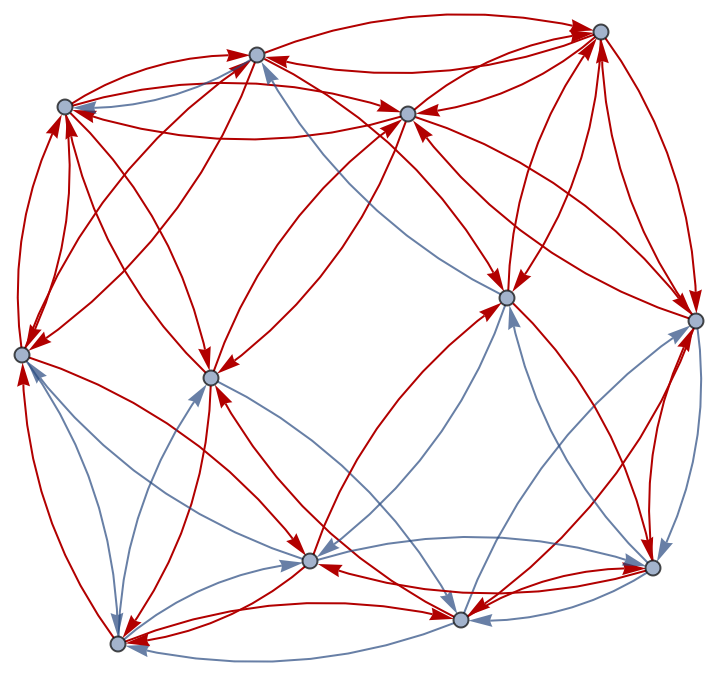
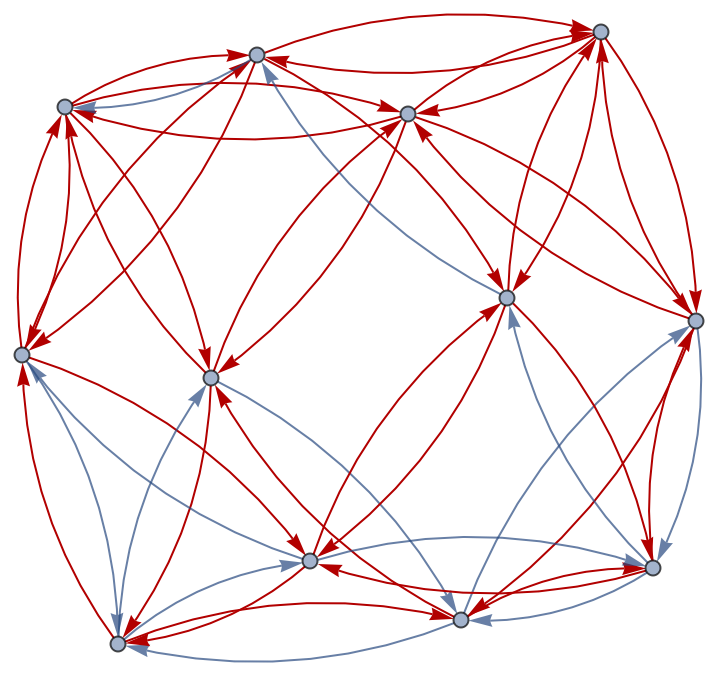
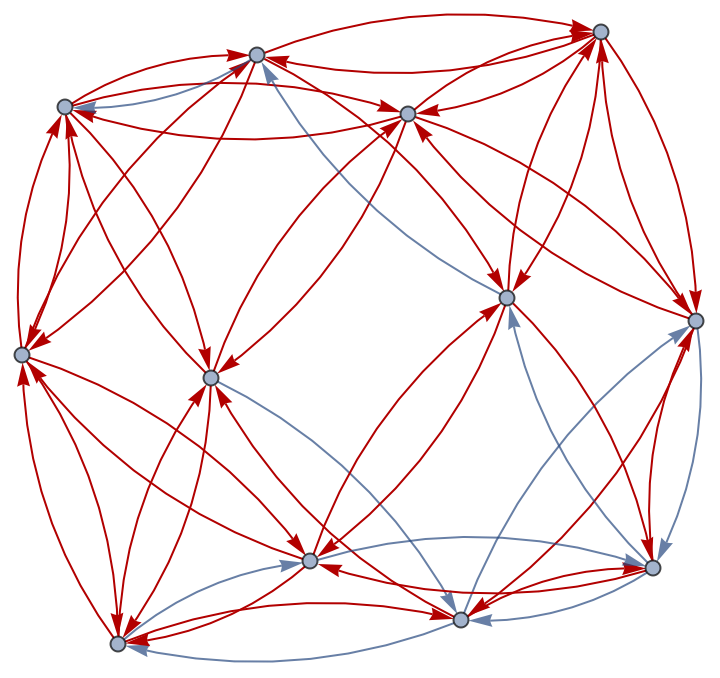
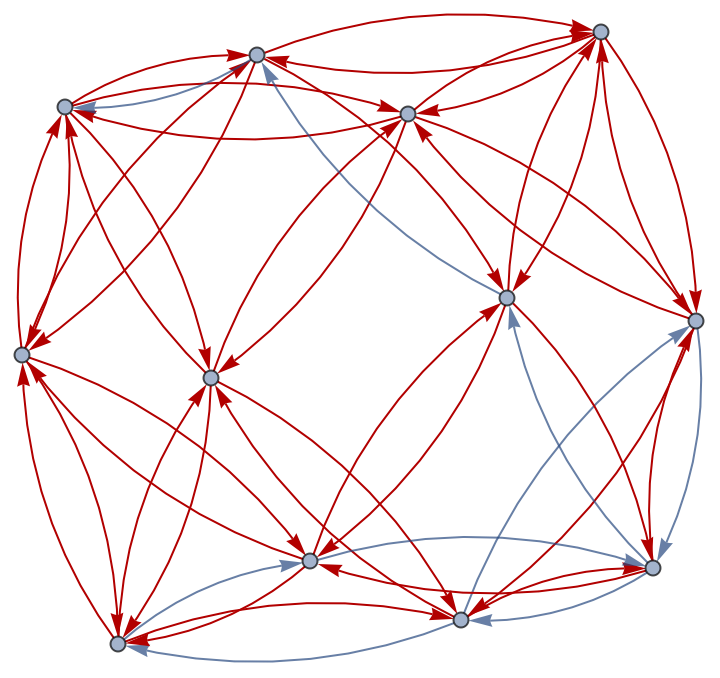
States of the Wolfram spinor after two rotations.
In[]:=
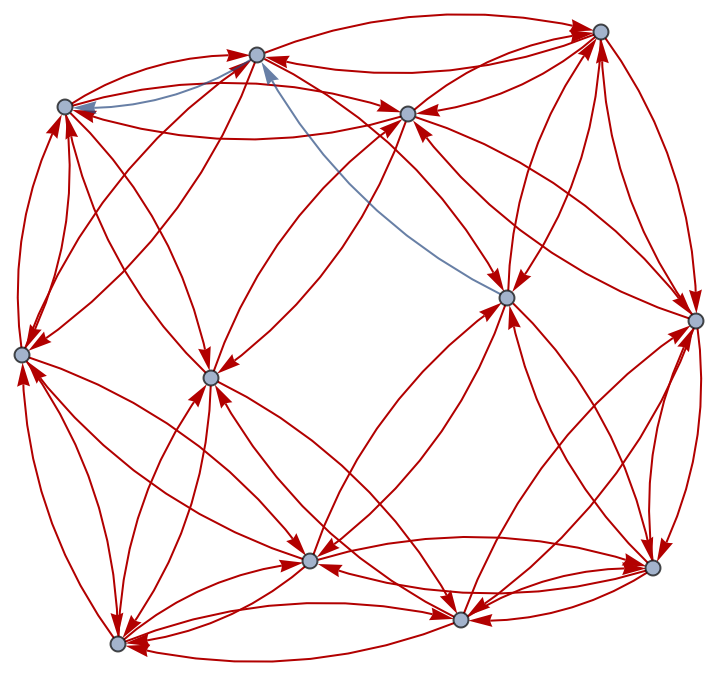
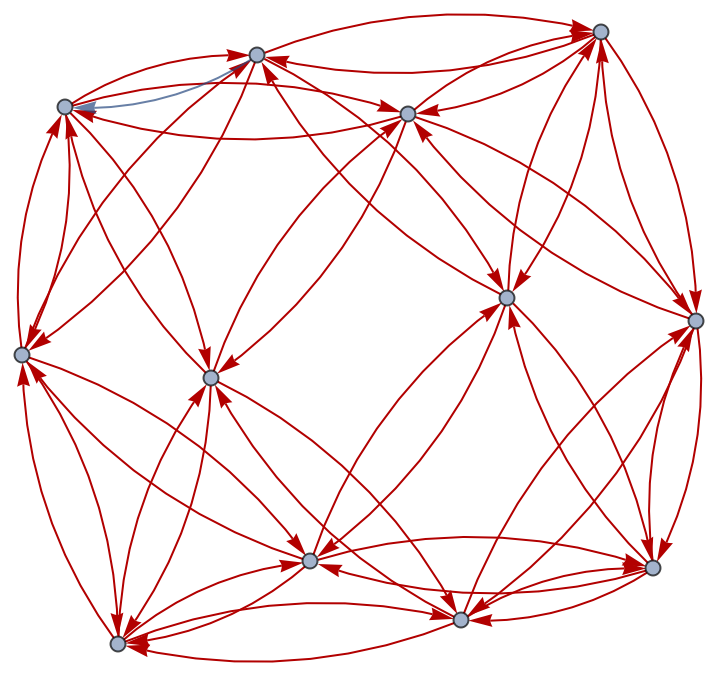
DoubleRotationSpinor[g]
Out[]=

,
,
,
,
,
,
,
,
,
,
,
,
,
,
,
,
,
,
,
,
,
,
,
,
,
,
,
,
,
,
,
,
,
,
,
,
,
,
,
,
,
,
,
,
,
,
,

List of n such that SqrtGraph[CompleteGraph[n]] is a Wolfram Spinor.