


AI Agents for
Higher-Order Thinking
(and Literature Review)*
AI Agents for
Higher-Order Thinking
(and Literature Review)*
Higher-Order Thinking
(and Literature Review)*
John McNally
Wolfram Research
ACS Fall Meeting 2025
Agenda
A paradigm for developing skills
The AI toolkit
AI for Literature Review*
FAQ About AI Agents
FAQ About AI Agents
How many AI agents are you talking about?
In this talk: 1. The assertion is to want one agent per lesson activity.
What do you mean by AI agent?
In my parlance: Agent = Language Model + Prompting + Tools
Do you mean a Wolfram agent or OpenAI agent?
In this talk: both. You can build agents as an amalgam of resources.
A Paradigm for AI Agents in Skills-Based Pedagogy
A Paradigm for AI Agents in Skills-Based Pedagogy
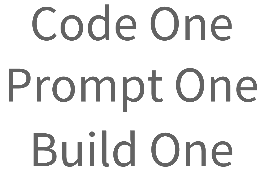
The Backstory - Graded Autonomy
The Backstory - Graded Autonomy
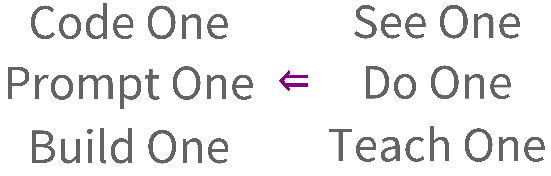
Differentiated Instruction
Differentiated Instruction
“Differentiated instruction involves teaching in a way that meets the different needs and interests of students using varied course content, activities, and assessments.”
- https://ctl.stanford.edu/differentiated-instruction
- https://ctl.stanford.edu/differentiated-instruction
How the Paradigm Supports Differentiated Instruction
How the Paradigm Supports Differentiated Instruction
Code One ⇒ Procedural and Factual Knowledge
Prompt One ⇒ Strategic Planning and Execution
Build One ⇒ Systems Thinking and Multi-disciplinary Creativity
Code One - Get Some Lab Data
Code One - Get Some Lab Data
A lesson “from the wild”
Non-linear regression and modeling of Thermogravimetric Analysis data
Thanks to Ghada Raba from NC State University for sharing the data
In[]:=
TGAdata=
Out[]=
Tabular


Code One - Explore a Model
Code One - Explore a Model
In[]:=
params={w0,w1,w2,w3,a1,a2,a3,b1,b2,b3};model=w0+{w1,w2,w3}.LogisticSigmoid[{a1,a2,a3}-{b1,b2,b3}t];
Out[]=


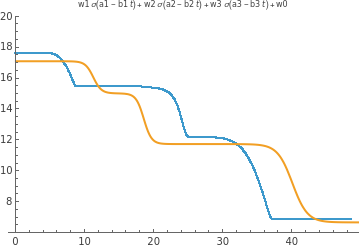
Code One - Fit and Visualize a Model
Code One - Fit and Visualize a Model
In[]:=
nlm=;TGAfitted=;Column,,
Out[]=


Prompt One - Planning
Prompt One - Planning
I want to do the following using the provided tool:
1. Import the lab data found at https://www.wolframcloud.com/obj/jmcnally0/ACSDemo/preformattedTGA.csv.
2. Fit the decomposition reaction data to a 3-step logistic sigmoid model.
3. Visualize the model predictions and observed data.
4. Visualize the percent error of the fitted model.
5. Identify regions where the percent error is greater than 2 %.
1. Import the lab data found at https://www.wolframcloud.com/obj/jmcnally0/ACSDemo/preformattedTGA.csv.
2. Fit the decomposition reaction data to a 3-step logistic sigmoid model.
3. Visualize the model predictions and observed data.
4. Visualize the percent error of the fitted model.
5. Identify regions where the percent error is greater than 2 %.
Prompt One - Exploration
Prompt One - Exploration
Make me a manipulative where I can adjust all those parameters in the empirical model
Prompt One - Extension
Prompt One - Extension
Wonderful. Now I want to visualize the percent error and identify regions where it is greater than 1%.
Prompt One - Secret Sauce
Prompt One - Secret Sauce
The example works reliably when the agent is given specific tools.
Performance is hit-or-miss if the language model has to invent tools.
Build One - Community Design Suggestions
Build One - Community Design Suggestions
from Sigot and Tassoti in J. Chem. Educ. 2025, 102, 2151−2159
Build One - Community Design Checklist
Build One - Community Design Checklist
How did we do today?
Build One - Extension Activity for Differentiation
Build One - Extension Activity for Differentiation
Gory Details:
The AI Toolkit
Computational Tools
Semantic Search
Language Models
The AI Toolkit - Language Models
The AI Toolkit - Language Models
Stochasticity is an inherent part of language model text generation!
The AI Toolkit - Semantic Search
The AI Toolkit - Semantic Search
The AI Toolkit - Computational Tools
The AI Toolkit - Computational Tools
Recap
Recap
Ask if you have the right agent for your lesson, not for your course
AI agents today have a trade-off between generality and reliability
Agents for Literature Review
Agents for Literature Review
* Time permitting
Shortest Paths Between Literature Results
Shortest Paths Between Literature Results
Serve the Results as a Notebook
Serve the Results as a Notebook
Thanks!
Some code in the slides requires permissions
Please reach out if you want to a runnable copy
Please reach out if you want to a runnable copy