The regular five cube compound was first described by Edmund Hess in 1876. It is one of five regular compounds, and dual to the compound of five octahedra. It can be seen as a faceting of a regular dodecahedron. It is one of the stellations of the rhombic triacontahedron. The goal is to construct the five cube compound in an additive way, i.e. start with a single cube, then add a second, and so on. Only the parts visible are added. The benefit is that you see the intersection lines clearly. The main problem is to find the right card-boards. In this sense the five cube compound is the simplest (beside the single cube) and the three and four cube compound are the hardest. I enjoyed programming, even more so once I was done :)
Definitions
Definitions
In[]:=
vertices=PolyhedronData["CubeFiveCompound","VertexCoordinates"]//N;
In[]:=
dodecahedron=Map[Polygon[vertices[[#]]]&,{{11,12,4,6,3},{6,4,10,18,20},{3,6,20,17,9},{11,3,9,7,15},{12,11,15,19,16},{4,12,16,8,10},{8,16,19,5,2},{18,10,8,2,14},{17,20,18,14,13},{7,9,17,13,1},{1,13,14,2,5},{1,5,19,15,7}}];
In[]:=
white=GrayLevel[0.99];
Single Cube in a Dodecahedron
Single Cube in a Dodecahedron
In[]:=
Graphics3D[{EdgeForm[Gray],Opacity[0],dodecahedron,Opacity[1],Cyan,EdgeForm[{Black,Thickness[0.002]}],Map[Polygon[vertices[[#]]]&,{{19,11,4,8},{20,14,1,9},{19,1,9,11},{20,4,8,14},{19,8,14,1},{20,9,11,4}}]},Lighting->"Neutral",ViewProjection"Orthographic",BoxedFalse]
Out[]=

Remove the color:
Out[]=

Remove the shading:
Out[]=

Definitions
Definitions
In[]:=
square2[{p1_,p2_,p3_,p4_}]:=With[{q=1.0/GoldenRatio},With[{qq={p1,p2,p3+q(p2-p3),p3,p4+q(p3-p4),p4}},{Polygon[qq[[{1,2,3}]]],Polygon[qq[[{3,4,5}]]],Polygon[qq[[{5,6,1}]]]}]];
Two Cubes in a Dodecahedron
Two Cubes in a Dodecahedron
Card-board with mirror image:
In[]:=
Grid[{{Graphics[square2[{{0,0},{1,0},{1,1},{0,1}}]],Graphics[square2[{{1,0},{0,0},{0,1},{1,1}}]]}}]
Out[]=
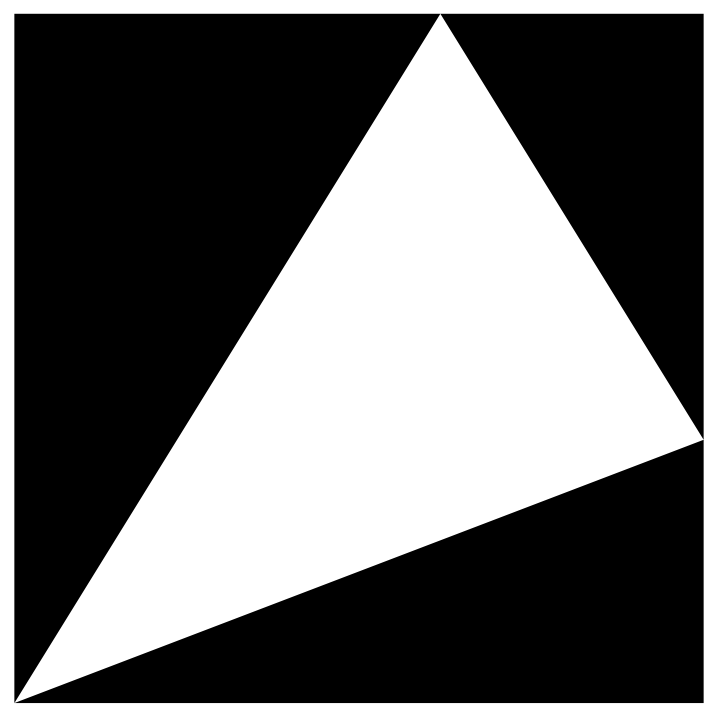
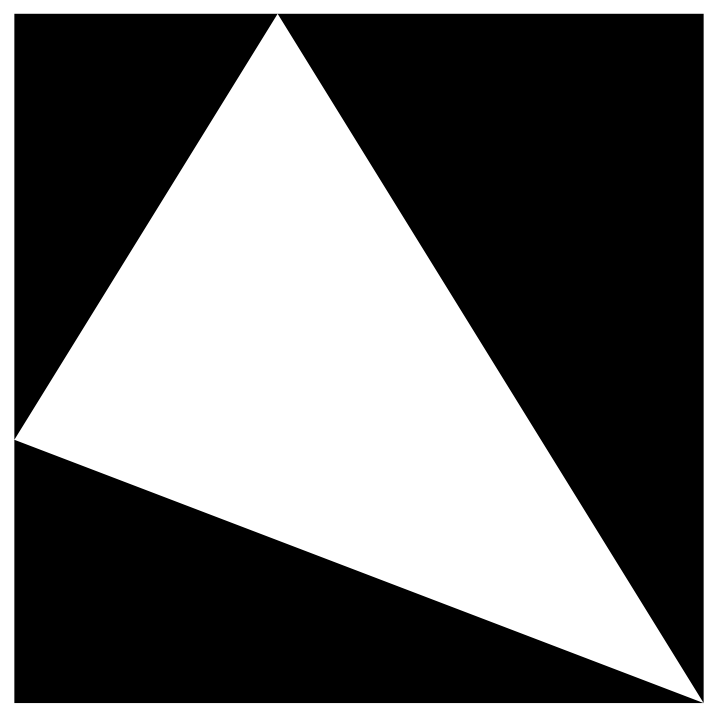
Two cubes:
In[]:=
Graphics3D[{EdgeForm[Gray],Opacity[0],dodecahedron,Opacity[1],Cyan,EdgeForm[{Black,Thickness[0.002]}],Map[square2[vertices[[#]]]&,{{19,11,4,8},{20,14,1,9},{19,1,9,11},{20,4,8,14},{19,8,14,1},{20,9,11,4}}],White,Map[square2[vertices[[#]]]&,{{19,12,3,7},{20,13,2,10},{19,2,10,12},{20,3,7,13},{19,7,13,2},{20,10,12,3}}]},Lighting->"Neutral",ViewProjection"Orthographic",BoxedFalse]
Out[]=

Remove the color:
Out[]=

Remove the shading:
Out[]=

Three Cubes in a Dodecahedron
Three Cubes in a Dodecahedron
Two symmetric card-boards and one card-board with mirror image:
Three cubes:
Remove the colors:
Remove the shading:
Four Cubes in a Dodecahedron
Four Cubes in a Dodecahedron
Card-board with mirror image:
Four cubes:
Remove the colors:
Remove the shading:
Cube Five Compound
Cube Five Compound
Symmetric card-board:
Five cubes:
Face View
Face View
Remove the colors:
Remove the shading:
Edge View
Edge View
Remove the colors:
Remove the shading:
Vertex View
Vertex View
Remove the colors:
Remove the shading:
CITE THIS NOTEBOOK
CITE THIS NOTEBOOK
Edmund Hess 1876: five cube compound in an additive way
by Oliver Seipel
Wolfram Community, STAFF PICKS, May 30 2023
https://community.wolfram.com/groups/-/m/t/2927614
by Oliver Seipel
Wolfram Community, STAFF PICKS, May 30 2023
https://community.wolfram.com/groups/-/m/t/2927614