Article abstract
Article abstract
Since one of the main goals of teaching geometry is to provide students with the opportunity to develop spatial reasoning, it is important to find the most suitable support for learning 3D geometry in elementary school. This paper compares Information and Communication Technology (ICT) and physical manipulatives support, with the aim to answer if their use produces different effects on students’ spatial reasoning. The participants in the study were 74 4th graders (10–11 years old) who were assigned to two equal groups that attended a month of the experimental program. Group EICT learned with the ICT support and group EMAN learned with physical manipulatives support. The results showed that there was no difference in students’ 3D geometry achievement regardless of the support that was used, and that both supports provided learning access for all students. According to our results, teaching geometry should be directed to the complementary use of physical manipulatives and ICT support, depending on the technological and software resources available to schools and teachers’ preference of the support. ICT can assist in achieving learning equity, but there is a need for a systematic development of the ICT sources that could be used as instructional manipulatives, their promotion, and the support for the teachers.
Introduction
Introduction
Geometry in elementary school should be intuitive, interactive, and above all it should be fun. By observing 3D world that surrounds them, children are given the opportunity to develop their spatial reasoning and to build their first notions about 3D geometry. Teachers frequently use physical manipulatives to support geometry learning, but we all witness that nowadays teacher - student communication and, learning in general, has been moved to digital world. One of our latest research showed that we should not be worried about using ICT tools instead of physical manipulatives - students would equally benefit from both.
On the other side, it is not easy for teachers to find online interactive 3D geometry applets or visual manipulatives that really fit into their instructional practice. However, with the little research and skill, they can use Mathematica to create interactivity and visualization in the ways that support concepts that they want to illuminate. Here are our suggestions for tasks and activities that can be used for Elementary school geometry.
On the other side, it is not easy for teachers to find online interactive 3D geometry applets or visual manipulatives that really fit into their instructional practice. However, with the little research and skill, they can use Mathematica to create interactivity and visualization in the ways that support concepts that they want to illuminate. Here are our suggestions for tasks and activities that can be used for Elementary school geometry.
Students could practice their visualisation skills
Students could practice their visualisation skills
In this task they need to answer following questions:
1) How many cubes is used to make the solid?
2) How many cubes should be added to make big cube?
1) How many cubes is used to make the solid?
2) How many cubes should be added to make big cube?
Out[]=


Students could use interactions in Mathematica to explore properties of cuboid and cube
Students could use interactions in Mathematica to explore properties of cuboid and cube
Which sides and edges of cuboid and cube coincide?
Out[]=

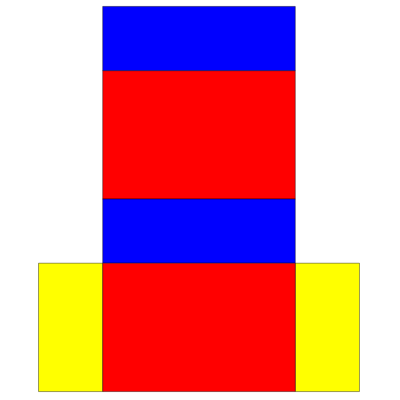
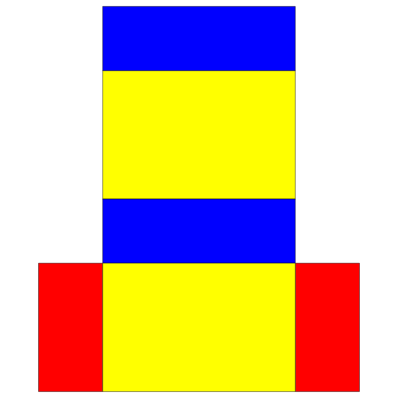
Exploring the nets of cuboid and cube could be done by recognizing the net for given solid
Exploring the nets of cuboid and cube could be done by recognizing the net for given solid
Which of the given nets is the net of the given solid?

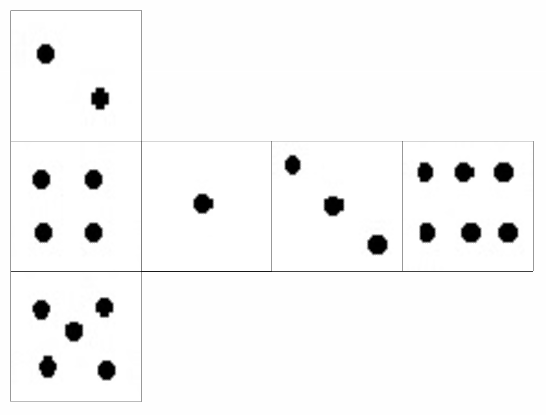
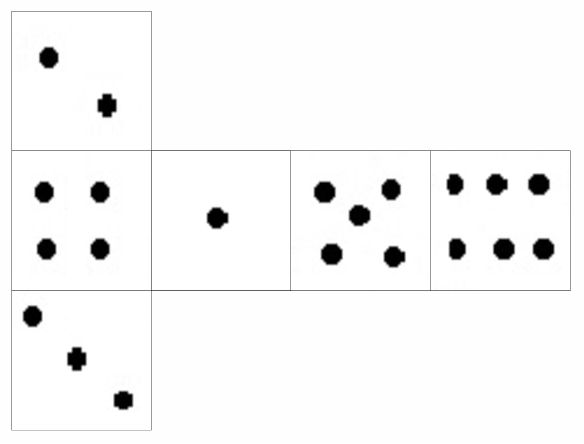
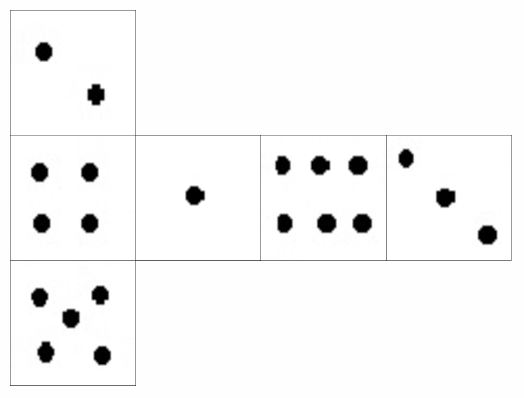

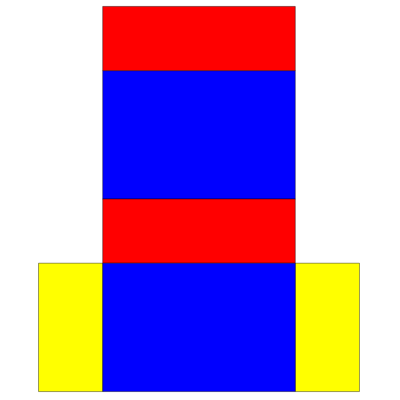
There is no better way of understanding the volume of the cuboid and cube than having the opportunity to induce formula using visual examples. Students can calculate the volume by multiplying number of cubes on length, width and height of cuboid. This way they can "see how formula works".
Out[]=

We provided here some of the examples that we used in our research in which we compared the ICT with physical manipulative supported learning. If you are interested, you can read about the research in the article:
Đokić, O., Dabić Boričić, M. & Jelić, M. (2021). Comparing ICT With Physical Manipulative Supported Learning of 3D Geometry in Elementary School. Journal of Educational Computing Research, 59(8), 1623-1654.
Đokić, O., Dabić Boričić, M. & Jelić, M. (2021). Comparing ICT With Physical Manipulative Supported Learning of 3D Geometry in Elementary School. Journal of Educational Computing Research, 59(8), 1623-1654.