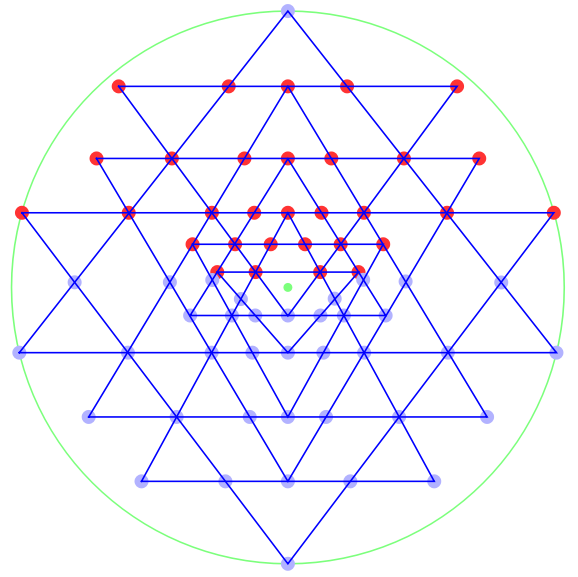
The SriYantra consists of nine interlaced triangles. Four triangles point upward and five point downward. The diameter of the circumscribed circle, as 1/1, defines a harmonics of string length and frequency. The vertices of the triangles are mirror images, so in effect there are only 18 string lengths plus the center line diameter. Each string length contains a number of stops, like frets on a guitar. These stops are shown in the above graphic as red and blue dotted lines. The 19 scales are sounded using sine tones. A long time ago I once heard that the SriYantra was a source of raga scales. I’m not sure of this, but the microtonal nature of these scales is inspiring.
Triangle 1, Base Line A
Triangle 1, Base Line A
The code for the base line of one triangle is shown here.
Starting variables
Starting variables
220 HZ for the diameter 1/1.
primeFreq=220.0;
This duration can expand in octaves from 0.42187 seconds to 13.5 seconds to create a smear of frequencies for longer durations
duration2=0.42187;
0.42187*512=220 9 octaves
6.75, 3.375 ... 0.42187 to 0.1054675
Duration2 & timeTotal expansion/contraction
6.75, 3.375 ... 0.42187 to 0.1054675
Duration2 & timeTotal expansion/contraction
timeTotal=0.421875;
Frequencies
Frequencies
Length of Base Line A as part of the diameter of the circumscribed circle
baseLenA={1.0899999999999999`/2.058171027032`}//N
Frequency of Base Line A
freqA=primeFreq/baseLenA
Cartesian coordinate stops on Base Line A. i.e. where other lines cross Base Line A. From file ConvertCartToMeasureA.nb
horizStops5A={1.`,1.5732619582580687`,2.`,1.5732619582580687`,1.`};
String length stops to frequency conversion. These are the actual frequencies incl upper octaves
freqHA=freqA*#&/@Reverse[horizStops5A]//Flatten
Timing
Timing
from file ConvertCartToMeasureA.nb
horizStopsTm5A={0.5449999999999999`,0.15621388362532368`,0.27249999999999996`,0.38878611637467625`,0.5449999999999999`}//N;
Amount of time allocated to Base Line A
timeA=timeTotal*baseLenA//N;
timeAA is the amount of time before the Base Line A start time since timeA is less than timeTotal
timeAA=(timeTotal-timeA)/2//N;
The actual location of each stop
timeStops5A=timeA*#+timeAA&/@horizStopsTm5A//Flatten
Clean up first stop
varA1=Append[ReplacePart[timeStops5A,1timeAA],0]//FlattenvarA2=Drop[Prepend[%,0],-1]
Actual locations are subtracted from their preceding locations to give a time duration between events
deltaTm1=Subtract[varA1,varA2]deltaTm2=ReplacePart[deltaTm1,-1timeAA]//Flatten
Finally the duration per event is subtracted from the previous result giving the real time between events, delta time
delta=deltaTm2-(duration2/2)
Sounding
Sounding
This sound object plays the scale of Triangle 1 Base A. All scales are adjusted to an octave as per norm.
scaleHoriz5A=Sound[{Play[Sin[0*t],{t,0,delta[[1]]}],Play[Sin[freqHA[[1]]2Pit],{t,0,duration2}],Play[Sin[0*t],{t,0,delta[[2]]}],Play[Sin[freqHA[[2]]2Pit],{t,0,duration2}],Play[Sin[0*t],{t,0,delta[[3]]}],Play[Sin[freqHA[[3]]2Pit],{t,0,duration2}],Play[Sin[0*t],{t,0,delta[[4]]}],Play[Sin[freqHA[[4]]2Pit],{t,0,duration2}],Play[Sin[0*t],{t,0,delta[[5]]}],Play[Sin[freqHA[[5]]2Pit],{t,0,duration2}],Play[Sin[0*t],{t,0,delta[[6]]},SampleRate44100]}]
The Scales of the SriYantra
The Scales of the SriYantra
Set your audio output at 1/2 then to taste. The following sound graphic is like a pin ball machine. If you "TILT", go back and reboot!
( If you hit the carrot or play more than one scale at a time there is a good chance of TILT. )
( If you hit the carrot or play more than one scale at a time there is a good chance of TILT. )
VISUAL RHYTHMICS
VISUAL RHYTHMICS
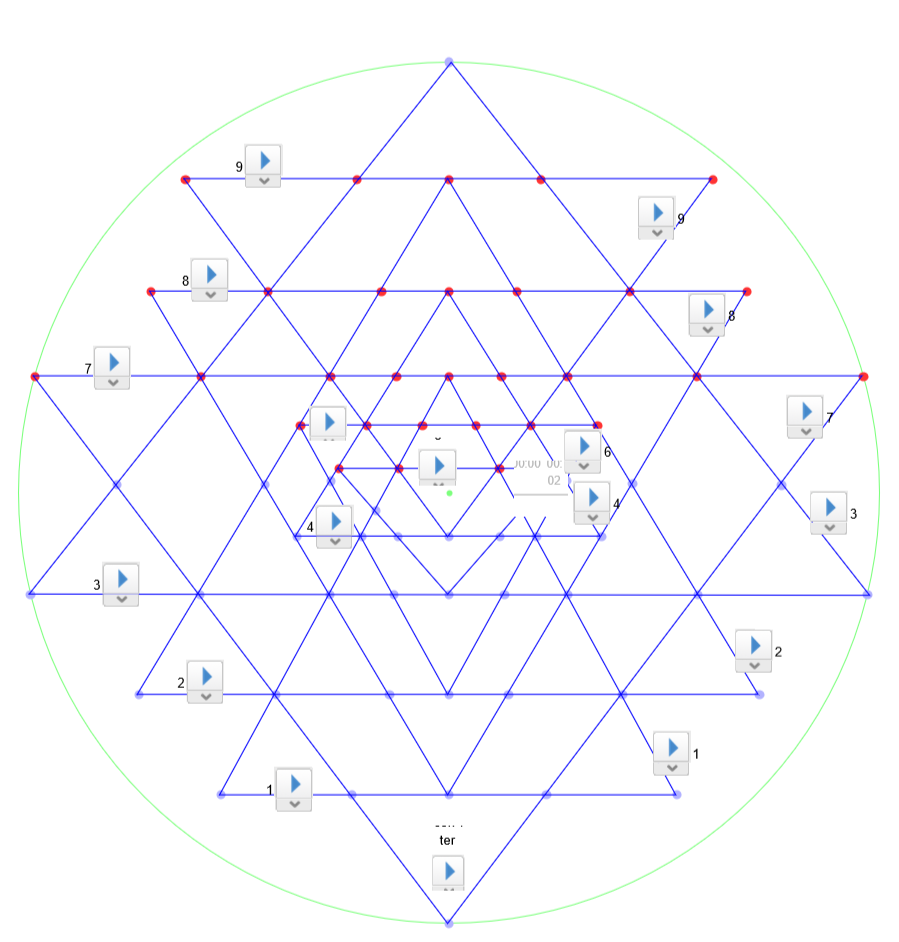
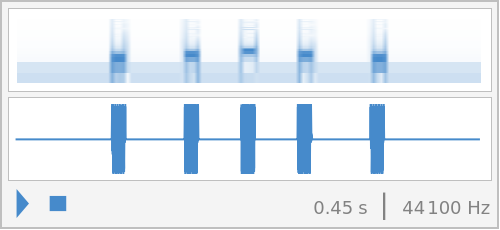
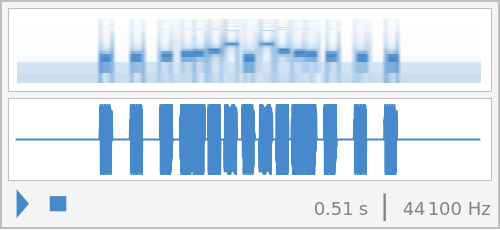
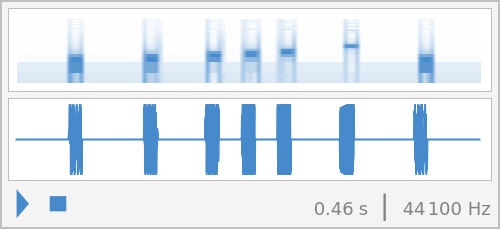
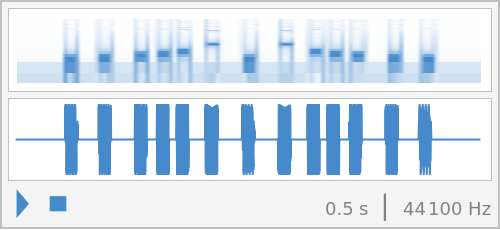
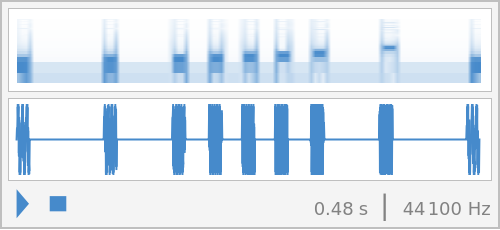
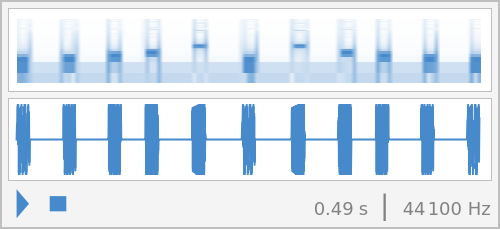
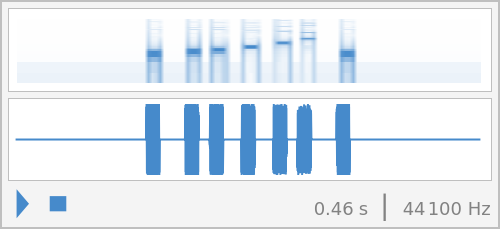
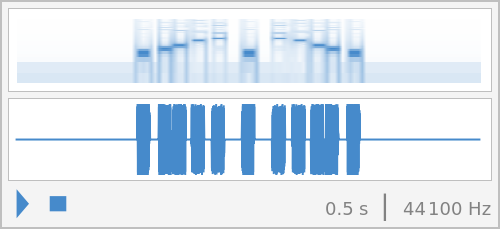
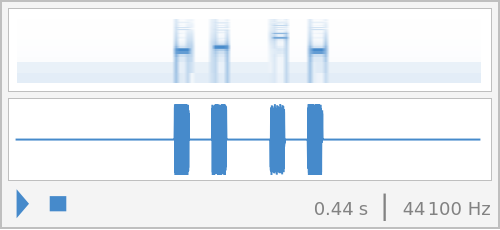
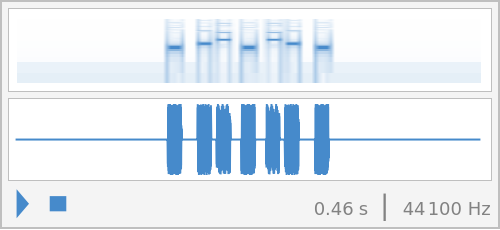
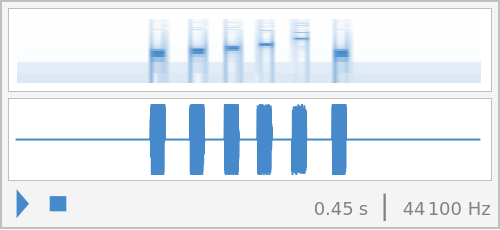
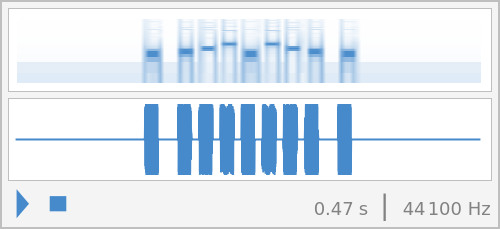
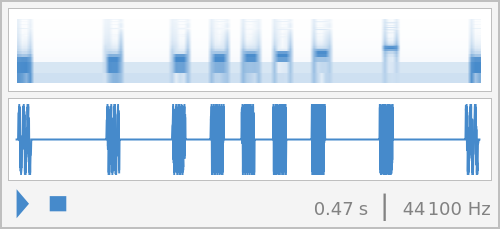
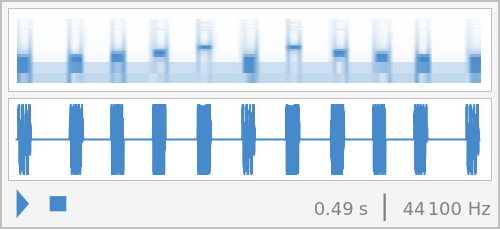
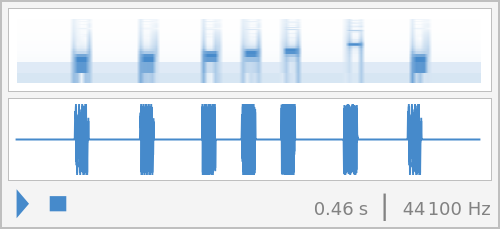
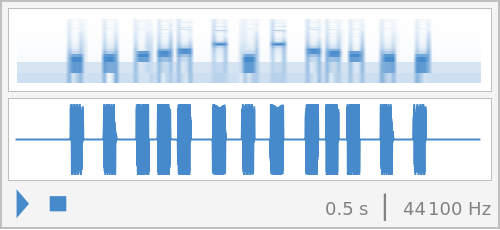
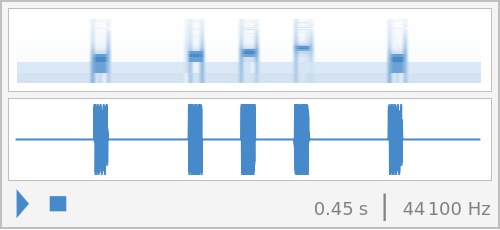
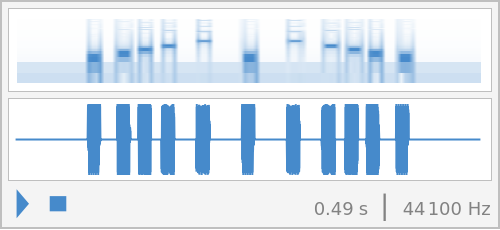
The same numbering applies as above . You will notice that each line/string length of the SriYantra visually corresponds to the organization of the following sound files.
sb1=
;sl1=
;sb2=
;sl2=
;sb3=
;sl3=
;sb4=
;sl4=
;sb5=
;sl5=
;sb6=
;sl6=
;sb7=
;sl7=
;sb8=
;sl8=
;sb9=
;sl9=
;
This next sound file is a CHORD that includes the fundamental frequencies of all 19 string lengths.
postscript:
It seems that relevancy is still set at 1/1. Some would say that 1/1 is the ultimate for humanity, but it was Decarte who set (0, 0) as the origin. This coincided with a Greek spititual/mathematical concept : 0/0 Eidos. Nothing is greater than One : 0 > 1; there is plenty less than 1 and just so greater than 1.
I have transcribed the SriYantra scales in their raw form, not the octave norm sounded here, to traditional notation. I play these on the piano and enjoy the pitch differences in tuning . Now thinking further into composing with these scales.
I have transcribed the SriYantra scales in their raw form, not the octave norm sounded here, to traditional notation. I play these on the piano and enjoy the pitch differences in tuning . Now thinking further into composing with these scales.
Special thanks to Carol Cronin who has been supportive of my work.
LESSO 1/22/2022
LESSO 1/22/2022