Phylogenetic trees for Solanaceae
Phylogenetic trees for Solanaceae
It is worth stressing that the outline of a phylogenetic tree is determined exclusively by the method used for comparing DNA sequences and thus cannot be unique.
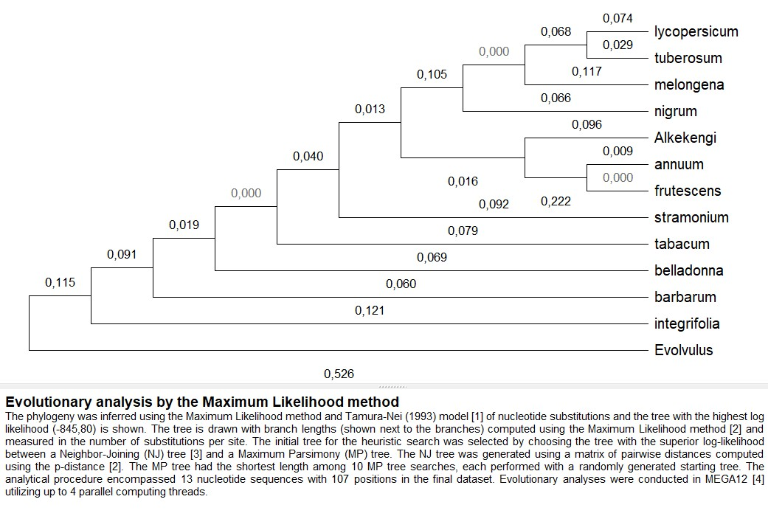
As an example, here are shown the phylogenetic tree for some representative species of Solanaceae family, comprising tomatoes, potatoes, tobacco and ornamental plants as well, both with the standard alignment method and the four-color graphical method.
Below the DNA sequences are reported for the genes for RBCL and maturase K (matK) genes. The latter is a chloroplast gene showing a rapid rate of evolutionary change compared to other plant plastid genes. So it is a very useful tool for DNA bar-coding and plant lineage tracking. The sequences were kindly provided by the author’s biotech colleague Dr. Davide Ferrigo, PhD. who also computed the phylogenetic tree obtained from their alignment.
As an example, here are shown the phylogenetic tree for some representative species of Solanaceae family, comprising tomatoes, potatoes, tobacco and ornamental plants as well, both with the standard alignment method and the four-color graphical method.
Below the DNA sequences are reported for the genes for RBCL and maturase K (matK) genes. The latter is a chloroplast gene showing a rapid rate of evolutionary change compared to other plant plastid genes. So it is a very useful tool for DNA bar-coding and plant lineage tracking. The sequences were kindly provided by the author’s biotech colleague Dr. Davide Ferrigo, PhD. who also computed the phylogenetic tree obtained from their alignment.
DNA base sequences
DNA base sequences
In[]:=
(*Solanumlycopersicum*)tomatoDNA="TCTAATTACCGTATCTAAACCGGATCCTAATGCCGTTATATCCGCCGGGTATGGTTGGCGGATTCCAGCTGTGGGGGAGAGGGTCCTGCTCCGTCGATATCCGCGGG";Characters[tomatoDNA]//Length
Out[]=
107
In[]:=
(*Solanumtuberosum*)potatoDNA="TCTAATTACTGTATCTACACCGGACACTGATGACGTTGTATCAGCCGGGTATGGTTGGCGGATTCCAGCTGTGGGGGAGAGGGTCCTGCCCCGTCGCTATCCGCGGG";Characters[potatoDNA]//Length
Out[]=
107
In[]:=
(*Solanummelongena*)eggplantDNA="TCTAATTACTGTATCTATACCGGACCCTGATGACGGTGTACCAGTCGGGGATGGTTGGCAGATTCCAGCTATGGGGAAGCGGGGTCTGATCTGGAGAAATCCATGGG";Characters[eggplantDNA]//Length
Out[]=
107
In[]:=
(*SolanumnigrumMorellainitaliano*)blacknightshadeDNA="TCCAATTACTGTATCTATACCGGACACTGATGACGTTGTACCAGCCGGGTATGGTTGGCAGATTCGGGGTGTGGGGGAGAGGGGCCTGCTTTGGAGATACCCGCGGG";Characters[blacknightshadeDNA]//Length
Out[]=
107
In[]:=
(*Capsicumannuum*)pepperDNA="TCTAATTACTGTATCCATACCGGGCACTAATGACGTGGACCTAGCTCTGTGTGGCGTACAGAGTGCAACTATGAAGGAGAATGGCATACTTTGGAGACGTTAGCGAT";Characters[pepperDNA]//Length
Out[]=
107
In[]:=
(*Capsicumfrutescens*)MexpepperDNA="TCTAATTACTGTATCCATACCGGACACTAATGACGTGGACCTAGCTCTGTGTGGCGTACAGAGTGCAACTATGAAGGAGAATGGCATACTTTGGAGACGTTAGCGAT";Characters[MexpepperDNA]//Length
Out[]=
107
In[]:=
(*Daturastramonium*)stramoniumDNA="TCTAATTACTGTATCCATACCGGACCCTGGTGACGTTATACCATCCCGGGATGGCGGGAAGATTGCAGCTGTGGGTGAGAGGGGCATGGTCTGTATATGTCAGCGGT";Characters[stramoniumDNA]//Length
Out[]=
107
In[]:=
(*Nicotianatabacum*)tobaccoDNA="TCTAACTACTGTATTCACACCGGACCCTGATGAAGTTGTACCATCCCGGTAGAGCGGGCAGATTGCAGCTGTGGGGGAGAAAGGCACGCTCTAGAGTTGTCAGCTGT";Characters[tobaccoDNA]//Length
Out[]=
107
In[]:=
(*Lyciumbarbarum*)GojiDNA="TGTAACTACTATATTCATACCGGACACTGATGAAACTGTACCATCCCGGTAGGGCGGGCAGATTGTAGCGGTGGGGAAGAGTGGCATGCTCTGGAGATGTCAGCGGT";Characters[GojiDNA]//Length
Out[]=
107
In[]:=
(*Petuniaintegrifolia*)petuniaDNA="TCTAACTACTATTTTCACGCCTGACCCTGAGTAAGTTGTACCATCTCGGTAGGGCGGGCAAGCTGCGGCGGCAGGGGGAAGTTGCATGCTCTGGAGAAGCCAGCTGT";Characters[petuniaDNA]//Length
Out[]=
107
In[]:=
(*Atropabelladonna*)deadlynightshadeDNA="TCTAACTACTGTATTCATACCGGACCCTGATGAAGTTGTACCATCCCGTTAGGACGGGCAGATCGCAGCTGTGGGTGAGAGTGGTATGCTCTTGATATGTCAGCGGT";Characters[deadlynightshadeDNA]//Length
Out[]=
107
In[]:=
(*PhysalisalkekengiorAlkekengiofficinarum*)
In[]:=
alkekengiDNA="TCTGATTACTGTTCCCATATCGGACGTTGATGACGTTGTACCAGCTCGGTATAGCGGGCAGATTGCAACTGTCGGGGAGAGTGGCATGCTCTGGAGATGTCAACGGT";Characters[alkekengiDNA]//Length
Out[]=
107
In[]:=
(*Evolvulusmorninggloryfamily*)
In[]:=
morninggloryDNA="CGTAGCGGTTCGTTTCGTACAGAACACGAACCAAATCGTACCCTTCCGATGGGCCAGATAAGTCGCAGTGAGGGGGAGAGGGTACAAGCCCTGTGACTTTTAGATGT";Characters[morninggloryDNA]//Length
Out[]=
107
In[]:=
phylotreealign=
;
Final Eigenvalues Data Collection for Phylogenetic Tree Construction
Final Eigenvalues Data Collection for Phylogenetic Tree Construction
These are the eigenvalue datasets obtained after applying the Randic four-color graphical method presented in the author’s post
In[]:=
dataegvtomato=;
In[]:=
dataegvpotato=;
In[]:=
dataegveggplant=;
In[]:=
dataegvblacknightshade=;
In[]:=
dataegvpepper=;
In[]:=
dataegvMexpepper=;
In[]:=
dataegvstramonium=;
In[]:=
dataegvtobacco=;
In[]:=
dataegvGoji=;
In[]:=
dataegvpetunia=;
In[]:=
dataegvdeadlynightshade=;
In[]:=
dataegvalkekengi=;
In[]:=
dataegvmorningglory=;
In[]:=
datasetegv={dataegvtomato,dataegvpotato,dataegveggplant,dataegvblacknightshade,dataegvalkekengi,dataegvpepper,dataegvMexpepper,dataegvstramonium,dataegvtobacco,dataegvdeadlynightshade,dataegvGoji,dataegvpetunia,dataegvmorningglory};
In[]:=
datamatrix4egv=Map[Take[#,4]&,datasetegv];
In[]:=
species={"Solanum lycopersicum (tomato)","Solanum tuberosum (potato)","Solanum melongena (eggplant)","Solanum nigrum (blacknightshade)","Physalis alkekengi (alkekengi)","Capsicum annuum (pepper)","Capsicum frutescens (Mexican pepper)"," Datura stramonium (stramonium)","Nicotiana tabacum (tobacco)","Atropa belladonna (deadly nightshade)","Lycium barbarum (Goji)","Petunia integrifolia (petunia)","Evolvulus alsinoides (dwarf morning glory)"};
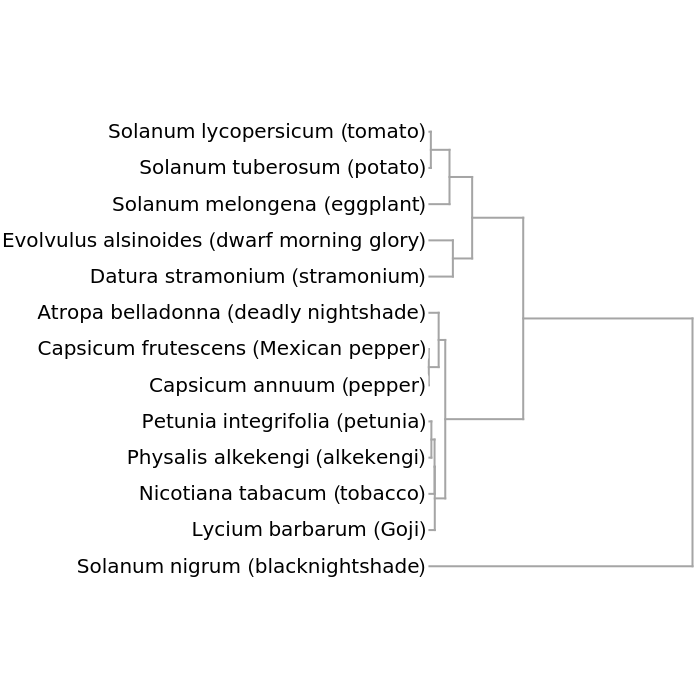
Below the computed phylogenetic tree is displayed with a non-standard orientation to make the comparison with the aligned tree easier. In this way, one can notice the striking matching between species belonging to Capsicum genre and among potato, tomato and eggplant in both trees.
In[]:=
Dendrogram[Table[datamatrix4egv[[i]]->species[[i]],{i,1,Length[species]}],Right,DistanceFunctionNormalizedSquaredEuclideanDistance,AspectRatio->GoldenRatio,ImageSize->{350,350}]
Out[]=
Final Remarks
Final Remarks
Besides several similarities captured by both phylogenetic trees, one must also remember that in the four-color graphical method the square spiral pattern was used to map the character sequences to the graphical spiral points. Therefore, different trees again can be obtained from other spiral patterns such as the triangular or hexagonal ones, which could be weighted appropriately to give the most likely averaged phylogenetic tree.