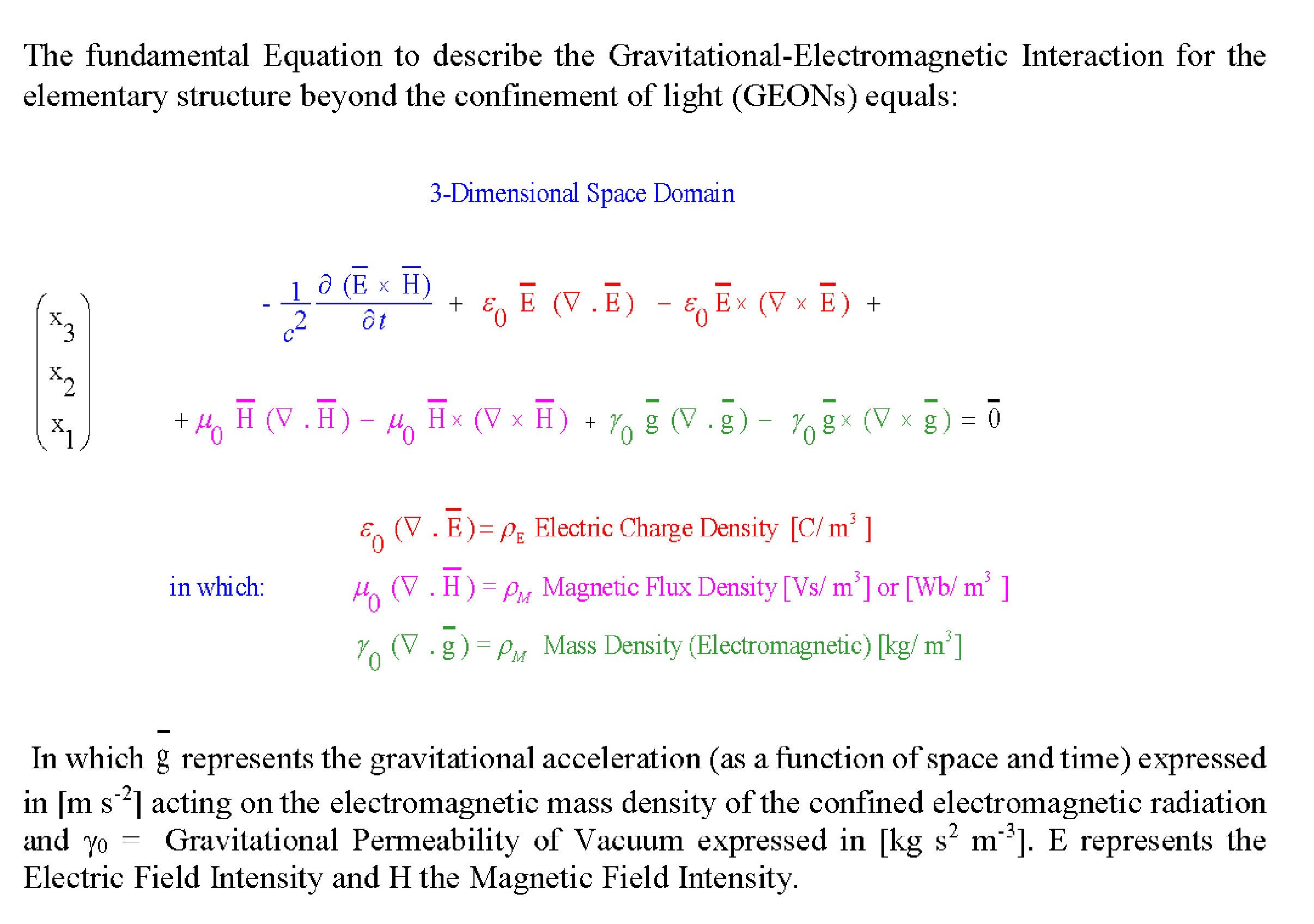
AnExaminationoftheTheoreticalFrameworkGoverningGravitational-ElectromagneticInteractionsinthePropagationofLightThroughaBose-EinsteinCondensate,LeadingtoSignificantAlterationsintheSpeedofLightElectromagneticImagingwithinaLaser-Beampropagatingwiththespeedoflight:c=
1
ϵ0μ0
In[]:=
Needs["DifferentialEquations`NDSolveProblems`"]
In[]:=
Needs["DifferentialEquations`NDSolveUtilities`"]
In[]:=
Needs["DifferentialEquations`InterpolatingFunctionAnatomy`"]
In[]:=
ϵ0=.
In[]:=
μ0=.
In[]:=
x=.
In[]:=
y=.
In[]:=
z=.
In[]:=
t=.
In[]:=
Get["VectorAnalysis`"]

In[]:=
InverseFunctions->True
Out[]=
InverseFunctionsTrue
In[]:=
Needs["DifferentialEquations`NDSolveProblems`"]
In[]:=
Needs["DifferentialEquations`NDSolveUtilities`"]
In[]:=
Needs["DifferentialEquations`InterpolatingFunctionAnatomy`"]
In[]:=
SetCoordinates[Cartesian[x,y,z]]
Out[]=
Cartesian[x,y,z]
In[]:=
{Coordinates[Cartesian],CoordinateRanges[Cartesian]}
Out[]=
{{x,y,z},{-∞<x<∞,-∞<y<∞,-∞<z<∞}}
In[]:=
K2=.
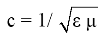
Research Proposal:The fundamental foundation for Einstein's Theory of General Relativity is the "Curvature of Space and Time" due to a Gravitational Field. In the "Theory of General Relativity" Gravitational RedShift has been explained by a change in time and space resulting is a change in the observed frequency shift in the spectrum of the light being emitted by far away Galaxies. The foundation for Einstein's theory of General Relativity is a constant value for the speed of light in the absence of a gravitational field.In the "New Theory" the fundamental foundation is "Equilibrium". Equilibrium for the "5 fundamental force densities in light" in any direction at any time and at any location. The 5 fundamental forces in light are:1) "Inertia Force" (Energy has always inertia according Einstein's E = m c2)2) "Electric Force"3) "Magnetic Force" 4) "Electric Force" due to the "Lorentz Transformation" of the "Magnetic Force"5) "Magnetic Force" due to the "Lorentz Transformation" of the "Electric Force"The speed of light has been fully controlled by the perfect equilibrium between the 5 fundamental force densities in any direction at any time and at any location. For a single beam of light the perfect equilibrium between the 5 fundamental forces always results in the speed of light: However in this experiment 3 beams of light with the same frequency and the same phase and 3 controllable (LPA) different intensities K1, K2 and K3 will cross each other in 3 orthogonal directions. This will result in different boundary conditions for the total electromagnetic radiation and will be measurable by a changing in the speed of light. In this experiment by a changing of the speed of light in the chosen z-direction. The changing of the speed of light will become visible by a change in the interference patterns of the 2 LASER beams. The original beam and the manipulated beam.The solution for equation (8) has been calculated in Mathematica when 3 laser beams cross each other perpendicular and will cause a change in the speed of light within the intersection of the 3 crossing Laser Beams due to Electromagnetic Interaction. According the calculations in Mathematica 11.3 at the exact "location dependent speed of light c[x,y,z]" there will be a perfect equilibrium between all the electromagnetic- inertia- and radiation pressure force densities at any time in any direction:One polarized (Electric Field in the x-direction) Laser Beam f1[x,y,z,] is propagating in the z-direction. The second polarized (Electric Field in the y-direction) Laser Beam f2[x,y,z] is propagating in the x-direction. In the cross section of both Laser Beams due to "Electromagnetic Interaction" deformation takes place and deforms both different images projected by both Laser Beams in two different and perpendicular directions. This has been called "Electromagnetic Interaction Lensing”.The solution for the equation above has been calculated in Mathematica. When 3 laser beams cross each other perpendicular and will cause a change in the speed of light within the intersection of the 3 crossing Laser Beams due to Electromagnetic Interaction. According the calculations in Mathematica at the exact “location dependent speed of light c[x,y,z]“ there will be a perfect equilibrium between all the electromagnetic- inertia- and radiation pressure force densities at any time in any direction:
Introducing an “Electromagnetic Resonating Plane Wave” corresponding to
the introduced material wave in the Bose-Einstein Condensate resonating
with the incident Laser beam with frequency ω.
the introduced material wave in the Bose-Einstein Condensate resonating
with the incident Laser beam with frequency ω.
Hau’s work further demonstrates that when a pulse of light is introduced into a BEC, it is reduced to a mere fraction of its velocity in a vacuum environment. One illustrative animation captures how the information contained within a light pulse compresses upon entry into a BEC (depicted within a blue arc) and subsequently returns to its unaltered state upon exit [39]. Another animation contrasts a light pulse navigating through a cigar-shaped BEC with that traversing unimpeded through open space, underscoring the potential for extensive control over light propagation using BECs. Such techniques herald the prospect of developing devices that manipulate light with the same finesse that microelectronic chips and computers exercise over electrical signals and data.
This intricate process within a Bose-Einstein Condensate can be experimentally simulated, as depicted in Figure 1. The visualization involves two intersecting beams, symbolizing the resonating electromagnetic dipole fields of the atom at those low temperatures, in conjunction with an incoming laser beam of identical frequency, opening new avenues for exploration in quantum optics and material science.
Only those electromagnetic solutions derived from this equation above correspond to physically realizable electromagnetic configurations.
The equation above delineates a physically plausible solution for a laser beam propagating at the speed of light, which is attenuated by resonating atomic dipoles at very low temperatures within a Bose-Einstein Condensate, all oscillating at the same frequency as the incident laser beam. The interaction between the electric fields of the laser beam and the resonating atomic dipoles is encapsulated within this equation: Vegt Wim, 2004, Exploring the Theoretical Framework of Gravitational-Electromagnetic Interactions in Light Propagation within a Bose-Einstein Condensate: Achieving Zero Light Speed
The subsequent solution characterizes the electromagnetic interaction under conditions of perfect equilibrium, wherein all electromagnetic force densities are equal to zero in every direction and at all times. This state of equilibrium occurs between a laser pulse ( g[z,t] ), which propagates with a speed of light (determined by the factor K3) along the z-direction, and a synchronized electromagnetic wavefront, represented by “Cos[ω t],” confined within a Bose-Einstein Condensate at low temperatures.
Introducing an “Electromagnetic Resonating Plane Wave” corresponding to
the introduced material wave in the Bose-Einstein Condensate resonating
with the incident Laser beam with variable frequencies.
the introduced material wave in the Bose-Einstein Condensate resonating
with the incident Laser beam with variable frequencies.
Introducing an “Electromagnetic Resonating Plane Wave” corresponding to
the introduced material wave in the Bose-Einstein Condensate resonating
with the incident Laser beam with frequency ω.
the introduced material wave in the Bose-Einstein Condensate resonating
with the incident Laser beam with frequency ω.
Hau’s work further demonstrates that when a pulse of light is introduced into a BEC, it is reduced to a mere fraction of its velocity in a vacuum environment. One illustrative animation captures how the information contained within a light pulse compresses upon entry into a BEC (depicted within a blue arc) and subsequently returns to its unaltered state upon exit [39]. Another animation contrasts a light pulse navigating through a cigar-shaped BEC with that traversing unimpeded through open space, underscoring the potential for extensive control over light propagation using BECs. Such techniques herald the prospect of developing devices that manipulate light with the same finesse that microelectronic chips and computers exercise over electrical signals and data.
This intricate process within a Bose-Einstein Condensate can be experimentally simulated, as depicted in Figure 1. The visualization involves two intersecting beams, symbolizing the resonating electromagnetic dipole fields of the atom at those low temperatures, in conjunction with an incoming laser beam of identical frequency, opening new avenues for exploration in quantum optics and material science.
Only those electromagnetic solutions derived from this equation above correspond to physically realizable electromagnetic configurations.
The equation above delineates a physically plausible solution for a laser beam propagating at the speed of light, which is attenuated by resonating atomic dipoles at very low temperatures within a Bose-Einstein Condensate, all oscillating at the same frequency as the incident laser beam. The interaction between the electric fields of the laser beam and the resonating atomic dipoles is encapsulated within this equation: Vegt Wim, 2004, Exploring the Theoretical Framework of Gravitational-Electromagnetic Interactions in Light Propagation within a Bose-Einstein Condensate: Achieving Zero Light Speed
The subsequent solution characterizes the electromagnetic interaction under conditions of perfect equilibrium, wherein all electromagnetic force densities are equal to zero in every direction and at all times. This state of equilibrium occurs between a laser pulse ( g[z,t] ), which propagates with a speed of light (determined by the factor K3) along the z-direction, and a synchronized electromagnetic wavefront, represented by “Cos[ω t],” confined within a Bose-Einstein Condensate at low temperatures.
This intricate process within a Bose-Einstein Condensate can be experimentally simulated, as depicted in Figure 1. The visualization involves two intersecting beams, symbolizing the resonating electromagnetic dipole fields of the atom at those low temperatures, in conjunction with an incoming laser beam of identical frequency, opening new avenues for exploration in quantum optics and material science.
Only those electromagnetic solutions derived from this equation above correspond to physically realizable electromagnetic configurations.
The equation above delineates a physically plausible solution for a laser beam propagating at the speed of light, which is attenuated by resonating atomic dipoles at very low temperatures within a Bose-Einstein Condensate, all oscillating at the same frequency as the incident laser beam. The interaction between the electric fields of the laser beam and the resonating atomic dipoles is encapsulated within this equation: Vegt Wim, 2004, Exploring the Theoretical Framework of Gravitational-Electromagnetic Interactions in Light Propagation within a Bose-Einstein Condensate: Achieving Zero Light Speed
The subsequent solution characterizes the electromagnetic interaction under conditions of perfect equilibrium, wherein all electromagnetic force densities are equal to zero in every direction and at all times. This state of equilibrium occurs between a laser pulse ( g[z,t] ), which propagates with a speed of light (determined by the factor K3) along the z-direction, and a synchronized electromagnetic wavefront, represented by “Cos[ω t],” confined within a Bose-Einstein Condensate at low temperatures.
Introducing an “Electromagnetic Resonating Plane Wave” corresponding to
the introduced material wave in the Bose-Einstein Condensate resonating
with the incident Laser beam with variable frequencies.
the introduced material wave in the Bose-Einstein Condensate resonating
with the incident Laser beam with variable frequencies.
Speed of Light as a function of the lattice spacing “DL” in a SiO2 crystal (normalized speed pf light (c = 1)