#2 Cellular Automata- From Classical Computation to Quantum Error Correction #2
In[]:=
AutoCollapse[]:=(If[$FrontEnd=!=$Failed,SelectionMove[EvaluationNotebook[],All,GeneratedCell];FrontEndTokenExecute["SelectionCloseUnselectedCells"]])AutoCollapse[]
In[]:=
deleteComments[]:=deleteComments@EvaluationNotebook[];deleteComments[nb_NotebookObject]:=(SelectionMove[nb,All,Notebook];NotebookWrite[nb,DeleteCases[NotebookGet[nb],RowBox[{"(*",___,"*)"}],Infinity]])deleteComments[]AutoCollapse[]
In[]:=
Out[]=

Out[]=

Out[]=

This project reinterprets Conway Game of Life (GPU-only) not as a mere visualization tool, but as a “code-as-proof” model for creating a deterministic, self-organizing representation from a causal seed, mirroring the core tenets of the Daedaelus philosophy. Here, the cryptographic hash of an input serves as the initial, conserved quantity of information. This seed is not broadcast to a global controller; instead, it provides the local rules for a computational fabric—a cellular automaton—that evolves based on “local information only,” creating a complex and unique structural history without a God’s-Eye-View. This emergent structure can be seen as the “groundplane.” The Graph Virtual Machine (GVM) then applies a deterministic policy, also derived from the initial seed, to this groundplane, selecting the symmetry and coloring rules that create the final, coherent form. The resulting icon is therefore not just a picture, but a verifiable, information-rich artifact representing the complete, self-contained evolution of its initial state, much like how the Transaction Fabric aims to make all operations within it transparent and provably correct.
In[]:=

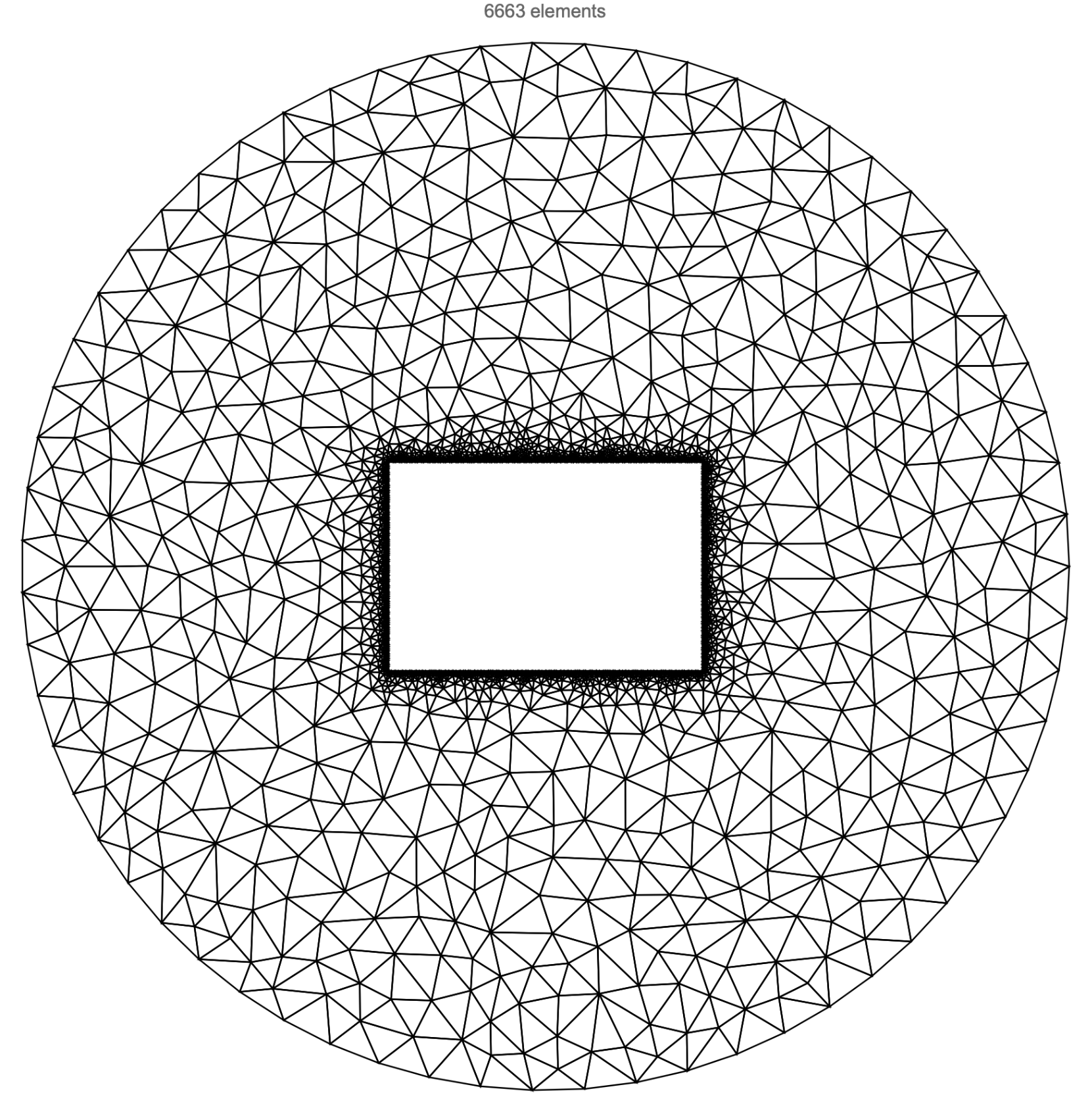

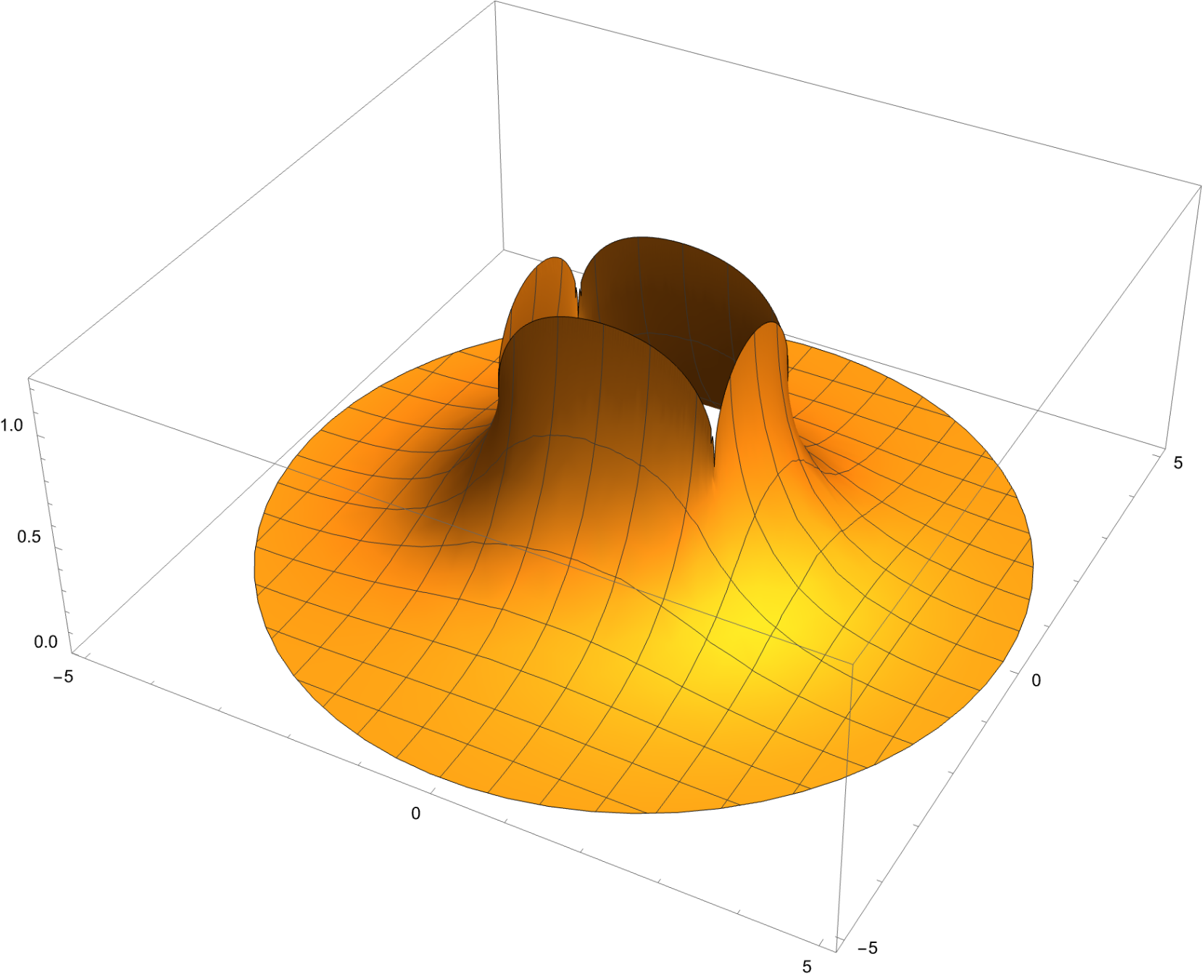

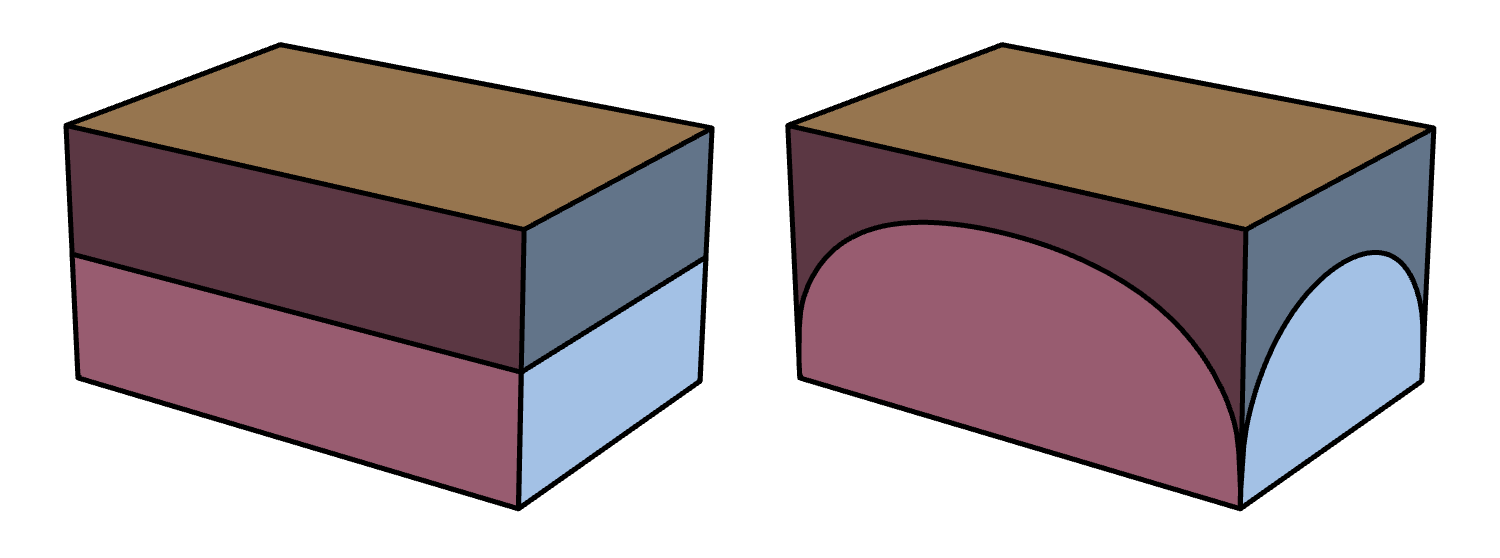
This Wolfram Mathematica package, Conway, represents a core component of the Daedaelus project’s “Code as Proof” methodology, a philosophy that will resonate deeply with students of the Wolfram Summer School. The mission of Daedaelus is to re-architect the foundations of distributed computing by replacing outdated, probabilistic models with formally verifiable systems inspired by first principles from physics and information theory. This code is not merely a collection of utilities; it is a precision toolkit for computational exploration, designed to build the rigorous, physics-based simulations and visualizations necessary to challenge the flawed assumptions of legacy protocols like Ethernet. For a student interested in the intersection of computation and fundamental science, this package is a compelling example of theory put into practice. It contains sophisticated modules for numerical analysis, such as the LaplaceYoung package, which leverages the Finite Element Method to solve complex differential equations modeling fluid dynamics. This demonstrates the project’s commitment to modeling real-world physical systems with mathematical rigor. Furthermore, the extensive styling tools, like LaTeXStyle and LatinModernFont, are designed to produce publication-quality graphics directly from the simulation, embodying the principle that a clear, persuasive visualization is an integral part of a formal proof. By developing and using this toolkit, the Daedaelus team sharpens its ability to model, simulate, and argue for new architectures like the N2N Lattice—ultimately using Mathematica not just to compute, but to build a compelling, evidence-based case for the future of reliable, distributed systems.
In[]:=
ClearAll["Global`*"];rule224={224,{2,{{2,2,2},{2,1,2},{2,2,2}}},{1,1}};rule90={90,{2,{{2,2,2},{2,1,2},{2,2,2}}},{1,1}};rule126={126,{2,{{2,2,2},{2,1,2},{2,2,2}}},{1,1}};rule184={184,{2,{{2,2,2},{2,1,2},{2,2,2}}},{1,1}};next[rule_][state_]:=Last@CellularAutomaton[rule,state,{{0,1}}];animate[init_,rule_:rule224]:=DynamicModule[{s=init},Dynamic@ArrayPlot[s=next[rule][s],Mesh->Automatic,ImageSize->Small]];randomBoard[]:=RandomInteger[1,{20,20}];block=ConstantArray[0,{5,5}];block[[{3,4},{3,4}]]=1;tub=ConstantArray[0,{5,5}];tub[[{2,4},3]]=tub[[3,{2,4}]]=1;beehive=ConstantArray[0,{5,6}];beehive[[2,{3,4}]]=beehive[[3,{2,5}]]=beehive[[4,{3,4}]]=1;stillLifeGallery=GraphicsGrid[{{ArrayPlot[block,Mesh->Automatic,ImageSize->Small,PlotLabel->"Block"],ArrayPlot[tub,Mesh->Automatic,ImageSize->Small,PlotLabel->"Tub"],ArrayPlot[beehive,Mesh->Automatic,ImageSize->Small,PlotLabel->"Beehive"]}},Spacings->{2,2}];blinker=ConstantArray[0,{5,5}];blinker[[{2,3,4},3]]=1;toad=ConstantArray[0,{6,6}];toad[[2,3]]=toad[[3,{3,4}]]=toad[[4,{3,4}]]=toad[[5,4]]=1;oscillatorGallery=Column[{Style["Blinker",Bold],animate[blinker],Style["Toad",Bold],animate[toad]},Spacings->2];glider=ConstantArray[0,{20,20}];glider[[3,{1,2,3}]]=glider[[2,3]]=glider[[1,2]]=1;lwss=ConstantArray[0,{7,30}];lwss[[3,{3,4,5,6}]]=lwss[[4,{2,6}]]=lwss[[5,6]]=lwss[[6,{2,5}]]=1;shipGallery=Column[{Style["Glider",Bold],animate[glider],Style["Light-weight Spaceship",Bold],animate[lwss]},Spacings->2];diehard=ConstantArray[0,{3,8}];diehard[[1,7]]=diehard[[2,{1,2}]]=diehard[[3,{2,6,7,8}]]=1;unstableGallery=Column[{Style["Diehard",Bold],animate[diehard]},Spacings->2];ruleGallery=GraphicsGrid[{{Column[{Style["Rule 90",Bold],animate[randomBoard[],rule90]}],Column[{Style["Rule 126",Bold],animate[randomBoard[],rule126]}],Column[{Style["Rule 184",Bold],animate[randomBoard[],rule184]}]}},Spacings->{3,2}];dashboard=Column[{Style["Conway’s Game of Life — Interactive Showcase",20,Bold],Style["Still Lifes",16,Bold],stillLifeGallery,Style["Oscillators",16,Bold],oscillatorGallery,Style["Spaceships",16,Bold],shipGallery,Style["Unstable Example",16,Bold],unstableGallery,Style["Random Boards with Alternative Rules",16,Bold],ruleGallery},Spacings->3];Print[dashboard];CreateDocument[dashboard,WindowTitle->"Game of Life — Exploration (Popup)"];