Heat transfer plays a vital role in industrial and biomedical systems, where precise temperature control ensures efficiency and safety. This study investigates the impact of thermophysical properties; thermal conductivity, specific heat capacity, and density, on temperature distribution using computational modeling. The classical heat equation and the energy equation for fluids were solved numerically using NDSolve in Mathematica to compare conventional fluids with nanofluids under conduction and convection. Results demonstrate that nanofluids, such as ethylene glycol with graphene nanoparticles, significantly enhance temperature rise compared to base fluids. These findings highlight the potential of nanofluids to improve heat transfer performance in engineering and biomedical applications.
Introduction
Introduction
Heat transfer is a fundamental phenomenon in science and engineering, playing a critical role in diverse applications ranging from industrial processes to biomedical treatments. In engineering, efficient management of heat is essential for the design of heat exchangers, cooling systems, and high-performance electronic devices, where overheating can cause structural damage or system failure. In biomedical engineering, controlled heat transfer is central to therapies such as thermal ablation, hyperthermia treatment for tumors, and cryopreservation, where precise temperature regulation directly affects efficacy and safety. Therefore, understanding the mechanisms of heat transfer and the factors influencing temperature distribution is vital for both industrial and biomedical applications.
Heat transfer occurs through three primary modes: conduction, convection, and radiation. Conduction describes the transfer of thermal energy within a material due to a temperature gradient, while convection involves energy transport by a moving fluid. In many practical systems, heat transfer is a combination of these mechanisms, commonly referred to as conduction–convection processes. For fluids used as heat carriers, such as water, oils, or specialized coolants, their thermophysical properties including thermal conductivity, specific heat capacity, and density, determine the rate and efficiency of heat transfer. A comprehensive understanding of how these properties influence temperature evolution in a system is therefore necessary for optimizing heat transfer performance. Conventional heat carrier fluids, however, often possess limited thermal conductivities, which restrict the efficiency of heat transfer in critical applications. Nanofluids, which are suspensions of nanoparticles (tiny particles of sizes 100mn with high thermal conductivity) in base fluids, have emerged as a promising solution to enhance thermal performance.
Out[]=
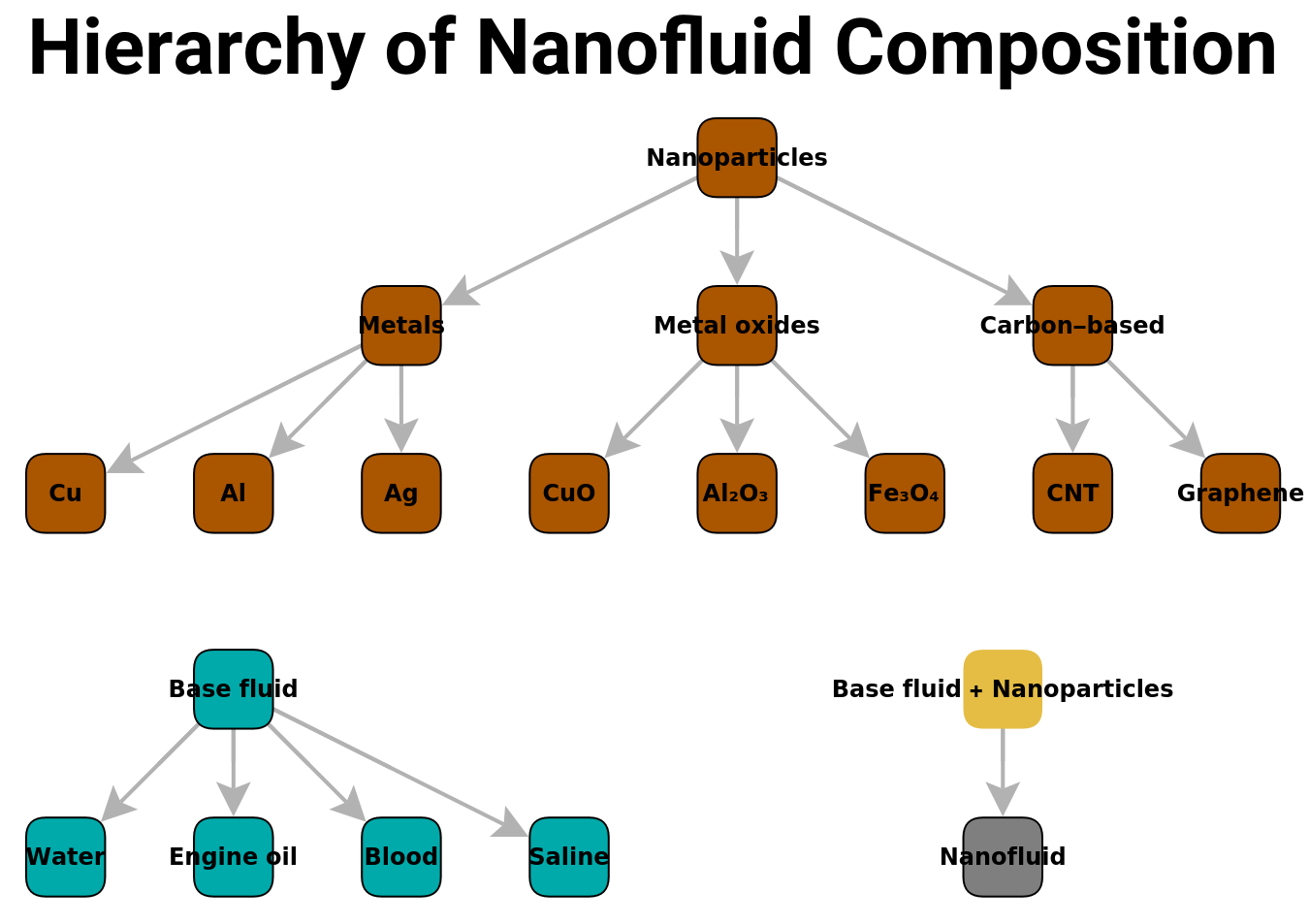
Many researchers, such as Induranga et al.[1], have demonstrated that by altering the thermophysical properties of a fluid such as increasing its thermal conductivity and modifying its heat capacity, nanofluids can significantly enhance heat transfer rates. Nanofluids have been investigated in a variety of applications, including the cooling of electronic devices, solar energy systems, and biomedical heat treatments. Studying the influence of these enhanced properties on temperature distribution enables optimized design and more efficient thermal management.
Computational modeling provides a powerful tool to investigate heat transfer phenomena, enabling detailed analysis of the effects of different thermophysical properties under controlled conditions. The heat equation, a fundamental partial differential equation describing conduction, serves as the foundation for understanding temperature evolution in time and space. By prescribing initial and boundary conditions that reflect realistic heating scenarios, computational simulations allow for exploration of temperature profiles, transient behavior, and the impact of fluid properties. Time-dependent boundary conditions, such as a gradually increasing surface temperature, provide a physically accurate representation of thermal activation and ensure numerical stability in simulations.
In this project, the focus is to examine the effect of thermophysical properties on heat transfer using computational methods. The study begins with the classical heat equation to investigate how thermal conductivity, specific heat capacity, and density of a material influence temperature distribution, establishing baseline behavior in a purely conductive system. The study then extends to the energy equation for fluids, which includes the effects of convection, allowing for a comparison between conventional fluids and nanofluids. By analyzing temperature distributions under varying thermal conductivities, specific heats, and densities, the project aims to provide insights into how these properties govern heat transfer efficiency. The computational approach allows controlled manipulation of these parameters, making it possible to isolate their effects and understand their roles in both industrial and biomedical applications.
Governing Equation
Governing Equation
Heat Equation
Heat Equation
The heat equation models conduction, i.e.,transfer of heat in solids or stationary fluids, and is written as: =αT0<x<L,t>0(1)where T is the temperature, t is the time, x is the spatial coordinate, and α is the thermal diffusivity of the material.
∂T
∂t
2
∂
∂
2
x
Basically, thermal diffusivity, α, measures how quickly heat diffuses through a material relative to its ability to store thermal energy.
Where ,Equation (1) becomes=T0<x<L,t>0
α=
k
ρ
C
p
∂T
∂t
k
ρ
C
p
2
∂
∂
2
x
Initial and Boundary Conditions
Initial and Boundary Conditions
Initial condition describes the temperature distribution at the starting time. It tells how hot or cold the material is initially.
T(x,0)=
10
x
Boundary conditions describe how the system interacts with its surroundings at the boundaries x=0 and x=L.
T(0,t) =0, T(L, t) =0
T(0,t) =0, T(L, t) =0
Out[]=
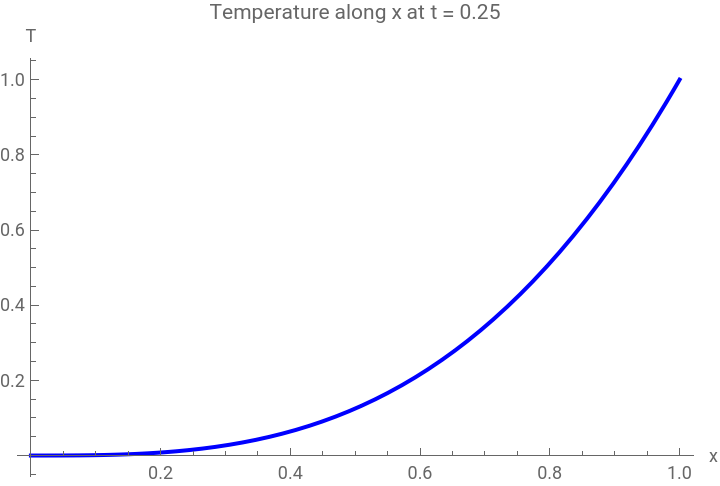
Figure 1: Temperature distribution at a fixed time.
Out[]=

Figure 2: 3D temperature distribution at a fixed time.
Examining how varying thermal conductivity, k, affects temperature profiles
Examining how varying thermal conductivity, k, affects temperature profiles
Out[]=
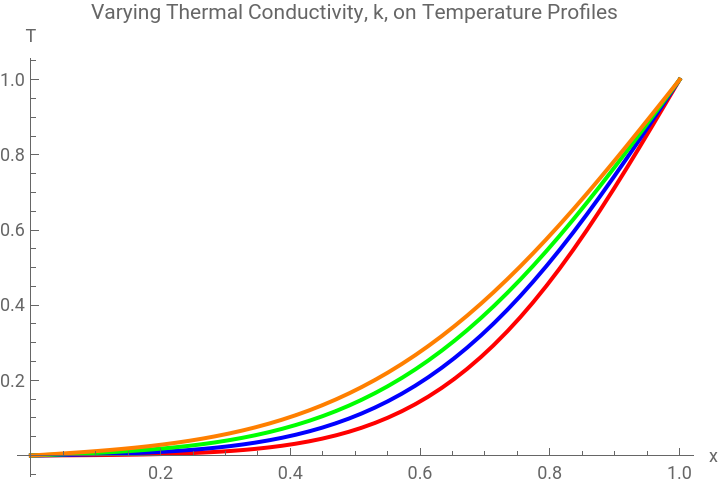


Figure 3: Temperature distribution at a fixed time varying thermal conductivity.
Figure 3 depicts the effect of varying thermal conductivity on the temperature distribution at a fixed time. It is observed that increasing the thermal conductivity results in higher temperature values across the spatial domain. This occurs because larger thermal conductivity enhances the rate of heat diffusion, allowing thermal energy to spread more rapidly through the medium. Consequently, the temperature profile rises as thermal conductivity increases, indicating improved heat transfer efficiency within the system.
Examining how varying specific heat capacity, Cp, affects temperature profiles
Examining how varying specific heat capacity, , affects temperature profiles
C
p
Out[]=
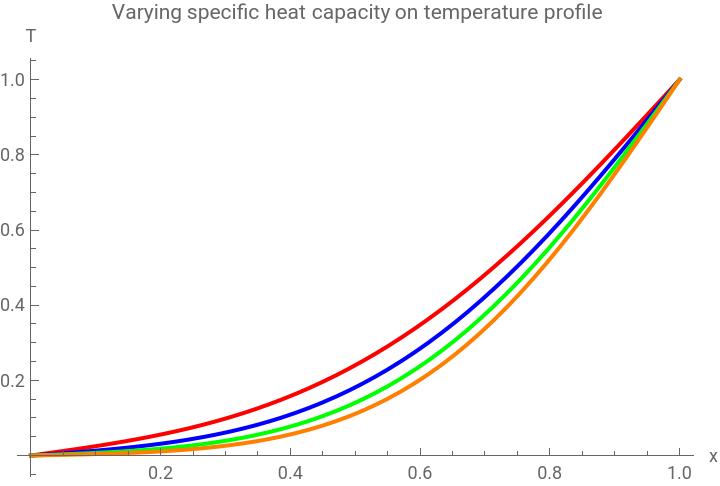
Figure 4: Temperature distribution at a fixed time varying specific heat capacity.
Figure 4 illustrates the influence of varying specific heat capacity on the temperature distribution at a fixed time. It is observed that increasing the specific heat capacity leads to a reduction in the temperature level throughout the domain. Physically, a higher specific heat capacity implies that more energy is required to raise the temperature of the material.
Out[]=
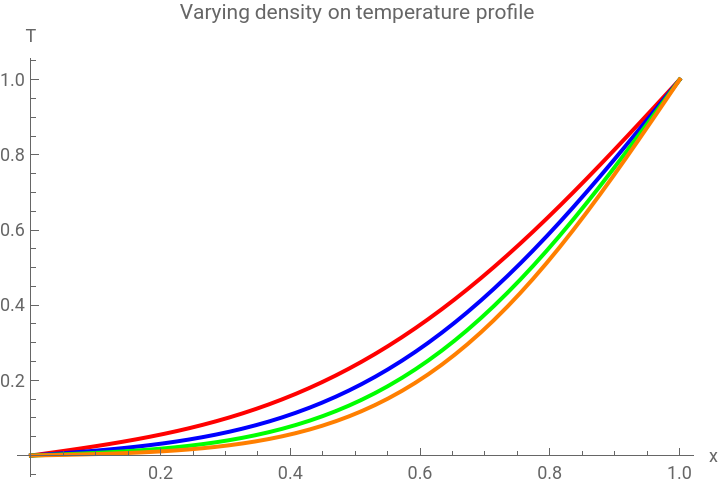
Figure 5: Temperature distribution at a fixed time varying density
Figure 5 shows the effect of varying density on the temperature distribution at a fixed time. It is observed that an increase in density leads to a decrease in the temperature level throughout the spatial domain.
Energy Equation
Energy Equation
The unsteady one-dimensional energy equation governing heat transfer in a moving fluid, accounting for both convection and conduction effects, is given by:
(ρ)+u=T
C
p
∂T
∂t
∂T
∂x
2
∂
∂
2
x
The dependent variable is the temperature T, which varies with time and position. The partial differential equation (PDE) model describes how thermal energy is transported over time in a medium with density, ρ and specific heat capacity . The specific heat capacity is a material property that specifies the amount of heat energy that is needed to raise the temperature of a substance with unit mass by one degree Kelvin.
C
p
Initial Condition
Initial Condition
Boundary Conditions
Boundary Conditions
Energy Equation (Ethylene Glycol)
Energy Equation (Ethylene Glycol)
Figure 6: Temperature distribution at a fixed time for ethylene glycol.
Energy Equation (EG–graphene nanofluid)
Energy Equation (EG–graphene nanofluid)
Figure 7: Temperature distribution at a fixed time for EG–graphene nanofluid.
Comparison
Comparison
Figure 8: Temperature distribution at a fixed time for ethylene glycol and EG–graphene nanofluid.
Discussion
Discussion
Figure 8 compares the temperature profiles of ethylene glycol and the EG–graphene nanofluid at a fixed time. The nanofluid consistently shows higher temperature values across the domain than the base fluid. This result is physically expected and is mainly due to the enhanced thermal conductivity and heat capacity introduced by the graphene nanoparticles.
The improved thermal properties allow the nanofluid to absorb and distribute heat more effectively, leading to higher bulk temperatures rather than heat being confined near the heated boundary. This behavior does not indicate poorer thermal performance; instead, it reflects more efficient heat transport and energy storage within the fluid.
Additionally, the temperature difference between the nanofluid and ethylene glycol increases along the flow direction, suggesting cumulative heat absorption as convection progresses. The smooth temperature profiles further confirm the stability and consistency of the numerical solution. Overall, the results demonstrate the effectiveness of graphene-based nanofluids in enhancing thermal response, in agreement with findings reported in the literature.
Concluding Remarks
Concluding Remarks
This project demonstrates how the thermophysical properties of fluids (thermal conductivity, specific heat capacity, and density) affect heat transfer and temperature distribution. By using computational modeling, both conduction in solids and convection in fluids were simulated, allowing detailed analysis of temperature evolution under controlled conditions.
The results show that conventional fluids like water have limited heat transfer capabilities, whereas nanofluids, with high-conductivity nanoparticles suspended in a base fluid, can significantly enhance thermal performance. In particular, fluids such as ethylene glycol with graphene nanoparticles showed notable increases in temperature rise compared to pure fluids, highlighting the potential of nanofluids for industrial and biomedical applications.
Acknowledgments
Acknowledgments
I sincerely appreciate the Wolfram Institute for the opportunity to participate in the Wolfram Winter Science School, it is truly a valuable and inspiring experience. My thanks go to Stephen Wolfram for the meet-and-greet session, which broadened my perspective on the computational world. I am grateful to Stephanie Bowyer for her thoughtful support and attentive listening, which meant a great deal to me. I also sincerely thank my primary mentor, Dugan Hammock, and secondary mentor, Eric Parfitt; our very first meeting directly inspired this project. Thank you all for your support and guidance.
References
References
1
.A. Induranga, C. Galpaya, et al. (2025), “Nanofluids for Heat Transfer: Advances in Thermo-Physical Properties, Theoretical Insights, and Engineering Applications,” Energies. 2025; 18(8):1935. https://doi.org/10.3390/en18081935
2
.Heat Transfer, Wolfram Language Documentation, Wolfram Research, accessed January 5, 2026, https://reference.wolfram.com/language/PDEModels/tutorial/HeatTransfer/HeatTransfer.html#2042133528
3
.K. Elsaid K, M. A. Abdelkareem (2021), “Thermophysical properties of graphene-based nanofluids,” International Journal of Thermofluids. 2021; 10:100073. https://doi.org/10.1016/j.ijft.2021.100073
4
.L. O. Aselebe, A. T. Adeosun (2024), “Investigation of thermal properties of ethylene glycol-based Williamson hybrid-nanofluid over stretchable/shrinking flat plate and their effects on solar panels,” International Journal of Thermofluids. 2024;24:100892. https://doi.org/10.1016/j.ijft.2024.100892
CITE THIS NOTEBOOK
CITE THIS NOTEBOOK
Computational investigation of heat transfer enhancement using ethylene glycol-graphene nanofluids
by Lateefat Olanike Aselebe
Wolfram Community, STAFF PICKS, January 14, 2026
https://community.wolfram.com/groups/-/m/t/3606767
by Lateefat Olanike Aselebe
Wolfram Community, STAFF PICKS, January 14, 2026
https://community.wolfram.com/groups/-/m/t/3606767