AI Saccade: Pictorials Attention SegmentationImage to Mesh computational geometry (technical note 1)
In[]:=
DateObject[]
Out[]=
Dara O Shayda
dara@compclassnotes.com
dara@compclassnotes.com

© 2012-Present CCN StudiosCreative Commons Attribution-NonCommercial-ShareAlike 4.0

Background
The Attention algorithms, primarily funded and developed by United States military and subcontractors for the purpose of visual augmentation of the air combat pilots’ helmets and also to augment the combat gunners’ scope to aid better aiming in realistic obstructed and distress battle landscapes. [1]
Purpose
● New developments and reuse of such military technologies to better the lives of the ordinary peoples
● Apply to realistic and real life examples for people get used to visually comprehending such applications complex systems
● In this example we are working the Attention algorithms on Stop-The-Game promotion video by Ireland’s soccer players
https://youtube.com/shorts/rHxcrNdmXVM?si=z4iPFuPkGNvHlvB0
● Apply to realistic and real life examples for people get used to visually comprehending such applications complex systems
● In this example we are working the Attention algorithms on Stop-The-Game promotion video by Ireland’s soccer players
https://youtube.com/shorts/rHxcrNdmXVM?si=z4iPFuPkGNvHlvB0
Pictorial 1:
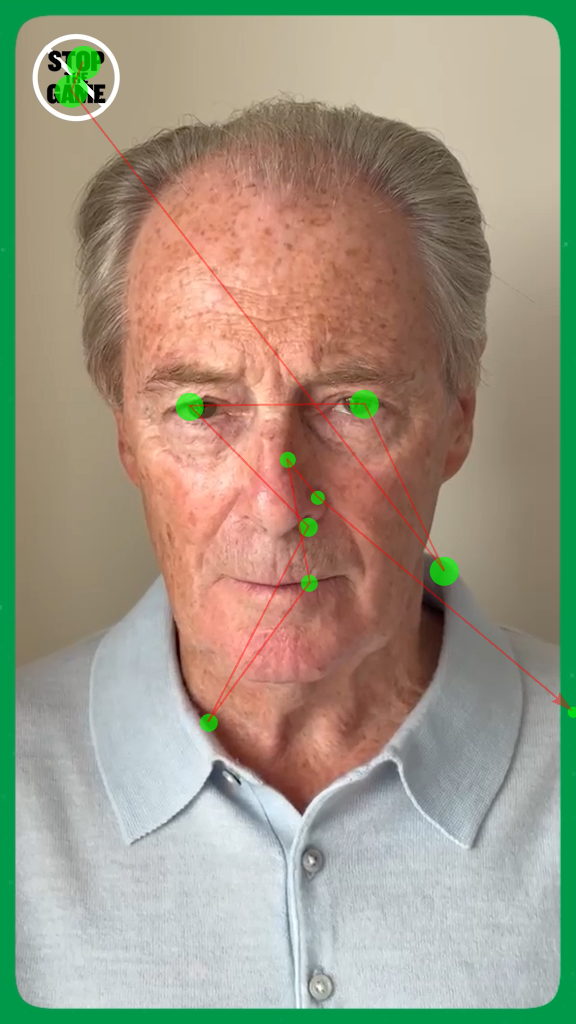
● A close up a human face and a branding log on top left
● Your Eyes and Brains are not two things, they are one entity!
● Some scientific conjectures state that the brain is a direct extension of the eyes
● Retina’s receptors are some of the densest neuronal circuitry in human body
● Image Segmentation: Eyes and the brain segment an image into geometric regions for different processing
● Example: The brand logo is processed on its own geometric region
● Your Eyes and Brains are not two things, they are one entity!
● Some scientific conjectures state that the brain is a direct extension of the eyes
● Retina’s receptors are some of the densest neuronal circuitry in human body
● Image Segmentation: Eyes and the brain segment an image into geometric regions for different processing
● Example: The brand logo is processed on its own geometric region
Out[]=
Pictorial 2
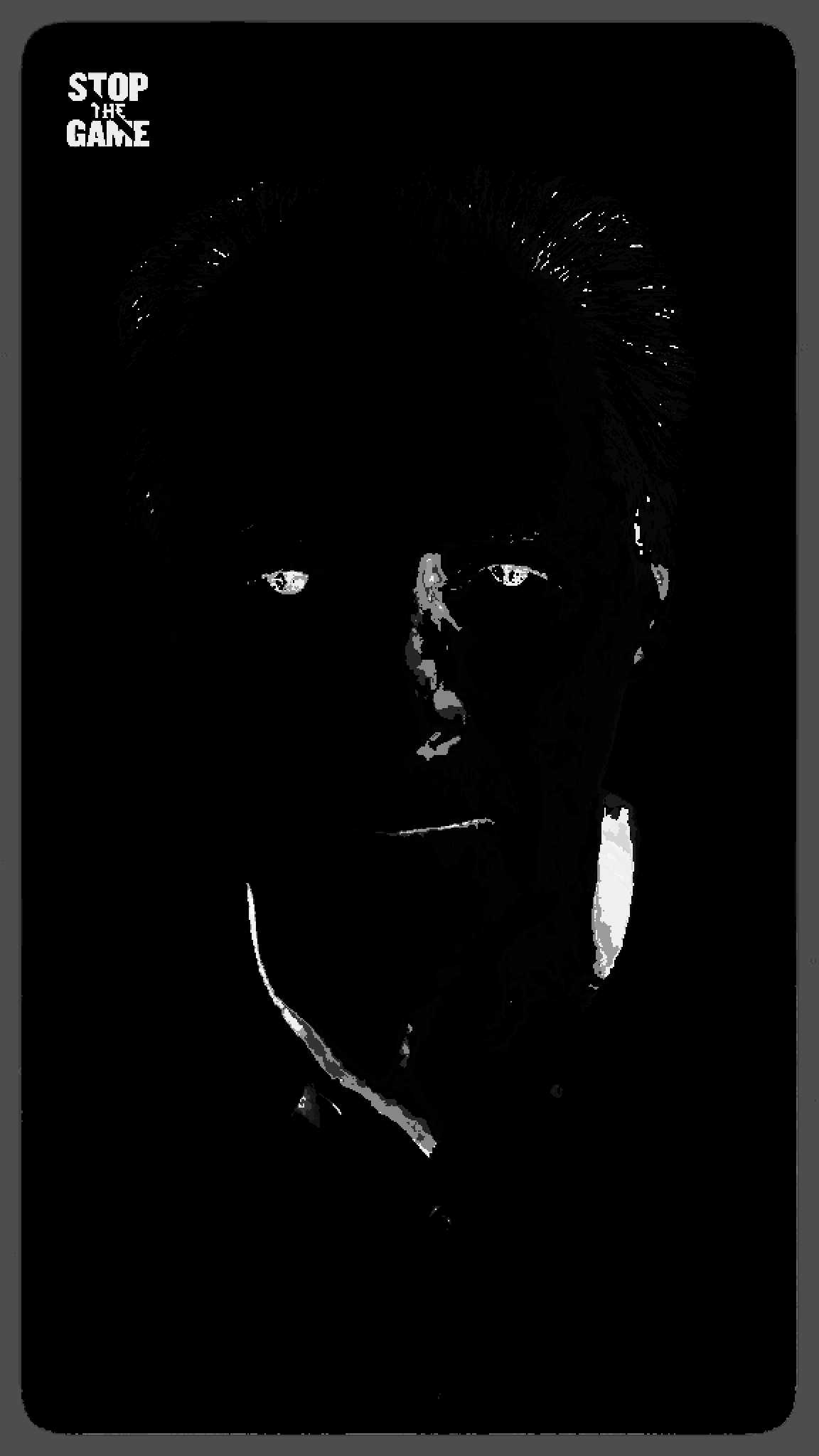
● The gray-colored image computed from the original colored image is called a mask
● The algorithm that computes such masks is called The Attention algorithm
● The resulting gray-colored image is called the Saliency Map
● The whiter or brighter the regions are the more likely that human eyes pay attention to
● The darker the regions less like of any attention by the eyes
● The algorithm that computes such masks is called The Attention algorithm
● The resulting gray-colored image is called the Saliency Map
● The whiter or brighter the regions are the more likely that human eyes pay attention to
● The darker the regions less like of any attention by the eyes
Out[]=
● Eye-Brain systems compute the attention worthy regions, in this case the darker region by the neck● The programs in this treatise computes the regions off the original image of the face and turn it into one to several 2D geometrical regions albeit a bit different at some boundary regions due to aliasing and error accumulations ● Example: The shadowy area caused by the neck’s occluding the light is a region of high attention⟶

Pictorial 3
● An Phalaistin Shirt and the Palestine flag the top Attention regions.
● Salience map as a mask
● Test: Salience map as a mask
● Salience map turned into a 2D mesh to compute its points due to its large region area.
Pictorial 4
● Note the three red regions on the shirt
● The three red regions of the Salience map turned into 2D meshes
Pictorial 5
References
[1] How the New ‘Smart Scope’ Changes Combat
https://www.youtube.com/watch?v=iPrIN0Gie-U&t=417s
[2] Computational foundations for attentive processes
http://www.scholarpedia.org/article/Computational_foundations_for_attentive_processes
[3] Computational models of visual attention
http://www.scholarpedia.org/article/Computational_models_of_visual_attention
https://www.youtube.com/watch?v=iPrIN0Gie-U&t=417s
[2] Computational foundations for attentive processes
http://www.scholarpedia.org/article/Computational_foundations_for_attentive_processes
[3] Computational models of visual attention
http://www.scholarpedia.org/article/Computational_models_of_visual_attention