CITE THIS NOTEBOOK: Two-way quantum computers (2WQC) with Wolfram Quantum Framework , by Jarek Duda. Wolfram Community APR 15 2024.
ARTICLE: Jarek Duda, https://arxiv.org/pdf/2308.13522
LECTURE: https://www.youtube.com/watch?v=HavK_YiaGZs
ARTICLE: Jarek Duda, https://arxiv.org/pdf/2308.13522
LECTURE: https://www.youtube.com/watch?v=HavK_YiaGZs
Article Abstract: While quantum computers use symmetric unitary evolution, they are currently considered assuming asymmetry: availability of state preparation, but not of its symmetric counterpart (postparation). In contrast, CPT symmetry required by modern physics, like for S-matrix: suggests its realization: by using a process, such that in CPT perspective it becomes the original process used for state preparation. For example state preparation is often realized by reducing temperature, which is the same in CPT perspective. Or we can enforce spin by applying magnetic field - if doing it just before we get state preparation, so applied just after would give postparation. Addition of such neglected postparation operation would allow for more symmetric two-way quantum computers: 2WQC upgrade of standard 1WQC, in theory being able to attack NP problems, and having improved error correction. Turns out the Wolfram Quantum Framework was already able to simulate 2WQC, what should help with algorithm design for such nextgen quantum computers.
|0〉
〈0|
U
ψ
f
ψ
i
CPT
↔
ψ
i
†
U
ψ
f
〈0|
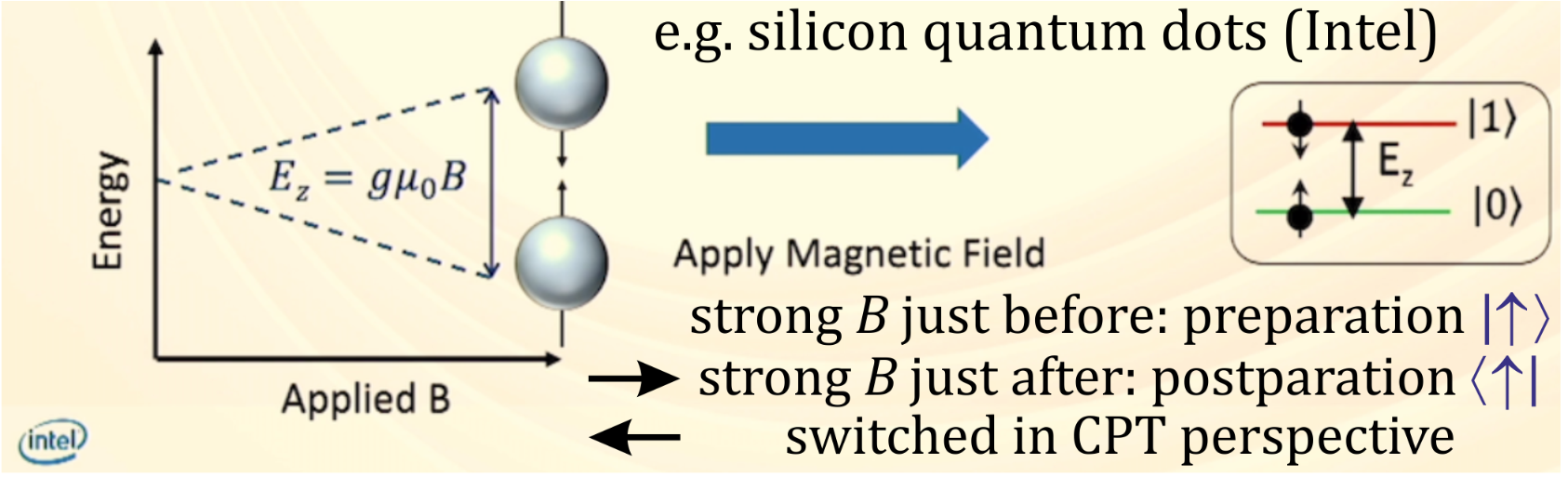
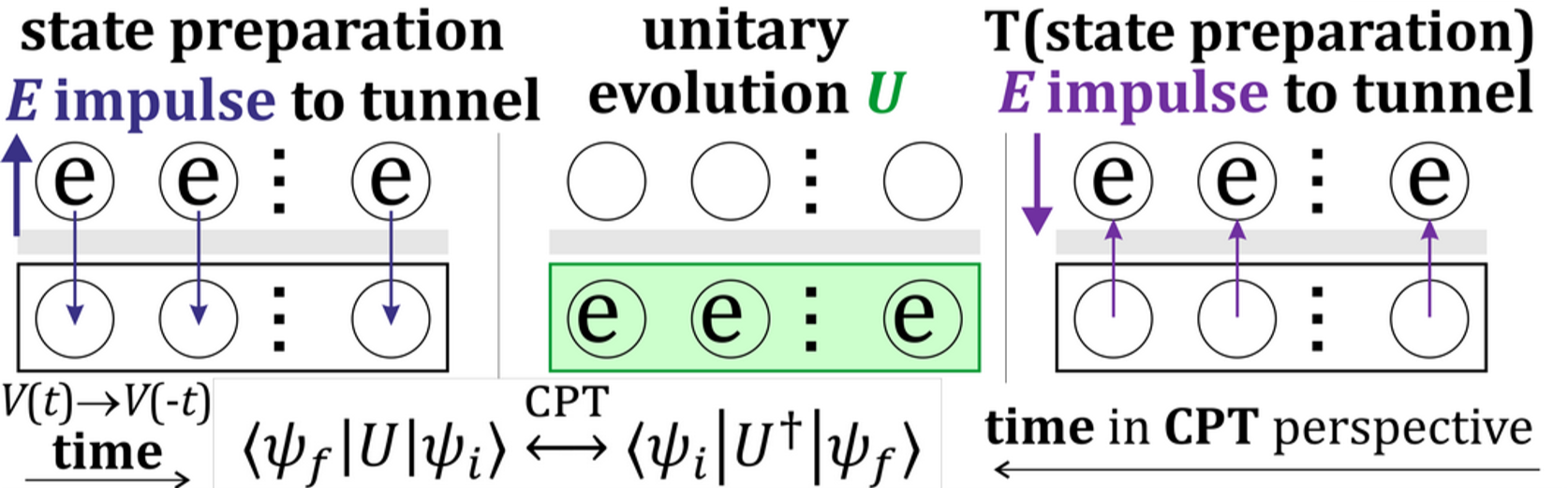
This notebook introduces to recent 2WQC enhancement of standard 1WQC - in this moment theoretical, but with many arguments that their hardware implementations should become available in a near future. Their simulation turned out, thanks to communication with Nikolay Murzin, already possible with Wolfram Quantum Framework we will use here. More discussion about 2WQC can be found in arXiv:2308.13522, 2WQC Grover article, no-cloning theorem article, 3-SAT solver article, photonic considerations, lecture recording, and slides. One-way quantum computers (1WQC), also called measurement-based, assume we start with state preparation, followed by unitary evolution U realized with quantum gates, then perform measurement of the final state. While quantum mechanics directly describes this central unitary evolution, for the boundary treatment (measurement and state preparation) it only assumes their behavior. Hence to understand them, we would have to get to the more fundamental level: quantum field theory, Feynman ensembles of diagrams/paths, which are believed to be CPT symmetric, confirmed by many experiments - violation of this symmetry would require to rebuild the modern physics, starting with Lorentz invariance (PhysRevLett.89.231602). And this symmetry says that preparing a process which in CPT perspective is state preparation, in standard perspective would become its symmetric counterpart - currently neglected, but in theory should be possible, and if included would lead to much more powerful 2WQC. For example we can enforce spin direction by applying magnetic field - if we can use it as state preparation just before, using it just after would get postparation (diagram based on Intel presentation): Below is another example realization using quantum electronics with silicon quantum dots, which for state preparation uses impulse of electric field to tunnel electrons, hence performing opposite impulse at the end, from perspective of CPT symmetry we would get the original state preparation process:
|0〉
〈0|

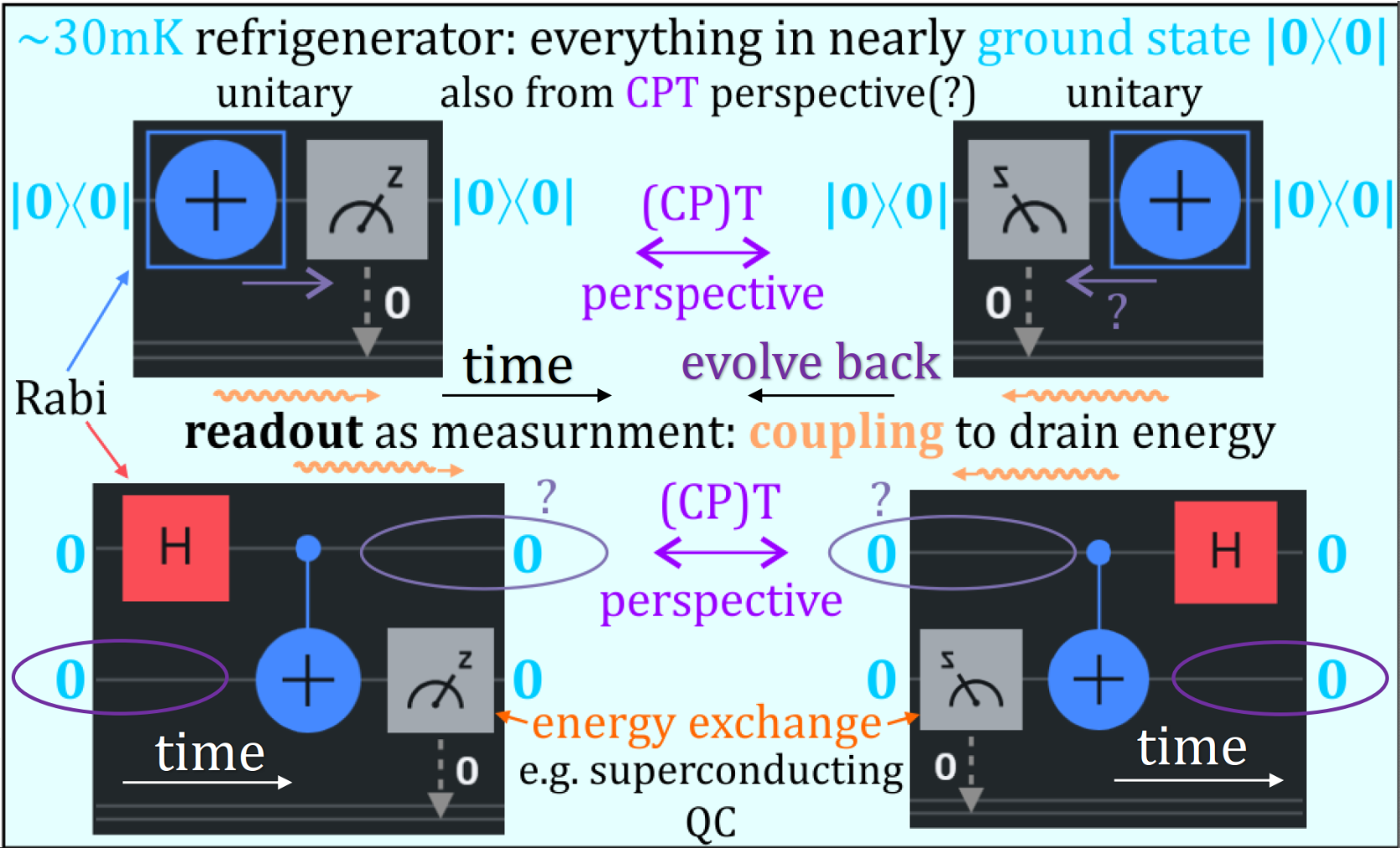
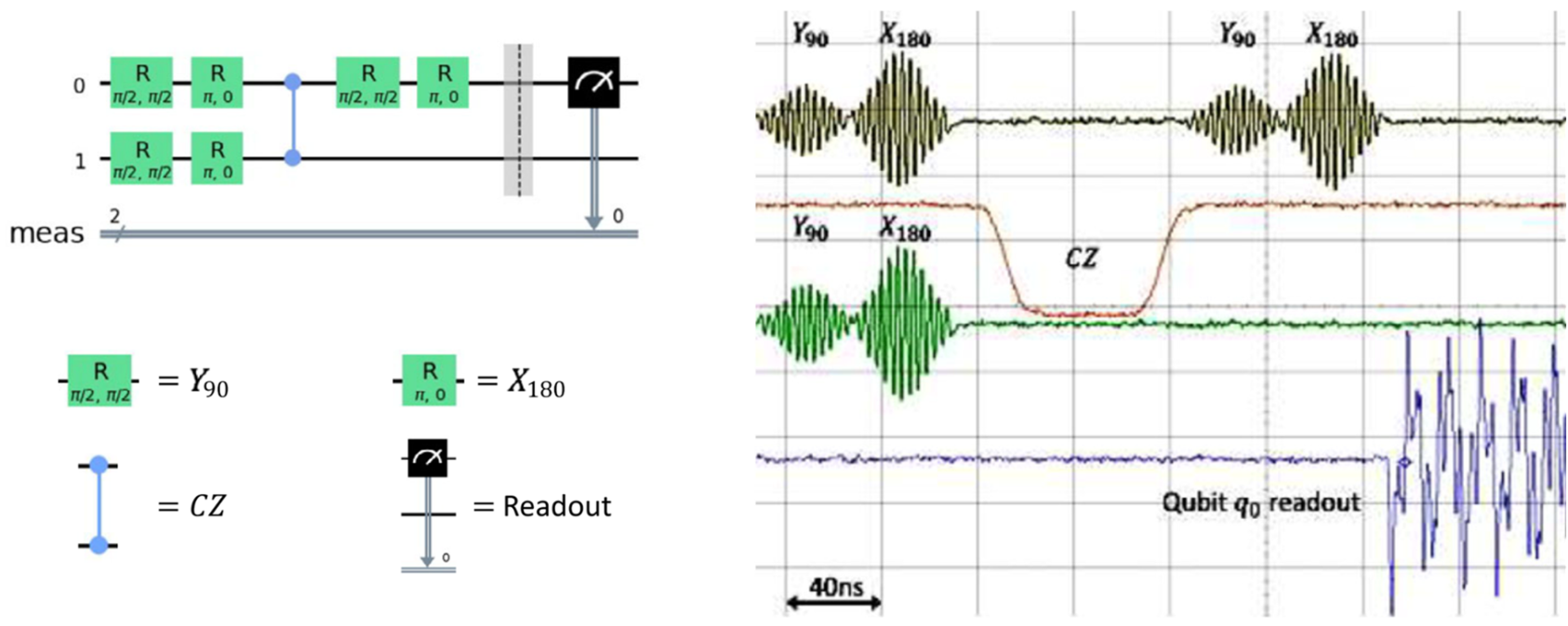
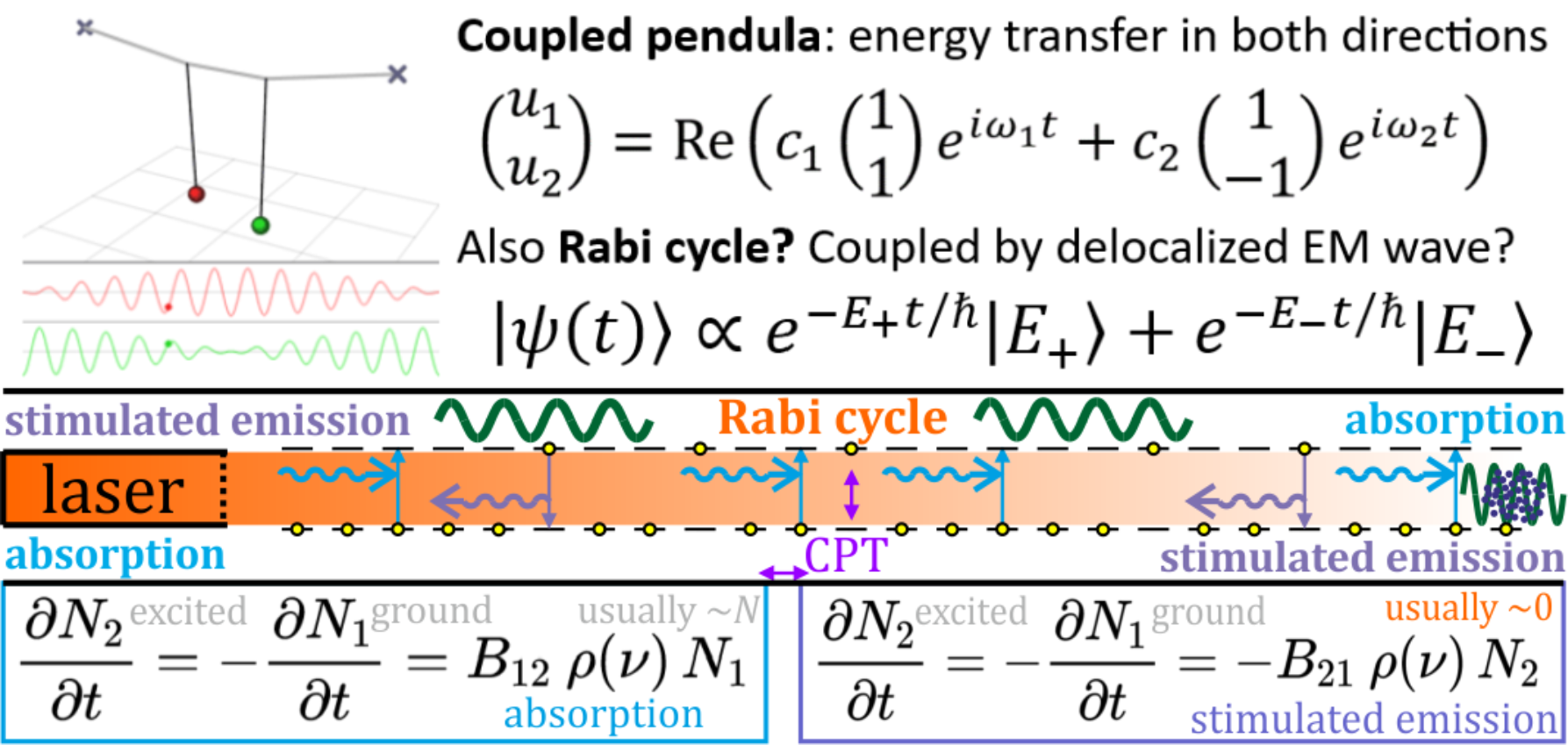
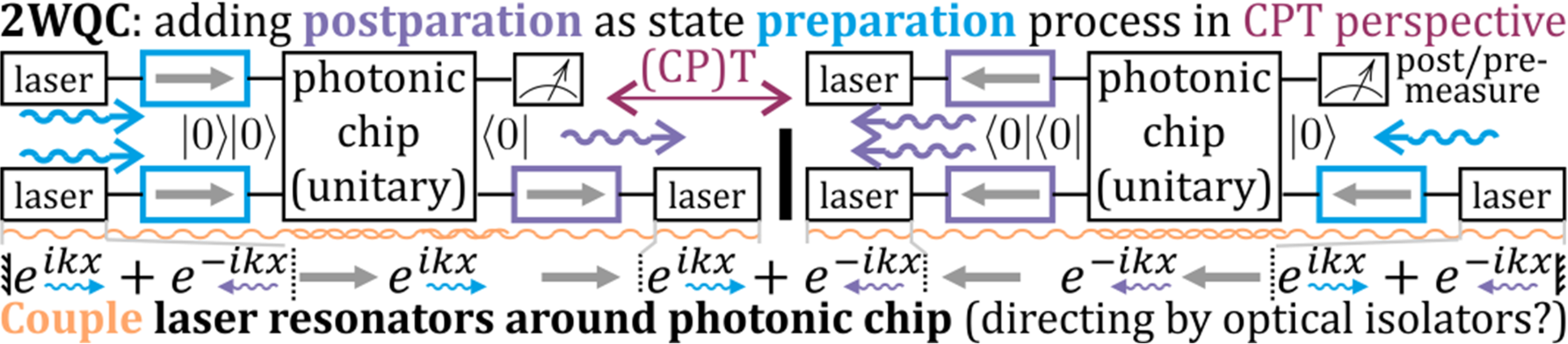
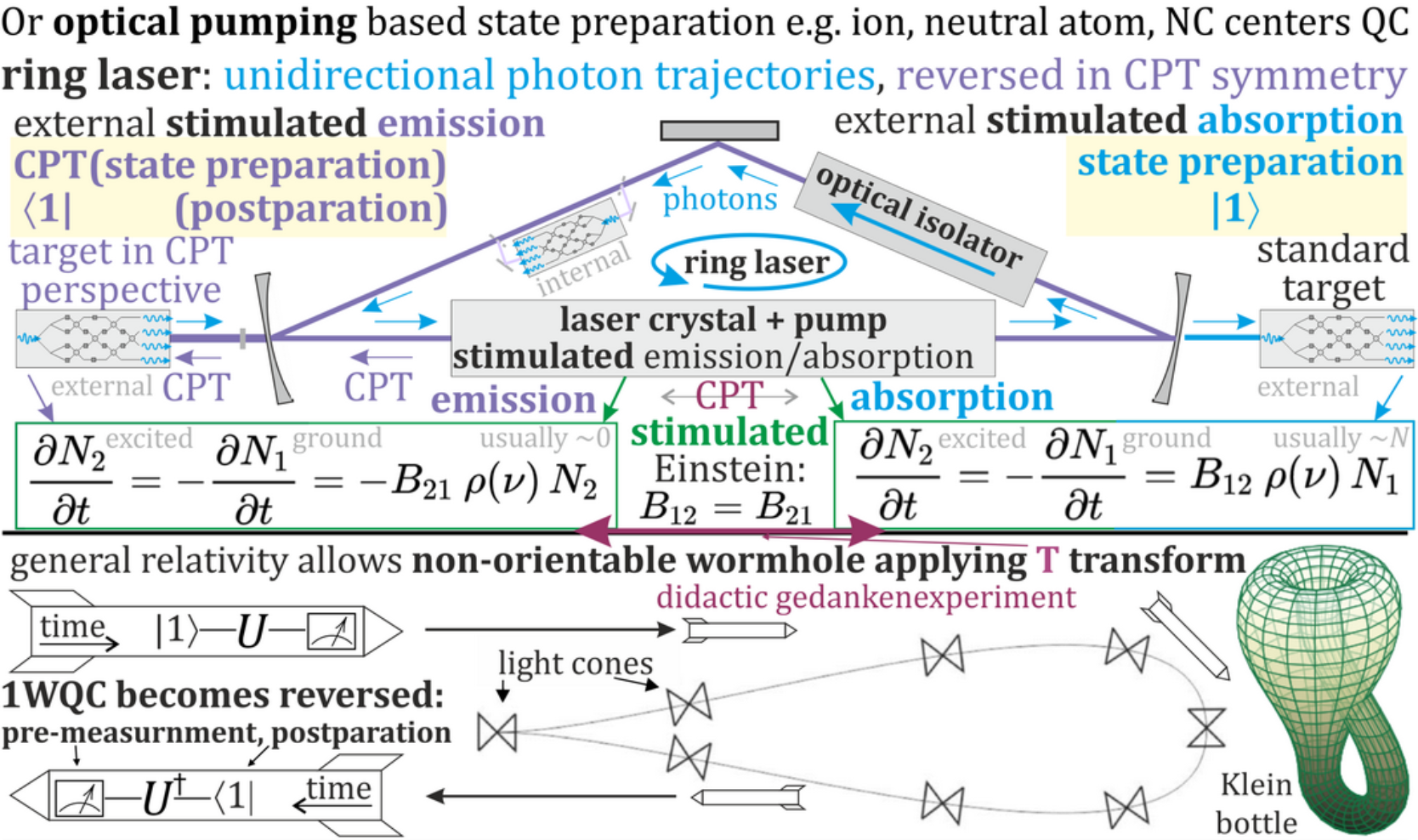
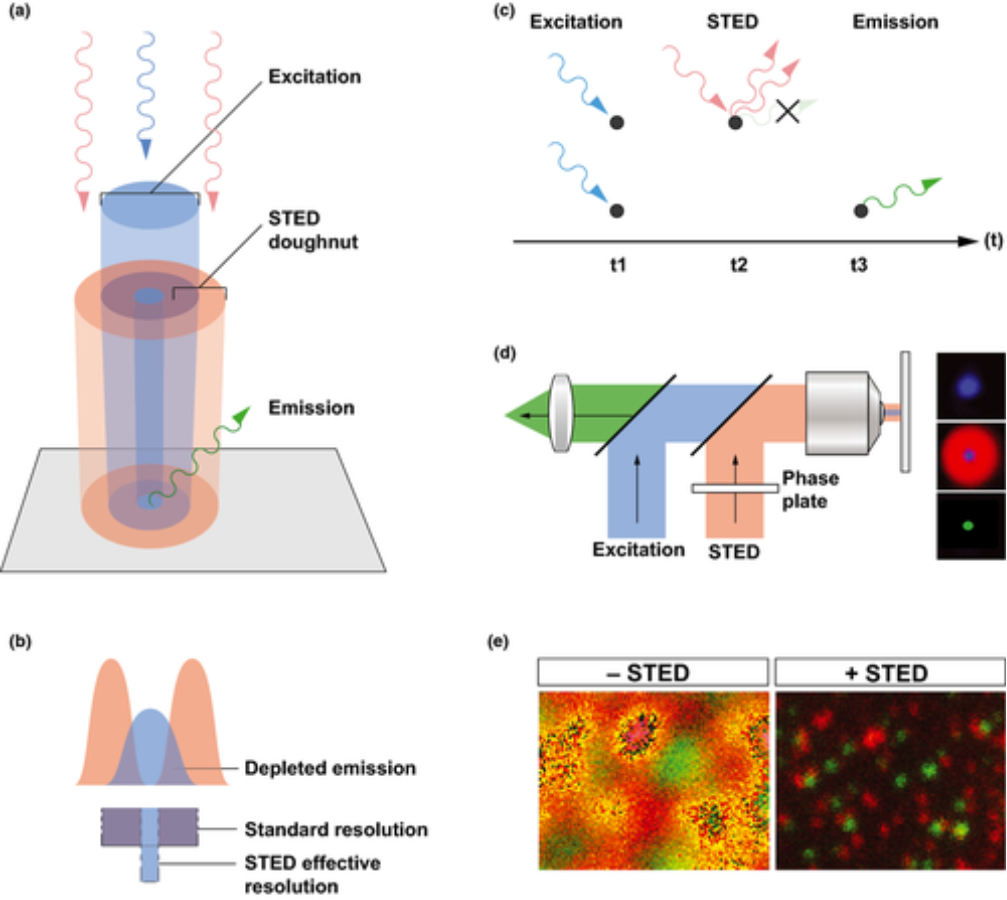
Or many quantum computer technologies prepare to the (ground) state by just reducing temperature - which does not change after CPT symmetry, hence it should act as both: . For example for superconducting QC suggests to just skip measurement as readout for these qubits for them to stay in the ground state - here are 2x2 nontrivial examples, worth thinking about also from perspective of CPT symmetry, from which physics should be governed by the same equations, e.g. starting from the ground state due to extremely low temperature: Its measurement as readout through coupling with resonator is highly invasive process - without such energy exchange, ground state qubit should remain so, also from perspective of CPT symmetry. Here is example of translation of quantum algorithm into applied EM impulses from IQM article: Going to photonics, Rabi cycle is coupling of two resonators, exchanging energy in both directions - e.g. laser periodically causing excitation and deexcitation of target, the same from perspective of CPT symmetry: Adding photonic chip between such two pumped resonators, should allow for better control of its photon flow (arXiv:2409.15399): Unidirectional ring laser seems a very useful tool for other QC technologies, enforcing single direction of photon circulation e.g. by Faraday effect in optical isolator. In many types of quantum computers, e.g. based on ions, neutral atoms, NV centers, we can use optical pumping with laser for state preparation . However, as e.g. laser in Rabi cycle can also cause deexcitation, for target on the left below, looking at the setting from CPT perspective, photon trajectory would be reversed - in this perspective we would prepare , what in standard perspective means preparation of . Generally lasers are based on stimulation emission-absorption equations, which are switched in CPT perspective like in Rabi cycle - state preparation is a consequence of one of them, hence the latter should allow for symmetric counterpart: Above there is also mentioned more science-fiction but in theory allowed by general relativity approach: using non-orientable wormhole ( https://en.wikipedia.org/wiki/Non-orientable_wormhole ), which should apply T (or P) symmetry to a rocket travelling through it - 1WQC inside would use pre-measurement and post- version of preparation. The stimulated emission and absorption equations would be switched inside. Such stimulated emission acting on external target is well known experimentally especially in stimulated emission depletion (STED) microscopy, e.g. as in the below diagram from https://onlinelibrary.wiley.com/doi/10.1111/joim.12278 : enforcing deexcitation in doughnut region by STED laser. For 2WQC such STED/depletion laser should be used e.g. with optical isolator (or through delays) like above to split into separate stimulated emission (for ) and absorption (for ) symmetric equations. Below are some other examples. In classical electronics we naturally act two-way by connecting chip to a battery: actively both pushing electrons into a chip, and pulling them with electric field. Also for hydrodynamics replacing battery with a pump. There are mechanical qubits for superfluid ( https://www.nature.com/articles/s41534-021-00393-3 ) - connecting such quantum computer to a pump, we would get 2WQC. Mathematically superfluid hydrodynamics and electrodynamics are nearly the same (table below), suggesting such two-way quantum computer should also work there if only having some analog of pump, and ring laser enforcing unidirectional photon flow seems to act as such pump for photons. Photonic quantum computers use laser impulse as state preparation (e.g. https://www.nature.com/articles/s41467-019-11489-y ), in the below setting in CPT perspective photon trajectory would be reversed - performing the same impulse for the opposite side of photonic chip. While it might seem unintuitive, there are realization of optical pulling with light, also negative radiation pressure is possible (e.g. above plot with depletion laser) - being CPT symmetry analogs of standard pushing with light using its positive radiation pressure.
|0〉
〈0|
|1〉
|1〉
〈1|
|1〉
〈1|
1WQC and 2WQC in Wolfram Quantum Framework
1WQC and 2WQC in Wolfram Quantum Framework
Attacking NP and further work
Attacking NP and further work
References
References
[1] J. Duda, Two-way quantum computers adding CPT analog of state preparation, arXiv:2308.13522 (2023)
[2] G. Czelusta, D. R. Verma, G. Wanjalkar, Grover’s algorithm on two-way quantum computer, arXiv:2406.09450 (2024)
[4] J. Duda, 3-SAT solver for two-way quantum computers, arXiv:2408.05812 (2024)
[5] A. Linden, B. Gül, Optimization of Postselection in Quantum Algorithms: A Two-Way Quantum Computing Approach, arXiv:2409.03785 (2024)
[5] A. Linden, B. Gül, Optimization of Postselection in Quantum Algorithms: A Two-Way Quantum Computing Approach, arXiv:2409.03785 (2024)