Brain Haemorrhage Diagnosis
Brain Haemorrhage Diagnosis
Using Lenet based Deep Learning Model
Data
Data
Using Kaggle dataset :
Head CT - hemorrhage
Balanced Normal vs Hemorrhage Head CT
https://tinyurl.com/dn8jn6jx
Using Kaggle dataset :
Head CT - hemorrhage
Balanced Normal vs Hemorrhage Head CT
https://tinyurl.com/dn8jn6jx
Head CT - hemorrhage
Balanced Normal vs Hemorrhage Head CT
https://tinyurl.com/dn8jn6jx
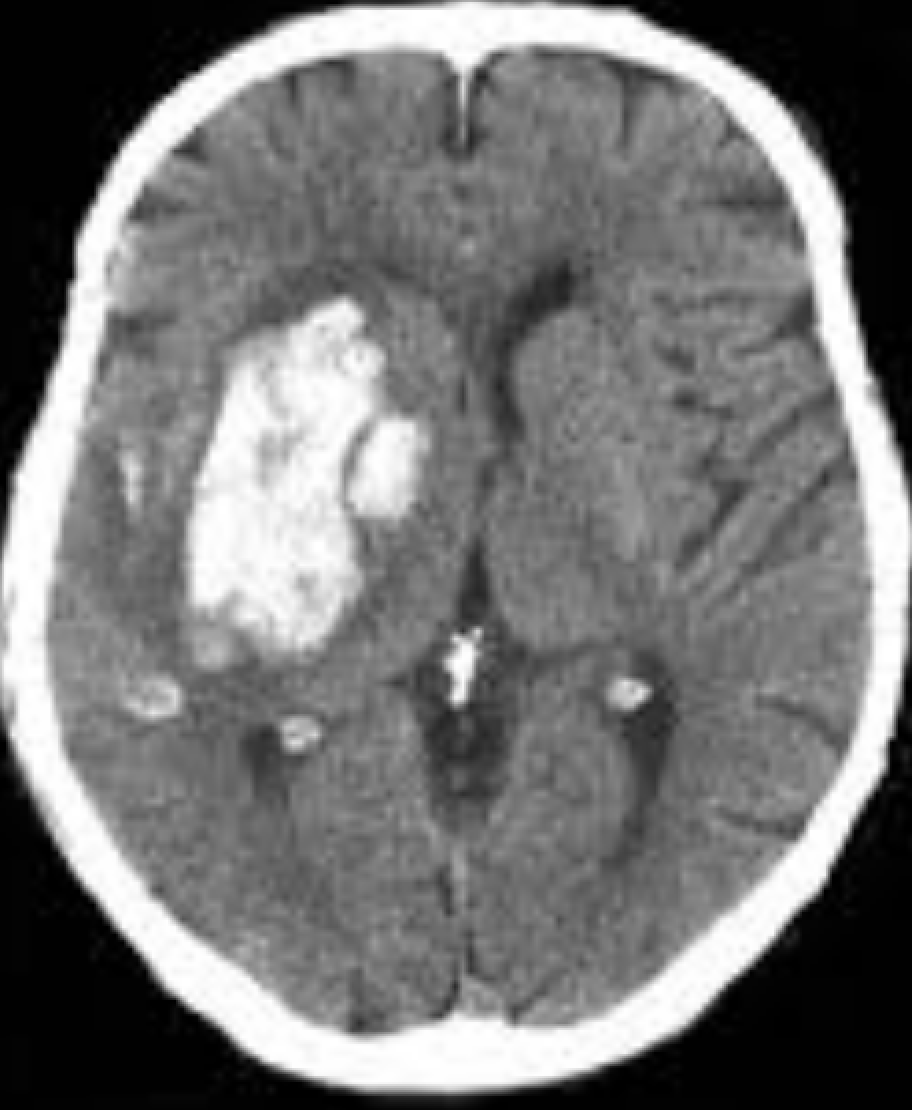
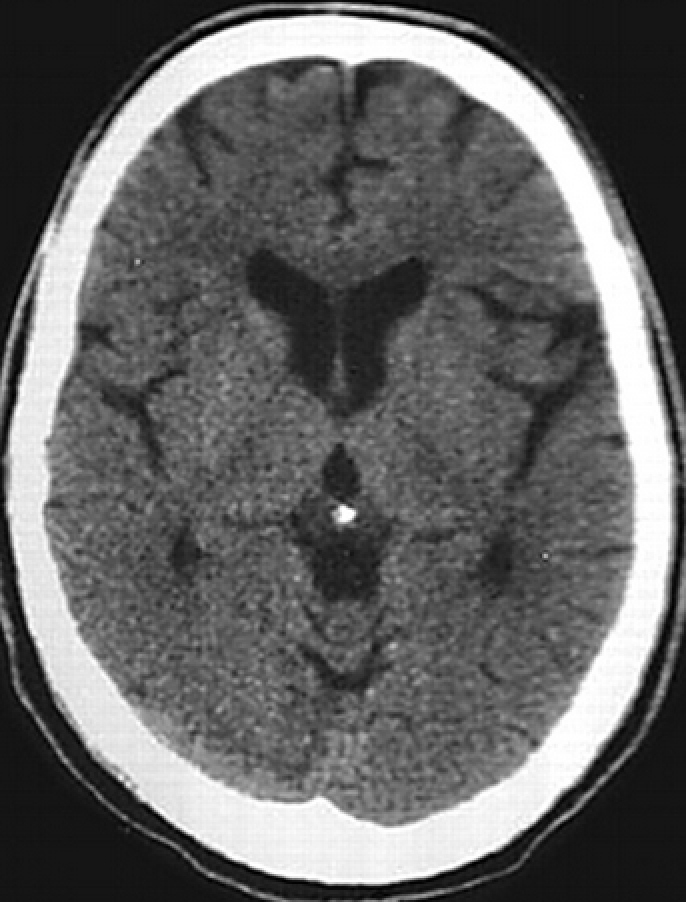
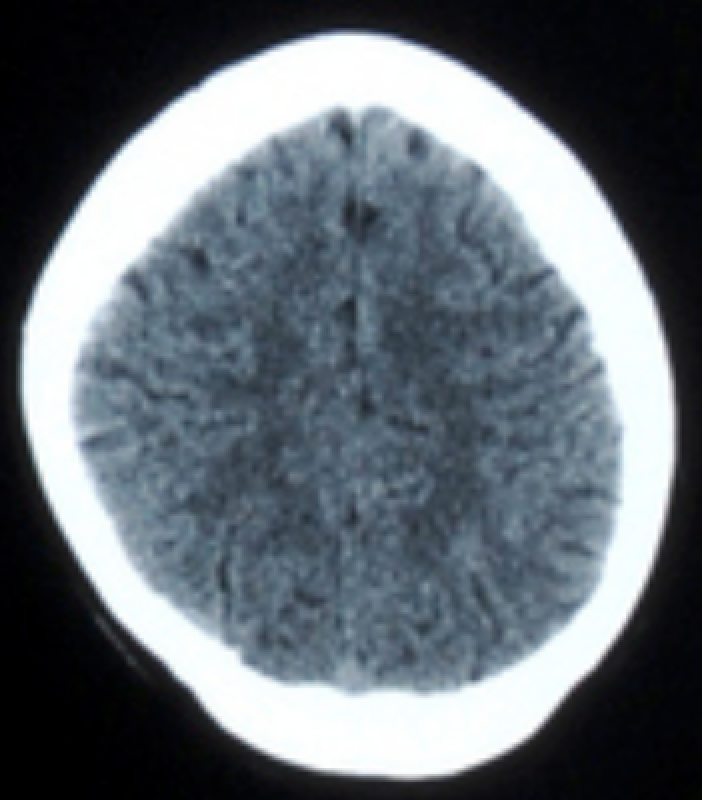
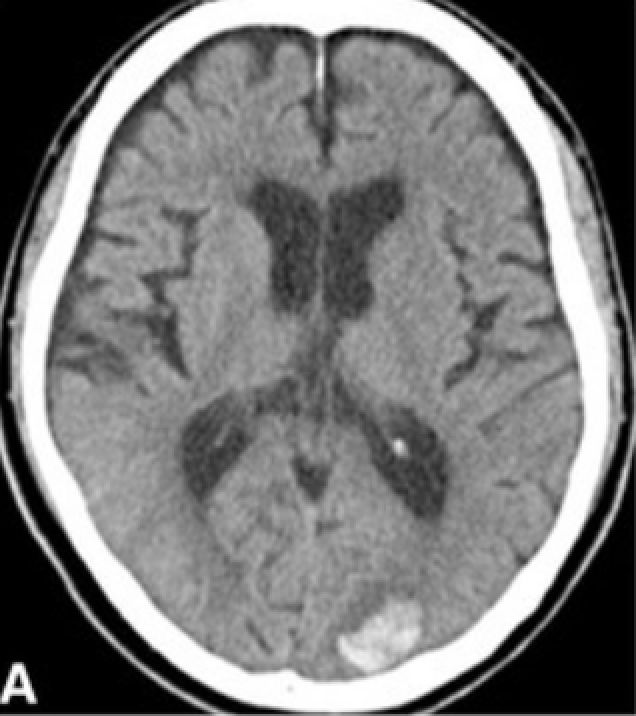
This dataset contains 100 normal head CT slices and 100 other scans are for patients with hemorrhage. Each slice comes from a different patient. There is no distinction between kinds of hemorrhage seen in the scans. The images were taken from an internet search and are of differing size and resolution. The main idea of using this dataset is to develop ways to predict imaging findings even in a context of limited data of varying quality.
In[]:=
imageDataDir="/Users/jonathan/Dropbox/Machine Learning/Brain Hemorrhage/Head CT Hemorrhage/CT Scans"
Out[]=
/Users/jonathan/Dropbox/Machine Learning/Brain Hemorrhage/Head CT Hemorrhage/CT Scans
In[]:=
SetDirectory[imageDataDir]
Out[]=
/Users/jonathan/Dropbox/Machine Learning/Brain Hemorrhage/Head CT Hemorrhage/CT Scans
In[]:=
CTimages=Import["*.png"];
In[]:=
Length@CTimages
Out[]=
200
Create the data associations used for neural net training and testing
Create the data associations used for neural net training and testing
In[]:=
CTdata=Join[AssociationThread[{"Input","Output"}{#,True}]&/@CTimages[[1;;100]],AssociationThread[{"Input","Output"}{#,False}]&/@CTimages[[101;;]]];
In[]:=
CTdata=Join[Table[Association[CTimages[[i]]True],{i,100}],Table[Association[CTimages[[i]]False],{i,101,200}]];
Split the data into train and test sets
Split the data into train and test sets
In[]:=
{trainCTdata,testCTdata}=ResourceFunction["TrainTestSplit"][CTdata];
In[]:=
Length@testCTdata
Out[]=
40
In[]:=
testCTdata[[1;;4]]
Out[]=
Input
,OutputTrue,Input
,OutputFalse,Input
,OutputFalse,Input
,OutputTrue
Neural Net
Neural Net
We use the MNIST image classification net as the baseline neural network. The network' s goal is to classify the CT images using true and false to describe whether the patient suffers brain hemorrhage or not. One interesting feature of the net is the Resize layer which changes the image dimensions of each image to 135 by 135. This ensures the images comply with the sensitivity of the neural network to the size of images. Further layers include the convolution layer, ramp, and pooling layer, which all work to narrow down image elements and create categories to classify each image to associate them .
In[]:=
dims={135,135}
Out[]=
{135,135}
In[]:=
lenet=NetChain[{ResizeLayer[dims],ConvolutionLayer[20,5],Ramp,(*Takesoutthethenotusefulfeatures*)PoolingLayer[2,2],(*Downsamples*)ConvolutionLayer[50,5],Ramp,(*Takesoutthethenotusefulfeatures*)PoolingLayer[2,2],(*Downsamples*)FlattenLayer[],500,(*Makesfeaturesintofeaturevector"*)Ramp,2,(*Takesoutthethenotusefulfeatures-Trueorfalse*)SoftmaxLayer[]},(*Turnsthevectorintoprobabilities*)"Output"NetDecoder[{"Class",{True,False}}],(*Tensorintotrueorfalse*)"Input"NetEncoder["Image"](*Turnsimageintonumbers*)]
Out[]=
NetChain


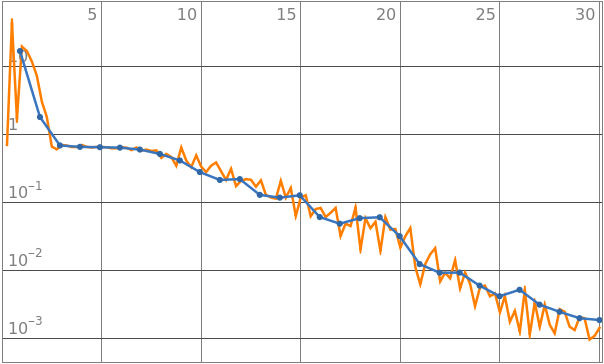
Initial Training
Initial Training
In[]:=
results=NetTrain[lenet,trainCTdata,All,ValidationSetScaled[0.2],MaxTrainingRounds30,TargetDevice"CPU"]
Out[]=
NetTrainResultsObject

Training the Neural Network with Augmented Layers
Training the Neural Network with Augmented Layers
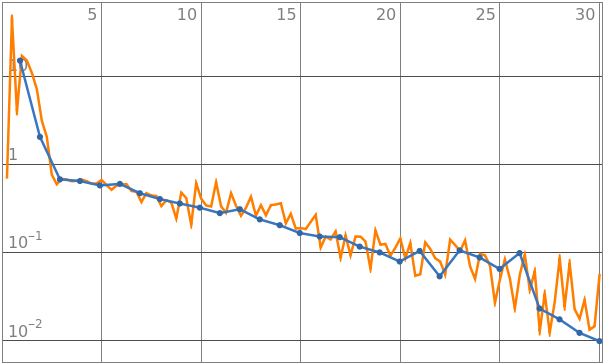
Next we implement an ImageAugmentationLayer, which randomly crops images to create new data sets to improve the neural network.
Next we implement an ImageAugmentationLayer, which randomly crops images to create new data sets to improve the neural network.
In[]:=
augment=ImageAugmentationLayer[{135,135},"Input"NetEncoder[{"Image",{139,139}}],"Output"NetDecoder["Image"]]
Out[]=
ImageAugmentationLayer

In[]:=
dims2={139,139}
Out[]=
{139,139}
In[]:=
lenet2=NetChain[{ResizeLayer[dims2],ImageAugmentationLayer[{135,135}],ConvolutionLayer[20,5],Ramp,PoolingLayer[2,2],ConvolutionLayer[50,5],Ramp,PoolingLayer[2,2],FlattenLayer[],500,Ramp,2,SoftmaxLayer[]},"Output"NetDecoder[{"Class",{True,False}}],"Input"NetEncoder["Image"]]
Out[]=
NetChain
In[]:=
results2=NetTrain[lenet2,trainCTdata,All,ValidationSetScaled[0.2],MaxTrainingRounds30]
Out[]=
NetTrainResultsObject
Test Results
Test Results
The results show a 90% accuracy rate, with 3 false positives and 1 false negative.
The results show a 90% accuracy rate, with 3 false positives and 1 false negative.
Areas for Further Research and Development
Areas for Further Research and Development
◼
Larger dataset
◼
Consistent image size and quality
◼
Testing different baseline neural nets