We have tried to create a prescription to translate the Holographic Entanglement Entropy Formula defined by Ryu and Takayanagi in the rewriting system. For that purpose we have studied the HEE in LQG premise using the Spin-network system. We have shown that we can manipulate the spin networks in the rewriting model well enough to study for the pre-geometrical notion of the holography and entanglement entropy. From this we can further our study by generalizing the procedure and looking in to the relation between different theories like Causal set Theory, AdS/CFT as well.
Introduction
Introduction
In the rewriting system developed by Stephen Wolfram, we are interested to look into how the geometric notions emerge naturally. In that procedure it has been through a lot of progress till now. Entanglement Entropy is a very crucial geometric property of any system, however often these are not easy to calculate in various strongly couples complex systems, hence the holographic dictionary comes in use . Also to understand completely the the theory of everything we need to understand the elementary geometric notions and relations between field theory and Gravity theories. rewriting model can help us in that purpose to look into it fundamentally.
Entanglement Entropy
Entanglement Entropy
While in the Quantum Mechanics, Product States corresponds to the hypergraph with collections of states with no branchial connections between them and entangled States are distinguished with direct branchial connections between them. Now for entangled subsystems, an observer automatically traces out parts of state space after having made a measurement on a given state . By these definitions, entanglement corresponds to a direct branchial connection . Tracing out a particular subspace of the branchial graph from a causally disconnected collection of two subsystems having a connection acting as a boundary will help us to realize a complete picture of Entanglement Entropy. We can compute the von Neumann entropy of the subsystem after tracing out the rest. This entropy provides a measure of the entanglement between those two subsystems. The higher the entanglement entropy, the more information is lost in tracing out a given subsystem, that is the correlation is stronger. If the local entanglement entropy is zero, there is no entanglement between the two subsystems and we can consider them to be distinct microstates of the global state.For a spacetime manifold M=R × Σ into time and space if we consider a subsystem Ω in Σ , the entanglement entropy of the region Ω is defined as SE(Ω) ≡ S(ρ(Ω)) , where S(ρ) = −Tr(ρ log ρ) is the von Neumann entropy. For a spin network we can define the entanglement entropy as
S(Γ,j,J,i,m)
Ryu-Takayanagi Formula
Ryu-Takayanagi Formula
TheRyu-Takayanagiformulastatesthatwecanconstructminimalsurfacesinasettingtofindtheentanglemententropyofasubsystem.whereCisaconstantindependentoftheminimalsurfacewhicharethesummationoftheentropiesofthetwodistinctlyseparatesubsystem.
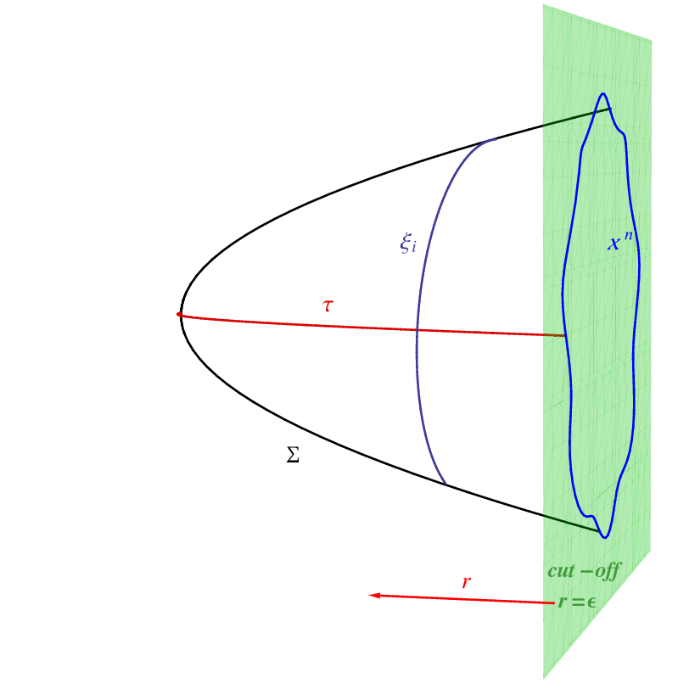
Ryu-Takayanagi Formula in LQG
Ryu-Takayanagi Formula in LQG
Holographic Principle gives a general treatment to the correspondence of Gravity theory and Field theory. Hence the formula of Holographic Entanglement Entropy defined in AdS/CFT is well understood in the background independent picture of LQG systems using Spin network structures. So, the basic principle remains the same only the idea of the systems get an interpretation for the LQG system. From this we can get an avenue to relate the String theory with LQG as well by further studying the treatment.
Commanding Spin Networks to study the HEE
Commanding Spin Networks to study the HEE
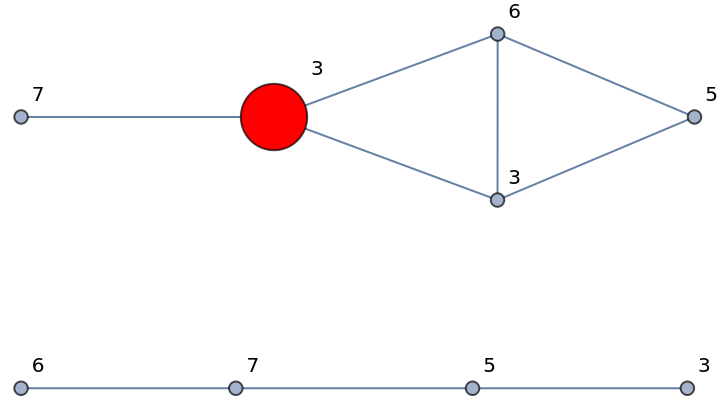
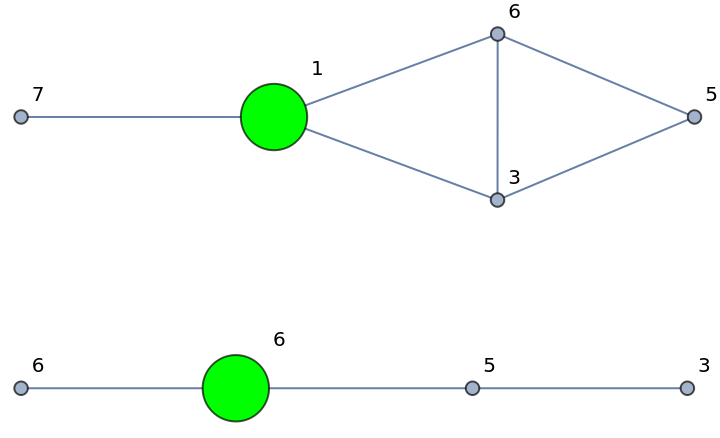
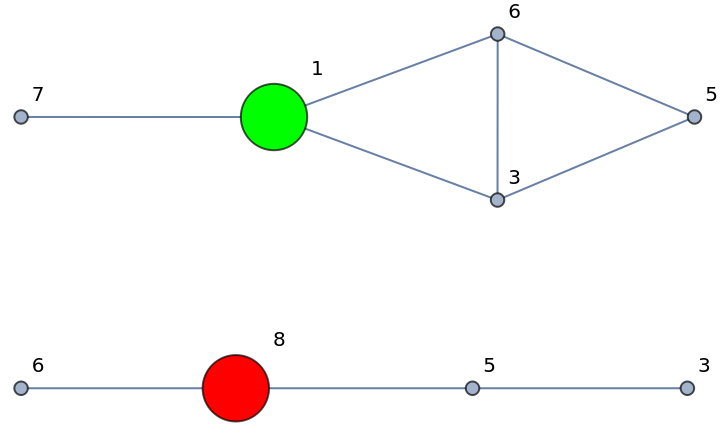
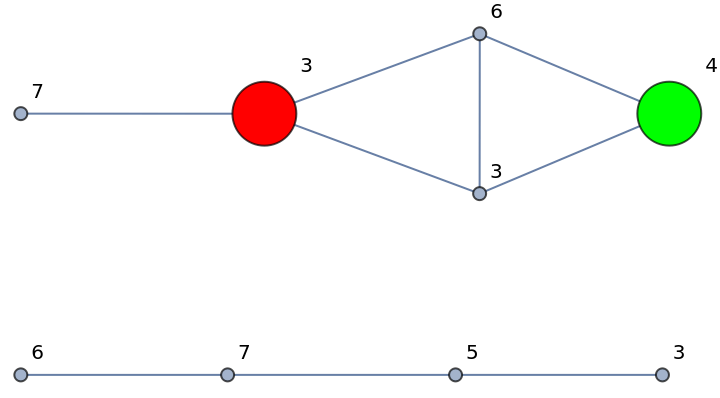
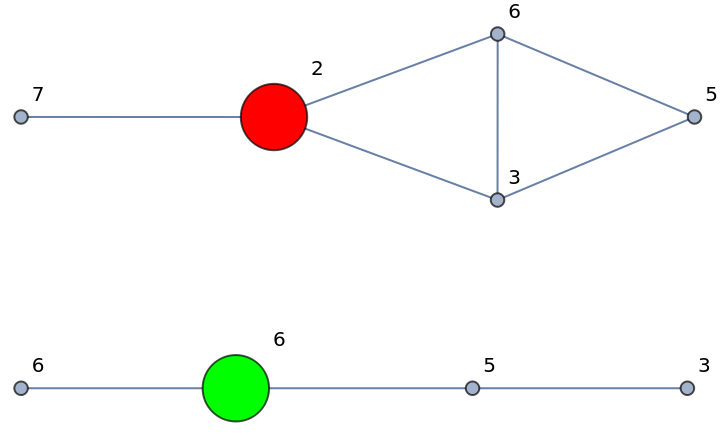
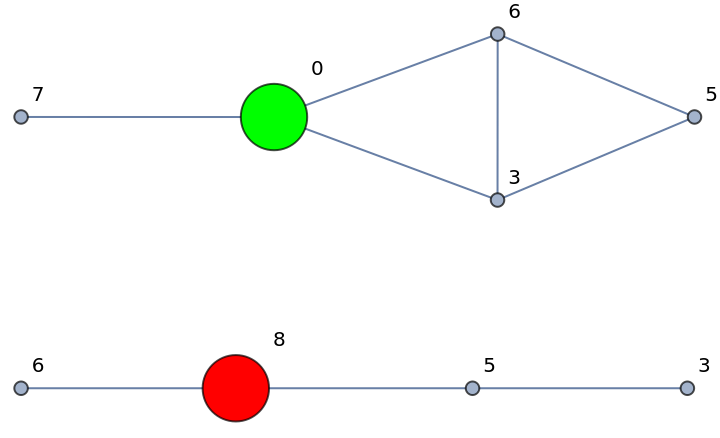
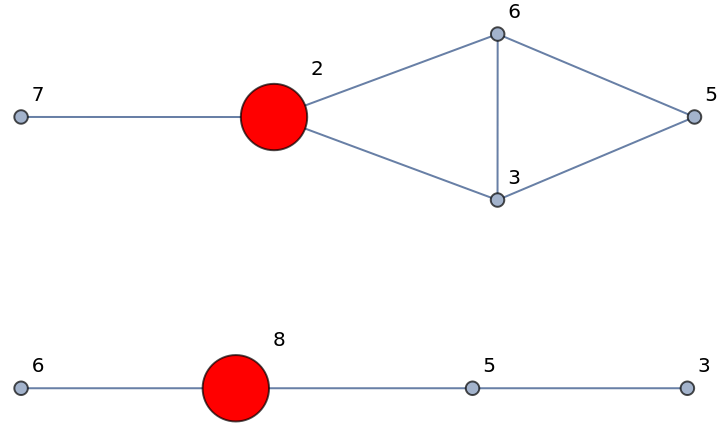
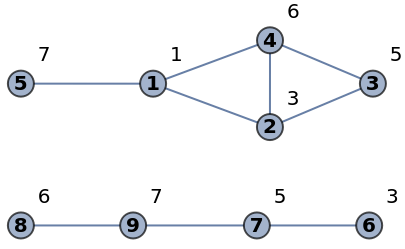
WecanconstructspinnetworkwithedgesoftheformandverticeswithintertwiningoperatorsoftheformThespinnetworkshouldbecausallydisconnectedwithsettingtherulesofevolutionaccordingly.Thetwosubsystemsaretreatedasseparatebranchialgraphs.WecanalsolookfortheirindividualevolutionfollowingthesamesetofrulesdistinctlyforcalculatingtheextratermC.Theminimalsurfacewillbefoundthebranchialconnectionsacrosshorizonsareproportionaltotheareaofthecorrespondingminimalsurfacesasdefinedviathehypergraph.Thebranchialconnectionswhichlinkacrossthehorizonsaregivenbythebranchialconnectionsbetweenthesecausallyseparatedmultiwaystates.Theevolutionofthespinnetsintimeformsthecylindricalstructureitself,so,forsimplicitywecanlookintothebranchialgraphsofthesubsystemandcalculatetheareaforwhichwearecalculatingtheEE.TheareacanbecalculatedthroughareaeigenvalueFirstweconstructtwosimplespinnetworksrepresentingtosubsystemssharingacommonconnection,thatisacommonboundaryinthiscase.
,
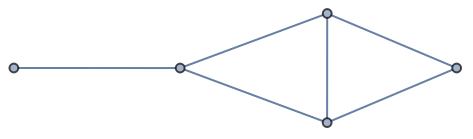
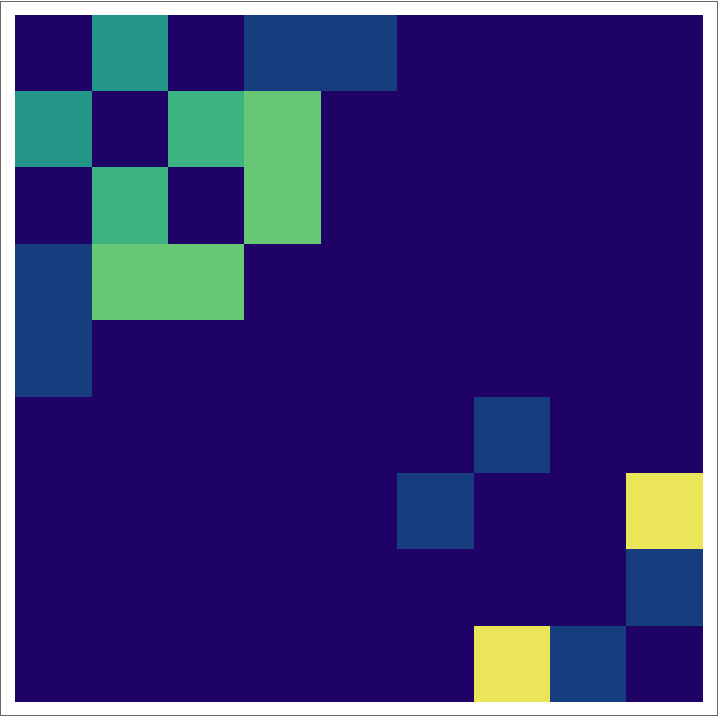
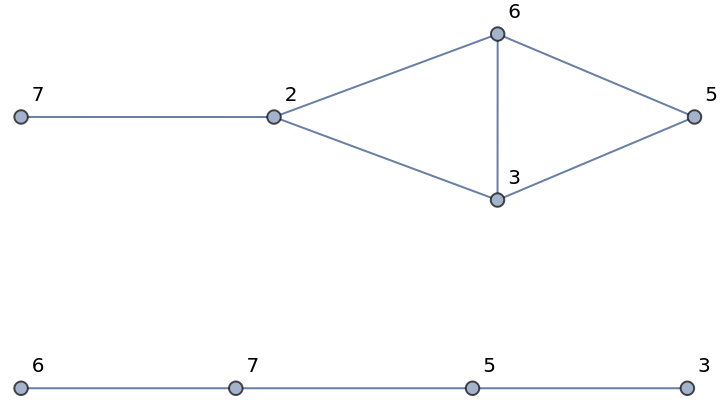
Nowwelookintosysteminitially,wherethetwosubsystemshavingnocausalconnectioninitiallyhavesignificantcorrelationandthiscanbeevidentfromlookingintothemdirectly.WhileSpinnetworkshows
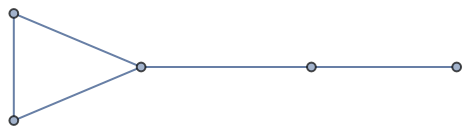
,thespinnetwork2shows
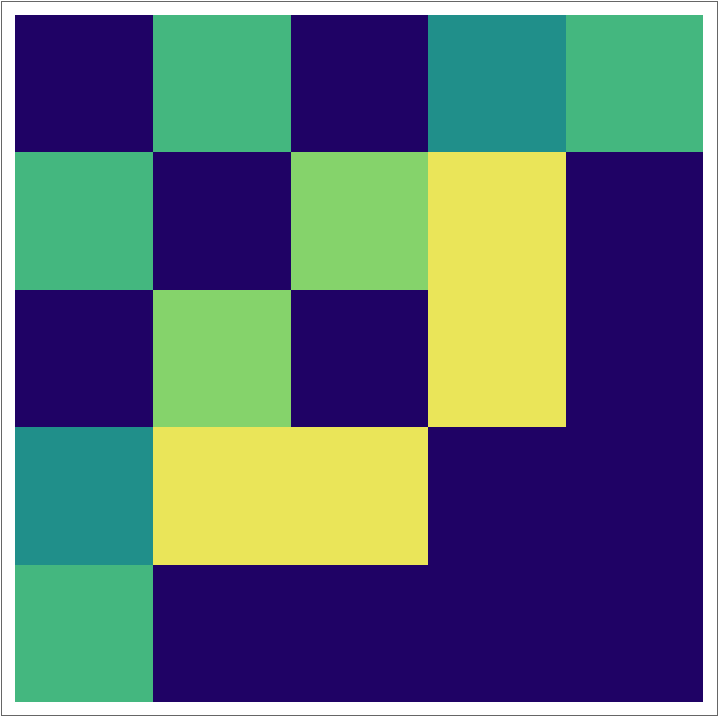
,wecanseeforthecombinedsystemas
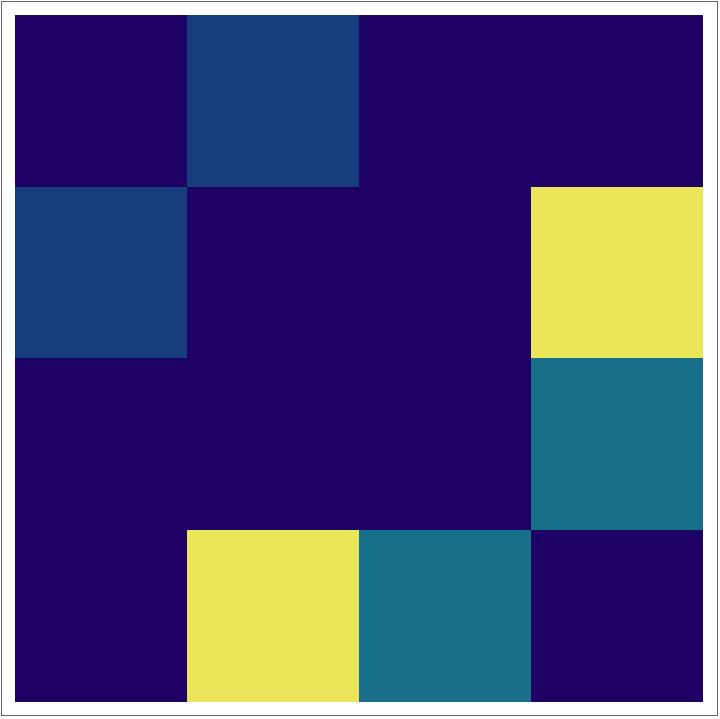
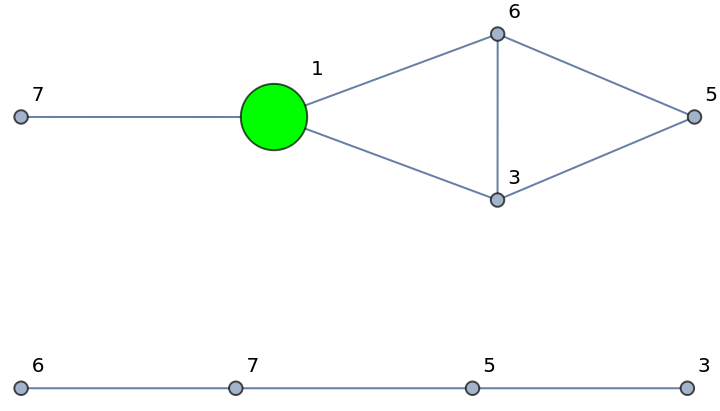
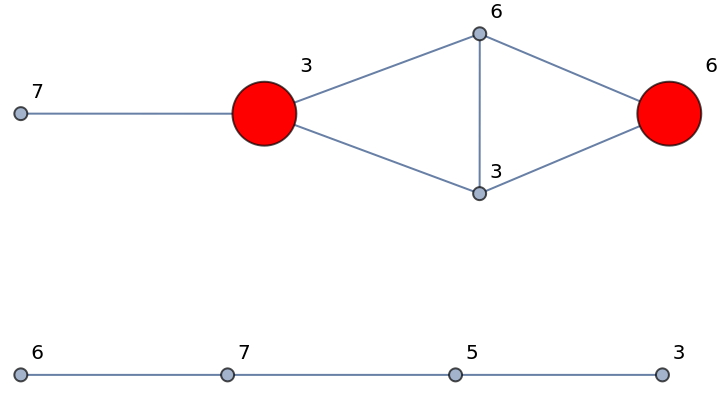
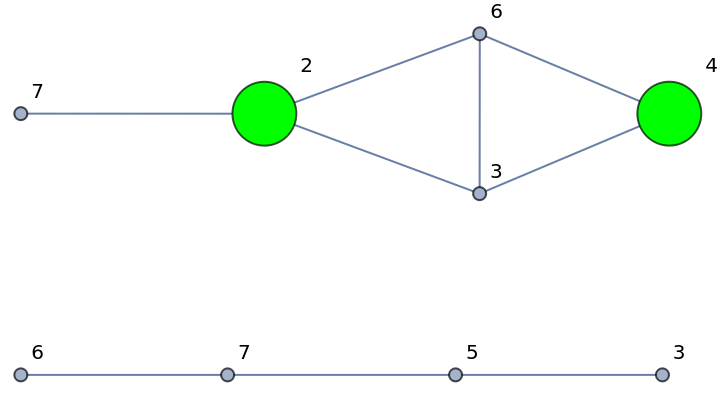
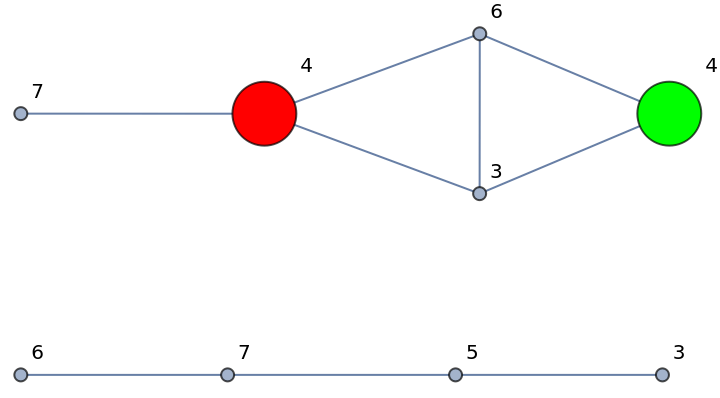
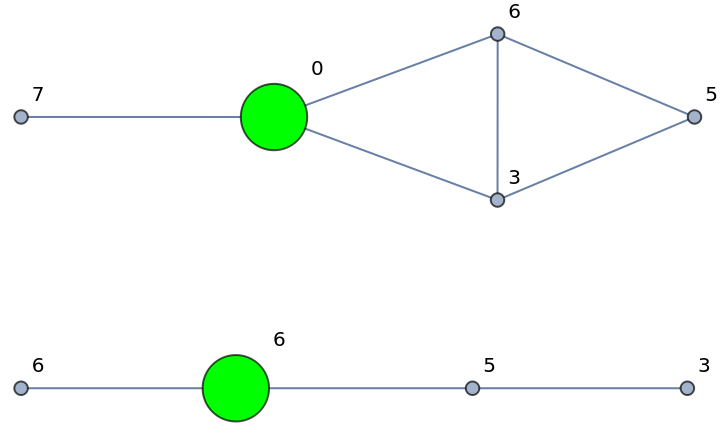
Nowwecansetanevolutionrulewherearandomvertexweightincreaseordecreaseswithtime:rule1[g_]:=With[{v=randomVertex[g]},{Graph[Annotate[{g,v},VertexWeight->addToVertexWeight[{g,v},1]],(*increment*)VertexSize{v->Large},VertexStyle(v->Red)],Graph[Annotate[{g,v},VertexWeight->addToVertexWeight[{g,v},-1]],(*decrement*)VertexSize{v->Large},VertexStyle(v->Green)]}]Nowwecanfindtheevolutionwhereeachlistgeneratedcorrespondstothepossiblestatesinthegivengeneration:ResourceFunction["MultiwaySystem"][<|"StateEvolutionFunction"->(rule1[#]&),"StateEquivalenceFunction"->(weigthedVertexListRules[#1]===weigthedVertexListRules[#2]&),"StateEventFunction"->Identity,"EventDecompositionFunction"->Identity,"EventApplicationFunction"->Identity,"SystemType"->"None","EventSelectionFunction"->Identity|>,{spinnet1},3]
,
,
,
,
,
,
,
,
,
,
,
,
,
,
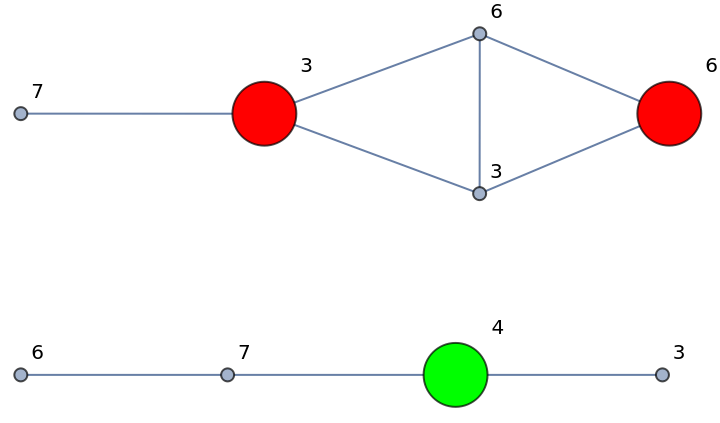
Nowconsideringthecausaldisconnection,wegetthestructureas,
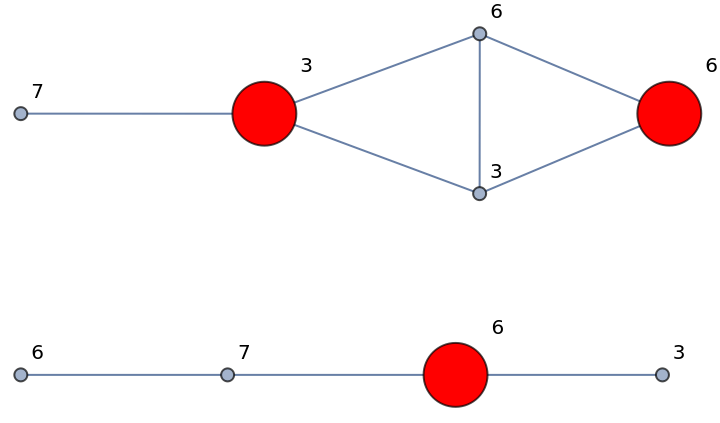
4,
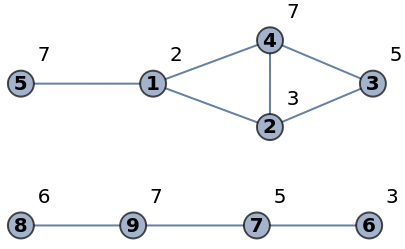
4,
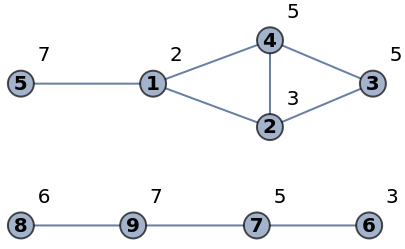
1,
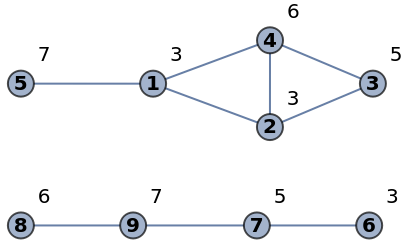
1,
4,
4SeedRandom[5];evolution=NestGraphTagged[rule1,spinnet,5,"RuleStyling"->{Red,Green},GraphLayout->"LayeredDigraphEmbedding",EdgeLabels->"EdgeTag"]
As a future prospect we need to come up with a more generalized way to study the minimal surface of the system.
Concluding remarks
Concluding remarks
We have shown a procedure to construct the initially causally independent subsystems in terms of spin networks and how to evolve them in time with giving a notion of non-locality and entanglement correlation which may be useful in various further studies of Quantum Mechanics. We have tried to figure out a procedure to find the Holographic Entanglement Entropy using Spin Structures. Now following this procedure we can test for several systems and compute them in different holographic settings to find the fidelity of the procedure. We have also atleast parametrically shown how the simultaneous evolution effects the entanglement of a system. As a future goal we can extend the whole process to check for the HEE calculated in AdS/CFT and Causal set Theory. These be check for the prescription as well as a way to study the interrelations between the system. We can also manipulate the rewriting model further to understand the pre-geometric concept of Entanglement and minimal surface more fundamentally.
Keywords
Keywords
◼
Holography
◼
Entanglement Entropy
◼
Spin Network
◼
Loop Quantum Gravity
◼
Ryu-Takayanagi formula
Acknowledgment
Acknowledgment
Mentor: Alessandro Pisana, Daniel Sanchez, Xerxes Arsiwalla
I am thankful for the support, guidance and help provided by Xerxes D. Arsiwalla, Hatem Elshatlawy, Alessandro Pissana directly or indirectly. I would like to specially thank Daniel Sanchez and Nikolay Murzin to help me in coding various parts of the project. I also thank Stephen Wolfram and Jonathan Gorard for their valuable comments and discussions. I also like to thank the organizers, the lecturers,the mentors and the fellow participants for making this winter school a success and bringing together people to interact and get enriched from various places with interesting perspectives in physics.
I am thankful for the support, guidance and help provided by Xerxes D. Arsiwalla, Hatem Elshatlawy, Alessandro Pissana directly or indirectly. I would like to specially thank Daniel Sanchez and Nikolay Murzin to help me in coding various parts of the project. I also thank Stephen Wolfram and Jonathan Gorard for their valuable comments and discussions. I also like to thank the organizers, the lecturers,the mentors and the fellow participants for making this winter school a success and bringing together people to interact and get enriched from various places with interesting perspectives in physics.
References
References
◼
Smolin, L. “Holographic relations in loop quantum gravity” https://arxiv.org/pdf/1608.02932.pdf
◼
Donnelly, W. “Entanglement Entropy in Loop Quantum Gravity” Physical Review D 77, 104006 (May 06, 2008) https://doi.org/10.1103/PhysRevD.77.104006
◼
Duffy, Callum F. , Jones, Joshua Y. L. , Yazdi, and Yasaman K. “Entropy of Disjoint Spacetime Intervals in Causal Set Theory” https://arxiv.org/pdf/2110.07627.pdf
◼
Ryu, Shinsei, Takayanagi, Tadashi “Holographic Derivation of Entanglement Entropy from AdS/CFT.” Physical Review Letters 96, no. 18 (May 9, 2006): 181602. https://doi.org/10.1103/PhysRevLett.96.181602
◼
Bousso, Raphael. “Holography in General Space-Times.” Journal of High Energy Physics 1999, no. 06 (June 28, 1999): 028–028. https://doi.org/10.1088/1126-6708/1999/06/028
◼
Gorard, Jonathan. “Some Quantum Mechanical Properties of the Wolfram Model,” n.d., 65.
———. “Some Relativistic and Gravitational Properties of the Wolfram Model,” n.d., 59.
———. “Some Relativistic and Gravitational Properties of the Wolfram Model,” n.d., 59.
◼
Wolfram, Stephen. “A Class of Models with the Potential to Represent Fundamental Physics.” arXiv (2020): arXiv-2004.