Let a power triangle be defined by a root and having sides ,,.
r
a
r
b
r
c
r
In[]:=
powertriangle[root_,{a_,b_,c_}]:=Module[{pts},pts={{0,0},{root^a,0},Flatten[Select[ResourceFunction["CircleIntersection"][Circle[{0,0},root^b],Circle[{root^a,0},root^c]][[1]],Last[#]>0&]]};Graphics[{EdgeForm[Black],White,Polygon[pts],Black,Style[Text[#[[1]],#[[2]]],16]&/@Transpose[{{a,b,c},Mean/@Subsets[pts,{2}]}]},ImageSize->Tiny]]
Here’s the Kepler triangle, based on powers of the golden ratio:
In[]:=
powertriangle[Sqrt[GoldenRatio],{0,1,2}]
Out[]=
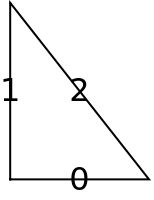
In 2016, I wondered what power triangles could surround a vertex. That led to Wheels of Powered Triangles. When I looked at that again, that led to Shattering the Plane, where I found a lot of new substitution tilings. I also found Powered Clique Polyhedra.
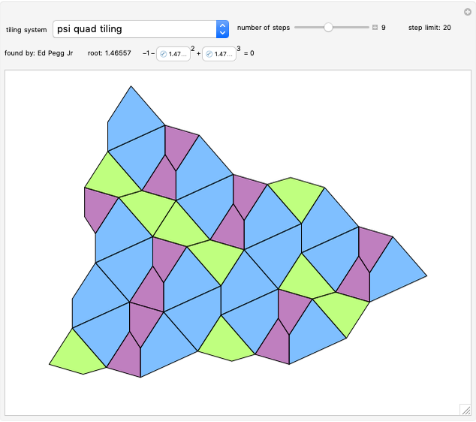
I took another look at the Wheels demo and realized I could make a new rectangle. First, some set-up:
In[]:=
trifig[trias_,color_,points_,root_]:=Module[{lin,ver},ver=Union[Flatten[trias]];Graphics[{EdgeForm[{Black,Thick}],color,Polygon[points[[#]]]&/@trias,Black,With[{line=Subsets[#,{2}],mid=Mean[points[[#]]]},Style[Text[ToString[ResourceFunction["IntegerChop"][Quiet@N[Log[root,EuclideanDistance@@points[[#]]]]]],Mean[{Mean[points[[#]]],Mean[points[[#]]],mid}]],20]&/@line]&/@trias,White,Disk[#,Norm[Last[points]]/60]&/@points[[ver]],Blue,Style[Text[#,points[[#]]],10]&/@ver},ImageSize->450]]
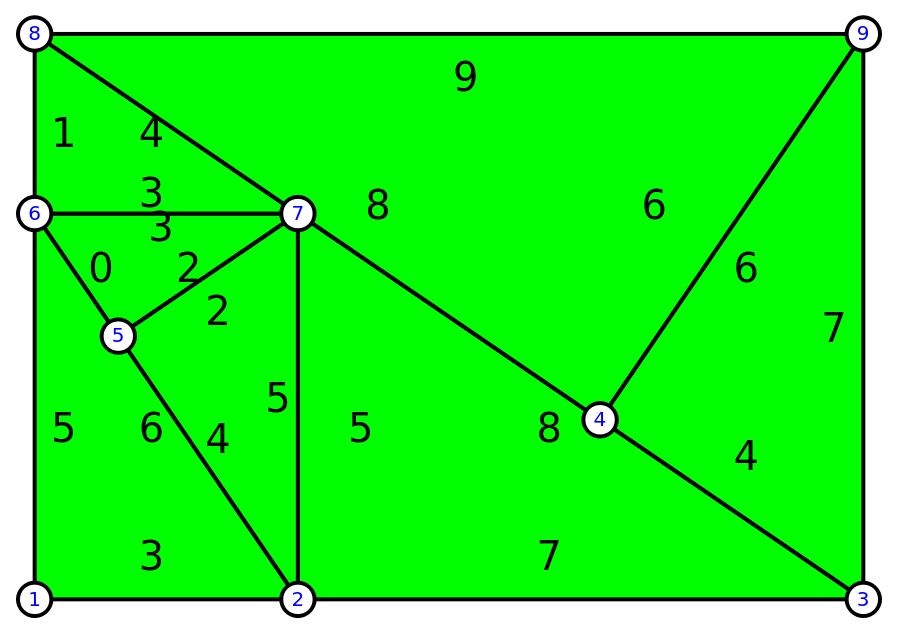
I found the following supergolden rectangle dissection, with seven triangles growing in powers of the supergolden ratio:
In[]:=
psi=RootReduceSqrt;p1={{0,0},{,0},{,0},{,psi},{psi^(-3),},{0,},{,},{0,},{,}};tri={{6,5,7},{8,6,7},{7,5,2},{2,1,6},{3,4,9},{7,2,3},{9,4,8}};trifig[tri,Green,p1,psi]

3
psi
9
psi
7
psi
3
psi
5
psi
3
psi
5
psi
7
psi
9
psi
7
psi
Out[]=
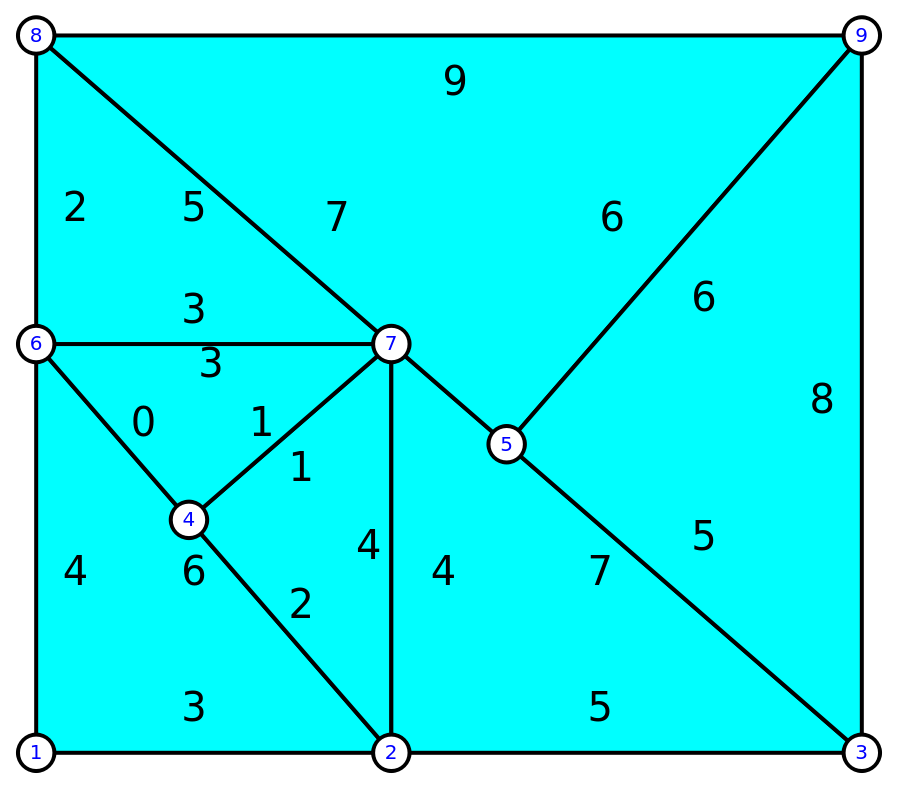
Next, I found the plastic rectangle dissection, with seven triangles growing in powers of the plastic ratio:
In[]:=
rho=RootReduceSqrt;p2={{0,0},{,0},{,0},{rho^(-3),1},{,},{0,},{,},{0,},{,}};tri={{1,2,6},{2,4,7},{6,7,4},{7,6,8},{7,2,3},{8,9,5},{3,9,5}};trifig[tri,Cyan,p2,rho]
3
rho
9
rho
5
rho
2
rho
4
rho
3
rho
4
rho
8
rho
9
rho
8
rho
Out[]=
Following that I got a golden rectangle dissection, with six Kepler triangles growing in powers of the golden ratio:
In[]:=
phi=RootReduce[Sqrt[GoldenRatio]];p3={{0,0},{1,0},{2phi^4,0},{1,phi},{phi^4,phi},{0,phi^5},{phi^4,phi^5},{2phi^4,phi^5}};tri={{1,2,4},{2,4,5},{4,5,7},{5,7,8},{7,6,1},{8,3,2}};trifig[tri,Yellow,p3,phi]
Out[]=
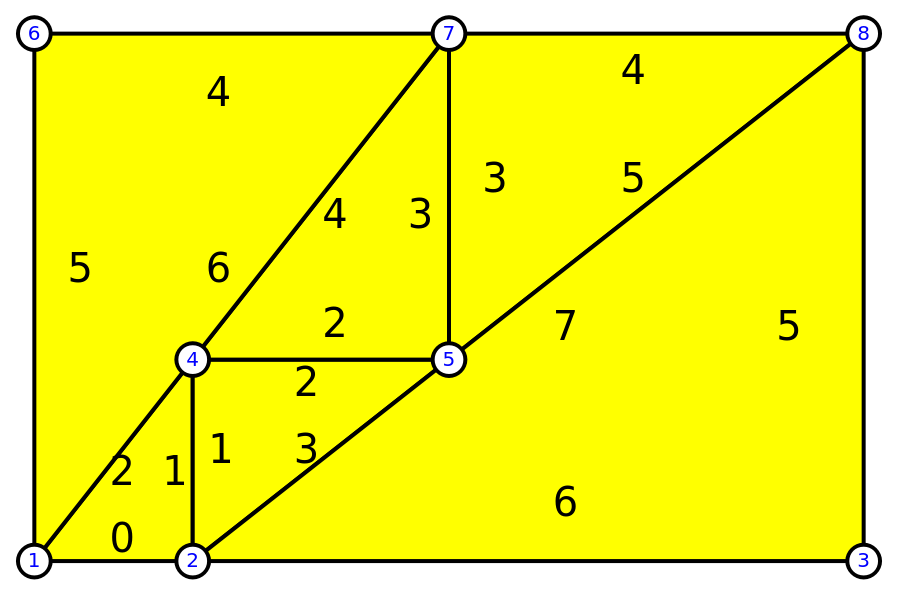
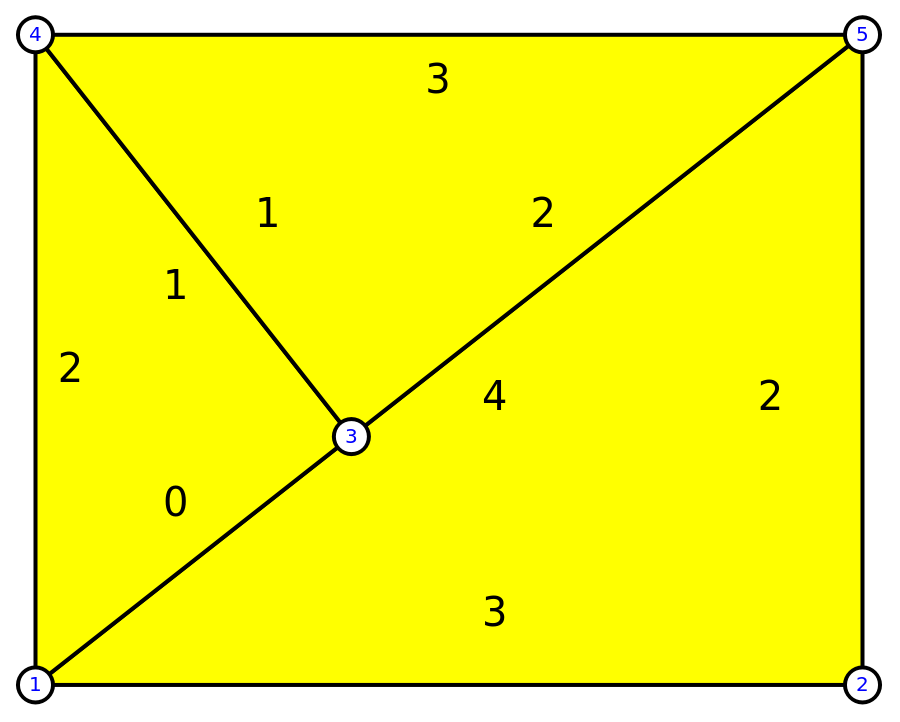
A simpler golden rectangle dissection is known as Brügner's 3-piece Tangram. The three pieces can make 16 convex polygons. The six triangles above is basically a larger set and smaller set. Curiously, the triangles were also used in the game Trigon.
In[]:=
phi=RootReduce[Sqrt[GoldenRatio]];p4={{0,0},{phi^3,0},{phi^(-1),phi^(-2)},{0,phi^2},{phi^3,phi^2}};tri={{1,2,5},{1,3,4},{4,3,5}};trifig[tri,Yellow,p4,phi]
Out[]=
I also found a chi ratio triangle divided into a series of triangles based on the chi constant.
In[]:=
chi=RootReduceSqrt;p5={{0,0},{chi^2,0},{0,chi^3},{chi^2,chi^3},{chi^(-6),chi^(-3)},{0,chi^9},{chi^10,0},{chi^10,chi^9},{chi^4,chi^1},{-chi^0,chi^9},{chi^10,-chi^5}};tri1={{2,3,4},{4,3,6},{4,2,7},{6,8,9},{7,8,9},{3,6,10},{2,7,11}};trifig[tri1,Magenta,p5,chi]