This is part of live presentation series called Mathematical Games in which we explore a variety of games and puzzles using Wolfram Language. In this episode, we explore Two Phi Psi Chi Rho.
demonstrations.wolfram.com
demonstrations.wolfram.com
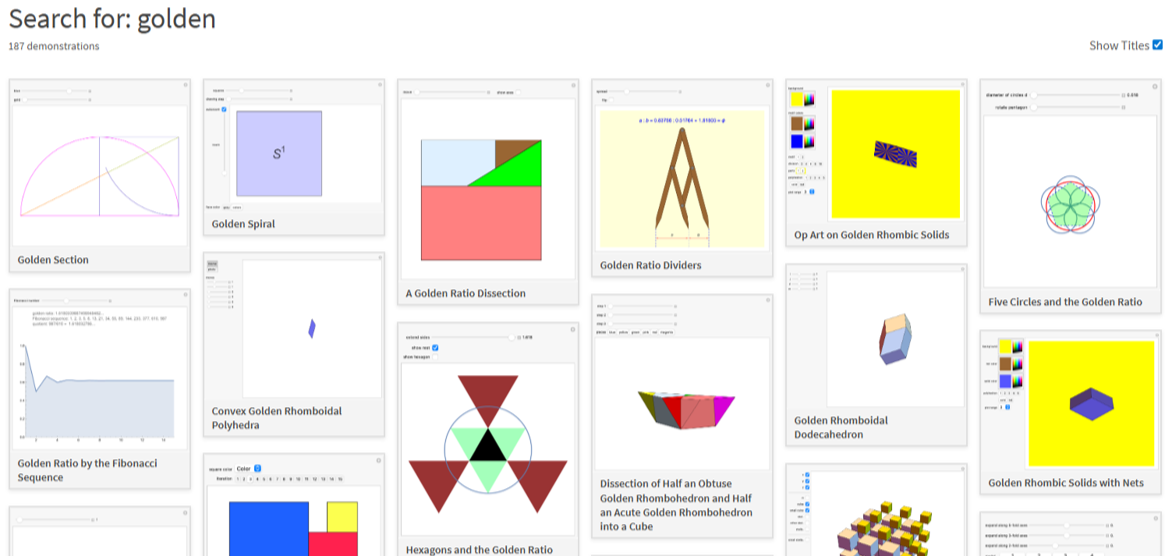
Many Demonstrations use the golden ratio. What about similar constants?
Two, Phi, Psi, Chi, Rho. 2 ϕ ψ χ ρ
Two, Phi, Psi, Chi, Rho. 2 ϕ ψ χ ρ
Various values are infinite sums of their own reciprocals.
In[]:=
Withϕ=1+,χ=,ρ=,RootReduce,,,,
1
2
5
,ψ=
∞
∑
n=0
-n
2
∞
∑
n=1
-n
ϕ
∞
∑
n=2
-n
ψ
∞
∑
n=3
-n
χ
∞
∑
n=4
-n
ρ
Out[]=
2,(1+,,
1
2
5
),Here’s a table of the values:
Out[]=
name | | offset | min poly | discriminant | value | ratio |
two | 2 | 0 | -2+x0 | 1 | 2.0000000 | two |
phi | ϕ | 1 | -1-x+ 2 x | 5 | 1.6180340 | golden |
psi | ψ | 2 | -1- 2 x 3 x | -31 | 1.4655712 | supergolden |
chi | χ | 3 | -1- 3 x 4 x | -283 | 1.3802776 | chi |
rho | ρ | 4 | -1-x+ 3 x | -23 | 1.3247180 | plastic |
It’s worth noting the number field discriminant.
In[]:=
NumberFieldDiscriminant[#^2]&/@2,1+,,
1
2
5
,Out[]=
{1,5,-31,-283,-23}
The discriminant is basically the squared “volume” you get when you take an integer basis for the number field and write its conjugates in a matrix. Here’s the matrix for the plastic constant:
In[]:=
plastic=x/.Solve[x^3==x+1,x];basis=NumberFieldIntegralBasis[plastic[[1]]];M=Outer[(#1/.plastic[[1]]->#2)&,basis,plastic]//RootReduce;MatrixForm[M]
Out[]//MatrixForm=
1 | 1 | 1 |
Note that the first column is powers of the plastic constant.
The square of the determinant is the discriminant:
The square of the determinant is the discriminant:
In[]:=
RootReduce[Det[M]^2]
Out[]=
-23
In case for chi, the second column is powers of chi.
In[]:=
chi=x/.Solve[x^4==x^3+1,x];basis=NumberFieldIntegralBasis[chi[[1]]];M=Outer[(#1/.chi[[1]]->#2)&,basis,chi]//RootReduce;MatrixForm[M]
Out[]//MatrixForm=
1 | 1 | 1 | 1 |
In[]:=
Chop[Det[N[M]]^2]
Out[]=
-283.
In[]:=
TableRootReduce^k,{k,0,3}
Out[]=
1,,,
In radical form, if you prefer:
In[]:=
ColumnToRadicals/@2,1+,,
1
2
5
,Out[]=
2 |
1 2 5 ) |
1 3 1/3 29 2 3 93 2 1/3 1 2 93 ) |
1 3 1/3 27 2 3 69 2 1/3 1 2 69 )2/3 3 |
1 4 1 4 1-16 +1/3 2 3(-9+ 849 )2/3 2 3 1/3 (-9+ 849 )1 2 1 2 1/3 2 3(-9+ 849 )1/3 1 2 849 )2/3 3 1 2 1-16 1/3 2 3(-9+ 849 )2/3 2 3 1/3 (-9+ 849 ) |
Gardner on Phi
Gardner on Phi
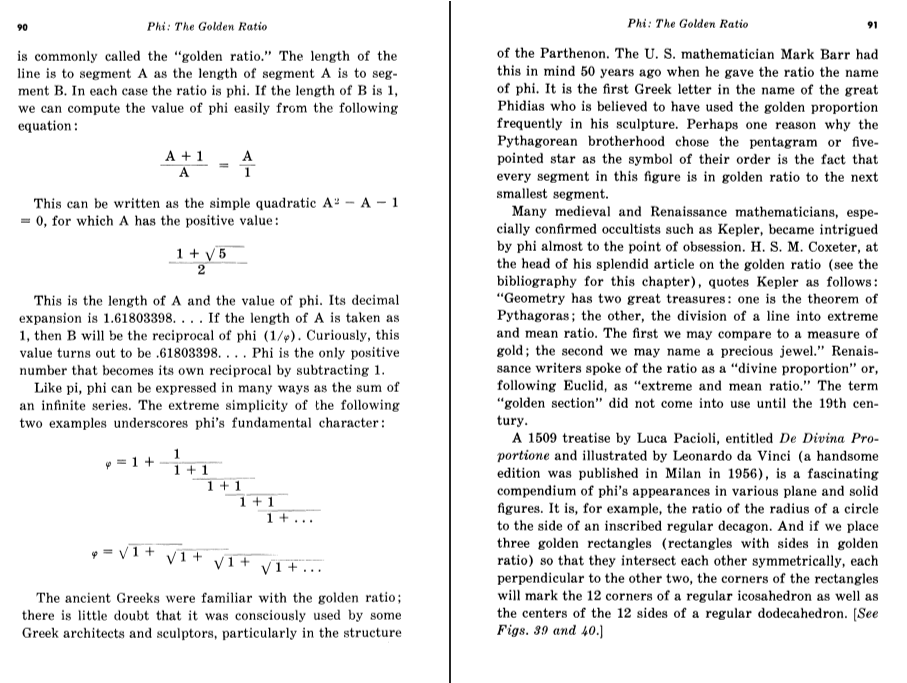
Gardner covered the golden ratio:
Series ratios
Series ratios
Book IX, Proposition 35 -- Euclid discusses the Powers of Two. He also has a construction for the pentagon.
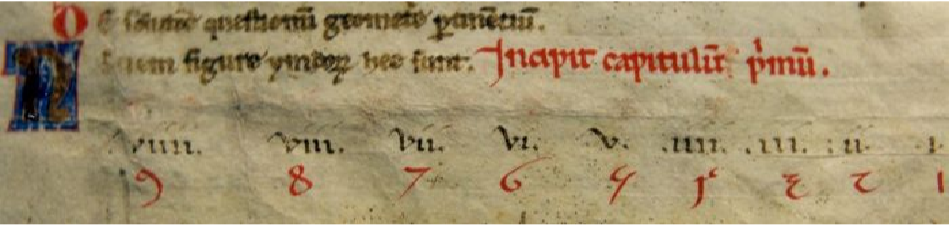
The rabbit problem, leading to what is now called the Fibonacci sequence. The name “Fibonacci” was created in 1838 from “filius Bonacci”or “son of Bonacci.”
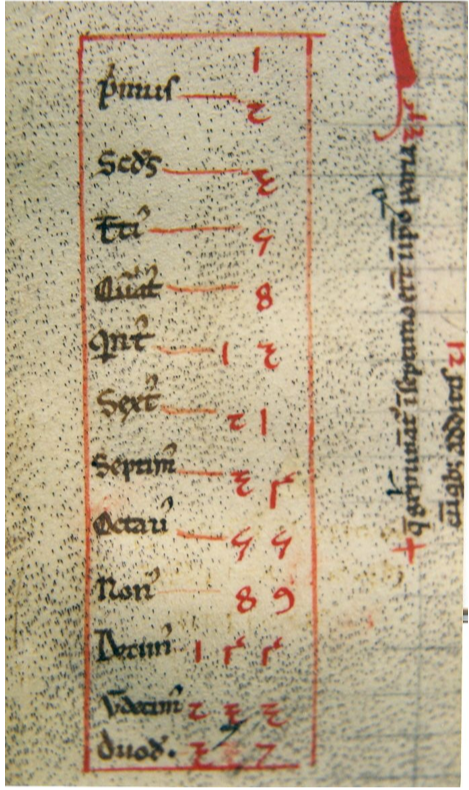
In 1356, Narayana posed the following question in his book Ganita Kaumudi: “A cow gives birth to a calf every year. In turn, the calf gives birth to another calf when it is three years old. What is the number of progeny produced during twenty years by one cow?”
The ratios between terms goes to a constant value.
Powers of 2 Triangle Spiral
Powers of 2 Triangle Spiral
Each triangle has an edge half the length of the next larger triangle. Or the reciprocal of 2.
Powers of ϕ Triangle Spiral
Powers of ϕ Triangle Spiral
Each triangle has an edge 1/ϕ the length of the next larger triangle. Or the reciprocal of ϕ.
Powers of ρ Triangle Spiral (Plastic Constant)
Powers of ρ Triangle Spiral (Plastic Constant)
Each triangle has an edge 1/ρ the length of the next larger triangle. Or the reciprocal of ρ.
Series of Triangles making a rectangle
Series of Triangles making a rectangle
A progression of 22 45° right triangles almost makes a 20×38 rectangle:
Seven triangles growing in powers of the supergolden ratio make a rectangle:
Seven triangles growing in powers of the plastic ratio make a rectangle:
I also found a chi ratio triangle divided into a series of 7 triangles based on the chi constant.
Constructions: Euclid’s Elements (c. 300 BCE)
Constructions: Euclid’s Elements (c. 300 BCE)
With a ruler and compass, an eye is easy to construct, leading to a regular pentagon construction. First draw a unit circle centered at O, the pupil. With centers at the top and bottom of the pupil, draw two circles of radius 2 to form the eyelids. Using the top of the pupil (A) as the center, draw an arc of radius 1 (AO) to intersect the upper eyelid at B. With C as the left corner of the eye, draw an arc with radius OC, and then a larger arc with radius BC. Draw a final arc with radius BC centered at O. Connect the intersection points for the pentagon.
The Beloch Fold
The Beloch Fold
In origami, their are seven Huzita–Hatori axioms:
1. Fold through two points (line through two points).
2. Fold a point onto another point (perpendicular bisector).
3. Fold a line onto a line (angle bisector).
4. Fold through a point perpendicular to a line (line through a point perpendicular to a line).
5. Fold a point onto a line, passing the crease through another point (tangent to a parabola).
6. Fold a point onto a line and another point onto another line (common tangent to two parabolas).
7. Fold a point onto a line, making the crease perpendicular to another line (tangent to a parabola perpendicular to a line).
1. Fold through two points (line through two points).
2. Fold a point onto another point (perpendicular bisector).
3. Fold a line onto a line (angle bisector).
4. Fold through a point perpendicular to a line (line through a point perpendicular to a line).
5. Fold a point onto a line, passing the crease through another point (tangent to a parabola).
6. Fold a point onto a line and another point onto another line (common tangent to two parabolas).
7. Fold a point onto a line, making the crease perpendicular to another line (tangent to a parabola perpendicular to a line).
The sixth axiom was found in 1936 by Margherita Beloch. This fold is now named the Beloch fold, and can be used in origami to solve various problems that cannot be solved with ruler and compass.
We can fold the cube root of 2:
We can make a fold for a heptagon:
We can fold a nonagon:
Degenerate Power Simplices
Degenerate Power Simplices
Powered Simplex Study -- Planes
Powered Simplex Study -- Planes
I decided to expand the previous Demonstration.
For five points, their volume in 4D space is given by a Cayley-Menger matrix based on the distances between points. If the hypervolume is zero, then the five points are a flat and have a representation in 3D space.
For the ten edge lengths, there are 120 permutations to consider for a canonical form.
For positive integer simplices, I calculated canonical forms up to integer value 5.
For all 443353 of them, I calculated possible roots of flats. Send me email if you want the 443353 canonicals.
For all 443353 of them, I calculated possible roots of flats. Send me email if you want the 443353 canonicals.
I was looking for power simplices, where all of these integer values are powers of a root. Here’s 52 of them.
Here’s one of them. The 4D volume is zero.
Let’s look at them. Not only do these exist in 3D, they also exist in 2D. The predominant roots are plastic, supergolden, golden, two and chi.
Note to Self: Take a closer look at these Supergoldens:
Powered Simplex Study -- Flats
Powered Simplex Study -- Flats
Remember, Flats are 3D objects. What powered simplices do we get in 3D?
Recall the table from the start.
Here’s a tally of discriminants
The predominant roots are plastic (-23), supergolden (-31), golden (5), chi (-283) and two (8). My count for TWO is low because I accidentally eliminated them from a two day run on everything, but still had partial data. I went into this experiment thinking those values would predominate, and that conjecture was correct.
Let’s take a look at them.
A K19 Powered Simplex
A K19 Powered Simplex
Here’s an object I call the Plastic Pyramid. Is K19 the largest complete graph in 3D representable by a powered simplex?
When I found this thing, I convinced myself that 19 was the maximal points for the plastic constant. That might be true. However, I also convinced myself that nothing else could compete with it. Based on my previous experiment where I showed that 2 ϕ ψ χ work just as well as ρ, I need to redo that experiment.
I’ll call 19 the Maximal Flat Degeneracy value for the plastic constant.
Pisot, Salem and Cyclotomic Polynomials
Pisot, Salem and Cyclotomic Polynomials
The Mekhontsev Wedge
The Mekhontsev Wedge
“A non-trivial self-similar convex polyhedron (rep-8-tile, V=6 F=5 E=9) that I found using IFStile.” - Dmitry Mekhontsev
This object lives in rational space:
Let’s repeat the mapping:
Let’s go another level with it:
One point get used a lot. In fact, it gets used 48 times.
It can be built as 7/6th of a side-2 cube.
Wheels of Powered Triangles -- The Similar Triangle Experiment
Wheels of Powered Triangles -- The Similar Triangle Experiment
Problem: Divide a polygon (other than a right triangle) into similar triangles that are not congruent and not right triangles. How can this be done?
The SqrtTwo Triangle
The SqrtTwo Triangle
Here’s the starting point for the SqrtTwo triangle:
If it weren’t for the Sqrt[14], it would offer another 2D degenerate simplex.
A modified form is the following. Looking at this, I should likely redo my triangle experiment.
Which can be seen in here.
Another related item is this dissection of the 4-5-6 triangle into five similar triangles.
Mathematica can solve the 4-5-6 triangle:
The SqrtPhi Triangle
The SqrtPhi Triangle
Here’s the starting point for the SqrtPhi triangle:
Which can be seen in here.
The SqrtChi Triangle
The SqrtChi Triangle
Here’s the starting point for the SqrtPhi triangle:
Which can be seen in here.
Substitution Tiling Systems: Two
Substitution Tiling Systems: Two
Substitution systems related to Two.
Substitution Tiling Systems: Phi
Substitution Tiling Systems: Phi
Substitution systems related to Phi, the golden ratio.
Substitution Tiling Systems: Psi
Substitution Tiling Systems: Psi
Substitution systems related to Psi, the supergolden ratio.
Substitution Tiling Systems: Rho
Substitution Tiling Systems: Rho
Substitution systems related to Rho, the plastic constant.
I need to add Vesa Timonen’s Plastic Pentagon
The following diagram isn’t quite right.
Rectangles
Rectangles
The Golden ratio has a nice continued fraction:
Classically, if you remove a square from a golden rectangle, you get another golden rectangle:
A4 paper, when folded in half, results in a rectangle similar to the original rectangle.
We can also divide up an area 200 sheet of A4 paper into smaller A4 rectangles.
The supergolden rectangle uses two rectangles and a square.
The plastic constant allows a square to be divided into three similar rectangles. The side length ratios are all the same.
Nice Triangles
Nice Triangles
There are many triangles with at least one nice angles when using simple powers of 2 ϕ ψ χ ρ.
Tetrahedral and Octahedral Similarohedrons
Tetrahedral and Octahedral Similarohedrons
Chaos Game
Chaos Game
We can make a fractal using the chaos game, which randomly picks a next point from two options. The iteration produces two similar fractal triangles.
For the supergolden ratio:
We can generate the wriggly edge to any desired fractal depth. Both triangles together build a third similar triangle, making it a self-similar dissection, irreptile, or Rauzy fractal.
For the plastic constant:
Code for the boundary.
Various Fractal Substitutions
Various Fractal Substitutions
The recently updated program IFSTile provides hundreds of irreptiles based on 2 ϕ ψ χ ρ. Here are a few order 3 examples:
The Two Triangle, a fractal substitution for the 1-2-2 triangle:
The Regular and Archimedean Solids
The Regular and Archimedean Solids
Many polyhedra use two, phi or the tribonacci constant. Here’s an amusing property of the truncated octahedron:
The polyhedra in the octahedral group use Two:
The polyhedra in the icosahedral group use Phi:
The snubs are in the Tribonacci constant space, with the dodecahedron adding Phi.
Here’s a construction for the snubs each using a single root object:
The radius of this object:
Uses the plastic constant:
Miscellanea
Miscellanea
Psi as a matrix:
Rho as a matrix:
The 29th power of ρ is close to 3480.
The 33th power of ψ is close to 300765.
Powers of ϕ are close to Lucas numbers.
Which is the 38th Lucas number.
Unsolved
Unsolved
How can similar triangles surround a point? It seems I missed some.
How can similar tetrahedra surround a point?
In the list of degenerate simplices, which ones overlap?
Is the Maximal Flat Degeneracy value for the plastic constant 19?
What is the Maximal Flat Degeneracy value for the supergolden ratio?
How can similar tetrahedra surround a point?
In the list of degenerate simplices, which ones overlap?
Is the Maximal Flat Degeneracy value for the plastic constant 19?
What is the Maximal Flat Degeneracy value for the supergolden ratio?
CITE THIS NOTEBOOK
CITE THIS NOTEBOOK
Mathematical Games: Two Phi Psi Chi Rho (2 φ ψ χ ρ)
by Ed Pegg
Wolfram Community, STAFF PICKS, January 22, 2026
https://community.wolfram.com/groups/-/m/t/3622456
by Ed Pegg
Wolfram Community, STAFF PICKS, January 22, 2026
https://community.wolfram.com/groups/-/m/t/3622456