Expandable Version of Newton's Proposition 1, Book 1 of Principia
Expandable Version of Newton's Proposition 1, Book 1 of Principia


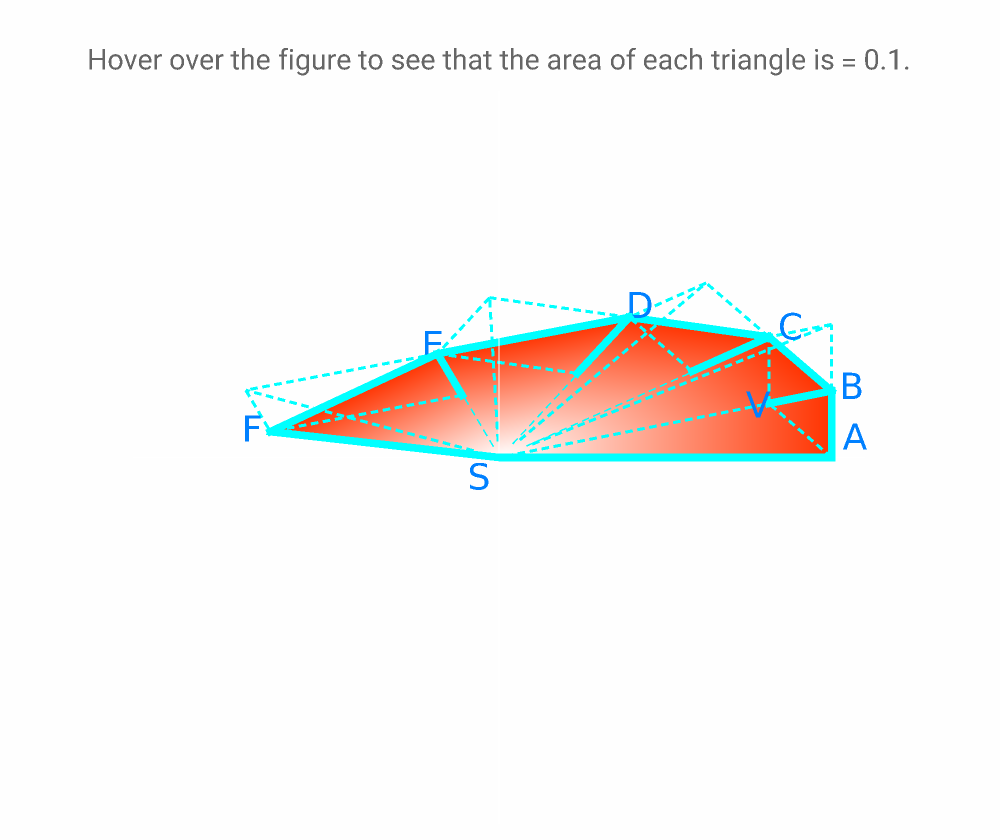
This Demonstration considers an expandable model of Isaac Newton's figure for Proposition 1, Book 1 of the Principia, 1687[1].
The five triangles were the extent of Newton's geometrical construction, which was intended to mathematically confirm Kepler's Second Law that the radial arm from a central body to an orbiting body (starting at ) sweeps out equal areas in equal times.
S
A
The triangular areas are always equal for all slider positions. This geometrically represents the physicality of equal areas in equal times, as further shown in the Snapshots.
Details
Details
In[1], Newton provides the geometrical steps and figure for the construction of the model shown here.
References
References
[1] I. Newton, Newton's Principia: The Mathematical Principles of Natural Philosophy (A. Motte, trans., N. W. Chittenden, ed.) New York: Geo. P. Putnam, 1850 pp. 103–104. books.google.com/books?id=N-hHAQAAMAAJ.
External Links
External Links
Permanent Citation
Permanent Citation
William J. Stockich
"Expandable Version of Newton's Proposition 1, Book 1 of Principia"
http://demonstrations.wolfram.com/ExpandableVersionOfNewtonsProposition1Book1OfPrincipia/
Wolfram Demonstrations Project
Published: March 25, 2024