This is part of live presentation series called Mathematical Games in which we explore a variety of games and puzzles using Wolfram Language. In this episode, we explore games that involve geology, AI and recent advances.
Watch on YouTube: https://www.youtube.com/watch?v=xTXSGaZRpKQ
demonstrations.wolfram.com
demonstrations.wolfram.com
We have a few Demonstrations for Geology.
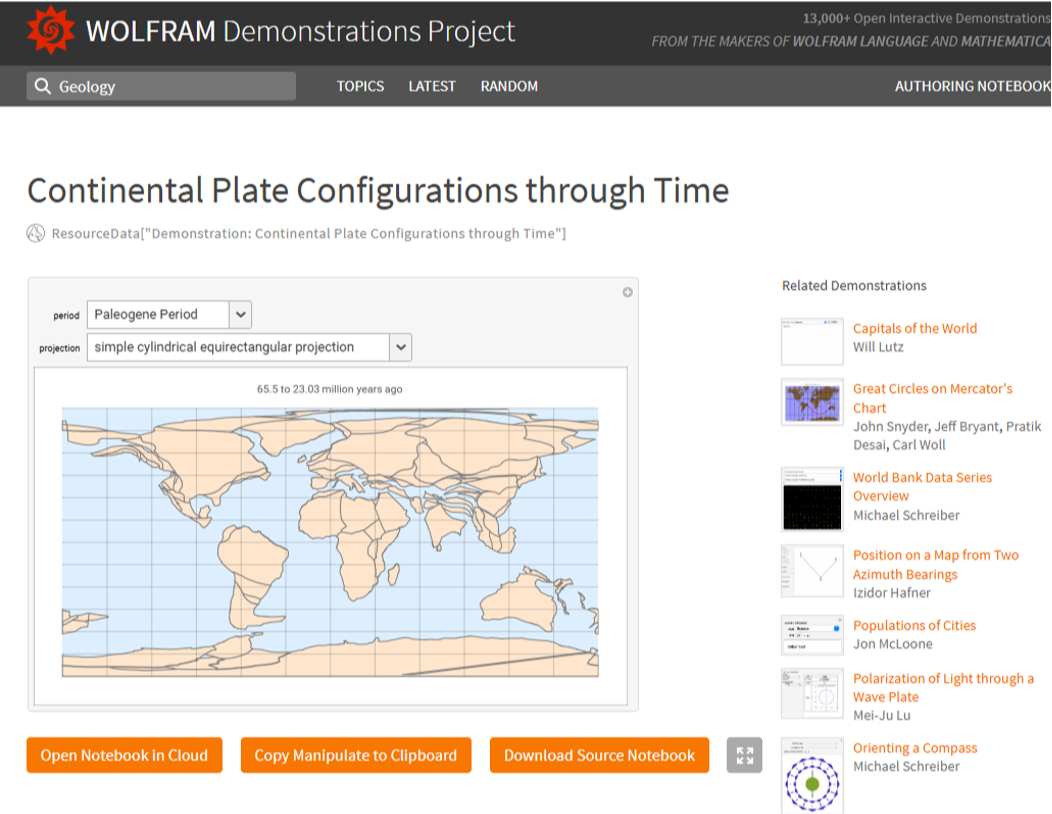
Quintic Crossing Numbers 8, 10, 14
Quintic Crossing Numbers 8, 10, 14
At Smallest Quartic Crossing Number Graph, Eric Weisstein has collected minimal quartic graphs that require a given number of crossings.
The minimal graphs for 8, 10 and 14 crossings are unique.
The minimal graphs for 8, 10 and 14 crossings are unique.
No-Three-In-Line Problem
No-Three-In-Line Problem
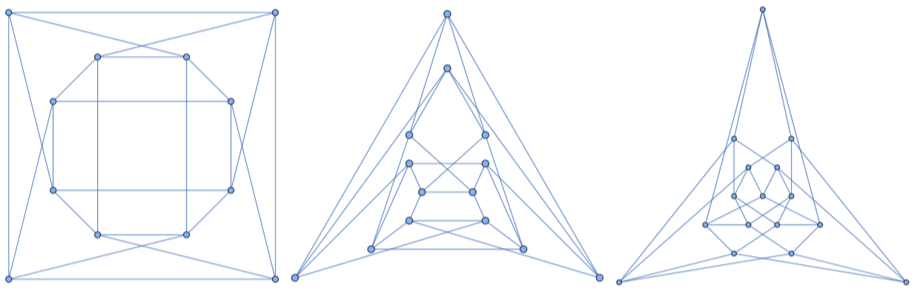
Arrange points in a grid so that no three points are in a line.
In 1975, a solution for 104 points in a 52×52 grid was found.
On 23rd March 2026 ,Thomas Prellberg found new record solution with grid size n=68
In 1975, a solution for 104 points in a 52×52 grid was found.
On 23rd March 2026 ,Thomas Prellberg found new record solution with grid size n=68
Erich’s Packing Center
Erich’s Packing Center

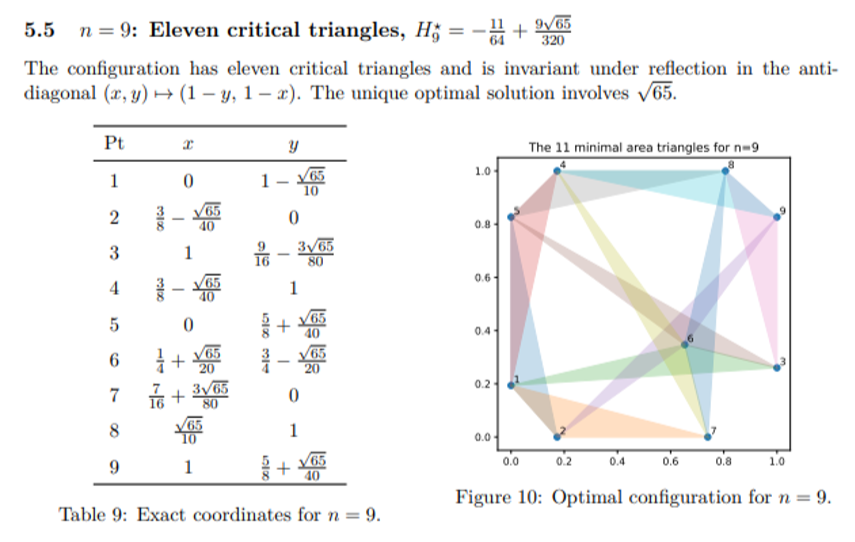
Heilbronn Triangle Problem
Heilbronn Triangle Problem
Idea: How much can AI assist a WL presentation?
Idea: How much can AI assist a WL presentation?
1. First, pick a topic. I chose Geological History.
2. Research some Community posts, videos and books.
a. Pleistocene-Holocene Sea Level 500K Years Change UK/European Coastlines.
b. Age and Rank of North American Coal Deposits.
c. Computational Geology and related post.
d. Kurzgesagt: 4.5 Billion Years in 1 Hour.
e. Geologic Time Scale 2020.
3. Pick some AIs to help out.
a. Wolfram Notebook Assistant.
b. ChatGPT.
c. Suno.
d. Google Gemini.
4. Hash out an outline, do more research and go through it over and over again.
5. And here we go.
■ Hadean 4567–4031 Ma
■ Hadean 4567–4031 Ma
Hadean — Solar dust and impact storms half-built a world of flame,
Then Theia struck, the Moon rose up and Earth was not the same.
From Hades, the Greek underworld; chosen for Earth’s hot, violent beginning.
Then Theia struck, the Moon rose up and Earth was not the same.
From Hades, the Greek underworld; chosen for Earth’s hot, violent beginning.
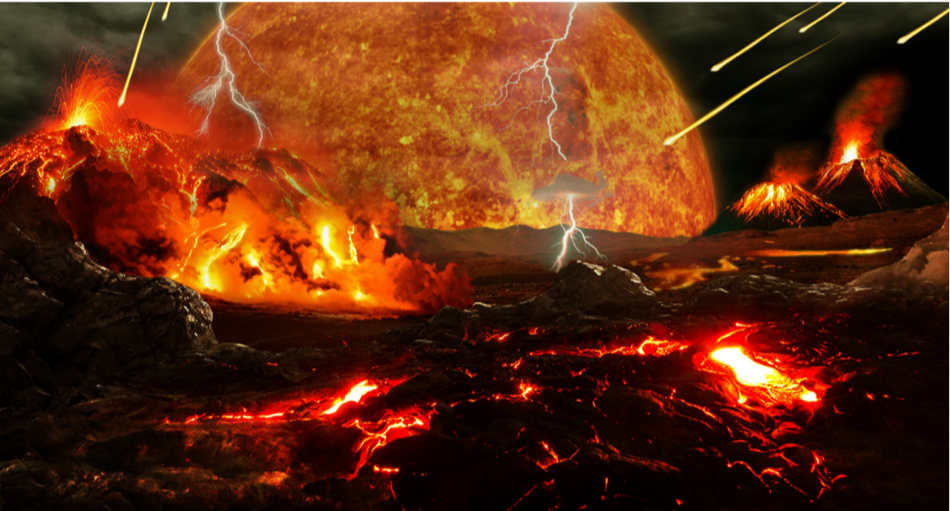
Theia Impact Event
Theia Impact Event
Chorus: Moon from impact, oceans later, start the world again.
■ Eoarchean 4031–3600 Ma
■ Eoarchean 4031–3600 Ma
Earth’s oldest surviving rocks kept scraps of crust and sea,
Beneath a faint young Sun, the record starts with what could be.
Dawn Archean; the earliest part of the Archean. 4,030,000,000 Year Acasta Gneiss
Beneath a faint young Sun, the record starts with what could be.
Dawn Archean; the earliest part of the Archean. 4,030,000,000 Year Acasta Gneiss
■ Paleoarchean 3600–3200 Ma
■ Paleoarchean 3600–3200 Ma
Greenstone belts and cratons grew from lava, rain and tide,
Microbial mats began to leave their signatures inside.
Microbial mats began to leave their signatures inside.
Old Archean; early Archean time after the Eoarchean.
Vaalbara, one of Earth’s earliest supercontinents, may have formed during this era
Vaalbara, one of Earth’s earliest supercontinents, may have formed during this era
■ Mesoarchean 3200–2800 Ma
■ Mesoarchean 3200–2800 Ma
Stromatolites built layered banks in warm and shallow light,
Continents grew thicker roots and held through pressure, heat and night.
Middle Archean. Stromatolites:
Continents grew thicker roots and held through pressure, heat and night.
Middle Archean. Stromatolites:
■ Neoarchean 2800–2500 Ma
■ Neoarchean 2800–2500 Ma
Cyanobacteria worked the seas before the air turned blue,
Banded iron took the oxygen and wrote it down in view.
Banded iron took the oxygen and wrote it down in view.
Anatomy of a Neoarchean continental arc-backarc system in the Cross Lake-Pipestone Lake region, northwestern Superior Province, Canada.
Precambrian Research, Volume 370, March 2022, 106556. New Archean; the later Archean.
Precambrian Research, Volume 370, March 2022, 106556. New Archean; the later Archean.
■ Siderian 2500–2300 Ma
■ Siderian 2500–2300 Ma
Iron oceans dropped their load in red and charcoal bands,
Oxygen began to count in air, in weathered rocks and lands.
From Greek sideros, iron; named for major banded iron formations
Oxygen began to count in air, in weathered rocks and lands.
From Greek sideros, iron; named for major banded iron formations
■ Rhyacian 2300–2050 Ma
■ Rhyacian 2300–2050 Ma
Methane lost its greenhouse hold as oxygen changed the air,
Glaciers reached across the world and left their damage there.
Bushveld Igneous Complex -- the largest layered igneous intrusion within the Earth’s crust.
From Greek rhyax, stream of lava; points to volcanic activity and large igneous provinces.
Glaciers reached across the world and left their damage there.
Bushveld Igneous Complex -- the largest layered igneous intrusion within the Earth’s crust.
From Greek rhyax, stream of lava; points to volcanic activity and large igneous provinces.
■ Orosirian 2050–1800 Ma
■ Orosirian 2050–1800 Ma
Vredefort struck early, Sudbury burned the shield,
Two huge scars in ancient rock still shape the mines they yield.
From Greek oroseira, mountain range; named for major mountain-building belts.
Two huge scars in ancient rock still shape the mines they yield.
From Greek oroseira, mountain range; named for major mountain-building belts.
■ Statherian 1800–1600 Ma
■ Statherian 1800–1600 Ma
Crust grew steadier, basins spread and platforms held their sheets,
Nuna started taking form through slow tectonic beats.
From Greek statheros, stable; named for stabilization of continental crust.
Nuna started taking form through slow tectonic beats.
From Greek statheros, stable; named for stabilization of continental crust.
■ Calymmian 1600–1400 Ma
■ Calymmian 1600–1400 Ma
Cover rocks lay broad and flat across the stable crust,
Quiet seas and sediment kept the middle planet’s trust.
Volyn biota. From Greek kalymma, cover; named for broad sedimentary covers on stable platforms.
Quiet seas and sediment kept the middle planet’s trust.
Volyn biota. From Greek kalymma, cover; named for broad sedimentary covers on stable platforms.
■ Ectasian 1400–1200 Ma
■ Ectasian 1400–1200 Ma
Old platforms stretched and widened while the seas stayed low and warm,
Eukaryotes held small positions before they changed the form.
From Greek ektasis, extension; named for continuing expansion of platform covers. Mackenzie dike swarm
Eukaryotes held small positions before they changed the form.
From Greek ektasis, extension; named for continuing expansion of platform covers. Mackenzie dike swarm
■ Stenian 1200–1000 Ma
■ Stenian 1200–1000 Ma
Rodinia came together through the Grenville mountain chains,
Narrow belts of altered rock marked continents under strain.
From Greek stenos, narrow; named for narrow metamorphic belts from mountain-building.
Narrow belts of altered rock marked continents under strain.
From Greek stenos, narrow; named for narrow metamorphic belts from mountain-building.
■ Tonian 1000–720 Ma
■ Tonian 1000–720 Ma
Rodinia cracked along its seams and shorelines changed their run,
New rifts, new seas and weathered rock helped set up ice to come.
From Greek tonos, stretch; named for crustal stretching during Rodinia breakup.NASA: After the Boring Billion and Before the Freezing Millions
New rifts, new seas and weathered rock helped set up ice to come.
From Greek tonos, stretch; named for crustal stretching during Rodinia breakup.NASA: After the Boring Billion and Before the Freezing Millions
■ Cryogenian 720–635 Ma
■ Cryogenian 720–635 Ma
Sturtian ice, then Marinoan, gripped the globe in white,
Cap carbonates marked the thaw when oceans found the light.
Cap carbonates marked the thaw when oceans found the light.
Snowball Earth 650–635 Ma
Snowball Earth 650–635 Ma
White world, bright world, freeze it to the bone.
■ Ediacaran 635–538.8 Ma
■ Ediacaran 635–538.8 Ma
The ice let go, the seas came back, soft bodies pressed in sand,
Dickinsonia, Charnia, Kimberella made forms with no clear brand.
Dickinsonia, Charnia, Kimberella made forms with no clear brand.
Named for the Ediacara Hills in South Australia, source of famous soft-bodied fossils. Ediacaran ‘worm’, Vendian, Ediacara Hills, south Australia - Houston Museum of Natural Science Charnia frond. A GSSP golden spike is a reference point which defines a stage on the geologic time scale. 81 of the 101 stages have spikes.
End-Ediacaran extinction 550–539 Ma
End-Ediacaran extinction 550–539 Ma
Before the Cambrian took the stage, old body plans declined,
Burrows, grazers, chemistry and time left stranger worlds behind.
Burrows, grazers, chemistry and time left stranger worlds behind.
■ Cambrian 538.8–486.85 Ma
■ Cambrian 538.8–486.85 Ma
Shells and spines and camera eyes arrived like tools on cue,
Predator and prey both leveled up; the old food web broke through.
Chengjiang, Burgess, trilobites, claws and plated skin,
The fossil record filled with shells, plates, claws and limbs.
From Cambria, the Latin name for Wales, where classic rocks of this age were studied.
Trilobites, Anomalocaris, Burgess Shale fossils in Smithsonian,
At age 9, I got into a course at the Rochester Museum & Science Center.
We would go to interesting geological areas that had trilobytes and other fossils.
We would go to interesting geological areas that had trilobytes and other fossils.
CITE THIS NOTEBOOK
CITE THIS NOTEBOOK
Mathematical Games: geology, AI and recent advances -- Part 1
by Ed Pegg
Wolfram Community, STAFF PICKS, May 25, 2026
https://community.wolfram.com/groups/-/m/t/3721898
by Ed Pegg
Wolfram Community, STAFF PICKS, May 25, 2026
https://community.wolfram.com/groups/-/m/t/3721898