New Information for Alternative Tiling
New Information for Alternative Tiling
New Substitution Function
New Substitution Function
Main Discussion
Main Discussion
From Alternative H7 and H8
From Alternative H7 and H8
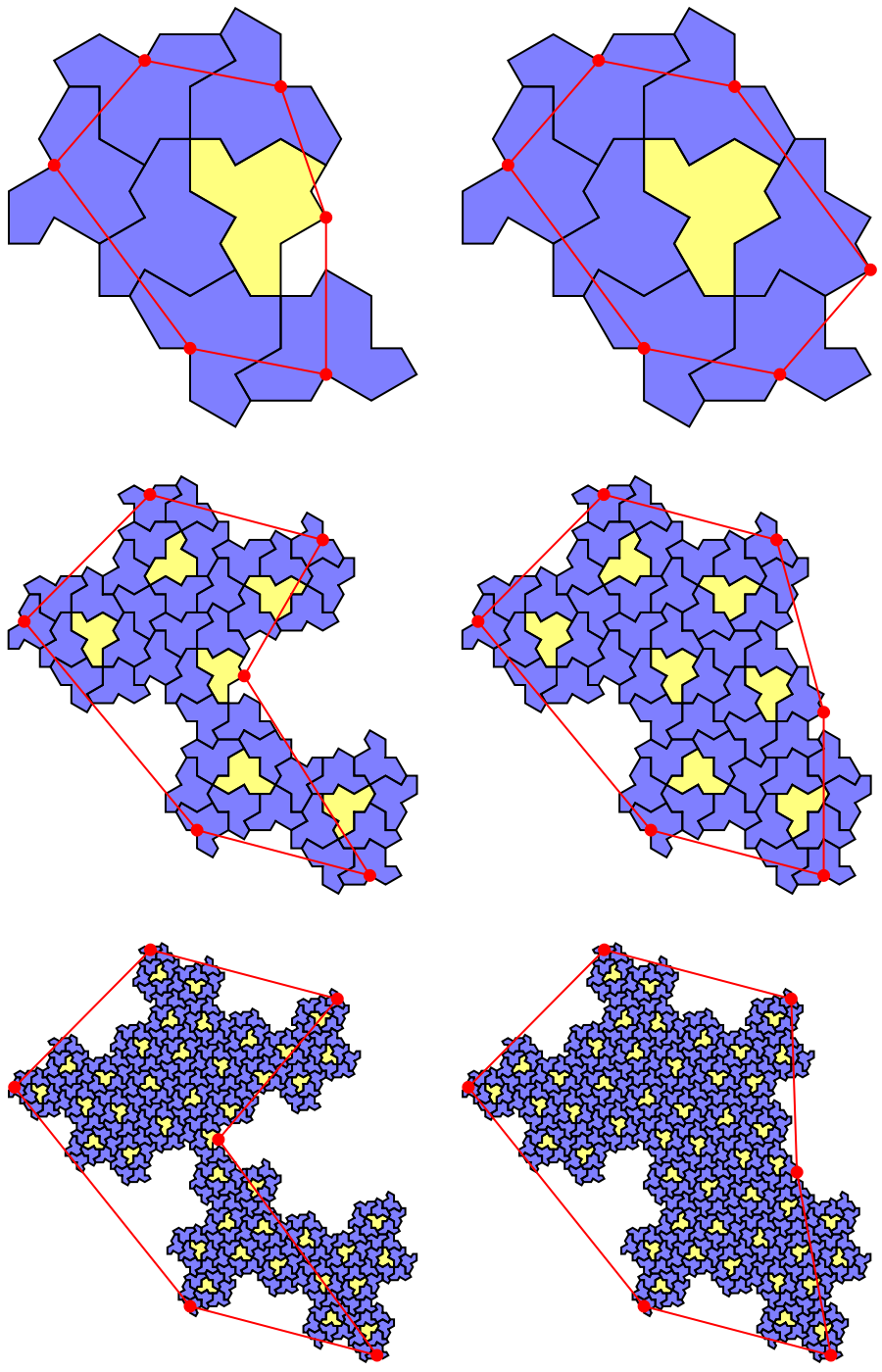
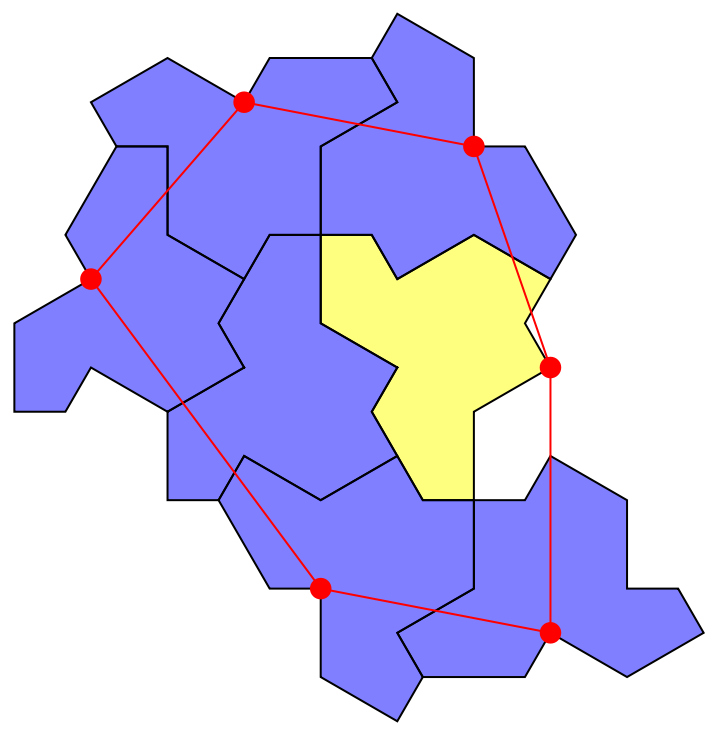
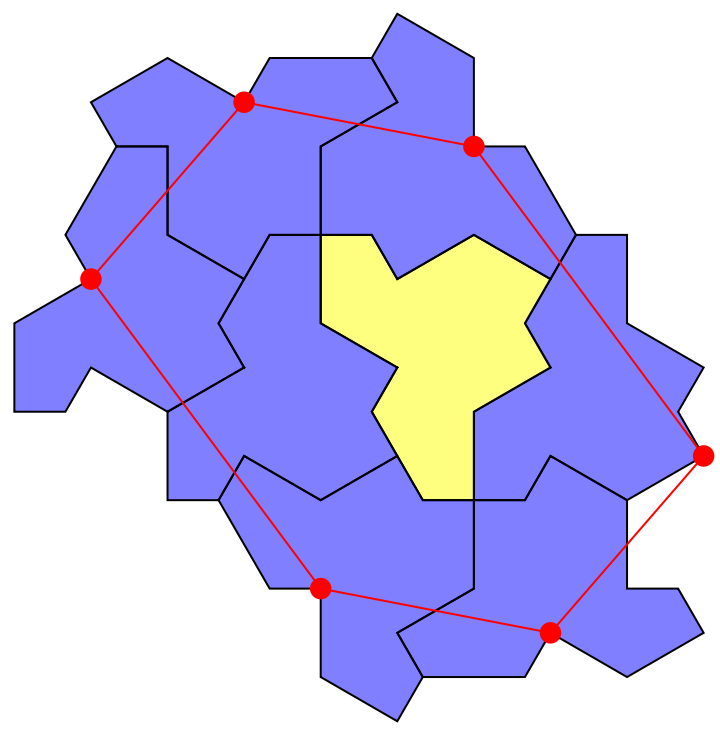
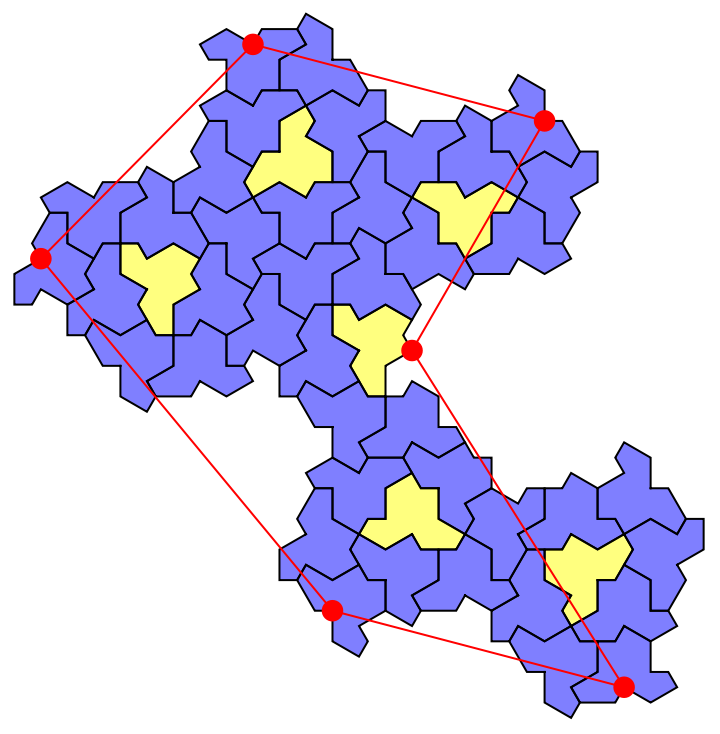
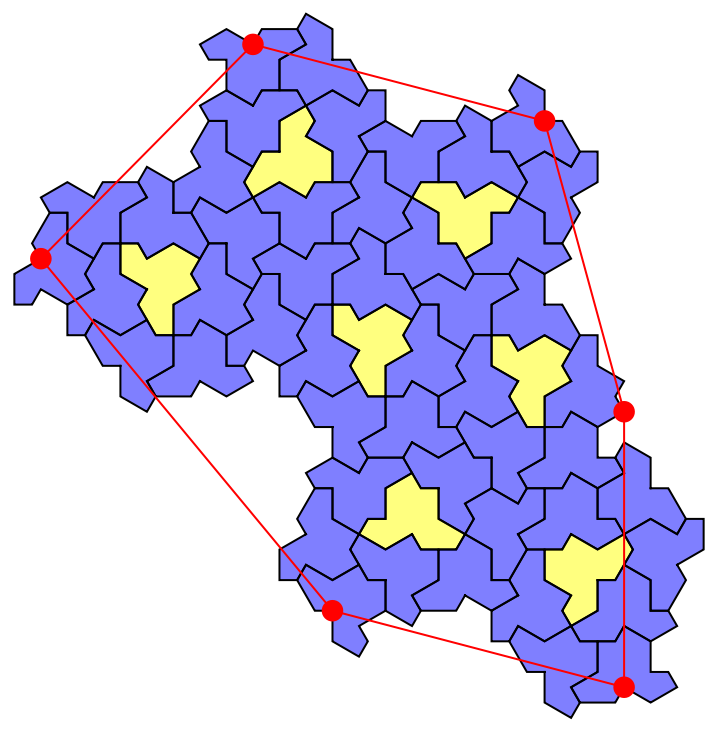
It is easy to make a little change on the code previous, then we can use the same idea to construct the same super-tiles with alternative H7 and H8:
We need to change two control points, and how they are be distinguished in cluster as well. But for this case, there’s a big hole in the middle of the cluster.
In[]:=
superTiles=Reap[NestList[Values[Asubstitute[#[[1]],#[[2]]]]&,{AH7Tiling,AH8Tiling},2]];
In[]:=
Map[depictControlPoints,superTiles[[1]],{2}]//GraphicsGrid
Out[]=
From Alternative H2 and H1
From Alternative H2 and H1
After observing and trying, we got control points of H2 and H1 as following:
In[]:=
depictControlPoints/@{AH2Tiling,AH1Tiling}//GraphicsRow
Out[]=
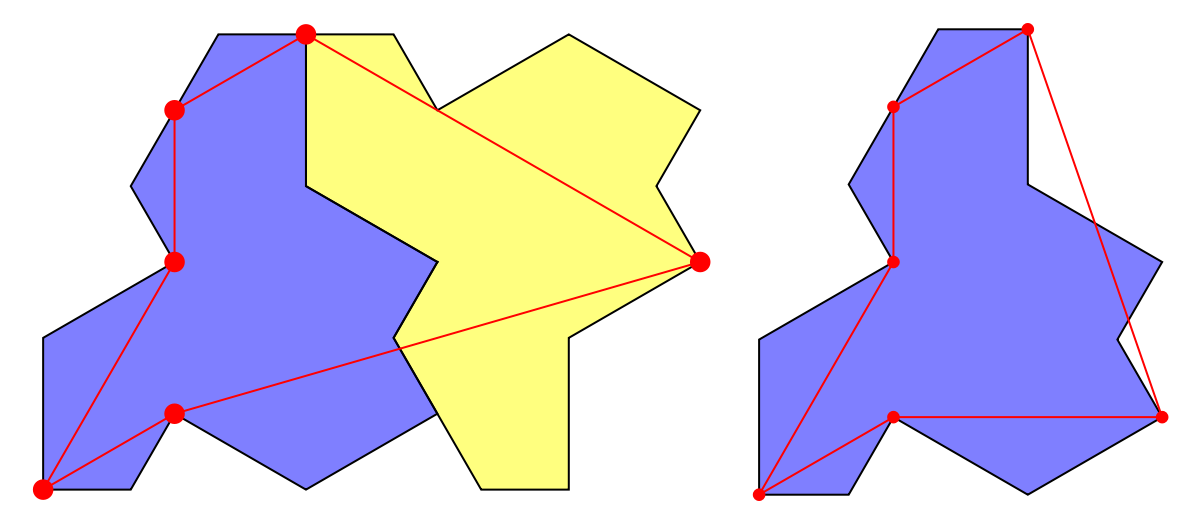
Only H2 is different from original H2, just like H7 changes into alternative H7.
In[]:=
superTiles=Reap[NestList[Values[Asubstitute[#[[1]],#[[2]]]]&,{AH2Tiling,AH1Tiling},2]];
In[]:=
Column[Riffle[MapThread[Grid[{depictControlPoints/@#1,Style[#,Purple,Bold,Italic,14]&/@#2}]&,{superTiles[[1]],{{"H2","H1"},{"H7","H8"},{"H7 super-tile","H8 super-tile"}}}],Style["↓",60,Red,Bold]],Alignment->Center,Spacings->1]
Out[]=
| ||||
↓ | ||||
| ||||
↓ | ||||
|
The process of construction
The process of construction
Original H7 and H8
In[]:=
superTiles=Reap[NestList[Values[substitute[#[[1]],#[[2]]]]&,{H2Tiling,H1Tiling},2]];
In[]:=
Row[Riffle[(depictControlPoints/@superTiles[[2,1,1,;;#]]//Show)&/@Range[7],Style["→",32,Purple,Bold]],Alignment->Center]
Out[]=
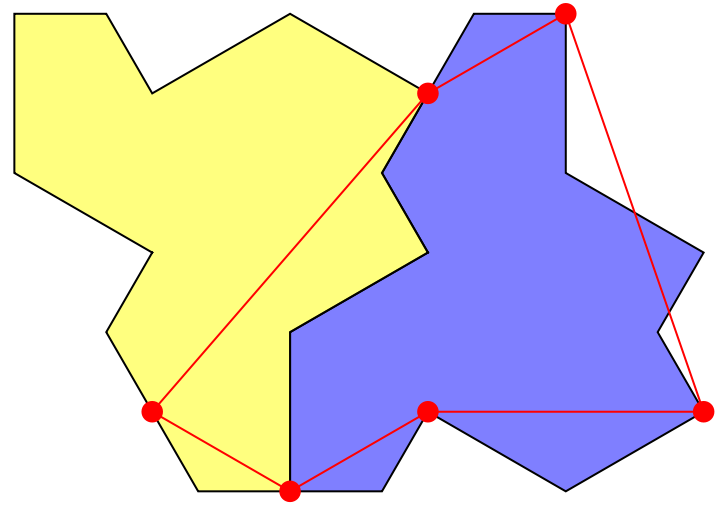
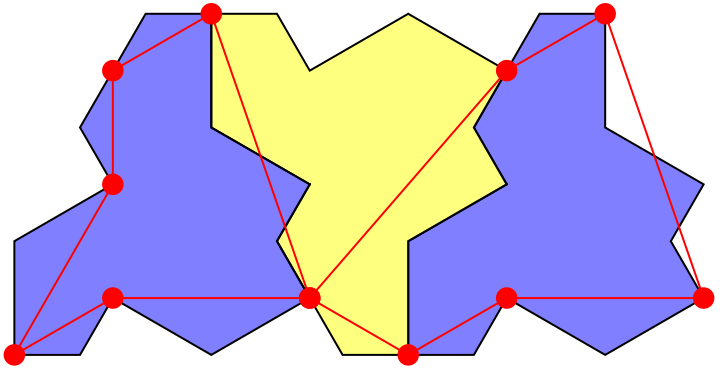
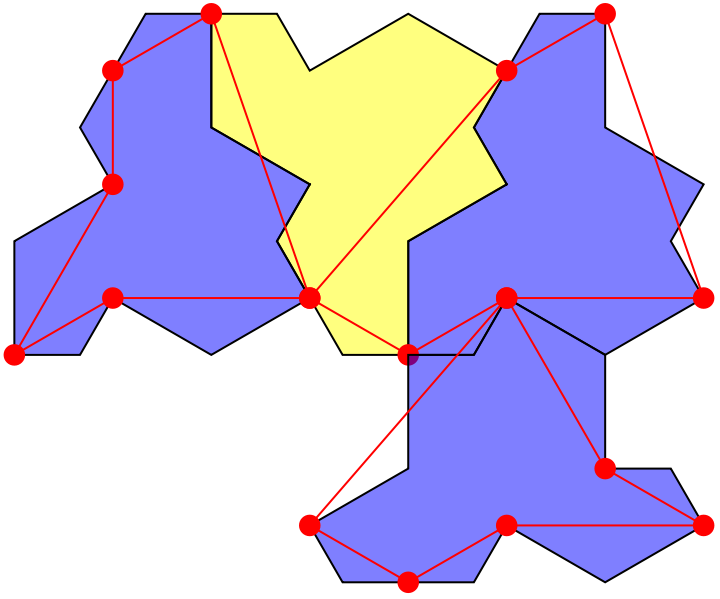
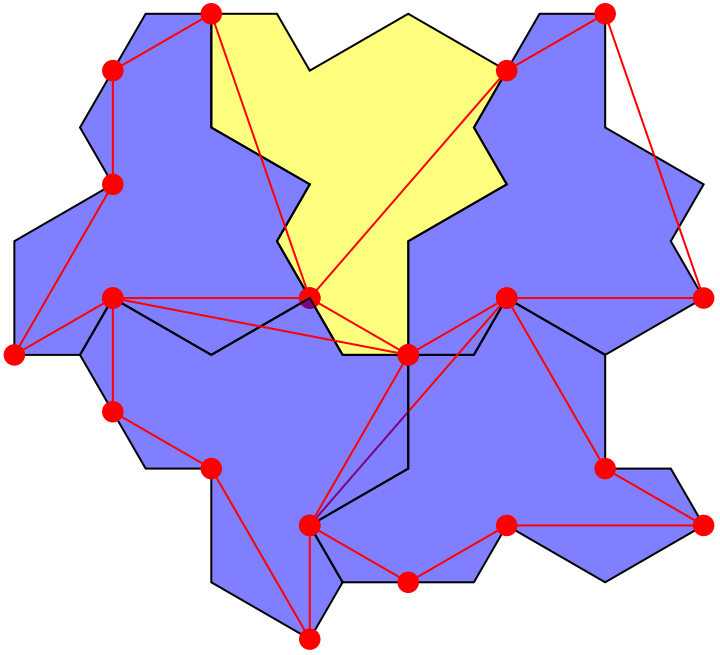
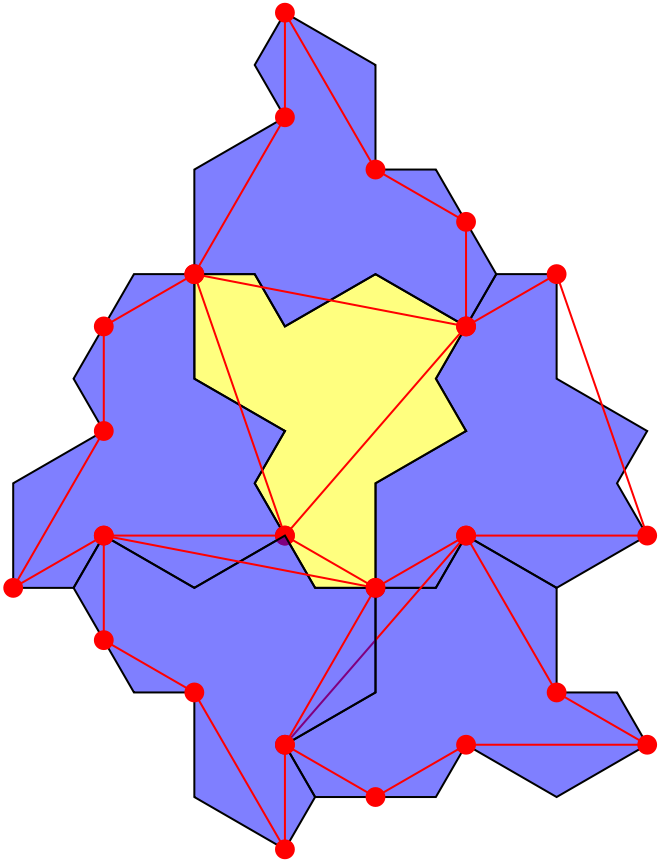
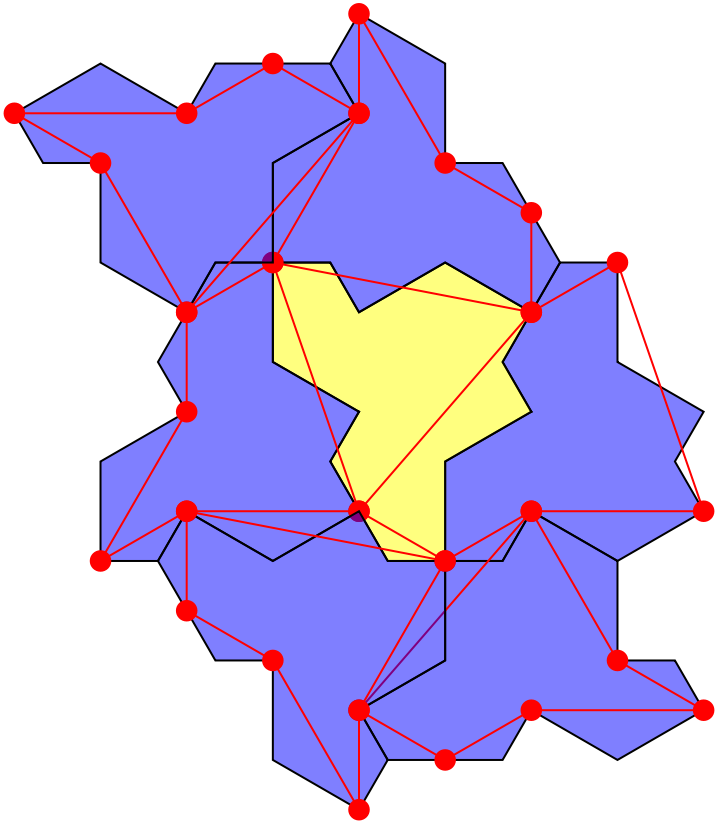
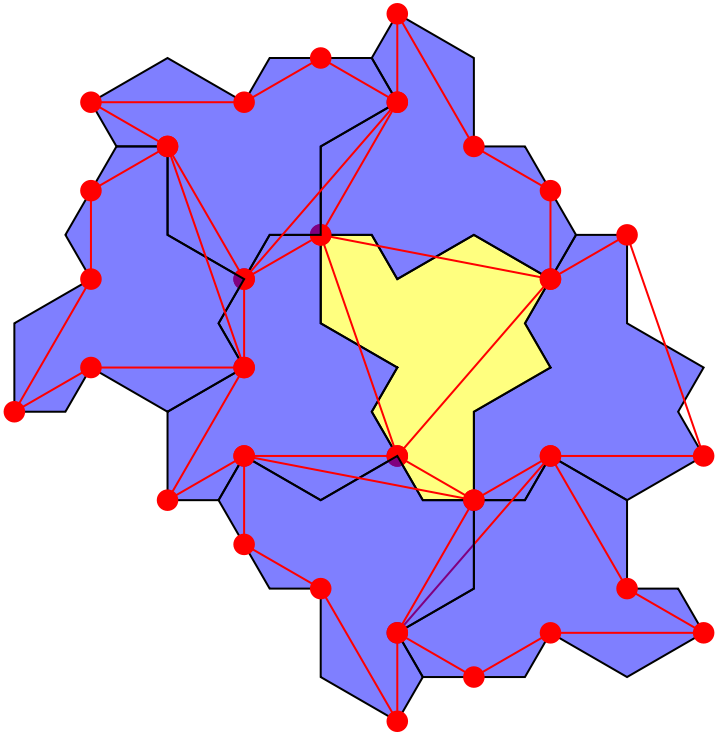
In[]:=
Row[Riffle[(depictControlPoints/@superTiles[[2,1,2,;;#]]//Show)&/@Range[7],Style["→",32,Purple,Bold]],Alignment->Center]
Out[]=
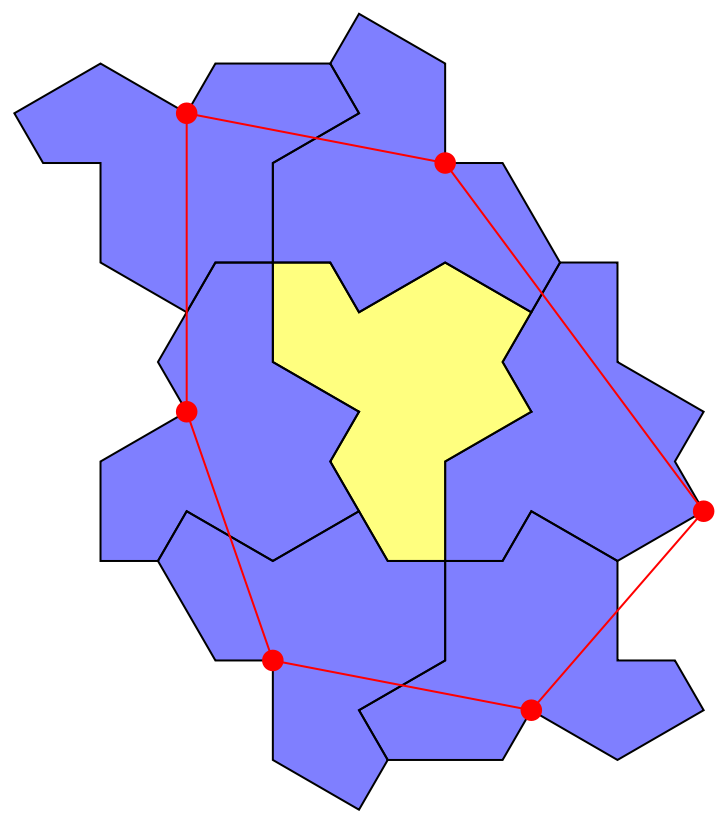
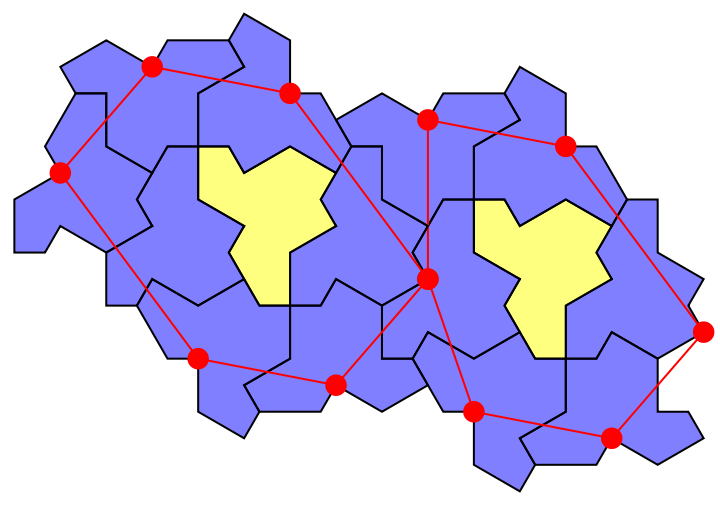
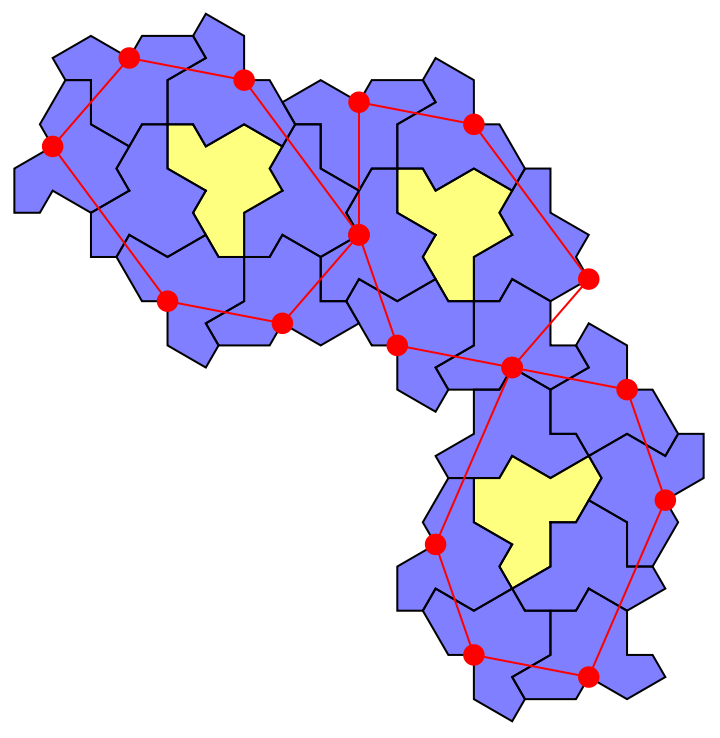
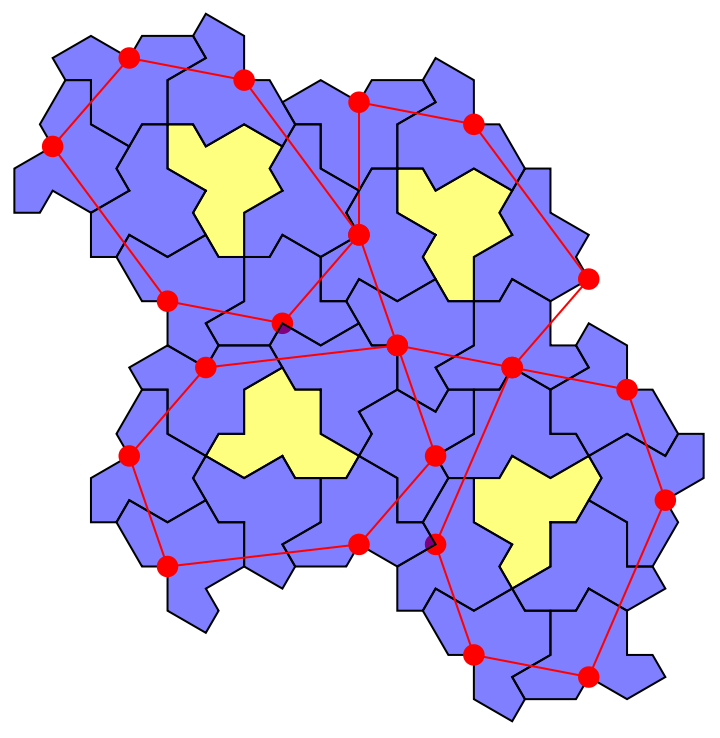
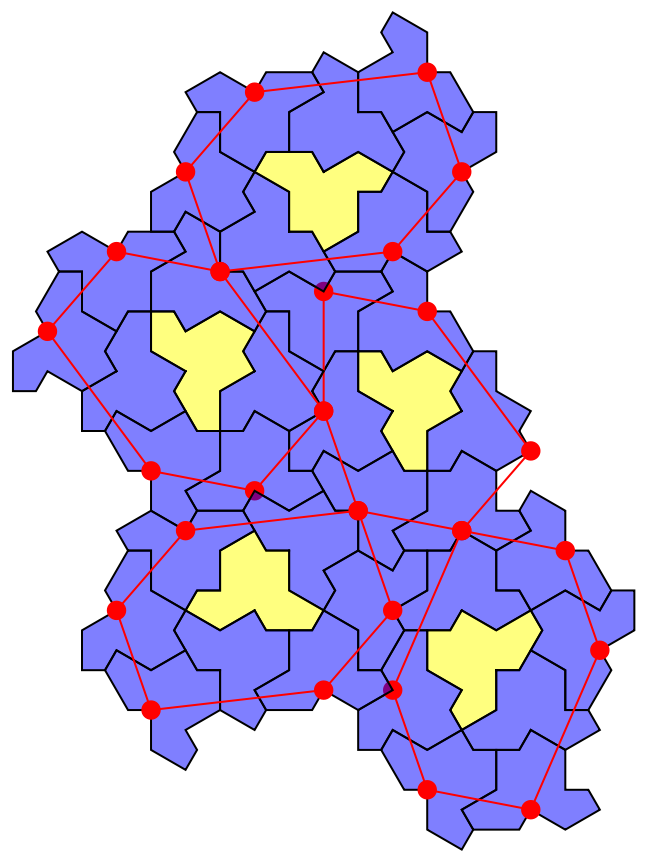
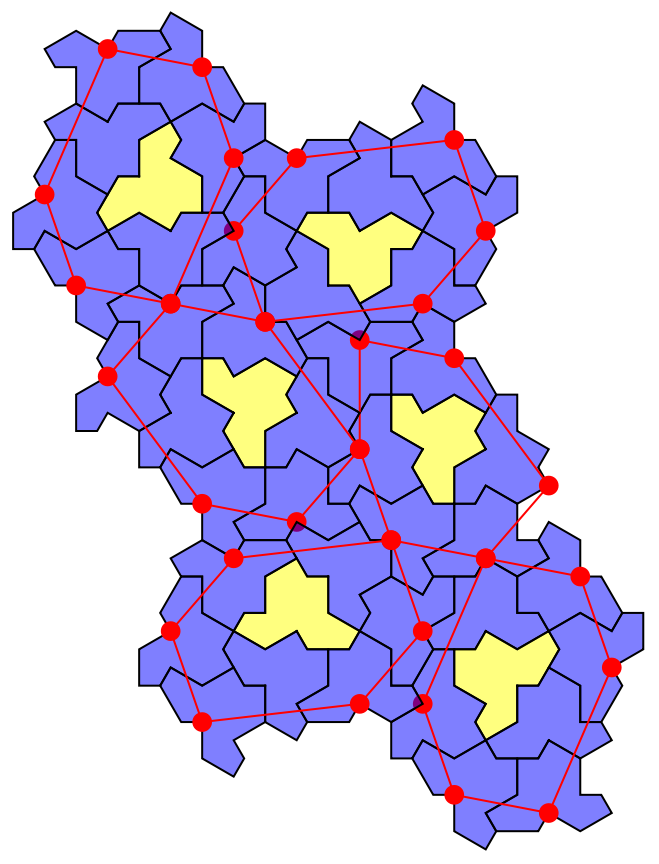
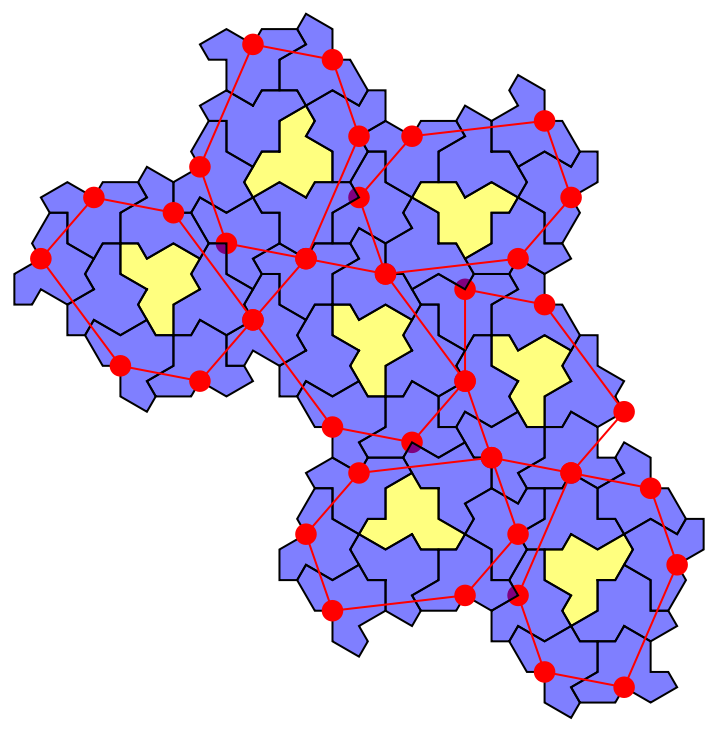
alternative H7 and H8
In[]:=
AsuperTiles=Reap[NestList[Values[Asubstitute[#[[1]],#[[2]]]]&,{AH2Tiling,AH1Tiling},2]];
Why they are equivalent?
Why they are equivalent?
Each super-tile consists of two sorts of clusters and 7 in total, 6 of which are like original H8, and the other one is like original H7.
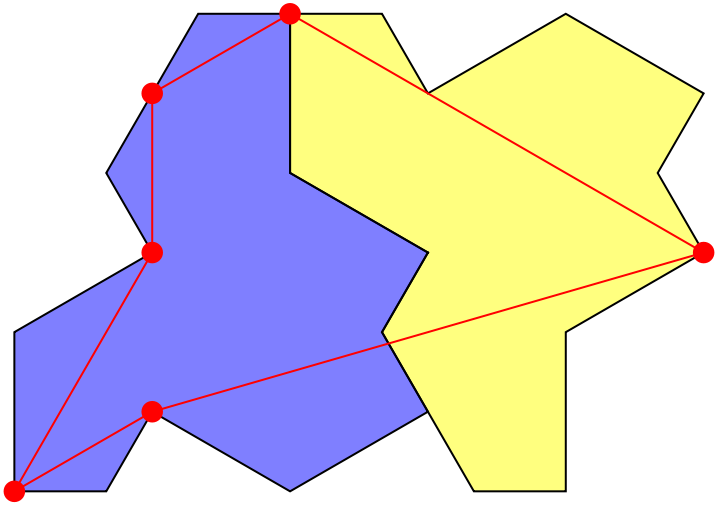
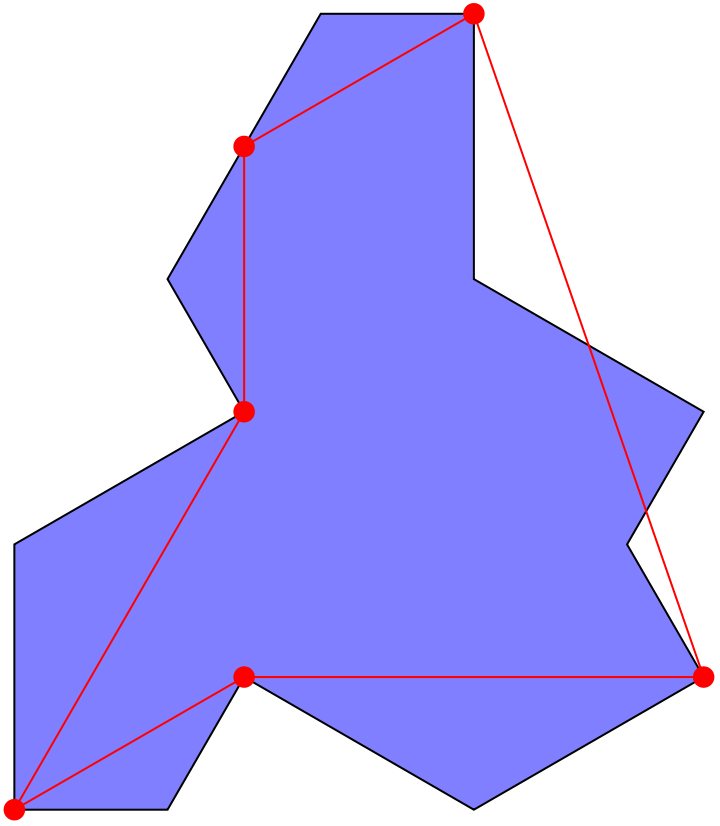
The interesting thing is, original H7 must have a translated version of H8 as its partner, like this:
The interesting thing is, original H7 must have a translated version of H8 as its partner, like this:
The figure above is original H7 and H8, and the following is alternative H7 and H8:
You can tell I’m not cheating by using the same merged cluster figure from different control points.
Since H7 must merge with H8 (it looks true), these two definition both works to construct super-tile by this way.
H7 and H8 in a big cluster
H7 and H8 in a big cluster
And there are some clues about it may have been shown in previous discussion, that is we cannot distinguish H7 or H8 from a cluster big enough, like when I try to find all H7 and H8 in a big cluster. There are some delicate things happening here:
These are all boundaries for H8 in this cluster, derivate by findByWalk function, which would walk from the reflected hat with certain steps to the boundary and begin to walk along the boundary with certain edge vectors and tags to find the boundary of H8. In the red circles, there are two special hats are surrounded by blue boundary respectively. That is because findByWalk function can’t distinguish H7 plus this hat with H8.
And about to distinguish them, we have to ways to divide the clusters in the red circle. One way is see them as a pair of original H7 and H8, the other is a pair of alternative H7 and H8.
And about to distinguish them, we have to ways to divide the clusters in the red circle. One way is see them as a pair of original H7 and H8, the other is a pair of alternative H7 and H8.
Brief Conclusion
Brief Conclusion
Original H7 and H8 are equivalent to alternative H7 and H8 to construct big cluster since one H7 is always with a H8 to merge a pair, and this pair can be regarded as a pair as alternative H7 and H8 as well.
Aesthetically, original H7 and H8 may be better. If we have a 3-super-tile, the hole of alternative H7 super-tile is huge. However, it is another beauty of brokenness?