This is part of live presentation series called Mathematical Games in which we explore a variety of games and puzzles using Wolfram Language. In this episode, we explore games that involve geology, AI and recent advances.
Watch on YouTube: https://www.youtube.com/watch?v=xTXSGaZRpKQ
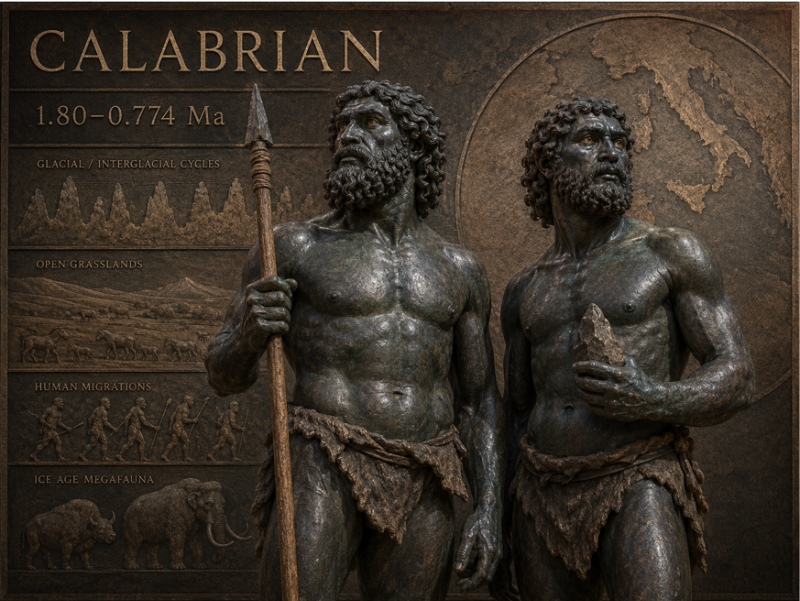
■ Calabrian 1.80–0.774 Ma
■ Calabrian 1.80–0.774 Ma
Humans ranged beyond old homes while glacial cycles grew,
Ice and thaw enlarged their reach and kept remaking routes anew.
Named for Calabria, southern Italy.
Ice and thaw enlarged their reach and kept remaking routes anew.
Named for Calabria, southern Italy.
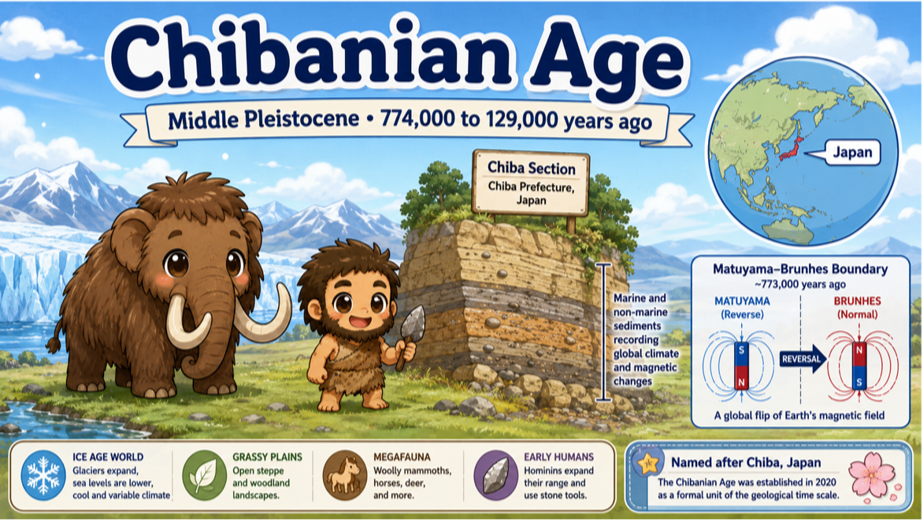
■ Chibanian 0.774–0.129 Ma
■ Chibanian 0.774–0.129 Ma
Magnetic north and south reversed to mark the opening line, Longer glacials gripped the world in middle Pleistocene time.
Neanderthals, Denisovans and sapiens all belong, To ice-age worlds where coastlines moved and cold phases ran long.
Named for Chiba Prefecture, Japan, where the boundary section is located.
Neanderthals, Denisovans and sapiens all belong, To ice-age worlds where coastlines moved and cold phases ran long.
Named for Chiba Prefecture, Japan, where the boundary section is located.
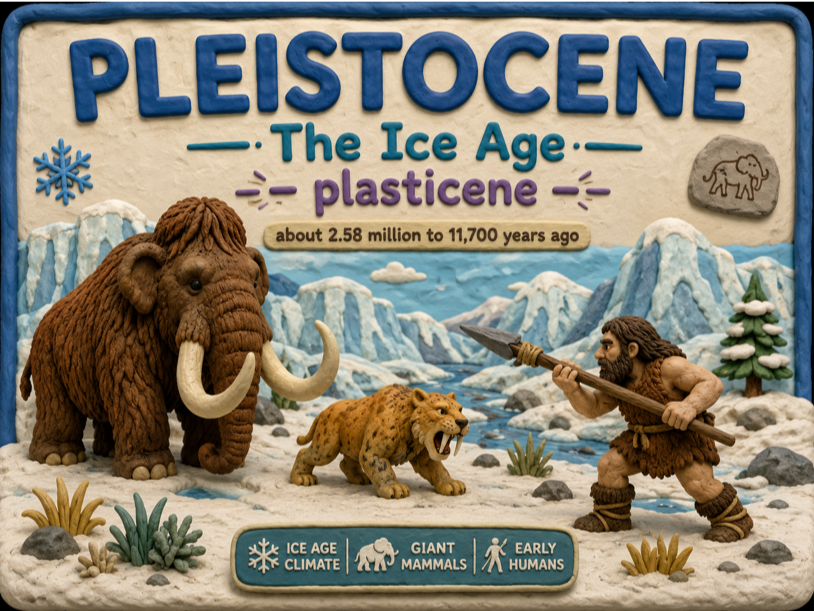
■ Late Pleistocene 129-11.7 kya
■ Late Pleistocene 129-11.7 kya
Ice reached its last great maximum and locked the oceans down,
Humans crossed to farther lands as shorelines changed around. (Bering land bridge)
Mammoths, sloths and saber-teeth still held the open scene,
Then many vanished near the end from pressure, climate, human means.
Humans crossed to farther lands as shorelines changed around. (Bering land bridge)
Mammoths, sloths and saber-teeth still held the open scene,
Then many vanished near the end from pressure, climate, human means.
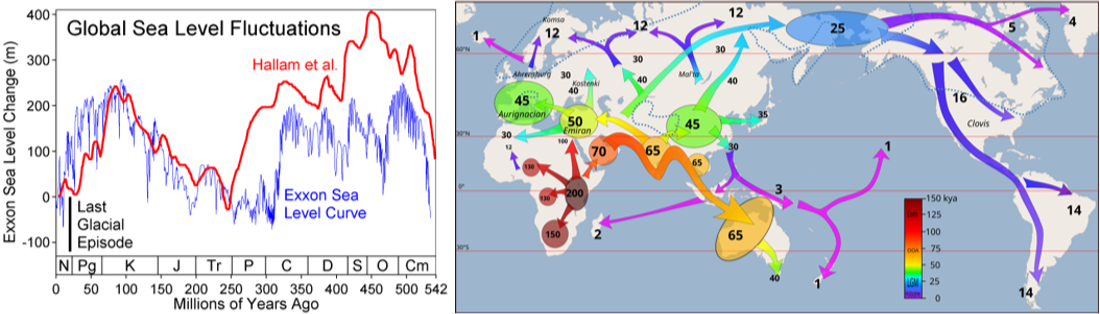
Big animals fell unevenly across the warming lands,
Not one clean cause, but climate shifts and human hands.
Not one clean cause, but climate shifts and human hands.
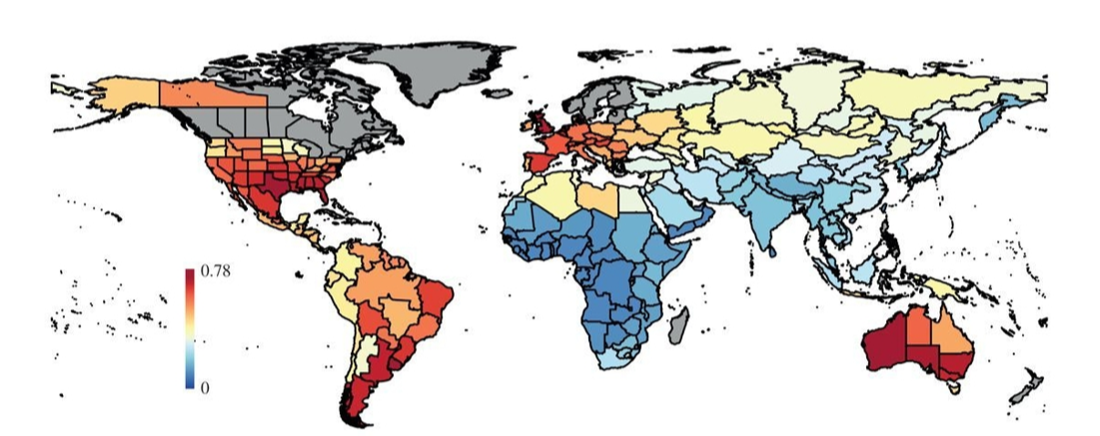
The proportion of extinct large mammal species during the last 132,000 years.
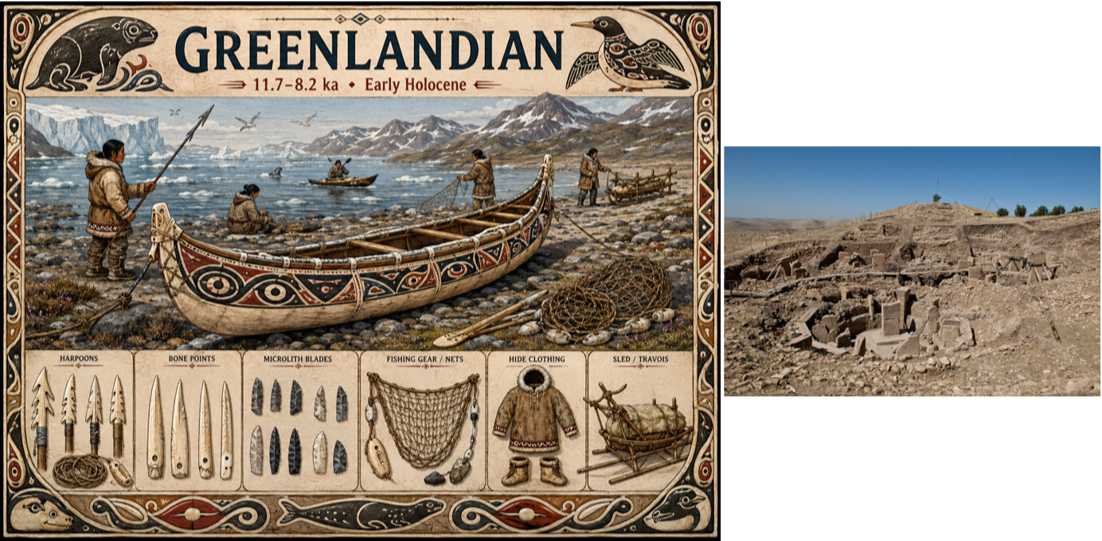
■ Greenlandian 11.7–8.2 ka
■ Greenlandian 11.7–8.2 ka
Ice sheets shrank and sea level rose across the early thaw,
Forests recolonized the ground and rivers changed the law.
Named from the Greenland ice-core record used for its boundary. Göbekli Tepe.
Forests recolonized the ground and rivers changed the law.
Named from the Greenland ice-core record used for its boundary. Göbekli Tepe.
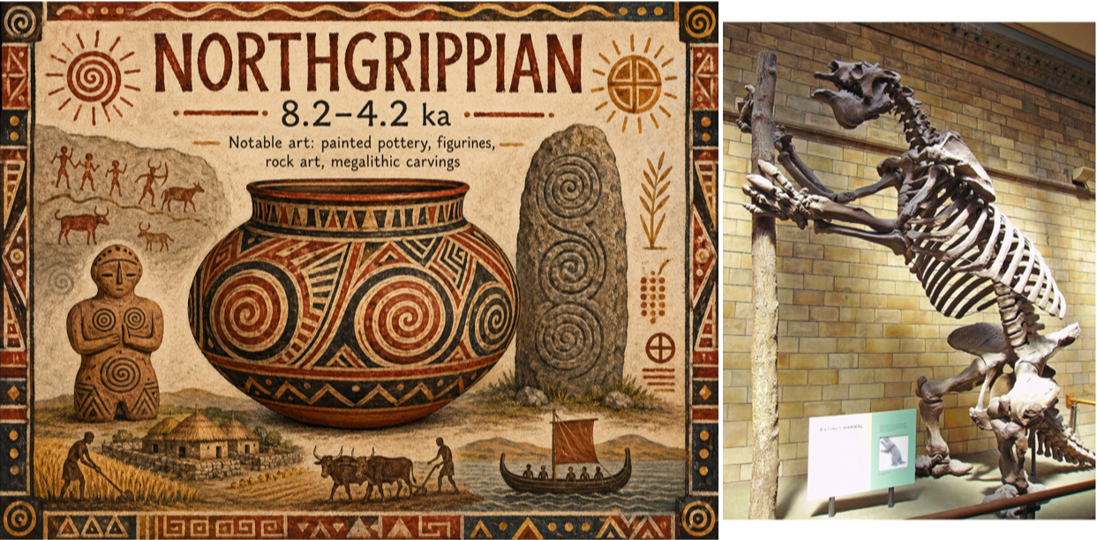
■ Northgrippian 8.2–4.2 ka
■ Northgrippian 8.2–4.2 ka
The 8.2-kiloyear chill cut through a warming age,
Farming spread, towns gathered weight and people filled the page.
Named for the North Greenland Ice Core Project, NorthGRIP. The giant ground sloth, Megatherium, went extinct at around 5370 BC.
Farming spread, towns gathered weight and people filled the page.
Named for the North Greenland Ice Core Project, NorthGRIP. The giant ground sloth, Megatherium, went extinct at around 5370 BC.
■ Meghalayan 4.2 ka–present
■ Meghalayan 4.2 ka–present
The 4.2-kiloyear drought marks where this late age starts, Bronze Age states, trade, writing, war and cities played their parts.
Then coal and oil and engines came in one late human roar, A blink of heat in geologic time that changed the air once more.
Named for Meghalaya, India, using a cave record from Mawmluh Cave. The age began with a 200-year drought that impacted human civilizations in the Eastern Mediterranean.
Then coal and oil and engines came in one late human roar, A blink of heat in geologic time that changed the air once more.
Named for Meghalaya, India, using a cave record from Mawmluh Cave. The age began with a 200-year drought that impacted human civilizations in the Eastern Mediterranean.
The Timestacks
The Timestacks
■ Precambrian 4031–2500 Ma
■ Precambrian 4031–2500 Ma
Precambrian — Hadean fire, Archean crust and Proterozoic oxygen made the stage,
Four billion years of hidden work before the fossil age.
Archean — Oldest crust, first seas and microbial worlds began the long design,
Cratons held, mats grew and oxygen waited offstage for its line.
Proterozoic — Oxygen changed the oceans, air and weathered continental stone,
Eukaryotes, supercontinents and ice prepared the animal zone.
Paleoproterozoic — Oxygen rewrote the rules and old anaerobic worlds were crossed,
Ice, rust, impacts and mountain belts marked what changed and what was lost.
Mesoproterozoic — Stable platforms, quiet seas and Rodinia’s early frame,
Not empty time, but slower time before large life changed the game.
Neoproterozoic — Rodinia broke, the planet froze and soft-bodied forms appeared,
The old Precambrian closed at last as animal worlds drew near.
■ Phanerozoic 2500 Ma-Present
■ Phanerozoic 2500 Ma-Present
Phanerozoic — Visible life filled shells, forests, reefs, bones, flowers, grass and sky,
Five great crashes cut the cast, and life rebuilt each stage.
Paleozoic — Seas filled first, then plants and limbs moved onto shore,
Forests, coal, eggs and synapsids built a land world more and more.
Mesozoic — Dinosaurs, pterosaurs, marine reptiles and flowers shaped the scene,
From Triassic ruins to Cretaceous fire, the age burned large and green.
Cenozoic — Mammals, birds, grasses, ice and humans filled the newest act,
A modern-looking world emerged, but never stayed intact.
GSSP Golden spike
GSSP Golden spike
Each age has an official color.
GSSP Golden spike and https://iugs-geoheritage.org/
GSSP Golden spike and https://iugs-geoheritage.org/
At https://iugs-geoheritage.org/ , the International Commission on Geoheritage, you can get pictures of all the golden spikes all over the world. I really wish I’d found this site much, much earlier.
The monument for the Paibian GSSP of the ICS timescale, near Paibi, Wulingshan, Huayuan, Hunan, China
Idea: How much can AI assist a WL presentation?
Idea: How much can AI assist a WL presentation?
1. First, pick a topic. I chose Geological History.
2. Research some Community posts, videos and books.
a. Pleistocene-Holocene Sea Level 500K Years Change UK/European Coastlines.
b. Age and Rank of North American Coal Deposits.
c. Computational Geology and related post.
d. Kurzgesagt: 4.5 Billion Years in 1 Hour.
e. Geologic Time Scale 2020.
3. Pick some AIs to help out.
a. Wolfram Notebook Assistant.
b. ChatGPT.
c. Suno.
d. Google Gemini.
4. Hash out an outline, do more research and go through it over and over again.
5. So that happened....
6. What went wrong?
a. I locked down my text too early. I could have organized better.
b. Music is hard to do. Most AI music systems run out of steam after 2-3 minutes.
c. I found the most useful material late in the game.
CITE THIS NOTEBOOK
CITE THIS NOTEBOOK
Mathematical Games: geology, AI and recent advances -- Part 4
by Ed Pegg
Wolfram Community, STAFF PICKS, May 25, 2026
https://community.wolfram.com/groups/-/m/t/3722361
by Ed Pegg
Wolfram Community, STAFF PICKS, May 25, 2026
https://community.wolfram.com/groups/-/m/t/3722361