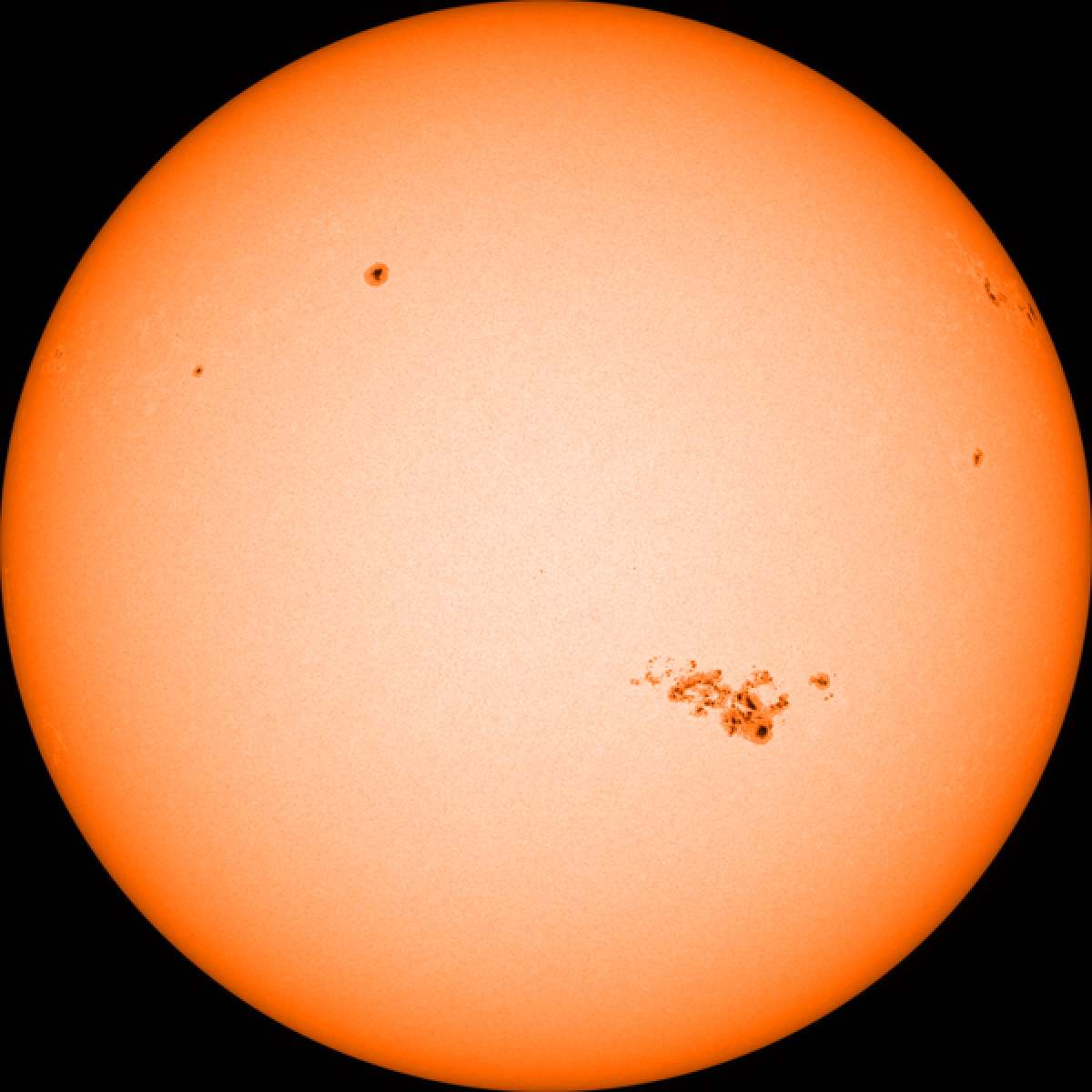
As I write this on the morning of May 9, 2024 the most active sunspot group of the current solar cycle is crossing the Sun.
In[]:=
img=ImageResize[ImageCrop[ResourceFunction["SolarImage"][DateObject[{2024,5,9,1,0,0},TimeZone->0],"Colorize"->True,ImageSize->1200]],600]
Out[]=
Whenever active space weather is implied, comparisons to the Carrington Event of 1859 are often brought up. In August of that year, Carrington observed a large sunspot group on the Sun and recorded the first solar flare ever observed. A few days later the largest geomagnetic storm in recorded history was observed. It induced sparks and fires at some telegraph receiving stations due to the induced current in telegraph wires. Here is a sketch (from the Royal Astronomical Society archives) made by Carrington of what he saw. The large sunspot group above and left of center was the area of interest.
In[]:=
carringtonraw=
;
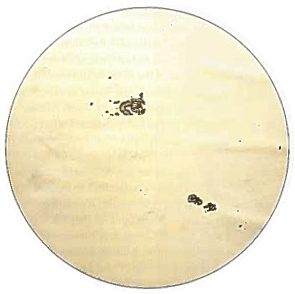
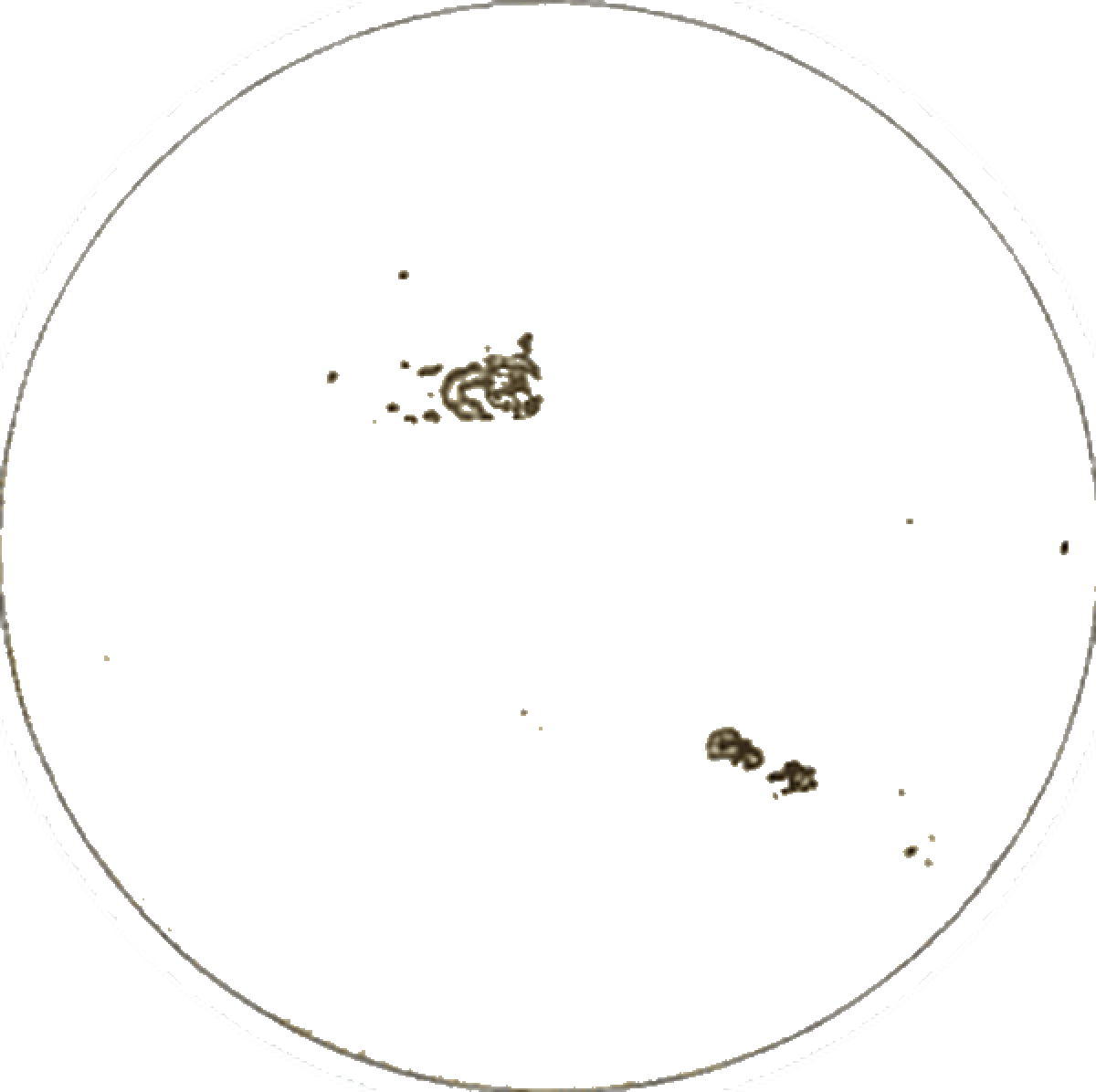
To compare this to the current image of the Sun, we can convert this sketch to a mask by analyzing the dominant colors and turning the sepia tones colors to totally transparent. We also need to crop and resize the image to match the current solar image.
In[]:=
dc=DominantColors[carringtonraw]
Out[]=
{,,,}

In[]:=
car=ColorReplace[ImageResize[ImageCrop[carringtonraw,282],600],dc[[1]]->SetAlphaChannel[dc[[1]],0]]
Out[]=
We can now compose these 2 images for a size comparison of the features.
In[]:=
ImageCompose[SetAlphaChannel[img,1],car]
Out[]=
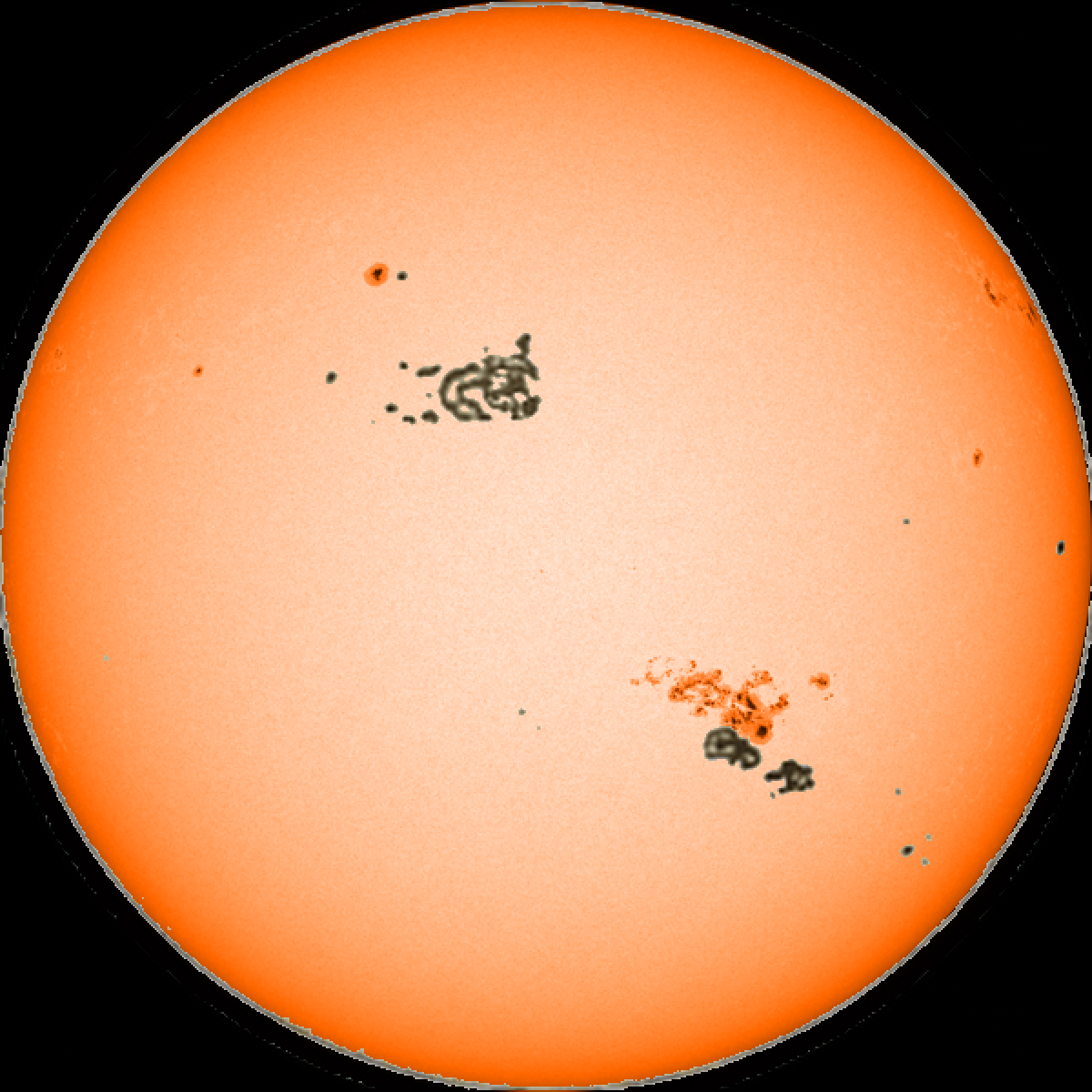
As can be seen above, the Carrington sunspot group was approximately the same size as the large sunspot group seen on the Sun this past week.
This sunspot group has been growing and evolving quickly over the last few days. Here we can construct a video showing the evolution.
In[]:=
dr=DateRange[DateObject[{2024,5,3,0,0,0},TimeZone->0],Now,Quantity[2,"Hours"]];
In[]:=
ts=ResourceFunction["SolarImage"][dr,"Colorize"->True,ImageSize->1200]
Out[]=
EventSeries


In[]:=
frames=ImageCrop/@Values[ts];
In[]:=
SlideShowVideo[frames]
Out[]=
If we observe in extreme ultraviolet wavelengths, we can see the area crackling with powerful solar flares.
In[]:=
dr=DateRange[DateObject[{2024,5,8,0,0,0},TimeZone->0],Now,Quantity[10,"Minutes"]];
The series of M-class flares since May 8 triggered coronal mass ejections which are Earth-directed. This plasma from the Sun should arrive sometime on May 10 or so. Time will tell if it will be geo-effective and result in a geomagnetic storm or auroras.
CITE THIS NOTEBOOK
CITE THIS NOTEBOOK
Exploring the most active sunspot group of this solar cycle
by Jeffrey Bryant
Wolfram Community, STAFF PICKS, May 9, 2024
https://community.wolfram.com/groups/-/m/t/3173439
by Jeffrey Bryant
Wolfram Community, STAFF PICKS, May 9, 2024
https://community.wolfram.com/groups/-/m/t/3173439