I enjoy that extra splash of soy sauce or sprinkling of Parmesan cheese over a plate of warm noodles. Now I know why. It’s the umami.
The four tastes of sweet, sour, bitter and salty are well-known. Lesser known is umami — the fifth taste. Umami has been described many ways, mostly as a savory, meaty taste. Specifically, it’s the taste of the amino acid glutamate in synergy with the nucleotides GMP and IMP.
The four tastes of sweet, sour, bitter and salty are well-known. Lesser known is umami — the fifth taste. Umami has been described many ways, mostly as a savory, meaty taste. Specifically, it’s the taste of the amino acid glutamate in synergy with the nucleotides GMP and IMP.
Glutamic Acid
Glutamic Acid
Glutamate and glutamic acid are closely related and often used interchangeably. I retrieved and charted the glutamic acid content for a range of foods. As expected, glutamic acid is low in raw fruits and vegetables, such as grapes and lettuce, and high in those foods that we perceive as umami-rich, such as tomato paste, anchovies and salami:
foodStrings={"anchovies","sun-dried tomatoes","parmesan cheese","gouda cheese","soy sauce","tomato paste","miso","lentils","dried mushrooms","cucumbers","grapes","lettuce","carrots","bananas","Roquefort cheese","walnuts","oysters","peas","corn","mackerel","salmon","ketchup","salami","asparagus"};foods=Interpreter["Food"][foodStrings];relGlutAcidAssoc=AssociationThreadfoodStrings,EntityValue#,&/@foods;relGlutAcidAssocSorted=Sort[relGlutAcidAssoc];relGlutAcidDataSorted=QuantityMagnitude[Values@relGlutAcidAssocSorted];chartLabels=Keys[relGlutAcidAssocSorted];BarChartrelGlutAcidDataSorted,
Out[]=
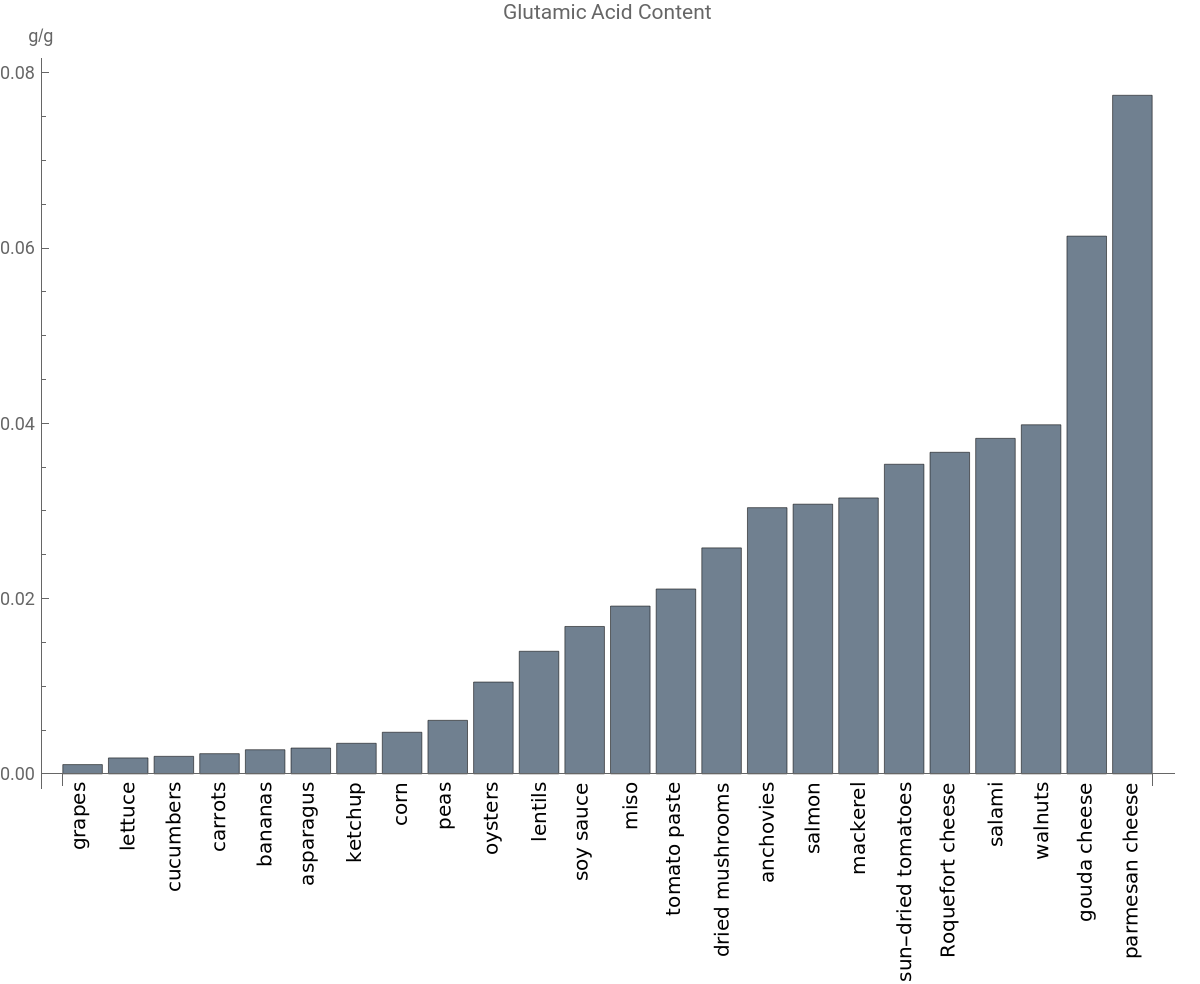
I was surprised to see walnuts so high on the chart. The taste of walnuts has been described as rich, earthy and somewhat buttery. I thought that was due to the high omega-3 fatty acid content in walnuts, but perhaps glutamic acid is a reason too.
Free Glutamate
Free Glutamate
The amount of glutamic acid reported in foods typically includes both free and bound forms of glutamate. Free glutamate contributes to umami. Monosodium glutamate (MSG) is a common food additive and flavor enhancer that provides free glutamate:
In[]:=
MoleculePlot
Out[]=
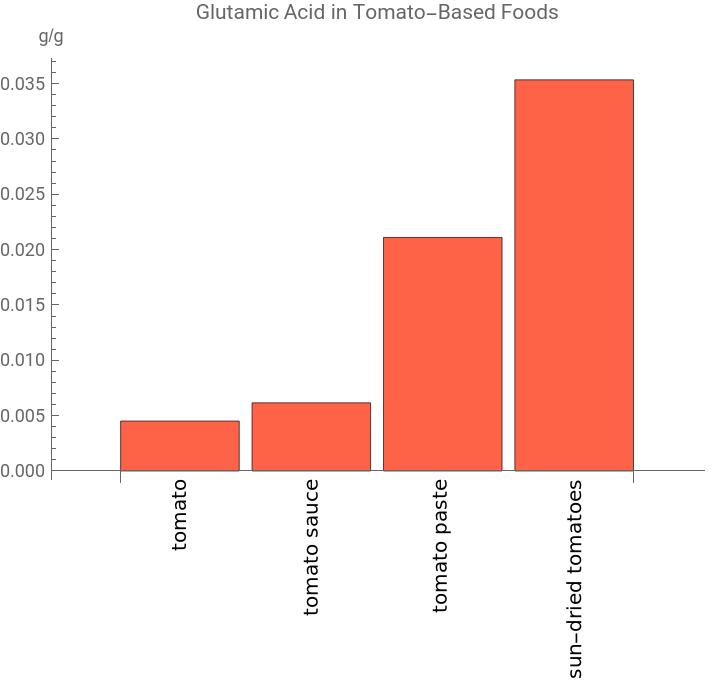
A processed food may have more umami than its fresh counterpart because the processing reduces moisture and concentrates the glutamate. This was true when I compared a fresh tomato to tomato products, as well as fresh versus dried fish:
In[]:=
tomatoStrings={"tomato","sun-dried tomatoes","tomato paste","tomato sauce"};tomatoFoods=Interpreter["Food"][tomatoStrings];tomRelGlutAcidAssoc=AssociationThreadtomatoStrings,EntityValue#,&/@tomatoFoods;tomRelGlutAcidAssocSorted=Sort[tomRelGlutAcidAssoc];tomRelGlutAcidDataSorted=QuantityMagnitude[Values@tomRelGlutAcidAssocSorted];tomChartLabels=Keys[tomRelGlutAcidAssocSorted];BarCharttomRelGlutAcidDataSorted,
Out[]=
In[]:=
EntityValue,,

Out[]=
,
Umami Food Pairings
Umami Food Pairings
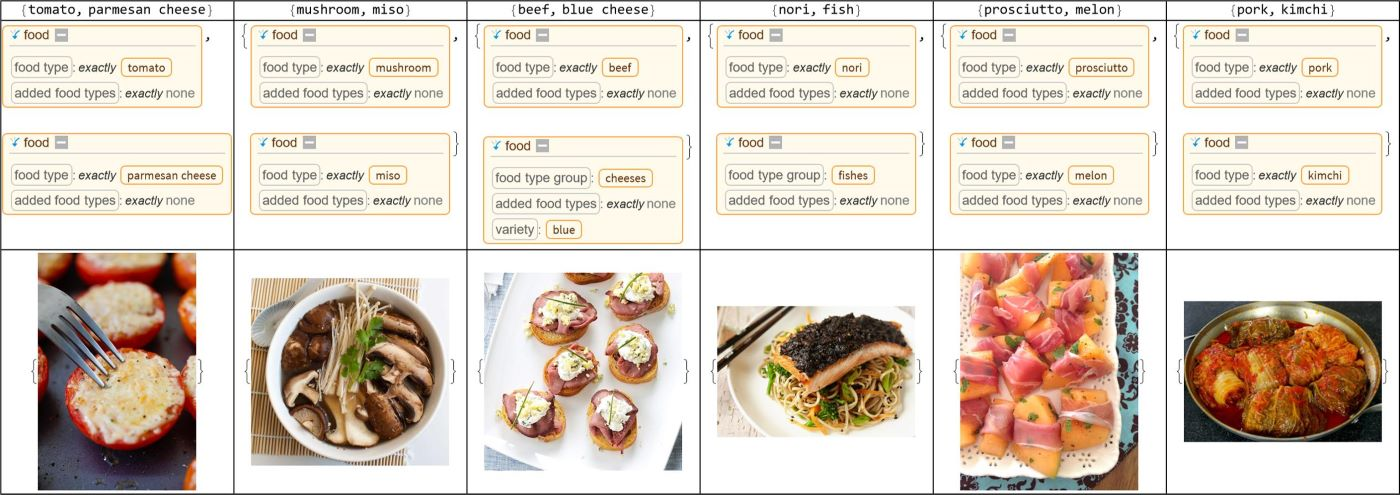
When meal planning with umami in mind, there are a couple of options. You could pair two umami-rich foods in a single dish, for a burst of that complex and savory taste, or you could pair an umami-rich ingredient with a low-umami food to balance and enhance its flavor. Here are some popular combinations:
In[]:=
umamiFoodPairs={{"tomato","parmesan cheese"},{"mushroom","miso"},{"beef","blue cheese"},{"nori","fish"},{"prosciutto","melon"},{"pork","kimchi"}};umamiFoodEntities=Interpreter["Food"][#]&/@umamiFoodPairs;umamiFoodImages=WebImageSearch[#,1]&/@umamiFoodPairs;Grid[{umamiFoodPairs,umamiFoodEntities,umamiFoodImages},Frame->All,ItemSize->16]
RecipeGraph
RecipeGraph
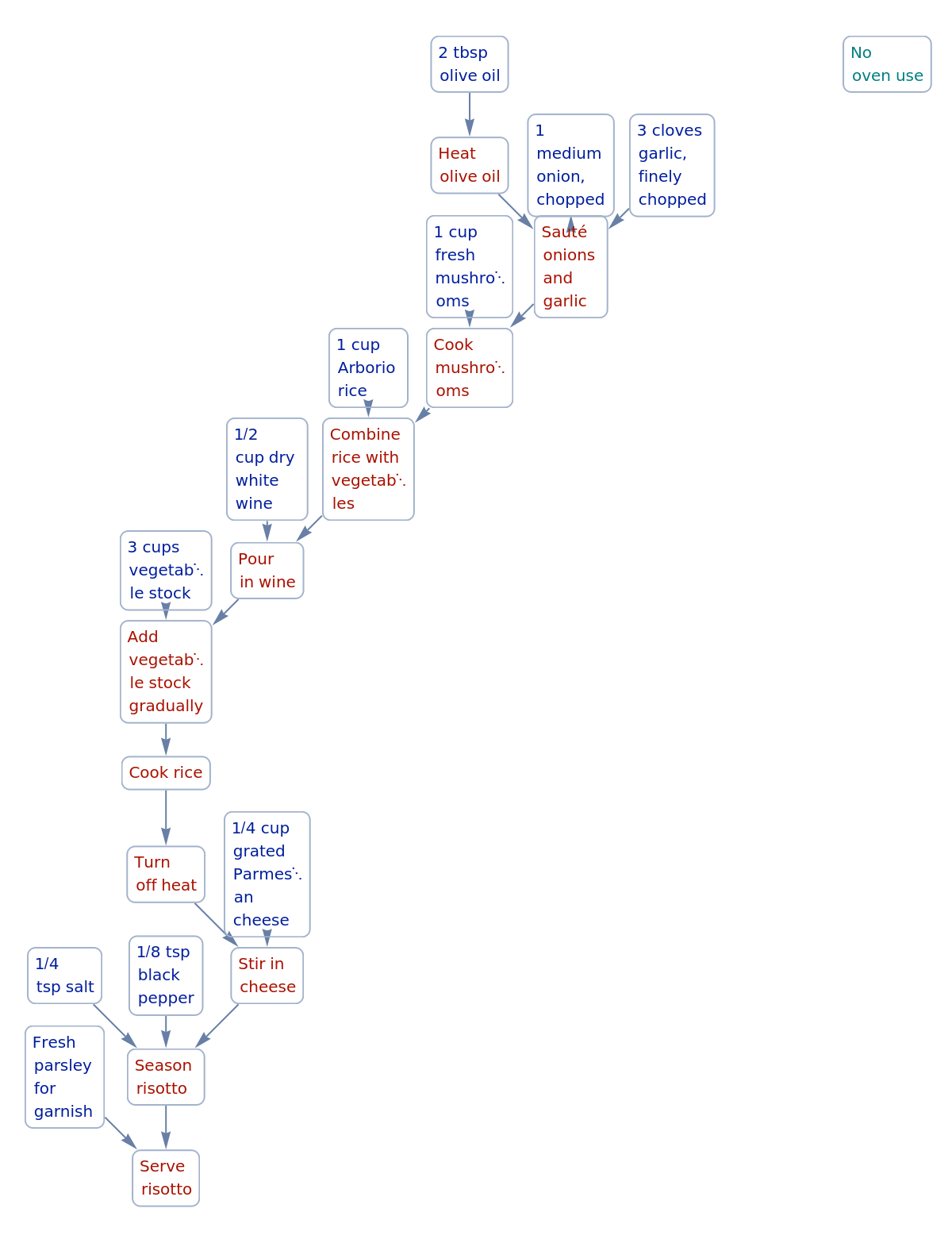
To complete my exploration of umami, I used to visualize a recipe for mushroom risotto, which provides intense umami flavors through mushrooms, garlic and Parmesan cheese:
In[]:=
Out[]=
Conclusion
Conclusion
While considering how to best describe the complex flavor of umami, I found this advice to be most helpful:
If you’re eating a food that is flavorful and delicious, but you can’t pinpoint it as sweet, sour, bitter or salty, it must be umami!
If you’re eating a food that is flavorful and delicious, but you can’t pinpoint it as sweet, sour, bitter or salty, it must be umami!
CITE THIS NOTEBOOK
CITE THIS NOTEBOOK
Umami: exploring the 5th taste in food
by Gay Wilson
Wolfram Community, STAFF PICKS, August 1, 2024
https://community.wolfram.com/groups/-/m/t/3239573
by Gay Wilson
Wolfram Community, STAFF PICKS, August 1, 2024
https://community.wolfram.com/groups/-/m/t/3239573