CITE THIS NOTEBOOK: The Experimental Correlates of QuantumToMultiwayFunction by Mark Merner. Wolfram Community JAN 13 2023.
An optical table was set up to generate the optical correlates of an extended version of QuantumToMultiwayFunction in Mathematica which can handle continuous angles and values. Over the last year, a large and diverse variety of MultiGraph diagrams were created, including those related to the Bell’s Inequality and Wigner’s Friend’s experiments.
The next step in this effort was to close the theory to experiment loop by generating the physical versions in optics.
If the correct corresponding operators, and parameters used in QuantumToMultiway diagram calculation can be related to the details of optical experiments, then the loop between theory and experiment can be closed.
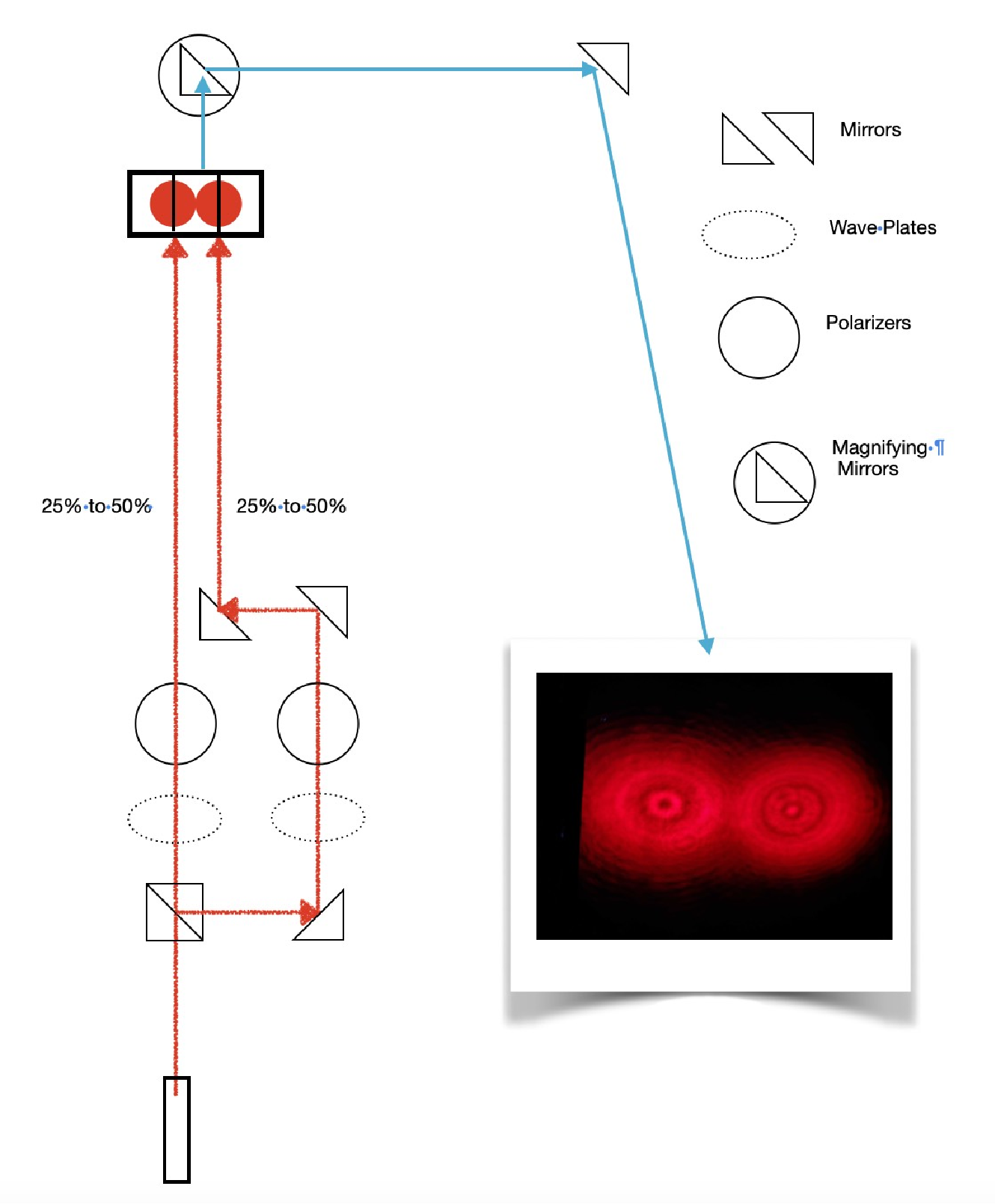
The project involved setting up an optical table and trying different optical setups which could:
1. Split the beam with beam splitters and mirrors
2. Input the proper polarization values
3. Input the half and quarter wave changes to specific beams
4. Re-combining the beams so interference and entanglement can happen, again with beam splitters and mirrors
5. Projecting the beam through single or multiple slits or diffraction gratings and projecting them on to a screen,
using lenses and magnifying mirrors.
6. At the end of the project, it was realized that a Fresnel Rhombic rotator was required to do rotations, and that
these corresponded to values in the QuantumToMultiway.
7. It was possible to generate interference patterns similar to the output of ThorLabs Quantum Eraser Educational offering.
Although the rotator did not arrive in time to conclude the experiment, the intent is to continue and conclude the experiment.
If successful, it might be possible to do a single photon interference version of Bell's experiment and other quantum operators
and experiments. Output from two beams are shown below:
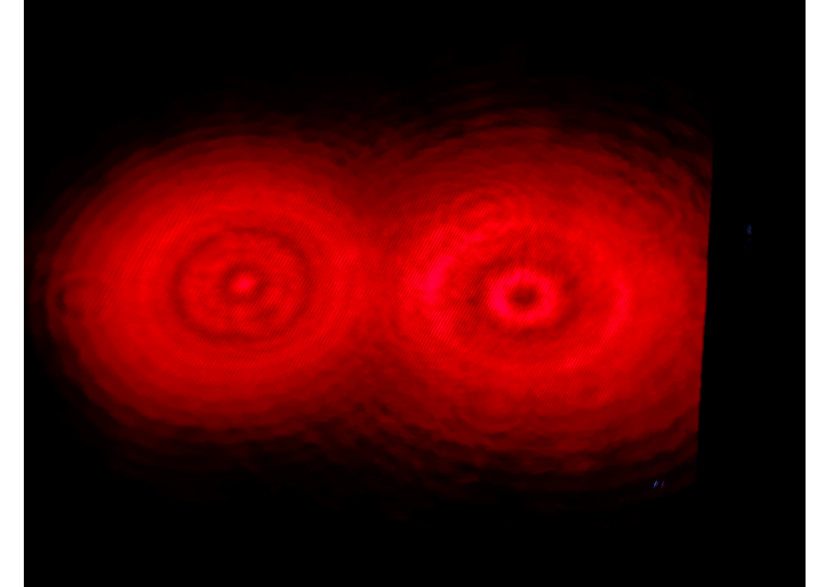
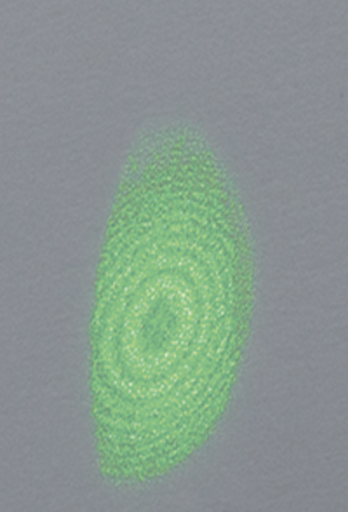
An example of an Interference and entanglement yielding data with an uncanny resemblance to Multiway diagrams.
An example of an Interference and entanglement yielding data with an uncanny resemblance to Multiway diagrams.
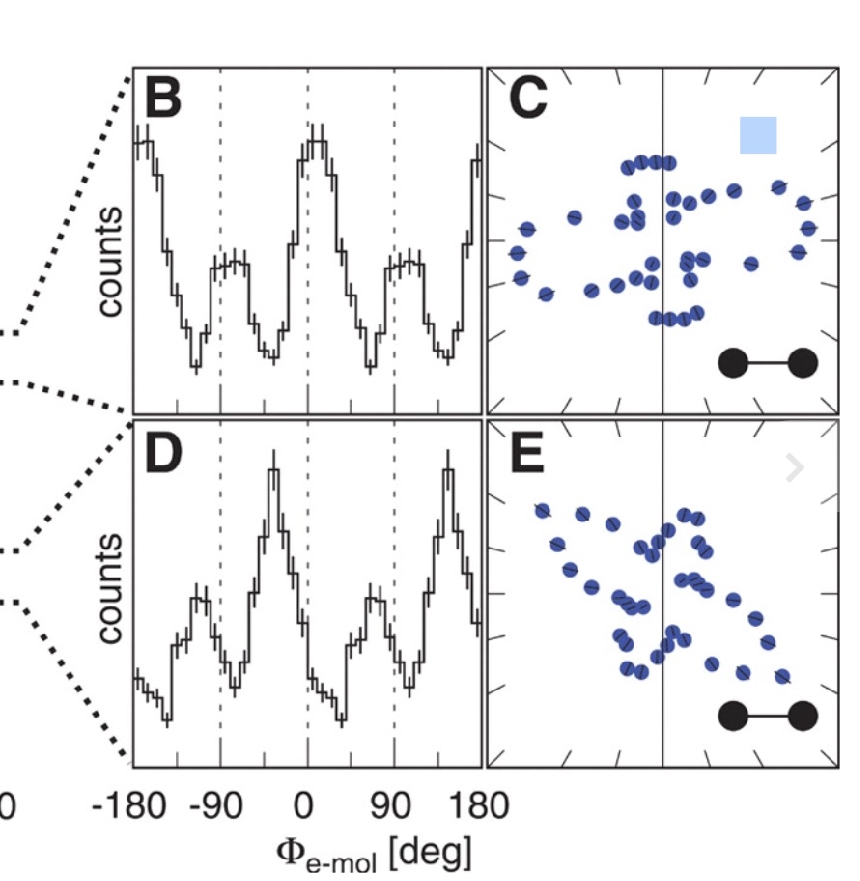
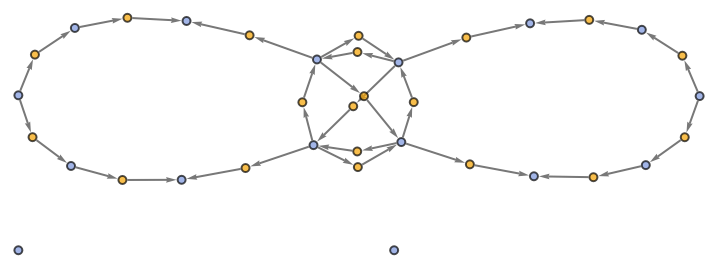
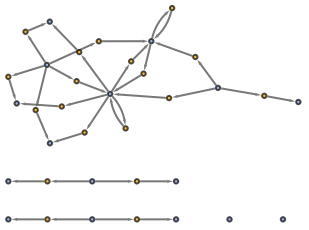
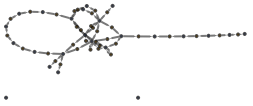
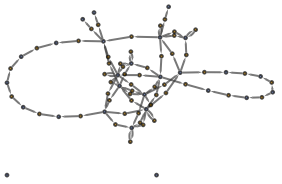
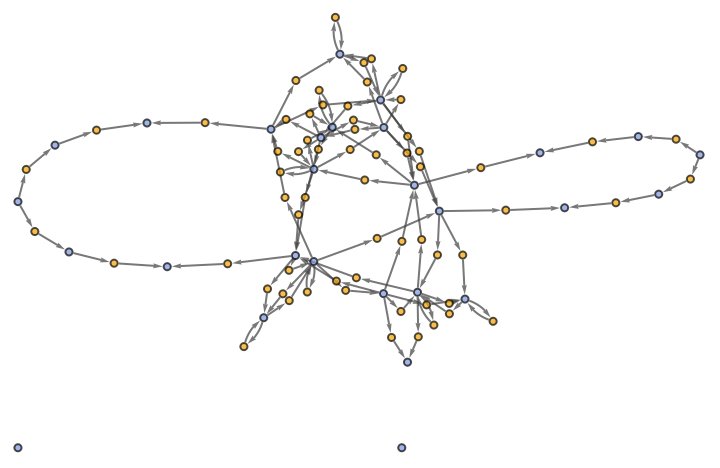
The following ‘entanglement of entanglement’ type QuantumToMultiway code generates diagrams with an uncanny resemblance to a molecular double slit experiment data shown below from the below reference found by Xerxes Arsiwalla, my mentor. This correspondence drove the search to find a real world example of a QuantumToMultiwayFunction.
The Simplest Double Slit: Interference and Entanglement in Double Photo ionization of H2. United States: N. p., 2007. Web. doi:10.1126/science.1144959
The example below requires the additional code developed by Hatem Elshatlawy and Max Piskunov.
A multitude of these diagrams with lobes was created using the extended QuantumToMultiwaySystem.
A multitude of these diagrams with lobes was created using the extended QuantumToMultiwaySystem.
In[]:=
TableQuantumToMultiwaySystem<|"Operator" 0{0,
0
,
0
,
0
,
0
,
0
,
0
}
,
-(1+)
{0,1
,
0
,
0
,
0
,
0
,
0
}
,
0{
0
,
0
,
0
,
0
,
0
,
0
,
0
}
,
{0,
1
,
0
,
0
,
0
,
0
,
1
},0{
0
,
0
,
0
,
0
,
0
,
0
,
0
}
,
0{
0
,
0
,
0
,
0
,
0
,
0
,
0
}
,
-(1+)
{
0
,
0
,
0
,
0
,
0
,
1
,
0
}
,
"Basis"{1,0,0,0
,0,0,0},{0,1,0,0
,0,0,0},{0,0,1,0
,0,0,0},{0,0,0,1
,0,0,0}, {0,0,0,0
,1,0,0},{0,0,0,0
,0,1,0},{0,0,0,0
,0,0,1}|>,{{1
,
0
,0,0
,1,
0
,0},{0,0,1,0
,0,0,1}-{0,1,1,0
,0,1,1},{1,1,0,0
,1,1,0}},t,"EvolutionEventsGraphStructure",{t,{2}}Out[]=
In[]:=
Table QuantumToMultiwaySystem<|"Operator"
{
1,1,-1,1,
0
,
0
,
0
,
0
,
0
}
,
(1+)
{
-
1,0,1,0,
0
,
0
,
0
,
0
,
0
}
,
{
1,0,-1,0,
0
,
0
,
0
,
0
,
0
}
,
{
1,1,-1,1,
0
,
0
,
0
,
0
,
0
}
,
{0,
1
,
0
,
0
,
0
,
0
,
1
,
0
,
0
}, {
0
,
0
,
0
,
0
,
0
,
0
,
0
,
0
,
0
}
,
(1+)
{
0
,
0
,
0
,
0
,
0
,
-
1,0,-1,0}
,
{
0
,
0
,
0
,
0
,
0
,
0,0,0,0}
,
{
0
,
0
,
0
,
0
,
0
,
0
,
0
,
0
,
0
}
,
"Basis"{{1,0,0,0,0
,0,0,0,0},{0,1,0,0,0
,0,0,0,0},{0,0,1,0,0
,0,0,0,0},{0,0,0,1,0
,0,0,0,0},1{0,0,0,0,1
,0,0,0,0},1{0,0,0,0,0
,1,0,0,0},0.01{0,0,0,0,0
,0,1,0,0},1{0,0,0,0,0
,0,0,1,0},.01{0,0,0,0,0
,0,0,0,1}}|>,{{1
,
0
,0,0
,
0
,1,
0
,0,0},{0,0,0,1,0
,0,0,0,1}-{0,0,1,0,0
,0,0,1,0},{0,1,0,0,0
,0,1,0,0}},t,"EvolutionEventsGraphStructure",{t,{1,2,3,4,5}}Out[]=
,
,
,
,
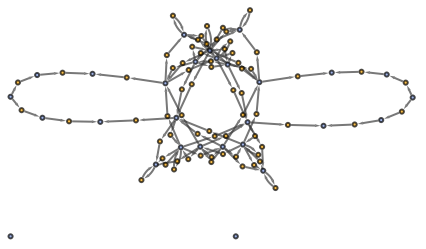
Multiple 2 and 3D examples of creating real world diagrams were attempted.
Multiple 2 and 3D examples of creating real world diagrams were attempted.
The example below was one attempt to create interference. However, the the optical device corresponding to rotation is needed to control the entanglement. The hope that with the Fresnel Rhombic arriving next week, the interference will be able to accomplished.
Concluding remarks
Concluding remarks
This effort is on-going and is scheduled to continue until clear results are obtained.
Keywords
Keywords
◼
Quantum Entanglement and Interference
◼
Optical table
◼
QuantumToMultiwaySystem
Acknowledgment
Acknowledgment
My thanks to my mentors Xerxes Arsiwalla and Hatem Elshatlawy for their on-going support.
My appreciation to Stephen Wolfram for founding the basis of this research, and to Jonathan Gorard who created QuantumToMultiwayFunction.
My appreciation to Stephen Wolfram for founding the basis of this research, and to Jonathan Gorard who created QuantumToMultiwayFunction.
References
References
◼
F. J. Duarte, TS Taylor, IOP Series in Coherent Sources, Quantum Fundamentals, and Applications; Quantum Fundamentals and Applications 7-7
◼
The Simplest Double Slit: Interference and Entanglement in Double Photo ionization of H2. United States: N. p., 2007. Web. doi:10.1126/science.1144959
Code Below
Code Below