

Computation Explorations with physical quantities and other areas of physics
Computation Explorations with physical quantities and other areas of physics
PeterCullenBurbery
I decided to take a look at various neat examples for functions for physical quantities. I am creating a computational exploration with physical quantities. I focus on using graphs in particular.
Physical Quantity Analysis
Physical Quantity Analysis
Find all physical quantities with the same dimensions as ohms:
Use the resource function PhysicalQuantityLookup:
In[]:=
PersistResourceFunction["PhysicalQuantityLookup"]
Out[]=
Success


In[]:=
PhysicalQuantityLookup["Ohms"]
Out[]=
,,,,,,,,,,,,,,,,,,,
Look for physical quantities that cover a quantity:
In[]:=
PhysicalQuantityLookup
Out[]=
,,,,,,
Look up physical quantities with the dimensions of power:
In[]:=
PhysicalQuantityLookup[]
Out[]=
,,,,,,,,,,,,,,,,,,,,,,,,,,,,,,,
I first need to store my resource function PhysicalQuantityData:
In[]:=
PersistResourceFunction["PhysicalQuantityData"]
Out[]=
Success
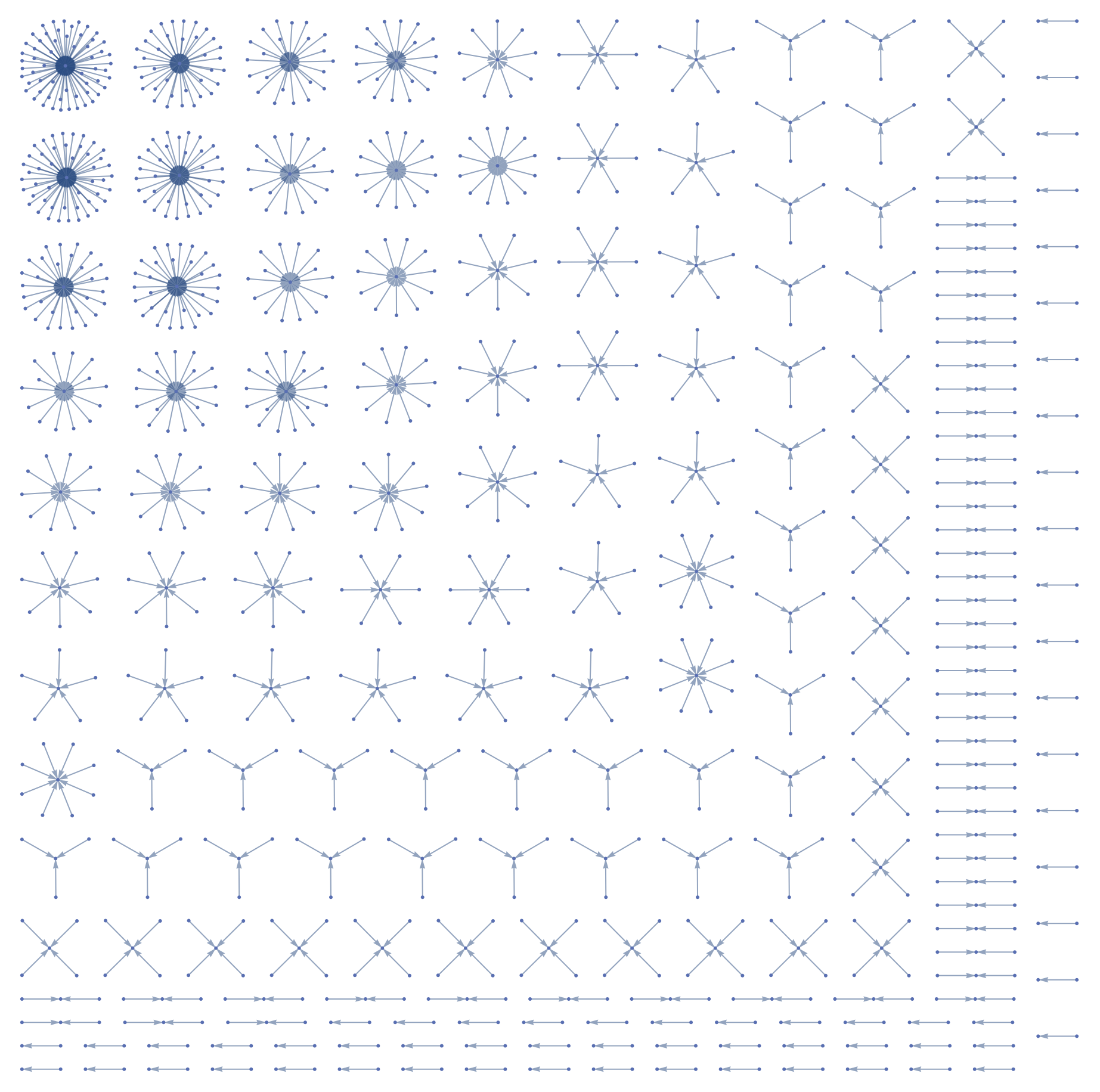
Group physical quantities by their base physical quantity:
In[]:=
Graph[Rule@@@DeleteCases[Transpose[{PhysicalQuantityData[],EntityValue[PhysicalQuantityData[],EntityProperty["PhysicalQuantity","BasePhysicalQuantity"]]}],{_,_Missing}],VertexLabels->Placed["Name",Tooltip],ImageSize->Full]
Out[]=
Group by SI unit:
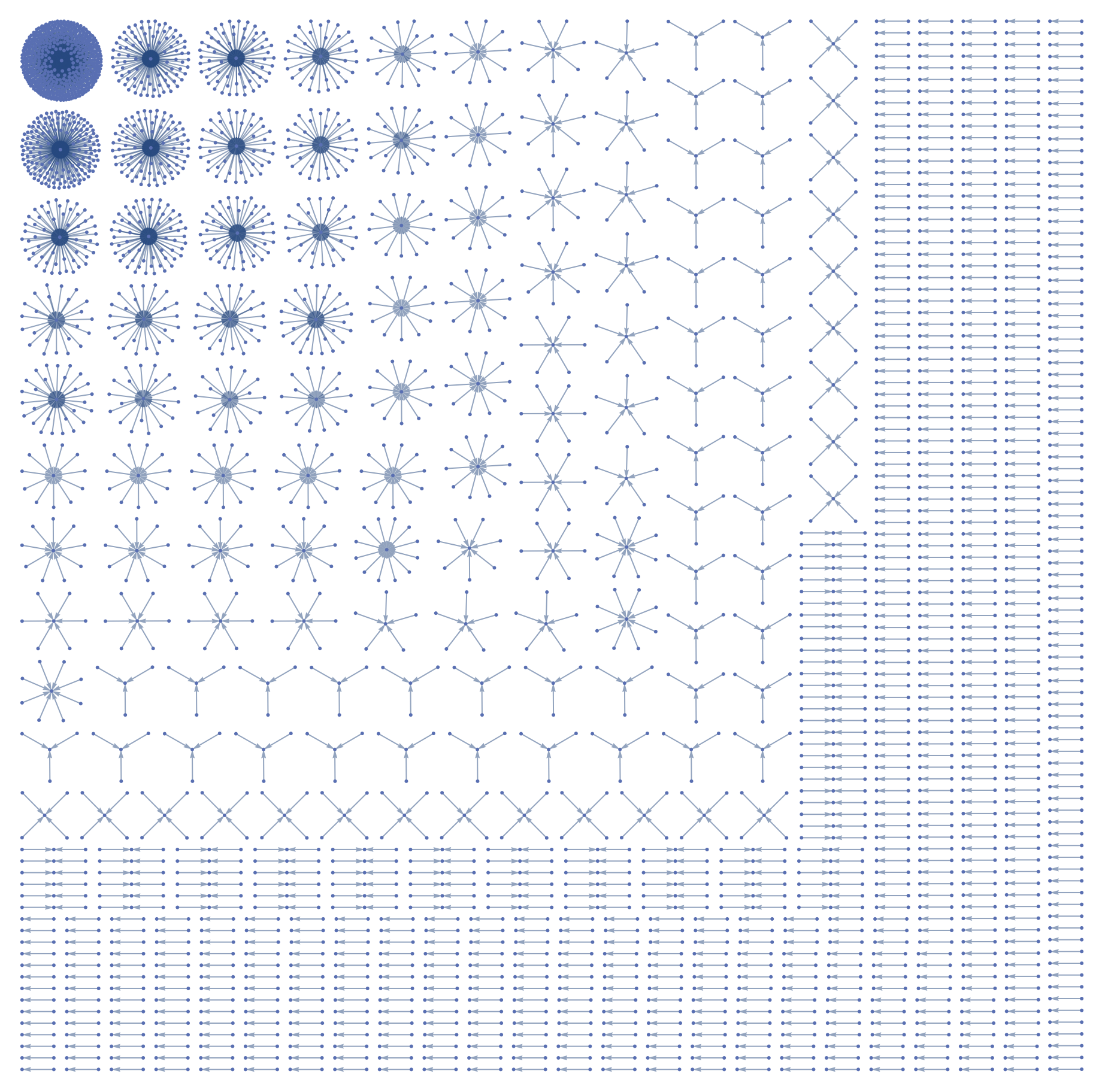
In[]:=
Graph[Rule@@@DeleteCases[Transpose[{PhysicalQuantityData[],EntityValue[PhysicalQuantityData[],EntityProperty["PhysicalQuantity","SIUnit"]]}],{_,_Missing}],VertexLabels->Placed["Name",Tooltip],ImageSize->Full]
Out[]=
Group by SI base unit:
Group by total absolute dimension:
Group by total dimensions:
This comes from a neat example for the documentation for PhysicalQuantity.
Visualize the dimensionality of physical quantities based on the standard dimensions:
Collect all physical quantities containing only those dimensions:
Convert dimension lists to vectors:
Visualize as a feature space plot:
Formula Data examples
Formula Data examples
Find all formulas that contain both the speed of light and Planck's constant as parameters:
I am including a neat example of exploring fundamental physics formulas:
Select all formulas that contain Planck's constant, speed of light, or gravitational constant as a parameter:
Construct a network of formulas based on related physical quantities:
Analyze the structure of the graph:
Physical Constant examples
Physical Constant examples
Compute the common logarithms for the magnitudes of the preceding length/radius pairs:
Plot the points in length-mass space. where the red line marks the quantum mechanical boundary, the green line marks the black hole boundary, the light blue line marks the boundary from the cosmological density, and the point of intersection of the black hole and cosmological lines is termed the cosmological-quantum (CQ) point:
Dimensional Combinations examples
Dimensional Combinations examples
Explore the possible dimensionless combinations of electromagnetic physical quantities:
Derive the factor for the fine structure constant from physical quantities: