Optimizing human sleep is one of the most impactful yet elusive challenges in modern health. Millions of individuals strive to improve their sleep quality but lack an actionable, scientifically grounded framework to start. Whether navigating day-to-day sleep hygiene or recovering from acute jet lag, people are forced to guess their biological needs. Current sleep-tracking solutions are dominated by highly expensive, proprietary, and inaccessible technologies. Commercial enterprises lock critical physiological data behind expensive wearables, subscription paywalls, and overly convoluted user interfaces. To democratize sleep science, the purpose of this project is to develop a free, highly intuitive software application that empowers both youth and adults to effortlessly map, understand, and optimize their sleep schedules.
Introduction
Introduction
Reading Flow
Reading Flow
Due to the large amount of information provided through this, I developed a roadmap to support people reading through the sections. Start off with the introduction, understand the problem and motivation behind the project. Next, optional but highly recommended, read the background information to understand all the concepts related to sleep that is relevant to the project; This may help you understand the mechanisms of sleep and the equations produced in this work. Then, look at the computational architecture. Then look over each user persona: regular individual or traveler. There will be interactive interfaces for both these personas that you can personalize and adapt to your own schedule. Finally, check over the acknowledgements to see the people who worked so diligently to support this project.
Point of Concern
Point of Concern
a. Poor Sleep Conditions
a. Poor Sleep Conditions
Sleep is a vital activity that every organism needs to function properly. The lack of sleep or poor sleep patterns can have significant impacts on a variety of essential day to day functions. Memory consolidation, body healing, and metabolic regulation occur during the sleep cycle. This sleep-wake cycle can influence eating habits, digestion, body temperature, hormone release, and other bodily functions. Detrimental effects on sleep can negatively affect a person’s ability to properly function and can result in many disorders. The various chronic health conditions linked to irregular rhythms include diabetes, obesity, depression, bipolar disorder, seasonal affective disorder, and other sleep disorders.
b. Barriers to accurate sleep health recommendation
b. Barriers to accurate sleep health recommendation
Although effective sleep-tracking tools exist, many remain inaccessible to the general public. Wearable devices often require a substantial upfront cost, while advanced analyses and personalized insights are frequently restricted behind subscription services or paywalls. In addition, many platforms feature complex interfaces and assume a level of prior knowledge that many users do not possess. As a result, individuals who could benefit most from these tools are often excluded because accessing and interpreting these tools are prohibitively expensive and unnecessarily complex.
c. Understanding when to sleep
c. Understanding when to sleep
Knowing that adequate sleep is important is straightforward, determining the optimal time to sleep is considerably more challenging. Sleep timing is governed by two interacting systems: the homeostatic sleep drive and the circadian rhythm. Prescribing a fixed bedtime fails to accommodate shifts in the circadian clock caused by factors such as jet lag or irregular schedules.
d. Lifestyle Constraints
d. Lifestyle Constraints
Even a theoretically optimal sleep schedule is of limited value if it cannot be realistically followed. Constraints such as work, school, childcare, and social obligations significantly restrict feasible sleep timing. A traveler, for example, cannot simply sleep at biologically preferred times and is bound to fixed arrival and departure schedules. As a result, the objective is the best achievable schedule given fixed constraints.
Background Information
Background Information
Defining Optimal Sleep
Defining Optimal Sleep
Before modeling sleep, it helps to define what we are optimizing for. Optimal sleep is not a single number but a combination of conditions working together. It requires an adequate duration, enough total sleep for the body to recover. It requires consistency, a stable timing from one day to the next rather than a schedule that lurches around the clock. It also requires alignment, keeping sleep roughly in phase with the natural cycle of light and dark so the body can settle into a rhythm instead of constantly fighting one. The general recommended sleep window to go to sleep is from 8pm to 12am.
Underneath all three of these requirements lies a single principle. Good sleep happens when two internal processes agree with each other: the process that builds up the need to sleep, and the process that decides when sleep is allowed to happen. Sleep scientists call these the homeostatic sleep drive and the circadian rhythm, and the framework describing how they combine is known as the two-process model of sleep, first formalized by Alexander Borbély in 1982.
a. Sleep Drive
a. Sleep Drive
The first process is the sleep drive, sometimes called sleep pressure. It is governed by a mechanism known as sleep-wake homeostasis, which reflects the principle that the longer wakefulness persists, the greater the need for sleep.
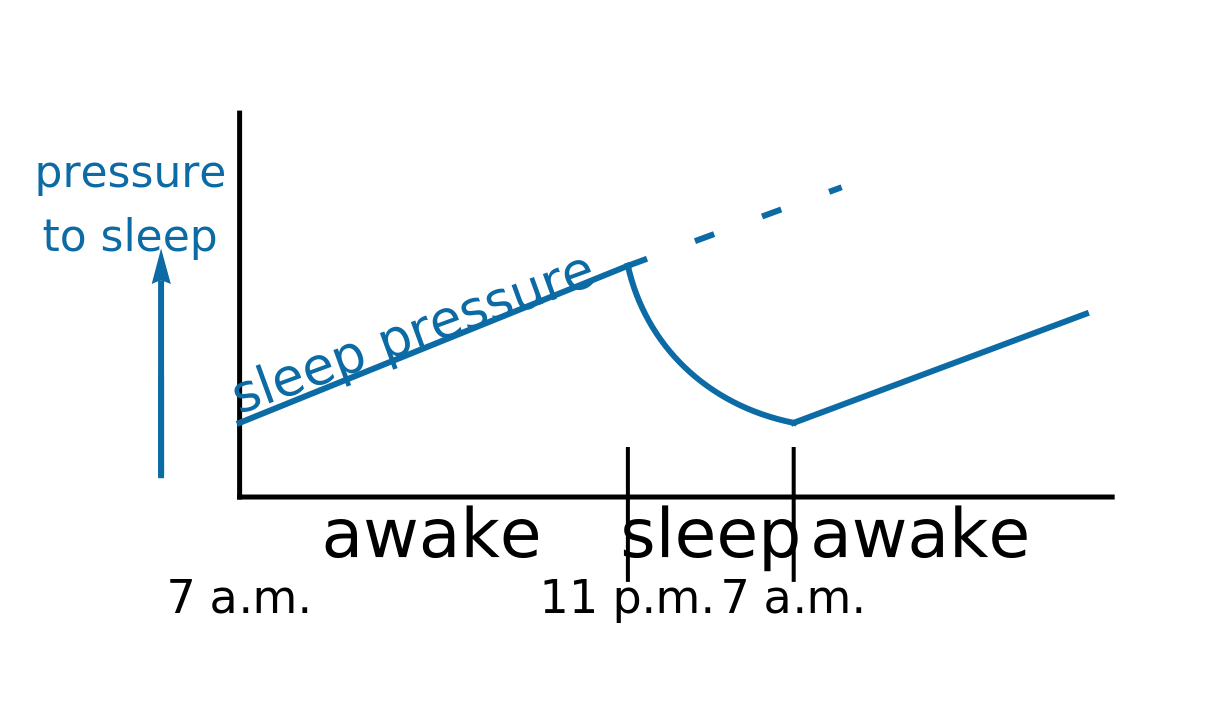
The biochemical buildup centers on a molecule called adenosine. As the brain performs routine metabolic activity, energy is expended through the breakdown of adenosine triphosphate (ATP), and one of the resulting byproducts is adenosine. Throughout the day, adenosine gradually accumulates in the brain, where it dampens neural activity and produces the growing sense of drowsiness associated with fatigue. Sleep clears this accumulation. During sleep, adenosine is removed from the brain, effectively resetting sleep pressure so that wakefulness can resume with reduced drowsiness.
Several everyday factors influence this process:
1
.Caffeine works by chemically blocking adenosine receptors in the brain. Adenosine remains present, but neural signaling is inhibited, producing increased alertness relative to underlying sleep pressure.
2
.Napping partially reduces accumulated sleep pressure, which is why a long afternoon nap can make it difficult to fall asleep at a typical bedtime. Part of the homeostatic drive has already been discharged.
3
.Exertion or illness can temporarily increase sleep drive. Physically demanding activity, cognitively intense work, and immune responses during infection all increase the body’s demand for restorative sleep.
b. The Circadian Rhythm
b. The Circadian Rhythm
The second process is the circadian rhythm. The name comes from the Latin circa (“around” or “approximately”) and diem (“a day”), and it describes exactly that: a roughly 24-hour cycle. Circadian rhythms are the recurring physical, mental, and behavioral changes that an organism cycles through over a single day, and they govern far more than sleep alone—they also shape hormone release, appetite and digestion, and body temperature. Nearly all living things, from animals to plants to microorganisms, run on such rhythms.
These rhythms are produced by an internal timekeeping system often called the biological clock, built from proteins encoded by thousands of genes that switch on and off in a specific, repeating order. Remarkably, almost every tissue and organ in the body carries its own local clock. Keeping all of them synchronized is the job of a master clock: a cluster of nerve cells in the brain called the suprachiasmatic nucleus (SCN). The SCN sets the tempo and aligns the many local clocks throughout the body so that they all keep the same time.
Crucially, the SCN takes its cue from the outside world—above all, from light. Specialized cells in the retina detect the presence or absence of light and send that information directly to the SCN, which uses it to determine the current biological time of day. Other signals such as food intake, stress, physical activity, social schedules, and temperature can nudge the clock as well, but light is the dominant one. The core pathway can be summarized in a single line:
Light → retinal cells → SCN → circadian rhythm
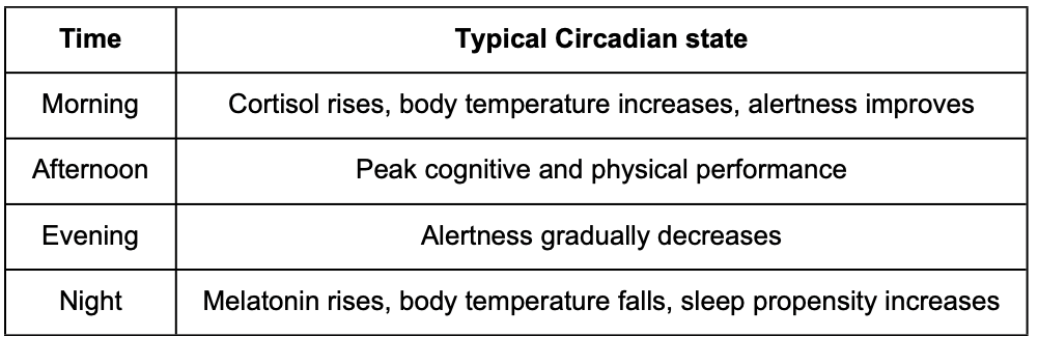
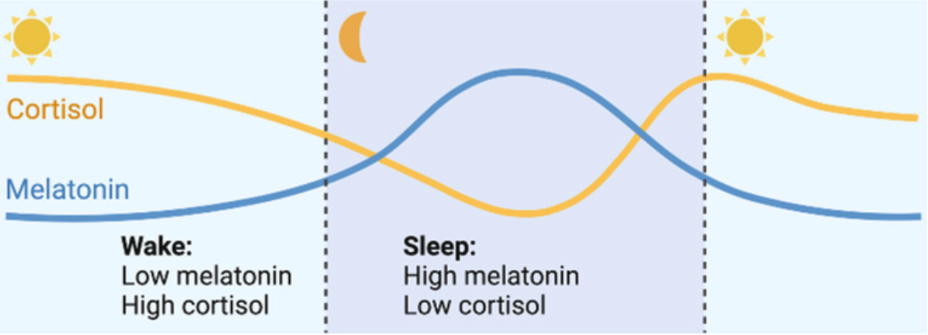
Once the SCN has established what time it is, it coordinates physiological processes that either promote wakefulness or prepare the body for sleep. One of its most important levers is the melatonin (a natural hormone produced by the brain’s pineal gland in response to darkness), which the body suppresses in the morning to encourage alertness and releases in the evening to usher in sleep. The result is a predictable daily arc of alertness:
◼
b1. Body Temperature Minimum (Tmin)
◼
A hallmark of a healthy, synchronized circadian rhythm is the predictable, daily fluctuation of core body temperature. Driven by signals from the SCN, body temperature peaks in the late afternoon and steadily declines across the night. Approximately once every 24 hours, this decline reaches its absolute lowest point, known biologically as the core body temperature minimum Tmin. In an unconstrained, healthy sleep cycle, Tmin typically occurs during deep sleep around 4:00 AM or 5:00 AM. Functionally, Tmin serves as the brain’s internal marker for the physiological end of the night, acting as the biological baseline where the body expects environmental dawn to occur shortly thereafter.
◼
Light Sensitivity and the Phase Response Curve (PRC)
◼
The timing of Tmin is highly malleable and intimately sensitive to environmental light, which is processed by specialized photo-receptive cells in the retina and transmitted directly to the SCN via the retinohypothalamic tract. Photic stimulation (bright light exposure) during the biological night acts as a powerful phase shifter, physically altering the coordinates of the sleep clock. The direction and magnitude of this shift depend entirely on when the light hits the eyes relative to Tmin:
◼
Phase Delay (Pushing the Clock Back): If bright light hits the eyes before reaching Tmin (for example, staying awake until 2:00 AM under high-intensity indoor lighting), the SCN interprets this as an extended evening. The brain assumes the day has lengthened, delaying melatonin secretion and pushing the internal clock backward. This makes it significantly harder to fall asleep early the following night.
◼
Phase Advance (Pulling the Clock Forward): Conversely, if bright light hits the eyes after passing Tmin (such as viewing bright, natural sunlight upon awakening at 7:00 AM), the SCN recognizes this as a premature dawn. This signals the brain to pull the circadian pendulum forward, resetting the biological clock to an earlier schedule.
◼
Understanding the precise mathematical placement of Tmin is therefore crucial; it represents the critical pivot point determining whether a specific light exposure will advance or delay an individual’s entire biological routine.
◼
b2. Chronotypes
◼
A chronotype is an individual’s natural, genetically influenced tendency to sleep and wake at specific times during a 24-hour cycle. Rooted in variation in core biological clock genes, chronotype effects an individual’s intrinsic circadian period, daily fluctuations in core body temperature, and the timing of peak physical and cognitive alertness.
◼
The Three Primary Chronotypes:
◼
Morning Larks (Early Types): Individuals who naturally wake up early and achieve peak performance in the morning hours. They accumulate sleep pressure quickly and get tired early in the evening due to a slightly faster internal biological clock.
◼
Night Owls (Late Types): Individuals who naturally stay up late and experience severe sleep inertia if forced to wake up early. Their peak cognitive and physical performance occurs in the late afternoon or evening because their biological clock operates on a longer daily cycle.
◼
Intermediates (Hummingbirds): The most common category, sitting comfortably between the two extremes. Intermediates naturally align with standard societal and industrial schedules (typically sleeping from roughly 11:00 PM to 7:00 AM) without experiencing significant biological or circadian friction.
c. Sleep Drive and Circadian Rhythm Interactions
c. Sleep Drive and Circadian Rhythm Interactions
Sleep is most stable when the two regulatory systems align: high sleep drive at night, when melatonin is rising and the circadian rhythm is permitting sleep. Disruption occurs when these systems are misaligned, and this mismatch can occur in two symmetric ways.
In the first case, sleep drive is high while the circadian system is promoting wakefulness. After prolonged wakefulness, such as remaining awake for 24 hours, sleep pressure becomes very strong. However, if sleep is attempted during the middle of a bright afternoon, the circadian system has not yet shifted toward sleep promotion and melatonin secretion remains low. The result is a physiological conflict in which strong fatigue coexists with difficulty initiating sleep.
In the second case, the circadian system is promoting sleep but sleep drive has been reduced. A long afternoon nap can significantly decrease accumulated sleep pressure. By the time nighttime arrives and melatonin levels rise, the circadian system is signaling that sleep is appropriate, but insufficient sleep drive remains to maintain sleep onset. This can produce a state of calm wakefulness in which sleep is not easily initiated despite appropriate timing.
The most pronounced disruption occurs when both systems are forced into opposition by sustained sleep deprivation. During extended wakefulness, many individuals experience a transient increase in alertness known as a second wind. This state arises from a combination of circadian timing and stress physiology. As sleep deprivation persists, the body can increase cortisol and adrenaline levels, which temporarily counteract the sedating effects of adenosine and melatonin. In parallel, the circadian system continues its fixed cycle and, approaching the biological morning, shifts toward wake promotion and reduces melatonin output. The overlap of these processes produces a temporary state of heightened alertness despite substantial physiological sleep debt.
This alertness is unstable. It occurs on top of a large accumulation of sleep pressure, resulting in impaired reaction time, reduced cognitive performance, and an increased likelihood of microsleeps (brief involuntary intrusions of sleep lasting seconds or less). Once compensatory stress hormones decline and circadian wake signals weaken, accumulated adenosine dominates, leading to a rapid and often deep sleep episode as the system attempts to recover from the prior deprivation.
Mathematical Modelling of Circadian Rhythm, Homeostatic Sleep Drive, Alertness, and Core Body Temperature Minimum
Mathematical Modelling of Circadian Rhythm, Homeostatic Sleep Drive, Alertness, and Core Body Temperature Minimum
Two Process Model Of Sleep Regulation
Two Process Model Of Sleep Regulation
The two-process model of sleep regulation, first proposed by Alexander Borbély in 1982, is one of the most influential mathematical frameworks for describing human sleep timing. Rather than treating sleep as a simple consequence of fatigue, the model proposes that sleep propensity is governed by the continuous interaction of two independent physiological processes: the homeostatic sleep drive (Process S) and the circadian process (Process C). Process S represents the body’s increasing need for sleep, accumulating throughout wakefulness and dissipating during sleep, while Process C represents the endogenous circadian rhythm generated by the suprachiasmatic nucleus (SCN), which promotes wakefulness during the biological day and facilitates sleep during the biological night.
Although each process describes a different biological mechanism, neither alone can accurately predict human sleep behaviour. Individuals often remain awake despite high sleep pressure due to the circadian wake-maintenance zone in the evening, while conversely experiencing reduced alertness during the early morning despite relatively low sleep pressure. By modelling the interaction between these two competing drives, the two-process model successfully reproduces many observed features of human sleep, including habitual sleep timing, recovery following sleep deprivation, and the daily rhythm of alertness. Owing to its simplicity, physiological interpretability, and accuracy, it remains the foundation of many modern sleep prediction algorithms and serves as the basis for the mathematical framework developed in this study.
1. Process C: Circadian Rhythm
1. Process C: Circadian Rhythm
Process C represents the effect of biological time of day on sleepiness and alertness. Unlike Process S, which depends on how long a person has been awake or asleep, Process C continues to follow an approximately 24-hour rhythm. It promotes wakefulness during the biological day and provides less support for wakefulness during the biological night. This explains why alertness can vary even when the amount of prior wakefulness remains unchanged.
◼
User input and daily-schedule assumption
The user provides one pair of times:
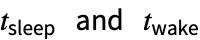
These represent the user’s usual sleep onset and wake time, rather than the timing of one unusual day. The model assumes that this reported schedule is representative and repeats every 24 hours. For example, if the user normally sleeps at 23:00 and wakes at 07:00, the model assumes the same general timing on each day.
◼
Estimation of CBTmin from the literature review
Because sleep and wake times are the only user inputs, the user’s actual circadian phase cannot be measured directly. Direct measurement would require physiological data such as continuous core body temperature or dim-light melatonin onset. Therefore, the timing of CBTmin is estimated using the relationship between habitual wake time and CBTmin identified in the literature review presented earlier in this essay.
The reviewed literature indicates that CBTmin commonly occurs approximately two to four hours before habitual awakening. To produce one deterministic estimate, the midpoint of this range is used:
The reviewed literature indicates that CBTmin commonly occurs approximately two to four hours before habitual awakening. To produce one deterministic estimate, the midpoint of this range is used:
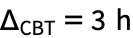
The estimated CBTmin is therefore calculated as:

Substituting the selected three-hour offset gives:

The modulo operation returns the result to the 24-hour clock.
◼
Circadian cosine function
The original Phillips model represents the circadian contribution using:

where:
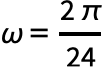
The parameter controls the amplitude of the circadian effect, while ϕ represents the clock time at which circadian sleep promotion is strongest. Phillips et al. describe this phase as occurring near CBTmin.
In the present simplified model, the cosine is normalized to range from −1 to 1, and the estimated CBTmin is used as its phase:
a
In the present simplified model, the cosine is normalized to range from −1 to 1, and the estimated CBTmin is used as its phase:
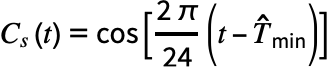
Thus, the model assigns maximum circadian sleep promotion to the estimated timing of CBTmin. Twelve hours later:
Substituting the cosine function gives:
At estimated CBTmin:
indicating minimum circadian support for wakefulness. Approximately twelve hours later:
indicating maximum circadian wake promotion. The final Process C calculation is therefore:
with all clock-time calculations interpreted modulo 24 hours.
2. Process S: Sleep Drive
2. Process S: Sleep Drive
Adenosine is a sleep-promoting signalling molecule associated with cellular energy use. During wakefulness, extracellular adenosine generally increases as brain activity continues. During sleep, its production is reduced and its clearance increases, causing its concentration to decrease. Phillips, Klerman, and Butler modelled this behaviour using first-order pharmacokinetics, in which adenosine is produced at a state-dependent rate and removed at a rate proportional to its current concentration.
◼
Sleep–wake input
The only user-provided input is a record of sleep-onset and wake times, including naps. These times are converted into a binary sleep–wake function,
◼
Total adenosine dynamics
◼
Solution during wakefulness
For a continuous wake interval beginning at time t0, the solution is:
◼
Solution during sleep
For a continuous sleep interval beginning at t0, the solution is:
◼
Process S approximation
The complete Phillips model divides total adenosine into bound and unbound pools and defines homeostatic sleep pressure using adenosine bound to A1 receptors. The present implementation omits the receptor-binding stage for simplicity and approximates Process S using total adenosine concentration:
This should be interpreted as an adenosine-based approximation of homeostatic sleep pressure, rather than a complete physiological model of the adenosine receptor system. It preserves the short-term rise of sleep pressure during wakefulness and its decline during sleep, but it does not include the slower receptor changes used in the full Phillips model to represent chronic sleep restriction and long-term recovery.
◼
Initial adenosine concentration
The user is not required to provide an initial adenosine concentration. Instead, the user’s habitual sleep–wake schedule is repeated computationally until the simulated adenosine profile becomes approximately identical across consecutive days:
Here, ε is a small numerical tolerance. The resulting stable value is used as the initial condition for the period being analysed. This allows Process S to begin from a state consistent with the user’s usual sleep schedule rather than from an arbitrary adenosine value.
Alertness and Sleep Propensity
Alertness and Sleep Propensity
Sleep propensity
Sleep propensity
Sleep propensity, SP(t), represents the combined tendency to sleep at time t. It is calculated by subtracting circadian wake promotion from homeostatic sleep pressure:
The final sleep-propensity equation is therefore:
Relative alertness
Relative alertness
Relative alertness is defined as the opposite of sleep propensity:
Substituting the sleep-propensity equation gives:
Alertness is therefore predicted to be highest when circadian wake promotion is strong and adenosine-related sleep pressure is low. It is predicted to be lowest when circadian wake promotion is weak and homeostatic sleep pressure is high.
Since each component ranges approximately from −1 to 1, the relative-alertness index ranges approximately from −2 to 2. For easier interpretation, it may be converted to a scale from 0 to 1:
Since each component ranges approximately from −1 to 1, the relative-alertness index ranges approximately from −2 to 2. For easier interpretation, it may be converted to a scale from 0 to 1:
On this scale, values closer to 1 represent greater predicted relative alertness, while values closer to 0 represent lower predicted alertness.
Computational System Architecture
Computational System Architecture
Overview of the Computational System
Overview of the Computational System
The computational system contains two user pathways: regular sleep optimization and travel-related sleep optimization. Both pathways begin from the same baseline model of sleep regulation. The user’s usual sleep and wake times are used to estimate homeostatic sleep pressure, circadian timing, CBTmin, and relative alertness. The system then applies a separate optimization process depending on whether the user is trying to improve a regular daily schedule or prepare for travel across time zones.
The overall computational flow is:
The physiological model estimates the consequences of a schedule, while the optimizer decides which schedule is most appropriate. These functions are kept separate because a biologically favourable sleep window may not be practical for a user with fixed school, work, travel, or event requirements.
Initial User Pathway Section
Initial User Pathway Section
When the application opens, the user first selects the purpose of the model:
1. Improve my regular sleep schedule
2. Prepare for travel or jet lag
2. Prepare for travel or jet lag
This selection determines which later questions, calculations, and outputs are shown. Common baseline information is collected first, while travel-specific information is requested only from travellers.
User Personas
User Personas
General Population
General Population
Individuals with relatively stable daily schedules whose sleep timing is primarily governed by the interaction between the circadian rhythm and homeostatic sleep drive. Although the internal biological clock is generally synchronized with the local light-dark cycle, everyday factors such as inconsistent bedtimes, work or school schedules, social obligations, evening light exposure, and caffeine consumption can disrupt this alignment. In addition, a limited understanding of circadian biology and healthy sleep practices often makes it difficult to determine an appropriate sleep schedule. As a result, many individuals struggle to consistently identify and maintain sleep habits that align with their biological rhythms.
Jet-Lagged Individuals
Jet-Lagged Individuals
Individuals who have recently travelled across multiple time zones, creating a temporary mismatch between their internal circadian clock and the local time at their destination. Although environmental cues such as daylight, meal timing, and social activity change immediately, the biological clock adjusts gradually. The CDC estimates that adaptation occurs at approximately one hour per day after eastward travel and 1.5 hours per day after westward travel. During this period, travellers may experience disturbed sleep, daytime sleepiness, cognitive impairment, reduced concentration, fatigue, mood changes, and gastrointestinal discomfort. A survey cited by the CDC found that 68% of international business travellers regularly experienced negative jet-lag symptoms, showing that the problem is common among frequent travellers.
Jet lag is therefore more than a minor inconvenience. Reduced alertness and cognitive performance may impair judgement and decision-making among business leaders, politicians, diplomats, and military personnel, particularly when they must perform demanding tasks shortly after arrival. U.S. Army guidance notes that physiological rhythms may require approximately five to eight days to synchronize after rapid travel across several time zones, during which cognitive performance and operational effectiveness may be reduced. These effects can also compromise athletic performance. An analysis of 11,481 NBA games across ten seasons found that home teams experiencing two hours of eastward jet lag had a 4.53-point reduction in point differential compared with teams without jet lag. Consequently, jet-lag management is relevant not only to tourists but also to individuals whose judgement, physical performance, and sustained attention can affect professional outcomes or public safety.
Jet lag is therefore more than a minor inconvenience. Reduced alertness and cognitive performance may impair judgement and decision-making among business leaders, politicians, diplomats, and military personnel, particularly when they must perform demanding tasks shortly after arrival. U.S. Army guidance notes that physiological rhythms may require approximately five to eight days to synchronize after rapid travel across several time zones, during which cognitive performance and operational effectiveness may be reduced. These effects can also compromise athletic performance. An analysis of 11,481 NBA games across ten seasons found that home teams experiencing two hours of eastward jet lag had a 4.53-point reduction in point differential compared with teams without jet lag. Consequently, jet-lag management is relevant not only to tourists but also to individuals whose judgement, physical performance, and sustained attention can affect professional outcomes or public safety.
Shared Baseline Assessment
Shared Baseline Assessment
Common User Inputs
Common User Inputs
Both pathways require the following baseline information:
◼
age
◼
usual sleep onset time
◼
usual wake time
◼
optional chronotype
◼
preferred or required wake time
◼
desired level of schedule flexibility
The usual sleep and wake times represent the user’s typical schedule rather than one unusual night. They are used to construct the repeating sleep–wake input for Process S and to estimate circadian phase for Process C.
Baseline Physiological Model
Baseline Physiological Model
The system calculates three main outputs:
1
.Process S
2
.Process C
3
.Relative alertness
Process S is represented using the adenosine accumulation model mentioned earlier in the essay:
Process C is represented using a fixed 24-hour cosine whose phase is based on estimated CBTmin:
Relative alertness is calculated from the difference between circadian wake promotion and homeostatic sleep pressure:
These three curves form the common biological foundation of both user pathways.
Role of Personalization Factors
Role of Personalization Factors
The purpose of personalization is to adapt the sleep recommendation to the user without creating an entirely different physiological model for every individual. The same Process S, Process C, and relative alertness framework is used for all users. Personal information is instead used to initialize the model, determine an appropriate sleep duration, restrict the available sleep schedules, and rank different candidate sleep windows.
The personalization profile is represented as:
where
◼
c represents chronotype
These factors enter the system in three main ways:
Habitual Sleep and Wake Times
Habitual Sleep and Wake Times
The user’s habitual sleep and wake times form the baseline of the model. These values should represent the schedule followed on most days rather than the timing of one unusual night.
Habitual sleep duration is calculated as:
Habitual sleep duration is calculated as:
The habitual sleep interval defines the repeating sleep–wake input used in Process S:
Habitual wake time is also used to estimate CBTmin:
This estimate determines the phase of Process C. The habitual schedule is not assumed to be optimal. Instead, it acts as a baseline against which proposed changes are measured. Large changes may be harder to maintain than small changes, so the optimizer applies a schedule-change penalty:
Because sleep times occur on a 24-hour clock, circular distance is used:
For example, the distance between 23:30 and 00:30 is one hour rather than 23 hours.
Age and Sleep Duration
Age and Sleep Duration
Age is used primarily to determine an appropriate sleep-duration range. In the current model, age does not alter the adenosine parameters or the shape of the circadian cosine because validated age-specific parameters are not included.
The age-based sleep-duration range can be represented as:
The age-based sleep-duration range can be represented as:
A candidate schedule that provides less than the minimum recommended duration receives a penalty:
Where an upper limit is defined, excessive sleep duration may be penalized as:
The overall duration penalty is:
Chronotype
Chronotype
Chronotype describes an individual’s tendency toward earlier or later sleep timing. Morning-type individuals generally prefer earlier sleep and wake times, while evening-type individuals generally prefer later schedules.
Chronotype is most closely related to the timing of Process C, rather than Process S. However, in the first version of the model, chronotype is treated mainly as a scheduling preference rather than as a direct biological measurement.
The midpoint of a candidate sleep interval is:
Chronotype is most closely related to the timing of Process C, rather than Process S. However, in the first version of the model, chronotype is treated mainly as a scheduling preference rather than as a direct biological measurement.
The midpoint of a candidate sleep interval is:
This encourages earlier recommendations for morning-type users and later recommendations for evening-type users.
General User Sleep Optimization
General User Sleep Optimization
Overall Flow
Overall Flow
The regular sleep optimizer begins with a basic user profile:
◼
usual sleep time
◼
usual wake time
◼
age
◼
chronotype
The user then selects one of two pathways:
The difference between the two pathways is:
◼
Unconstrained users are free to change their schedule, so the optimizer searches for a biologically and practically ideal sleep window.
◼
Constrained users have fixed schedule limits, so the optimizer searches for the best sleep window inside those restrictions.
The current version considers four optimization factors:
Unconstrained User Flow
Unconstrained User Flow
Unconstrained users do not care strongly about preserving their current sleep timing. Their current schedule is still collected, but it is used mainly to create a transition plan from the current schedule to the optimized one.
For these users, the optimizer does not penalize deviation from the current sleep schedule. This is because the goal is to shift the user toward a better target rhythm rather than preserve their current circadian anchor.
The unconstrained flow is:
For these users, the optimizer does not penalize deviation from the current sleep schedule. This is because the goal is to shift the user toward a better target rhythm rather than preserve their current circadian anchor.
The unconstrained flow is:
Duration
Duration
Age determines the recommended sleep-duration range. For example, the CDC lists 8–10 hours for teens and at least 7 hours for adults, with specific ranges varying by age group.
The target duration is:
where:
For an adult, this means:
◼
dark target duration: 8 hours
◼
lighter acceptable duration window: 7–9 hours
This should be visualized as a target sleep block surrounded by a lighter sleep-duration window.
Timing
Timing
For unconstrained users, the optimizer should prefer a normal night-aligned sleep schedule. The model can use 22:00–00:00 as the default bedtime anchor.
This should be treated as a practical design assumption, not a strict medical rule. It gives the optimizer a normal local-night target that is likely to work with morning daylight, school/work norms, and the local light-dark cycle.
Define the preferred bedtime interval as:
This should be treated as a practical design assumption, not a strict medical rule. It gives the optimizer a normal local-night target that is likely to work with morning daylight, school/work norms, and the local light-dark cycle.
Define the preferred bedtime interval as:
The timing penalty is based on how far the candidate bedtime is from this interval:
Chronotype
Chronotype
Chronotype slightly shifts the preferred bedtime earlier or later.
A simple implementation is:
The default target bedtime is 23:00:
The chronotype-adjusted preferred bedtime is:
The circular distance function is:
Alertness
Alertness
The optimizer should prefer schedules where predicted alertness is high during the day and lower close to bedtime.
For each candidate schedule, calculate relative alertness:
The waking alertness penalty is:
To make sure alertness is not too high close to bedtime, add a small pre-bed penalty:
The alertness penalty is:
This means the model mainly rewards high daytime alertness, while also preferring schedules where alertness naturally decreases near bedtime.
Unconstrained Objective Function
Unconstrained Objective Function
For unconstrained users, the total score is:
A practical initial weighting is:
The selected schedule is:
where:
Unconstrained User Output
Unconstrained User Output
Best Schedule Table
Best Schedule Table
The first output should be a table showing how the user can transition from their current schedule to the optimized schedule.
The current schedule is:
The optimized schedule is:
The number of transition days is:
The schedule table would look like:
Code Explanation
Code Explanation
These lines set the main biological constants for the model: average adenosine level while awake, average adenosine level while asleep, and how quickly adenosine changes during waking and sleeping. The time constants control the speed of buildup or decay, with wake pressure changing more slowly than sleep recovery.
This function forces any numeric value to stay between 0 and 1. If the value is below 0, it becomes 0; if it is above 1, it becomes 1.
This function converts a decimal clock time into a normal “HH:MM” time string. For example, 13.5 becomes “13:30”, and the Mod[..., 1440] keeps the time within a 24-hour day.
This function finds the shortest distance between two times on a 24-hour clock. For example, the distance between 23:00 and 1:00 is 2 hours, not 22 hours, because it wraps around midnight.
This function finds how far the current time needs to shift to reach the target time, while choosing the shortest direction around the 24-hour clock. The result can be positive or negative, so it shows whether the schedule should move later or earlier.
This function checks how far a bedtime is from the preferred bedtime window of 22:00–00:00. If the bedtime is already between 10 PM and midnight, the distance is 0; otherwise, it returns the shortest distance to either 22:00 or 00:00.
This function returns the recommended sleep duration range based on the user’s age. Each output has three values: minimum sleep, target sleep, and maximum sleep duration.
This function places a clock time into a specific extended time range, even if the range crosses midnight. It shifts the time by 24-hour blocks so it appears inside the plotting window or schedule range.
This part sets up the regular alertness model by calculating bedtime, wake time, estimated CBT minimum, and how much sleep pressure decays during sleep versus builds during waking. It also calculates the predicted sleep pressure at bedtime and wake time, which are then used to build the full alertness curve.
This part returns the actual alertness function, where # represents any clock time being tested. It calculates time since bedtime, estimates adenosine/sleep pressure depending on whether the person is sleeping or awake, combines that with circadian wake drive, and clips the final alertness score between 0 and 1.
This function scores one possible sleep schedule by checking sleep duration, bedtime timing, chronotype fit, and predicted alertness during the day and before bed. It combines those penalties into one total score and returns the schedule details, where a lower score means a better recommendation.
This function generates and scores many possible regular sleep schedules, depending on whether the user is unconstrained or has bedtime/wake-time limits. It tests different bedtimes and sleep durations, then returns all the candidate schedules so the best one can be chosen later.
This function checks whether a candidate sleep schedule is allowed under the user’s constraints. It rejects schedules with too little or too much sleep, then makes sure the bedtime and wake time fit either the unconstrained, fixed-wake, or latest-wake pathway.
This function builds a set of acceptable flexible schedule options around the best schedule by shifting bedtime earlier or later within the chosen flexible window. It then keeps only the schedules that are feasible and whose score is close enough to the best score, based on the allowed score tolerance.
This function creates the main recommendation table for the optimized sleep plan. It shows the user pathway, target bedtime, wake time, sleep duration, age-based sleep range, flexible timing window, and estimated CBTmin in a clean grid format.
This function creates a score breakdown table showing how much each factor contributed to the final sleep recommendation score. It lists penalties for sleep duration, timing, chronotype, and alertness, then shows the total score at the bottom.
This function creates a transition table that shows how to gradually shift from the user’s current sleep and wake times to the optimized schedule. It calculates the difference, moves the schedule by about 30 minutes per day, and displays each day’s target bedtime, wake time, and goal.
This function creates the alertness graph by plotting the predicted alertness curve across the day and labeling the time axis in clock format. It also shades the flexible sleep window and target sleep period, then marks bedtime, wake time, and estimated CBT minimum on the graph.
This function creates a small tips panel using the recommended sleep schedule. It gives advice like when to wind down, when to avoid big meals, when to get morning light, and how to keep the sleep environment consistent.
After developing the equations, theory, and flow utilizing mathematics and biology, I used Gemini LLM to develop this dynamic modules to implement these theories into an interactive interface for a user.
Travel and Jet-Lag Optimization
Travel and Jet-Lag Optimization
Purpose of the Travel Mode
Purpose of the Travel Mode
The travel optimizer is designed for users whose internal circadian clock is temporarily misaligned with the local time at their destination. Unlike the regular-sleep optimizer, the travel pathway must decide whether the user should maintain home time, partially adapt, or fully adapt to the destination.
The goal is not always to force full adjustment. For short trips, especially trips with small time-zone shifts, changing the sleep schedule and then changing it back may create more disruption than benefit. The CDC Yellow Book notes that travellers on very short trips may sometimes minimize disruption by remaining closer to home time, while larger shifts and longer stays may require more deliberate adjustment.
The travel flow is:
The current travel model considers:
◼
usual sleep and wake times
◼
age-based sleep duration
◼
chronotype
◼
one-way or round-trip travel
◼
time-zone difference
◼
trip length
◼
destination sleep timing
◼
predicted alertness
◼
light-seeking and light-reduction windows
Travel User Inputs
Travel User Inputs
The traveller first completes the same basic profile as a regular user:
◼
usual sleep time
◼
usual wake time
◼
age
◼
chronotype
The user then selects whether the trip is:
◼
one-way, where the destination is treated as the new long-term schedule; or
◼
round trip, where the system must also account for the cost of readjusting home.
The itinerary can be entered through a flight number or manually. The system should obtain:
◼
origin airport
◼
destination airport
◼
departure date and time
◼
arrival date and time
◼
origin time zone
◼
destination time zone
◼
return flight or return date, if round trip
◼
desired adaptation preference
The adaptation preferences are:
The goal is not always to maximize circadian adaptation. For short trips, fully shifting the circadian rhythm and then shifting back may create more disruption than maintaining a schedule closer to home time.
Time-Zone Shift
Time-Zone Shift
The time-zone difference is:
A positive value means the destination clock is later than the origin clock. A negative value means the destination clock is earlier.
Because time is circular, the same shift can often be represented in two directions. For example, a +16-hour shift can also be treated as a −8-hour shift.
The model can normalize the shift as:
Because time is circular, the same shift can often be represented in two directions. For example, a +16-hour shift can also be treated as a −8-hour shift.
The model can normalize the shift as:
This gives the shortest clock-time displacement in the range:
For example:
Trip-Length
Trip-Length
Trip length determines whether adaptation is worth attempting.
For a round trip, the stay length is measured from arrival at the destination until departure for the return journey:
For a round trip, the stay length is measured from arrival at the destination until departure for the return journey:
For a one-way trip, the model can treat the stay length as long-term, because the user does not need to immediately readjust home.
The model should distinguish between:
The model should distinguish between:
Strategy Selection
Strategy Selection
The optimizer evaluates each strategy using a travel cost function.
The terms represent:
For one-way trips, the return penalty is removed. For round trips, the return penalty increases when the user fully adapts during a short stay, because the user must then shift back soon after.
This makes full adaptation less attractive for short trips and more reasonable for longer stays.
The selected strategy is:
The selected strategy is:
Dynamic Circadian Phase
Dynamic Circadian Phase
The regular-sleep model uses a fixed Process C. Travel requires a moving circadian phase because the body clock gradually adapts to the new time zone.
Let ϕ represent estimated CBTmin on travel day d.
Let ϕ represent estimated CBTmin on travel day d.
The initial phase is based on the user’s usual wake time at home:
The target phase is:
where R is the maximum daily adjustment rate.
A practical first implementation can use:
A practical first implementation can use:
The CDC Yellow Book gives approximate adaptation rates of about 1 hour per day for eastward travel and 1.5 hours per day for westward travel.
The clipping function is:
The clipping function is:
Process C During Travel
Process C During Travel
For each travel day, Process C is recalculated using that day’s predicted CBTmin:
This allows the circadian curve to move gradually toward the destination schedule.
Process S is still calculated from the sleep schedule for each day. The main difference is that Process C no longer stays fixed.
Process S is still calculated from the sleep schedule for each day. The main difference is that Process C no longer stays fixed.
Light-Seeking and Light-Reduction Windows
Light-Seeking and Light-Reduction Windows
Light is the main environmental signal used to shift circadian phase. The direction of the shift depends on when light occurs relative to CBTmin.
◼
Light before CBTmin --> phase delay
◼
Light after CBTmin --> phase advance
Human light phase-response studies show that light exposure before the core body temperature minimum tends to delay the circadian clock, while light after the minimum tends to advance it. The app splits these three cases into: seek bright light, reduce bright light, and normal light is acceptable.
For a phase delay:
For a phase advance:
Destination Sleep Schedule
Destination Sleep Schedule
The destination sleep schedule should be generated from:
◼
age-based duration
◼
selected adaptation strategy
◼
destination local time
◼
predicted CBTmin
◼
chronotype
For a full adaptation strategy, the sleep window should resemble a normal destination-night schedule. For home-time maintenance, the sleep window is based on the user’s home sleep schedule converted into destination local time. For partial adaptation, the sleep window is placed between home-time sleep and destination-time sleep.
The model can represent this with:
The model can represent this with:
where q=0 means home time, q=0.5 means partial adaptation, and q=1 means full destination adaptation.
Travel User Output Flow
The travel pathway should produce four main outputs.
1. Strategy Card
1. Strategy Card
This summarizes:
◼
origin and destination
◼
time-zone shift
◼
trip length
◼
selected strategy
◼
expected adaptation direction
◼
estimated number of days to adjust
Example:
2. Multi-Day Sleep Table
2. Multi-Day Sleep Table
This is an example table that shows how the user should shift sleep over several days.
3. Alertness Graph
3. Alertness Graph
The graph should show:
◼
predicted alertness in destination local time
◼
sleep intervals
◼
estimated CBTmin for each day
◼
whether the user is aligned, partially aligned, or misaligned
4. Light Directive Bar
4. Light Directive Bar
This gives simple daily instructions:
One-Way Versus Round Trip
One-Way Versus Round Trip
The major difference is the return cost.
For one-way travel:
For one-way travel:
The model usually favours destination adaptation because there is no need to preserve the home schedule.
For round-trip travel:
For round-trip travel:
The model may choose home-time or partial adaptation when the stay is short.
Code
Code
This section clears old variables and sets the biological constants for adenosine/sleep pressure.
This sets the colours used in the route map.
This function keeps any calculated score between 0 and 1. If the value goes below 0 it becomes 0, and if it goes above 1 it becomes 1.
This function converts decimal time into normal clock format.
This function turns two decimal times into a readable time interval.
This function calculates whether a time needs to move earlier or later to reach a target time. The sign tells the model the direction of the circadian shift.
This function smoothly blends between two clock times on a circular 24-hour clock. It is used to move between the traveler’s home schedule and the destination schedule.
This function returns the minimum, target, and maximum recommended sleep duration based on the user’s age. The model uses this to choose an appropriate sleep duration for the travel plan.
This function tries to fetch real flight information from the Aviationstack API using the flight number and date. If the API fails or no flight is found, it returns an error message so the app can fall back to manual inputs.
This function calculates a point along the curved shortest path between two airports on Earth. It is used to draw the flight route and animate the plane position on the map.
This is a backup database of airport names and coordinates. It is used when Wolfram’s built-in airport lookup cannot find a result.
This function finds an airport’s coordinates from its IATA code. It first tries Wolfram’s AirportData, then uses the fallback airport list.
This function finds a readable airport name from its IATA code. If no name is found, it simply returns the airport code.
This is the core biological model that predicts alertness from two parts: homeostatic sleep pressure and circadian wake drive. It returns an alertness function that can estimate relative alertness at any destination clock time.
This function models how the circadian rhythm shifts over multiple days toward the target destination rhythm. It limits the daily shift so the adaptation happens gradually rather than instantly.
This function decides when the user should seek bright light or avoid bright light. It depends on whether the circadian rhythm needs to shift earlier, later, or stay stable.
This function creates the full sleep and light plan for a given adaptation level. It calculates the target bedtime, wake time, CBTmin, and daily recommendations.
This function scores each travel strategy using timing fit, circadian mismatch, return-trip disruption, and the user’s preference. The app picks the strategy with the lowest score.
This function creates a styled airport information card for the map. It displays the airport title, departure or arrival label, and scheduled time.
This function creates a small colored label for airport names on the map.
This function creates the custom map pin marker used for origin and destination airports.
This function creates the small flight-duration box shown on the map.
This function calculates the flight duration using departure time, arrival time, and UTC offsets. If the calculation fails, it defaults to a simple flight label.
This function builds the full flight route map with airport pins, route line, plane marker, airport labels, and flight information cards.
This is the main interactive interface. It takes the user’s sleep, flight, time zone, and trip preferences, then chooses the best jet-lag adaptation strategy and displays the map, schedule, alertness graph, and tips. This component was generated with the support of Gemini LLM.
Conclusion
Conclusion
Overall, this project developed an interactive interface for both regular people seeking sleep improvement or travellers. By combining Process S, Process C, estimated CBTmin, age-based sleep duration, chronotype, and schedule constraints, the model can generate personalized sleep windows for regular users and travel adaptation plans for jet-lagged users. The regular-user pathway focuses on finding a biologically reasonable sleep rhythm, while the travel pathway compares whether it is better to stay on home time, partially adapt, or fully adapt to destination time based on time-zone shift and trip length. Although the current system uses simplified assumptions, it creates a clear foundation for turning circadian biology into an interactive tool that helps users understand why certain sleep times are recommended, how their alertness may change across the day, and how to gradually adjust their schedule in a practical way.
Future Directions
Future Directions
Future work could expand the system beyond regular users and travellers by developing a separate optimization pathway for shift workers. Their schedules may repeatedly conflict with the local light-dark cycle, so the model would need to account for night shifts, rotating shifts, naps, recovery sleep, and whether the user is trying to stay adapted to work days or return to a normal schedule on days off.
Another important direction would be to replace the simplified cosine representation of Process C with a more advanced circadian model, such as the FJK or Kronauer-Jewett light-responsive model. This would allow the system to model circadian phase more realistically, especially for travel. Instead of estimating CBTmin from wake time and shifting it at a fixed daily rate, the model could respond dynamically to light intensity, light timing, and previous circadian state. This would make the jet-lag recommendations more biologically accurate, especially when generating light exposure instructions.
The system could also include additional personalization factors that were intentionally left out of the current version due to time constraints. Recent sleep history would allow Process S to begin from a more accurate state instead of assuming the user has followed their usual schedule. Light exposure could help estimate whether the user’s circadian rhythm is likely to advance or delay. Caffeine intake could be added as a behavioural factor that affects perceived sleepiness and sleep onset. User-defined critical alertness periods could allow the optimizer to prioritize exams, meetings, competitions, or other times when performance matters most.
Next, modelling sleep debt. The current model focuses on one optimized sleep schedule, but it does not fully track the accumulated effect of several nights of insufficient sleep. Adding sleep debt would allow the system to distinguish between a user who is simply sleeping at the wrong time and a user who also needs recovery sleep. This would make the recommendations more realistic because the best schedule after several short nights may not be the same as the best schedule for someone who is already well rested.
Then, including a formal API key that doesn’t require the user to get it. Most users will think it is a hassle to find an API key from online, then entering it. The website to access these API keys also require registration sign up. To remove friction for the user here in the future, implementing an automatic API fetch request would work well.
Finally, the project could be deployed as an actual web application that people can use directly. The current computational essay demonstrates the logic through models, graphs, and prototype interfaces, but a web version would make the system more practical. Users could enter their profile, import flights or schedules, see a map-based travel plan, view their recommended sleep window, and receive a clear adjustment table. This would turn the model from a theoretical optimization tool into a usable product for everyday sleep planning and travel preparation.
Acknowledgements
Acknowledgements
First and foremost, I really like to thank my mentor, Dr. Anton Antonov --- for his late-night dedication to providing feedback, thinking of ways to make my project better, and humourous personality that makes our work environment so enjoyable to be a part of. To my mentor group, thank you for being working with me, the energy, kindness, and respect that you have all demonstrated throughout our days together has been so incredible. It has been so important to have people around you that both have an ambitious work ethic, but are equally stellar in character. To my advocate group, thank you for providing the mentorship, guidance, and time to go through the struggles together as we all approached the Wolfram language for the first few days. Even though the data science exploration left a lasting impression on us, we got through it all together. Thank you to all the teaching assistants, Aanya Gupta and Amrita Kumar, who consistently be people who we can relate with us, support us on our projects, and also patiently edit our final projects as well. I’d like to acknowledge Stephen Wolfram, for developing an experience like this to expose ambitious young people who want to use the cutting edge of computation to make an impact on the world--- I have made some of my closest friends, became a much better coder, and learned to embrace the beauty of computation. Last, but certainly not least, the camp directors. I would like to thank you for your continued passion, concern, and effort that you put into this program. From being there to support us on our projects, making sure we are safe, to setting up the multitude of activities that make WSRP the experience it is, your efforts have definitely been seen. I am so appreciative of the work that you all put in to make this experience possible, even if it means losing a lot of sleep to do so. Thank you to WSRP 2026, for this incredible, incredible experience that it is.
References
References
1
.Borbély, A. (2022). The two-process model of sleep regulation: Beginnings and outlook. Journal of Sleep Research, 31(4), e13598. https://doi.org/10.1111/jsr.13598
2
.Cleveland Clinic. (n.d.). Circadian rhythm: What it is, how it works & what affects it. Retrieved July 9, 2026, from https://my.clevelandclinic.org/health/articles/circadian-rhythm
3
.Eastman, C. I., & Burgess, H. J. (2009). How to travel the world without jet lag. Sleep Medicine Clinics, 4(2), 241–255. https://doi.org/10.1016/j.jsmc.2009.02.006
4
.Huberman Lab. (n.d.). Huberman Lab AI. Retrieved July 9, 2026, from https://ai.hubermanlab.com/
5
.Leota, J., Hoffman, D., Czeisler, M. É., Mascaro, L., Drummond, S. P. A., Anderson, C., Rajaratnam, S. M. W., & Facer-Childs, E. R. (2022). Eastward jet lag is associated with impaired performance and game outcome in the National Basketball Association. Frontiers in Physiology, 13, Article 892681. https://doi.org/10.3389/fphys.2022.892681
6
.National Institute for Occupational Safety and Health. (n.d.). Module 2 [Training for nurses on shift work and long work hours]. Centers for Disease Control and Prevention. Retrieved July 9, 2026, from https://www.cdc.gov/niosh/work-hour-training-for-nurses/longhours/mod2/11.html
7
.National Institute of General Medical Sciences. (2023). Circadian rhythms. U.S. Department of Health and Human Services. https://www.nigms.nih.gov/education/fact-sheets/Pages/circadian-rhythms
8
.Rea, M. S., Nagare, R., Bierman, A., & Figueiro, M. G. (2022). The circadian stimulus–oscillator model: Improvements to Kronauer’s model of the human circadian pacemaker. Frontiers in Neuroscience, 16, Article 965525. https://doi.org/10.3389/fnins.2022.965525
9
.Reddy, S., Reddy, V., & Sharma, S. (2023). Physiology, circadian rhythm. In StatPearls. StatPearls Publishing. https://www.ncbi.nlm.nih.gov/books/NBK519507/
10
.Riedy, S. M., & Williams, S. G. (2025). Jet lag disorder. In E. S. Halsey, K. M. Angelo, E. D. Barnett, et al. (Eds.), CDC Yellow Book 2026: Health information for international travel. Centers for Disease Control and Prevention. https://www.cdc.gov/yellow-book/hcp/travel-air-sea/jet-lag-disorder.html
11
.Sleep Foundation. (n.d.). Circadian rhythm. Retrieved July 9, 2026, from https://www.sleepfoundation.org/circadian-rhythm
Smith, M. R., & Eastman, C. I. (2012). Shift work: Health, performance and safety problems, traditional countermeasures, and innovative management strategies to reduce circadian misalignment. Nature and Science of Sleep, 4, 111–132. https://doi.org/10.2147/NSS.S10372
Smith, M. R., & Eastman, C. I. (2012). Shift work: Health, performance and safety problems, traditional countermeasures, and innovative management strategies to reduce circadian misalignment. Nature and Science of Sleep, 4, 111–132. https://doi.org/10.2147/NSS.S10372
12
.Heid, M. (n.d.). What’s the best time to sleep? Time. Retrieved July 9, 2026, from https://time.com/collections/guide-to-sleep/3183183/best-time-to-sleep/
13
.Wignall, N. (2018, April 20). Sleep drive: A brief introduction. Nick Wignall. https://nickwignall.com/youve-heard-of-sex-drive-but-sleep-drive/
14
.OpenAI (2026), ChatGPT 5.5 Pro; Google Gemini (2026), 3.5 Flash was used to generate the DynamicModule components in both my visuals for the regular and travel users. All mathematical equations, writing, and other components were independently by the Author.
CITE THIS NOTEBOOK
CITE THIS NOTEBOOK
Circadian-based optimization of personalized sleep schedules
by Warren Chen
Wolfram Community, STAFF PICKS, July 9, 2026
https://community.wolfram.com/groups/-/m/t/3754125
by Warren Chen
Wolfram Community, STAFF PICKS, July 9, 2026
https://community.wolfram.com/groups/-/m/t/3754125