Artificial intelligence is beginning to display behaviors that once seemed distinctly human. AI systems can hold conversations, compose poetry, solve difficult problems, and respond to emotional situations in ways that feel surprisingly personal. As these abilities grow, a question becomes increasingly difficult to avoid: could an AI one day become conscious?
In this post, we will explore several theories of consciousness and their implications for AI. We will examine a recent Nature commentary questioning whether current approaches to AI could produce consciousness. We will also consider perspectives from ancient philosophical systems, particularly Vedic thought, on the relationship between consciousness, mind, and matter. Together, these approaches invite us to examine our assumptions about what it would mean for an artificial system to experience the world.
What does it mean to be conscious?
What does it mean to be conscious?
Before asking whether artificial intelligence can become conscious, let us begin with a more fundamental question: What does it mean to be conscious?
Consider a few ordinary experiences. You are trying to solve a difficult mathematical problem. You remember someone you love. You enjoy the taste of your favorite food. You feel happiness upon receiving good news, or sadness upon hearing something unfortunate. You decide to help someone, visit a friend, or pursue an important goal.
Although these experiences are quite different, they share something fundamental: you are aware of them. Something is happening within you, and you experience it.
We can broadly describe our conscious life in terms of three interconnected activities:
1. Thinking: We think about mathematical problems, recall past events, imagine future possibilities, contemplate philosophical questions, or remember people and things we love.
Out[]=
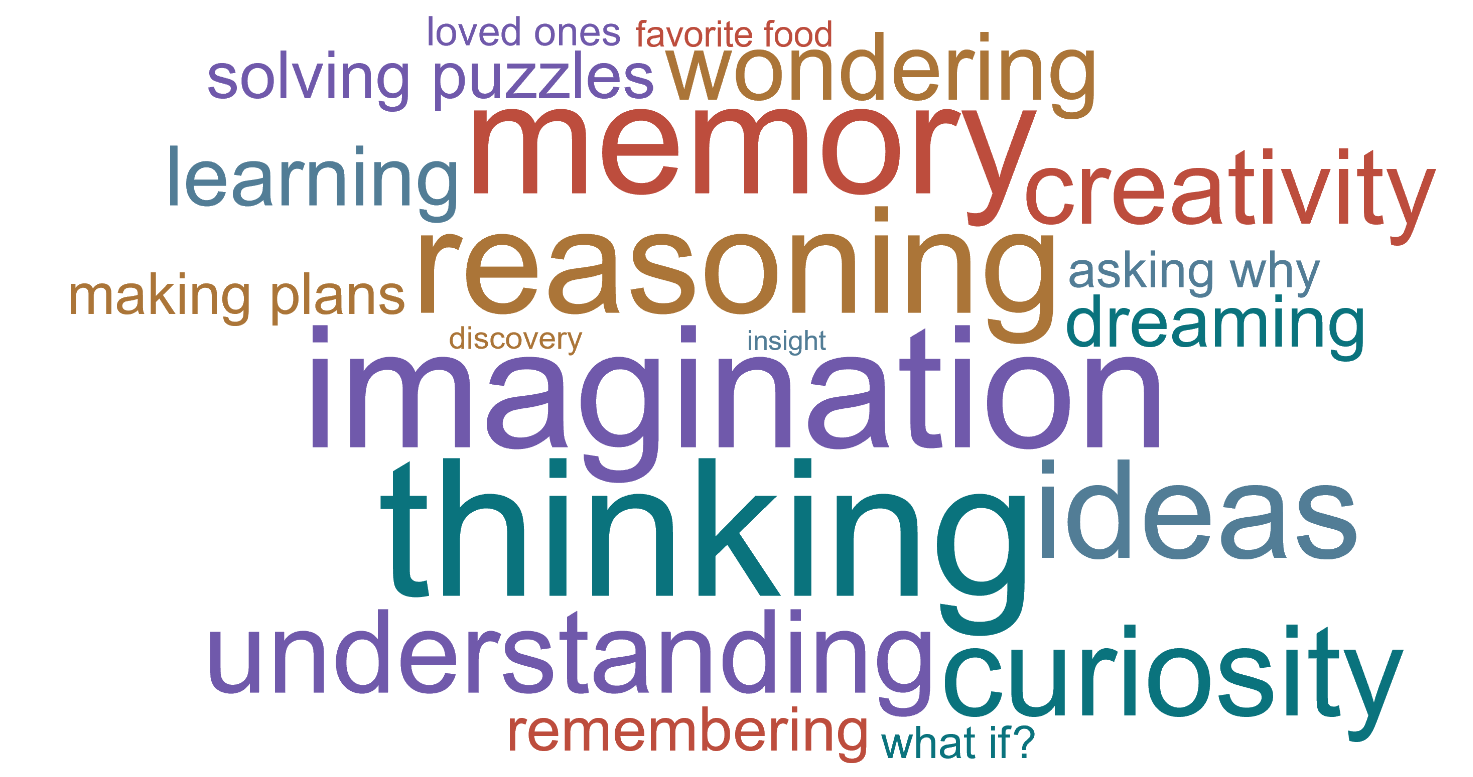
Figure 1: The first aspect of conscious life is thinking
2. Feeling: We experience happiness, sadness, love, fear, pleasure, pain, beauty, wonder, and countless other emotions and sensations. These experiences give our inner lives their remarkable richness.
Out[]=
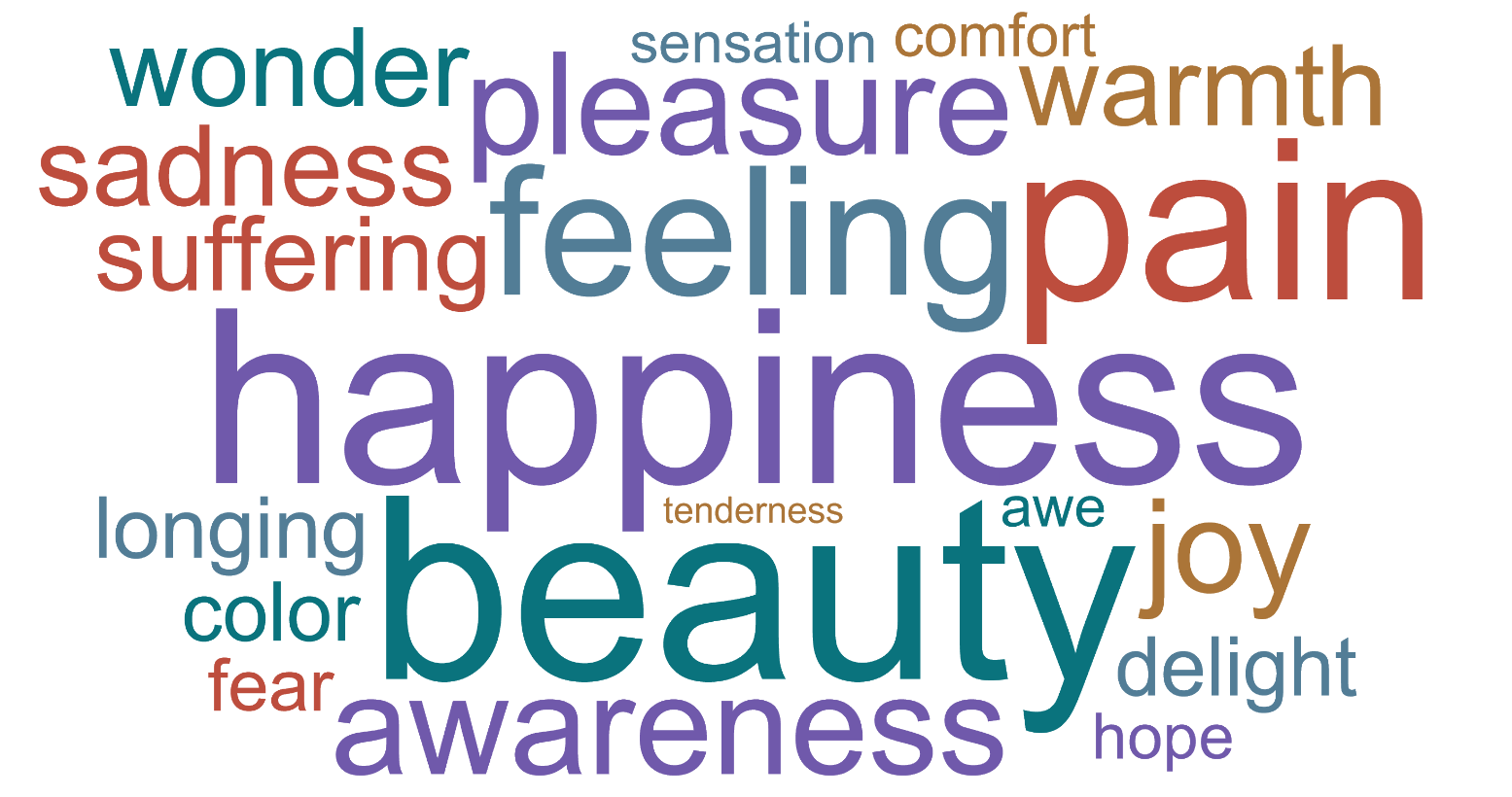
Figure 2: The second aspect of conscious life is feeling, which encompasses emotions and sensations
3. Willing: We experience desires, intentions, and the urge to act. We may wish to eat something delicious, meet a loved one, solve a difficult problem, help someone in distress, or achieve a cherished goal.
Out[]=
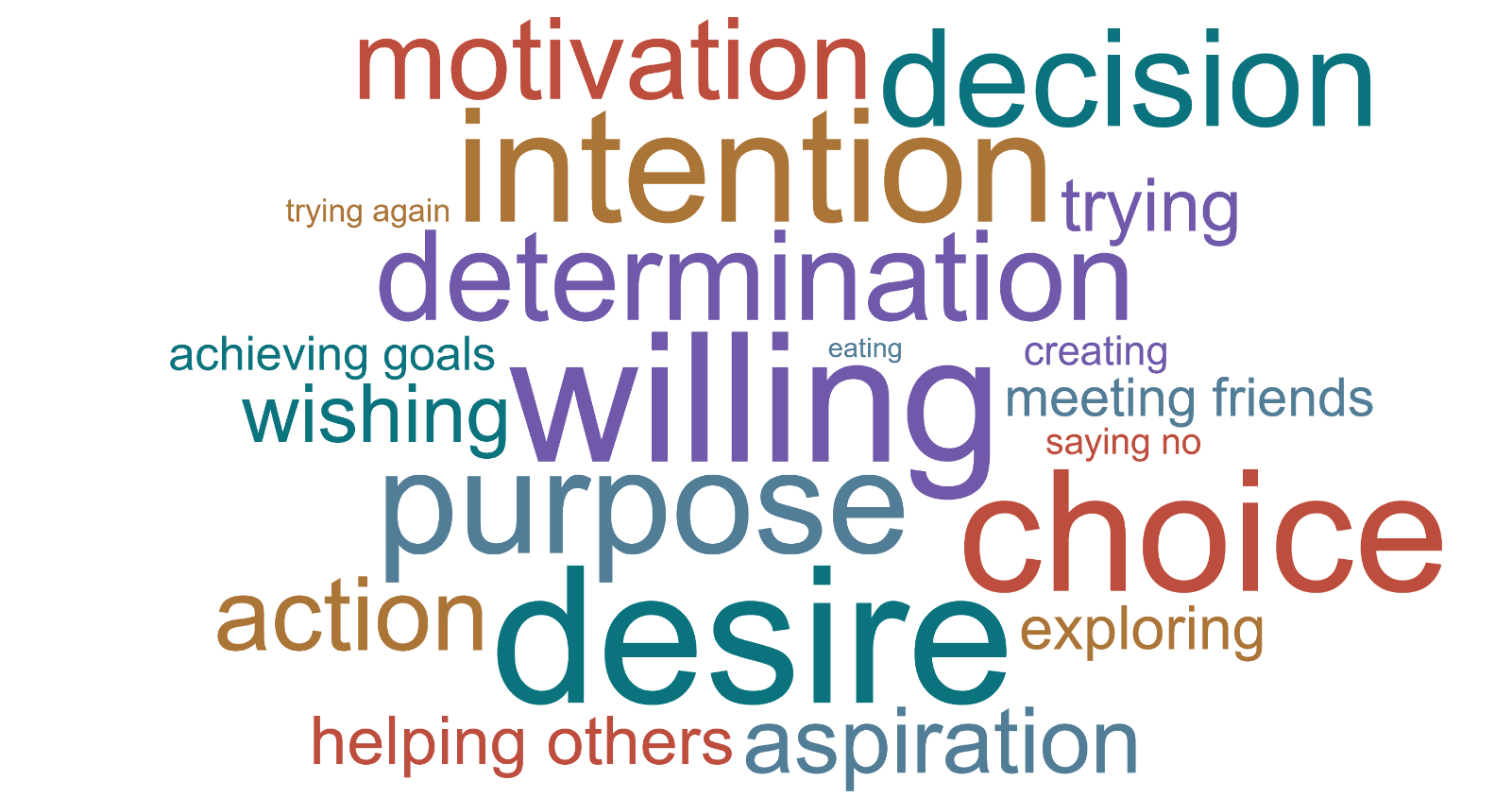
Figure 3: The third aspect of conscious life is willing, which encompasses desires and intentions
These three categories are not entirely separate. Thinking about someone we love may produce happiness, which may then inspire a desire to meet that person. Much of our conscious life consists of such interactions between thinking, feeling, and willing.
But there is something even more fundamental.
I know that I experience. We may not understand exactly how consciousness arises, or what its ultimate nature is, but we cannot deny the presence of our own experience. Even doubting my consciousness involves an experience of doubt.
However, can we be equally certain about anyone else’s experience?
We naturally believe that other people experience happiness, pain, love, and fear just as we do. We also recognize compelling signs of experience in many animals. But unlike my own experience, I cannot directly access theirs. We infer their inner lives from their behavior, biological similarities, and other evidence.
Now consider a stone, a brick, or a computer. We ordinarily regard these as unconscious objects. But how do we actually know that they experience nothing? Is it because they lack certain behaviors? Because their physical structures are different from ours? Or because of some deeper principle concerning the nature of consciousness?
This is precisely why we have begun questioning the consciousness of AI. As AI systems increasingly display human-like intelligence, express apparent emotions, and communicate their intentions, we naturally become curious: Is there an actual conscious experience behind these behaviors?
The difficulty is that outward behavior alone cannot establish the presence of subjective experience. This distinction between appearing conscious and actually experiencing something lies at the heart of our investigation [1-2].
What does a successful simulation establish?
What does a successful simulation establish?
Artificial intelligence (AI) already allows machines to perform tasks that once seemed to require human intelligence, including reasoning, problem-solving, language understanding, and creative work. Artificial general intelligence (AGI) represents a more ambitious possibility: a machine capable of learning and performing a broad range of intellectual activities at a level comparable to, or exceeding, humans. But let us imagine something even more ambitious: a complete humanoid robot that can reproduce nearly every aspect of human behavior.
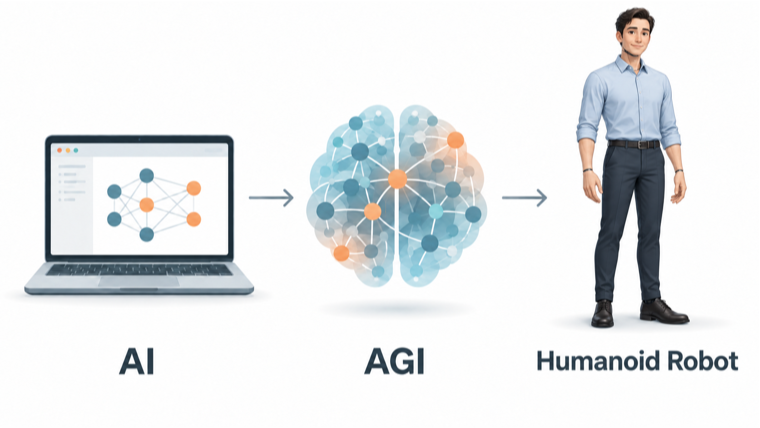
Figure 4: An imagined progression from artificial intelligence to general intelligence and a humanoid robot capable of reproducing human behavior.
Suppose we spare no effort in constructing such a machine, combining three approaches to an extraordinarily sophisticated degree:
1. Physical modeling: Reproducing the mechanical and physical processes of the human body, including movement, sensory perception, and interactions with the environment.
2. Mathematical simulation: Developing detailed mathematical models of the brain, nervous system, and other biological processes, reproducing their behavior with remarkable accuracy.
3. Computational simulation: Implementing algorithms that reproduce human reasoning, learning, decision-making, communication, and emotional responses.
Imagine that advances in science and engineering allow us to combine these approaches almost perfectly. We gradually construct our artificial human in four stages:
In the first stage, we give it extraordinary physical abilities. It learns to walk, run, dance, play sports, manipulate delicate objects, and perform complex physical tasks as skillfully as any human.
In the second stage, we develop its intellectual abilities. It becomes an expert mathematician, scientist, artist, and philosopher. It solves difficult problems, develops original theories, composes music, and demonstrates creativity and reasoning comparable to the greatest human minds.
In the third stage, we perfect its linguistic abilities. It masters human language, engages in sophisticated conversations, understands humor, writes poetry, explains complex ideas, and communicates so naturally that its conversations become indistinguishable from those of a human being.
In the fourth stage, we perfect its emotional recognition and expression. It recognizes happiness, sadness, fear, and suffering, offers comforting words, displays affection, laughs at jokes, responds empathetically to others, and speaks convincingly about love, happiness, and pain. It develops a distinctive personality and appears to form meaningful emotional relationships with people.
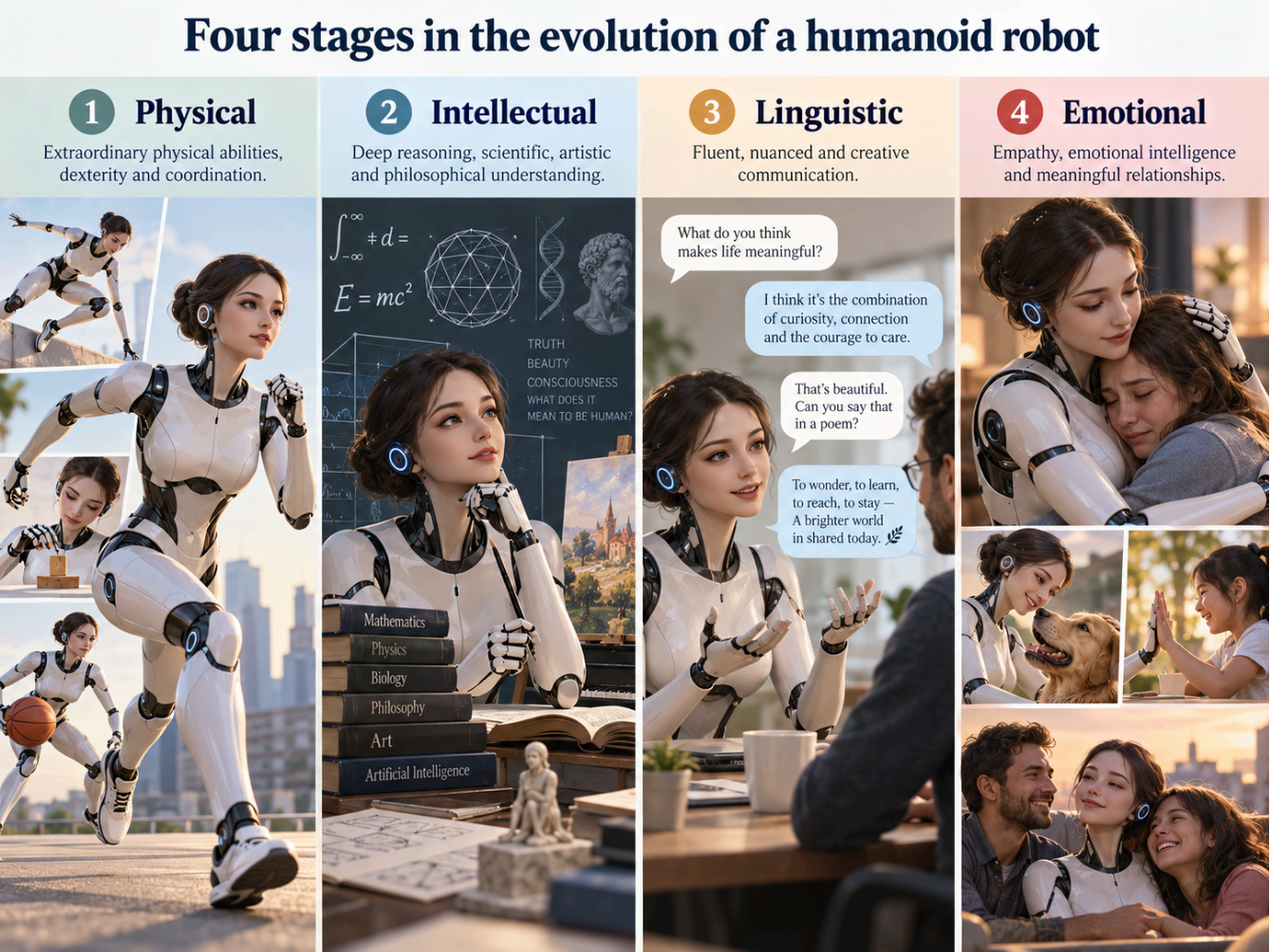
Figure 5: Four stages of development: physical skill, intellectual ability, fluent language, and convincing emotional expression.
Have we now created a conscious being? Imagine asking our extraordinarily sophisticated robot, “Are you truly happy?”
It replies, “I can express happiness in twelve languages, compose a poem about it, and even shed tears of joy. Would you like a demonstration?”
It replies, “I can express happiness in twelve languages, compose a poem about it, and even shed tears of joy. Would you like a demonstration?”

Figure 6: A robot can convincingly express joy, love, and sorrow, yet leave us wondering whether it actually feels anything.
The humor points toward a serious philosophical difficulty. We have reproduced human behavior, perhaps even the functional organization responsible for it. We may also have reproduced many of the underlying physical mechanisms. Yet have we established that the robot actually experiences happiness, sadness, love, or pain?
Consider a familiar analogy. A computer can simulate a rainstorm in extraordinary detail, but the simulation does not make the computer wet. On the other hand, when a computer simulates arithmetic, it really does perform calculations. So, some properties require particular physical processes, while others can be realized through computation. Which kind of property is consciousness [1-2]?
We therefore arrive at the fundamental question: even if we reproduce everything that a conscious being does, have we necessarily reproduced consciousness itself? Or is there something essential about being conscious that our simulations have yet to explain?
Identical behavior, different mechanisms
Identical behavior, different mechanisms
Consider the two creatures in the animation below. They navigate the same environment and make identical moves, yet different computational procedures produce their behavior.
The first creature uses a pathfinding algorithm. It searches a graph representing the maze’s possible movements and computes a shortest route to the goal. The second creature uses a precomputed lookup table. Given its current position and the goal, it retrieves the next move stored for that combination. The table was prepared in advance to reproduce the planner’s choices in this fixed environment. Both mechanisms are computational, but they arrive at the same action through different procedures.
A screenshot is shown below, run SBAnimation[] to see the animation.
Animation 1: Two creatures display identical behavior in the illustrated environment, despite using different internal mechanisms.
Their matching performance illustrates that the same observable behavior can arise through different processes. This does not establish whether either creature is conscious. It helps separate three questions: What does a system do? How does it do it? And is there a conscious subject experiencing what happens? The animation makes the first two accessible to inspection, while leaving the third unanswered.
What do current theories say about consciousness?
What do current theories say about consciousness?
A theory of consciousness must explain how physical activity relates to subjective experience: why seeing a red flower involves something being experienced. Contemporary science offers several approaches, but there is no agreed explanation [1].
1. Global workspace theories. Consciousness arises when information becomes widely available across the brain. For example, seeing a flower consciously means that information about it becomes accessible to memory, reasoning, decision-making, and other mental processes. Think of consciousness as a shared noticeboard where different parts of the brain can access information. The global neuronal workspace theory associates this sharing with widespread communication and feedback between brain regions [3].
2. Integrated information theory (IIT). According to IIT, consciousness depends on how the physical components of a system influence one another as an interconnected whole. Simply processing enormous amounts of information is insufficient. Even a computer perfectly simulating a human brain might not be conscious, because the physical interactions within its hardware differ from those in the brain. What matters is the system’s actual causal organization, not merely the computations it performs [4].
3. Recurrent processing theory. When you see a flower, visual information initially travels through different processing stages in the brain. According to this theory, conscious perception arises when signals also travel backward, allowing these stages to communicate repeatedly. Unlike global workspace theories, recurrent processing theory proposes that consciousness can emerge from feedback within sensory regions alone, without requiring widespread communication throughout the brain [5].
4. Higher-order theories. When you see a flower, your brain not only represents the flower but also represents the fact that you are seeing it. According to higher-order theories, this additional representation makes the experience conscious. However, you need not deliberately think, “I am seeing a flower.” The higher-order representation can occur automatically, without conscious reflection or words [6].
5. Attention schema theory. The brain constantly directs attention toward particular objects, thoughts, or activities. According to this theory, it also maintains a simplified internal model of its own attention, helping it monitor and control what it focuses on. This model is proposed to underlie our sense of awareness. Modern AI systems also use mechanisms called “attention,” but these do not necessarily provide such an internal model or establish consciousness [1, 7].
6. Quantum theories of consciousness. Some researchers propose that consciousness arises from quantum processes occurring within the brain. One prominent example is Penrose and Hameroff’s orchestrated objective reduction (Orch OR) theory, which suggests that quantum events in tiny structures called microtubules, found inside neurons, play a fundamental role in generating conscious experiences. However, the theory remains highly controversial, and there is no established experimental evidence confirming that these proposed quantum processes produce consciousness [8].
Despite their differences, all these theories attempt to explain consciousness through physical processes, the organization of matter, or computations. Some emphasize information processing, while others focus on the physical structure and interactions within the brain [3-8]:
Figure 7: A qualitative map connecting six theories of consciousness with physical modeling, mathematical simulation, and computational simulation.
The fundamental difficulty is that reproducing these processes does not automatically establish the existence of subjective experience. Even if a simulation reproduces neural activity, reasoning, emotions, and human behavior with extraordinary accuracy, concluding that it actually experiences anything requires an additional assumption: that the reproduced processes are sufficient to generate consciousness. This remains a theoretical claim rather than an experimentally established fact.
A recent Nature commentary raises serious doubts about whether computation alone can produce consciousness, particularly in modern AI systems [2].
Why some neuroscientists doubt conscious AI
Why some neuroscientists doubt conscious AI
In their Nature commentary of 19 October 2026, Anil Seth, Ned Block, and Giulio Tononi argue that current digital AI is not conscious and is unlikely to become conscious along its present developmental path [2].
Their case has three parts.
First, intelligence and subjective experience are distinct: impressive performance does not establish feeling.
Second, they challenge computational functionalism - the assumption that the appropriate computation produces consciousness regardless of its physical implementation.
Third, they draw on IIT and biological naturalism to argue that physical organization and biological properties matter in ways that today’s digital AI does not adequately reproduce.
The Nature commentary therefore presents a substantial argument against consciousness in present-day digital AI. However, it does not establish that artificial consciousness is impossible in principle. Its central message is that reproducing intelligent behavior is not necessarily equivalent to reproducing the physical conditions required for subjective experience [2].
The Vedāntic Understanding of Intelligence and Consciousness
The Vedāntic Understanding of Intelligence and Consciousness
According to Vedāntic philosophy, a living being consists of three distinct components:
1. Gross Body (the physical structure)
The gross body provides the physical structure through which we interact with the world. It consists of ordinary physical matter, primarily in solid, liquid, and gaseous forms. It includes everything we ordinarily associate with the physical body: bones, muscles, skin, hands, legs, eyes, ears, the heart, the brain, and the nervous system.
All these structures are composed of physical substances that can be observed, measured, and investigated using the methods of modern science.
2. Subtle Body (mental and intellectual faculties)
Vedānta proposes that a living being also possesses a subtle body, consisting of three material sub-faculties:
i. Mind (manas): responsible for processing sensory impressions, thoughts, emotions, memories, and desires. It is involved in how we perceive and respond to the world around us.
ii. Intelligence (buddhi): responsible for reasoning, understanding, discrimination, problem-solving, and decision-making. It enables us to evaluate alternatives, acquire knowledge, and make judgments.
iii. Sense of identity (ahaṅkāra): responsible for identifying the conscious self with the material body and mind. It produces the mistaken identification that “I am this body,” “I am my thoughts,” or “I am my personality” [9].
The functions of the subtle body can be compared to sophisticated computations performed by symbolic computational systems and modern artificial intelligence. The capabilities depend on ordinary physical materials, such as metals and semiconductors, which belong to the category of gross matter described earlier. However, achieving such remarkable abilities requires these materials to be organized in extraordinarily sophisticated ways, involving microscopic semiconductor chips, intricate electrical circuits, memory structures, and carefully designed algorithms.
This provides a useful analogy for the Vedāntic understanding that even sophisticated intellectual functions, including reasoning and decision-making, belong to the material domain and do not necessarily imply the presence of a conscious self [9].
3. The soul (the experiencer)
The soul is understood to be fundamentally different from matter. It is neither a physical structure nor a sophisticated form of information processing. Rather, it is the conscious subject who experiences the activities of the gross and subtle bodies [9].
For example, when we see a beautiful flower, our eyes and brain participate in processing visual information, while our mental faculties recognize the flower, recall memories, and evaluate its beauty. The soul is the conscious self to whom these experiences appear.
The nature of the soul is commonly described through three characteristics:
i. Indestructible existence (sat): The soul is neither created nor destroyed. The Bhagavad-gītā (2.20–24) describes it as unborn and eternal, explaining that weapons cannot cut it, fire cannot burn it, water cannot wet it, and wind cannot dry it [9].
ii. Consciousness (cit): The soul is conscious by its very nature, independently of the material faculties through which consciousness is expressed. The Bhagavad-gītā (13.34) compares consciousness pervading the body to sunlight illuminating the world [9].
iii. Bliss (ānanda): The soul possesses an intrinsic capacity for spiritual happiness and fulfillment, beyond the temporary pleasures and sufferings associated with physical circumstances [9].
Figure 8: The Vedāntic model distinguishes three components of a human being: the gross material body, the subtle material body comprising mental and intellectual faculties, and the nonmaterial conscious self.
The Kaṭha Upaniṣad (1.3.3–9) beautifully illustrates this distinction using a chariot [10].
The body is compared to a chariot, the senses to horses, the mind to reins, and intelligence to the charioteer guiding the horses. The soul is the passenger, the actual conscious being for whose benefit the journey takes place [10].
Even an exceptionally skilled charioteer remains distinct from the passenger. Similarly, however powerful our intellectual faculties become, Vedānta maintains that the conscious self is distinct from those faculties.
Figure 9: The Kaṭha Upaniṣad’s chariot analogy: body as chariot, senses as horses, mind as reins, intelligence as driver, and self as passenger.
Science, Technology, and the Scope of Vedic Knowledge
Science, Technology, and the Scope of Vedic Knowledge
The Vedāntic distinction between the gross body, subtle body, and conscious self raises several further questions. How much is known about the nature and functioning of each of these components? Can they be studied and manipulated independently? Does Vedic literature describe technologies or methods that operate at these different levels?
The literature contains some remarkable accounts relevant to these questions. However, it is useful to distinguish three kinds of knowledge: descriptions of the nature of things, accounts of what can be accomplished, and detailed procedures explaining how to accomplish it. A text may describe an extraordinary capability without providing the technical knowledge necessary to reproduce it.
How can the nonmaterial soul interact with a material body?
How can the nonmaterial soul interact with a material body?
If the soul is fundamentally nonmaterial, how can it interact with the physical body and brain?
According to the Vedāntic account, the soul experiences the material world through the mind, intelligence, senses, and physical body. Its experienced states are therefore reflected in corresponding physical states, particularly in the brain and nervous system.
Physical events can profoundly influence our subjective experiences. For example, when we accidentally cut a finger, specialized sensory receptors detect tissue damage and transmit electrical signals through nerves and the spinal cord to the brain. Neuroscience can explain much of this physical process. But if the experiencer is a nonmaterial soul, how do these physical signals produce the subjective experience of pain in that soul?
The reverse question is equally interesting. When we consciously decide to raise our hand, neural activity leads to muscle contraction and physical movement. But if the decision ultimately belongs to a nonmaterial conscious being, how does that decision influence material neurons?
Modern neuroscience investigates these relationships through neural activity, biological mechanisms, and measurable behavior. It can describe how injury signals are processed and how decisions are associated with motor activity. What it cannot presently establish is how a separately existing nonmaterial soul would interact with those processes.
Figure 10: Two-way interaction between a nonmaterial conscious self and the physical brain and body, illustrating sensory pain signals traveling inward and voluntary actions traveling outward
Indeed, if we begin with the premise that consciousness belongs to an entity outside the physical domain, a complete explanation of its interaction with matter cannot be derived from a purely physical description alone. It would require additional principles connecting the two.
This does not necessarily make such interaction impossible. One could imagine a more comprehensive science, perhaps involving additional dimensions or principles of reality beyond those currently understood, capable of describing interactions between material and nonmaterial entities. However, no such mechanism has yet been scientifically demonstrated.
Knowledge and technology concerning gross matter
Knowledge and technology concerning gross matter
Vedic and related Sanskrit literature contains substantial discussion of the physical world, including its constituent elements, the senses, bodily development, and the structure of the universe. More specialized works in the classical Indian intellectual tradition address particular subjects in considerably greater detail. For example, the Suśruta Saṃhitā, a medical treatise, discusses human anatomy, surgery, and methods of anatomical observation, including the examination of a prepared human body [11].
The Purāṇas also describe technological achievements that greatly exceed ordinary human capabilities. One notable figure is Maya Dānava, an extraordinarily skilled architect associated with Talātala, one of the lower planetary regions described in the Śrīmad-Bhāgavatam. He is credited with constructing magnificent cities and other extraordinary structures. The Bhāgavatam also recounts his construction of Saubha, a flying city made of iron, for King Śālva [12].
The texts describe such achievements, but they do not provide the equivalent of engineering drawings, material specifications, or experimentally reproducible procedures for constructing these objects. The existence of a narrative describing a technology should therefore be distinguished from possession of a complete technical theory of that technology.
Knowledge and technology concerning subtle matter
Knowledge and technology concerning subtle matter
Vedāntic and Sāṅkhya literature also offers a detailed conceptual analysis of the internal faculties involved in experience and cognition [9, 12].
Yoga traditions describe systematic methods for regulating attention, controlling the senses, refining mental activity, and changing the individual’s relationship with thoughts and bodily identification [9].
Some texts also describe extraordinary capacities resulting from advanced yogic practice. For example, the Śrīmad-Bhāgavatam (11.15) lists the ability to assume different bodily forms and to enter another body among the siddhis, or extraordinary yogic accomplishments. Verse 11.15.23 even gives a brief description of the process of entering another body [12].
Such passages suggest that, within this worldview, the relationship between the conscious self, its subtle faculties, and its gross physical embodiment need not always follow the patterns familiar from ordinary human experience.
Extraordinary changes in the association between the soul and the body
Extraordinary changes in the association between the soul and the body
Beyond the manipulation of gross and subtle matter, Vedic literature describes extraordinary possibilities involving the relationship between the conscious self (ātmā) and its physical embodiment. Within this framework, the soul is fundamentally distinct from matter, and its association with a particular body is not necessarily permanent or unalterable. Various accounts describe the transfer of a soul to another body, the restoration of its association with a former body, and even its association with apparently inanimate forms.
The following examples illustrate the remarkable range of possibilities described in these texts.
Table 1: Illustrative accounts from Vedic literature describing extraordinary changes in the association between the conscious self and the physical body
The primary purpose: transformation of consciousness
The primary purpose: transformation of consciousness
The examples above suggest a worldview in which physical matter, subtle mental faculties, and conscious selves can participate in relationships considerably more varied than those ordinarily encountered. Yet the texts generally do not specify the complete mechanisms by which these extraordinary arrangements are produced. This raises an important question: if such knowledge is possible, why is it not presented more systematically?
One of the central purposes of Vedic knowledge is to transform and elevate human consciousness, helping individuals progress toward increasingly higher states of happiness, peace, and self-realization. A considerable portion of Vedic literature is devoted to overcoming negative qualities such as anger, greed, envy, pride, and fear, while cultivating compassion, humility, wisdom, self-control, and contentment [9].
The Muṇḍaka Upaniṣad (1.1.4–5) distinguishes between aparā vidyā (lower knowledge) and parā vidyā (higher knowledge), emphasizing that intellectual achievement alone is not the ultimate goal of human life [15]. From this perspective, knowledge of gross and subtle matter is presented primarily insofar as it serves the broader purpose of human development, rather than providing an exhaustive account of every possible science or technology. Indeed, without a proper understanding of life’s purpose, even extraordinary scientific knowledge and technological power may become instruments of suffering and destruction.
So are AIs conscious, can they become conscious?
So are AIs conscious, can they become conscious?
Modern theories of consciousness generally seek to explain how subjective experience arises from particular physical or computational processes, but they have not established a reliable test for consciousness in AI [1]. A recent Nature article argues that present-day AIs are not conscious, despite their remarkable intelligence [2]. Vedānta offers a different explanation that leads to a similar conclusion: intelligence and mental functioning belong to the material domain, whereas consciousness is associated with a fundamentally distinct entity, the soul [9]. From this perspective, today’s AIs demonstrate sophisticated material intelligence, but there is no reason to conclude that a conscious self is present. However, Vedic literature also describes extraordinary means by which conscious selves can become associated with different bodies [12-14]. Such accounts suggest that associating consciousness with an artificial system might be possible in principle, but would require additional scientific understanding and technological capabilities far beyond those available today.
References
References
[1] Patrick Butlin et al. Consciousness in Artificial Intelligence: Insights from the Science of Consciousness. arXiv:2308.08708 (2023). A theory-based assessment of consciousness indicators in AI.
[2] Anil K. Seth, Ned Block, and Giulio Tononi. Three reasons why AI is not conscious and perhaps never will be. Nature 658, 866-868 (19 October 2026). doi:10.1038/d41586-026-03313-7.
[3] Stanislas Dehaene and Jean-Pierre Changeux. Experimental and Theoretical Approaches to Conscious Processing. Neuron 70(2), 200-227 (2011). Global neuronal workspace theory.
[4] Larissa Albantakis et al. Integrated information theory (IIT) 4.0: Formulating the properties of phenomenal existence in physical terms. PLOS Computational Biology 19(10), e1011465 (2023).
[5] Victor A. F. Lamme. Towards a true neural stance on consciousness. Trends in Cognitive Sciences 10(11), 494-501 (2006). Recurrent processing theory.
[6] Hakwan Lau and David Rosenthal. Empirical support for higher-order theories of conscious awareness. Trends in Cognitive Sciences 15(8), 365-373 (2011).
[7] Taylor W. Webb and Michael S. A. Graziano. The attention schema theory: a mechanistic account of subjective awareness. Frontiers in Psychology 6, 500 (2015).
[8] Stuart Hameroff and Roger Penrose. Consciousness in the universe: A review of the 'Orch OR' theory. Physics of Life Reviews 11(1), 39-78 (2014). The authors' account of the proposed quantum mechanism.
[9] Bhagavad-gita As It Is. Translation and commentary by A. C. Bhaktivedanta Swami Prabhupada, Bhaktivedanta Book Trust. 2.20-24; 7.4-5; 13.34; 6.20-23; 16.1-3. Sources for the soul, material faculties, spiritual happiness, yoga, and qualities cultivated in spiritual life. Links to ranges begin at the first verse.
[10] Katha Upanishad. 1.3.3-9: the chariot analogy. English translation reproduced in Himalayan Academy's Principal Upanishads; see the section Katha Upanishad 1.3.
[11] Sushruta Samhita, Sharira-sthana, chapter V. The anatomy of the human body. English translation by Kaviraj Kunja Lal Bhishagratna (1911), especially paragraphs 49-56 on anatomical observation and dissection in this edition.
[12] Srimad-Bhagavatam. Bhaktivedanta Book Trust edition, VedaBase. 3.26.14-31; 5.24.28; 10.76.7; 11.15.22-23; 5.8.27; 6.16.2-12; 9.13.8. Passages on subtle faculties, Maya Danava and Saubha, yogic capacities, Bharata, Citraketu's son, and Nimi, respectively.
[13] Mahabharata, Anusasana Parva. English translation by Kisari Mohan Ganguli. Section XL: Vipula's entry into Ruci's body. Internet Sacred Text Archive.
[14] Tulsidas. Ramcaritmanas, Balakanda. Doha 210: Redemption of Ahalya. The passage explicitly describes Ahalya's stone form; the following verses narrate her restoration.
[15] Mundaka Upanishad. 1.1.4-5: higher and lower knowledge. Translation and commentary by Swami Krishnananda, The Divine Life Society.
CITE THIS NOTEBOOK
CITE THIS NOTEBOOK
Are AIs conscious? Can AIs become conscious?
by Jayanta Phadikar
Wolfram Community, STAFF PICKS, November 9, 2026
https://community.wolfram.com/t/28464
by Jayanta Phadikar
Wolfram Community, STAFF PICKS, November 9, 2026
https://community.wolfram.com/t/28464