This project aims to recreate Archimedes’ Pssamites (The Sand Reckoner) using the Wolfram Language, making it more accessible for a wider audience by means of Archimedes’ friendly tone and interactive diagrams. The goal is to imbue the reader with both a sense of satisfaction in understanding the text and a sense of appreciation of Archimedes’ incredible work, all while assuming minimal mathematical knowledge. There is still some additional work to be done to complete a full representation of The Sand Reckoner which will be pursued after the summer school.
Introduction
Introduction
About The Sand Reckoner
About The Sand Reckoner
Archimedes’ wrote The Sand Reckoner around the 3rd century BC. The 8-page paper addressed to King Gelo II of Syracuse sets out to determine the upper bound of grains of sand that would fit inside the universe, with the end goal to demonstrate Archimedes’ system to express extremely large numbers that remedies the issue of “innumeracy” of the Greek numerical notation system.The work is interesting to the modern audience in many ways:
1
.It is one of the first known examples of psychophysics (the study of the observing capabilities of humans).
2
.It contained many details about ancient astronomy, and 4) it is written for the layman, potentially also one of the earliest examples of a research paper.
3
.The ancient Greeks, having no formal mathematical notation, used sentences to describe the relationships between quantities. It is remarkable how they managed to discover so much with modern mathematical symbols.
Recreating the Work
Recreating the Work
This project is not meant to be a translation of The Sand Reckoner, but rather is a computational essay that aims to explain it. Despite being said as one of the most accessible of Archimedes’ work, I found existing English translations a little difficult to follow, making it one of early the challenges I faced during this project. This, however, did motivate me to really focus on the digest-ability of my recreation.I decided that my version should also be narrated by Archimedes’, as such a tone can achieve a friendlier exposition. Some creative narrative decisions were taken that are not based on the original text. Archimedes’ didn’t explain about the Greek number system in his treatise. He would also never have known what chopsticks were nor have ever eaten pizzas. The decisions were taken to make certain concepts easier to understand. I did not manage to complete the essay during the summer school, with the current progress standing roughly at 50% of the original content. Below is what has been done so far:
The Sand Reckoner
The Sand Reckoner
Introduction
Introduction
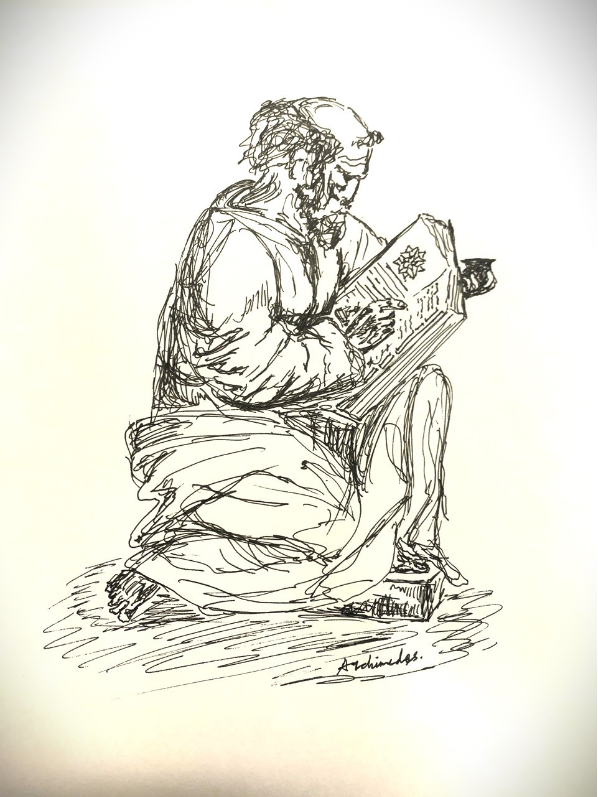
How much sand do you think there is on Earth? Some people think it is infinite, others instead say that it is innumerate, which is to say there is so much sand that we don’t have numbers that can describe it. Well I think both of these people are wrong, and I can show it to you.Whoops! I have forgotten to introduce myself. Χαῖρε! My name is Archimedes, or Ἀρχιμήδης if you write it in Greek. If I was alive today (in 2024), I would be celebrating my 2311th birthday.
Number Systems
Number Systems
I think the reason why the people during my time thought that sand is innumerable is because our Greek counting system is rather clunky. Your current system only uses ten symbols (0, 1, 2, 3, 4, 5, 6, 7, 8, & 9). You use each one to represent the quantities zero to nine and then use the position of the symbols to represent whether you mean ones, tens, hundreds, thousands... etc.
Out[]=

Your number system, also known as Western Arabic Numerals, is a fantastic way to represent numbers. You only have to remember ten symbols. Our ancient Greek number system is not as simple. We need about 28 symbols and a few special markings. Here is a table of the symbols:
1 | 2 | 3 | 4 | 5 | 6 | 7 | 8 | 9 |
α | β | γ | δ | ϵ | ϝ | ζ | η | θ |
10 | 20 | 30 | 40 | 50 | 60 | 70 | 80 | 90 |
ι | κ | λ | μ | ν | ξ | ο | π | ϟ |
100 | 200 | 300 | 400 | 500 | 600 | 700 | 800 | 900 |
ρ | σ | τ | υ | ϕ | χ | ψ | ω | ϡ |
1000 | 2000 | 3000 | 4000 | 5000 | 6000 | 7000 | 8000 | 9000 |
͵α | ͵β | ͵γ | ͵δ | ͵ϵ | ͵ϝ | ͵ζ | ͵η | ͵θ |
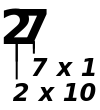
Our number system is additive, which is to say you add the symbols together to get your number. “Μ” means 10 000, “͵θ” means 9000, “σ” means 200, and “α” means 1, so 19 201 is written as “Μ͵θσα” in Greek. You might have noticed, that we use the same symbols (α, β, γ,...) for our alphabet as well. So to distinguish between the two, we would add a bar above the number like this: “”.You also might have noticed, that the table does not tell you how to write numbers above 19 999. How do we express numbers like 20 000, 30 000 and so on? Well, we Greeks regard 10 000 (or a myriad) as the unit for counting the big numbers, and to represent 20 000 we will write . The β above the Μ represents 2, so means 2 x 10 000, or 20 000. This way we can get numbers quite large, numbers that are multiples of 10 000. 9 x 10 000 ( ), 50 x 10 000 ( ), 200 x 10 000 ( ), all the way up to 10 000 x 10 000 ( ). You can now try out different numbers and see how they look like in Greek below:
Μ͵θσα
β
Μ
β
Μ
θ
Μ
ν
Μ
σ
Μ
Μ
Μ
Out[]=
What next then? How are we Greeks going to count to numbers more that ten thousand ten thousands? Well, if they so wish, they can use a system that I have invented to talk about large numbers. I mean huge numbers. Numbers that, if written in your number system, will have a 1 followed by at least a quadrillion zeros (note that we Greeks back then didn’t have the word “quadrillion”). But before we get to my fancy number system, which I have already told my friend Zeuxippus (or Ζεύξιππος) all about. I want to address the problem of counting sand. As I said before, some people think that there is so much sand on Earth that there is no way we can use numbers to describe it, but I will show you that my number system can describe not only the number of grains of sand that can fill the Earth but the the number of grains of sand that can fill the entire universe.Don’t believe me? Well let’s get to it.
Estimating the Size of the Universe
Estimating the Size of the Universe
Firstly, how big is the entire universe? Well during our time we aren’t all too sure. The Greek astronomer Aristarchus (Ἀρίσταρχος) thought that the Sun is at the center of the universe, with the Earth orbiting round it, with the furthest point of the universe being a sphere inlaid with the stars.
In[]:=
FramedManipulateModule{earthTexture,earthRadius,earthLabelPosition,moonColour,moonRadius,moonLabelPosition,sunTexture,sunRadius,sunLabelPosition,starSphereTexture,kosmos},earthTexture=Texture
;earthRadius=12;earthLabelPosition={170,50,50};moonColour=Gray;moonRadius=8;moonLabelPosition={130,30,-30};sunTexture=Texture
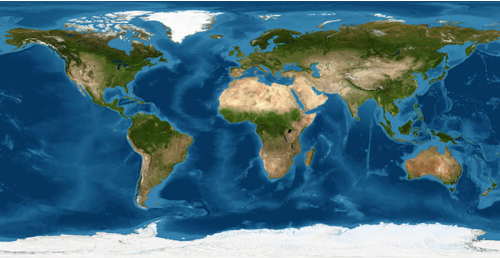
;sunRadius=39;sunLabelPosition={50,50,50};starSphereTexture=Texture
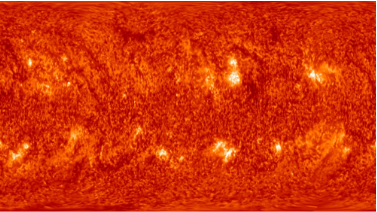
;kosmos=Graphics3D[{{sunTexture,Sphere[{0,0,0},sunRadius],Style[Text["Sun",sunLabelPosition],FontSize->16,Orange,Bold],Style[Line[{sunLabelPosition-2,{0,0,0}}],Thick,Orange]},{earthTexture,Sphere[{120,0,0},earthRadius],Style[Text["Earth",earthLabelPosition],FontSize->16,Blue,Bold],Line[{earthLabelPosition-2,{120,0,0}}]},{moonColour,Sphere[{160,0,0},moonRadius],Style[Text["Moon",moonLabelPosition],FontSize->16,Black,Bold],Style[Line[{moonLabelPosition+6,{160,0,0}}],Thick,Black]},{starSphereTexture,Sphere[{0,0,0},800],Style[Text["The Sphere of Stars i.e the Edge of the Universe",{0,0,900}],FontSize->16,Purple,Bold]}},ViewPoint->Front,ImageMargins->-80,Background->Lighter[LightBrown,0.8]];Show[kosmos,PlotRange->zoomout*50,Boxed->False,ImageSize->Large],{{zoomout,1,Style["Zoom-out!",Medium]},1,20},ControlPlacement->Top,FrameLabel->Style["Aristarchus' Universe",Large,Bold],Paneled->False,SaveDefinitions->True,Background->Lighter[LightBrown,0.8]
...to be continued.
Conclusion
Conclusion
That Which Remains to be Done
That Which Remains to be Done
That Which Could be Done
That Which Could be Done
References
References
Cite This Notebook
Cite This Notebook