On the night of March 13-14, 2025, there will be a total lunar eclipse visible over most of the western hemisphere.
In[]:=
eclipse=LunarEclipse[DateObject[{2025,3,14}]]
Out[]=
In[]:=
GeoGraphics[{LunarEclipse[eclipse,"TotalPhasePolygon"]},GeoProjection->"LambertAzimuthal",GeoGridLines->Automatic]
Out[]=
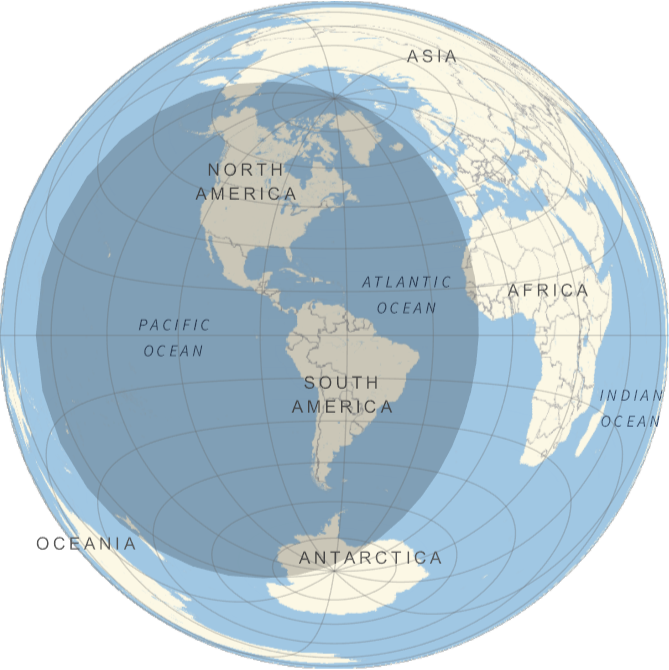
A lunar eclipse happens when the Moon moves through the Earth’s shadow, cast by the Sun. Even when there is not a lunar eclipse, this shadow still exists. It is always opposite in the sky to the Sun. For example, at the time I am authoring this post, the Earth’s shadow can be found in the southern part of the constellation of Leo.
In[]:=
ResourceFunction["LunarEclipseStarChart"][AstroRange->Quantity[30,"AngularDegrees"],AstroGridLines->None]
Out[]=
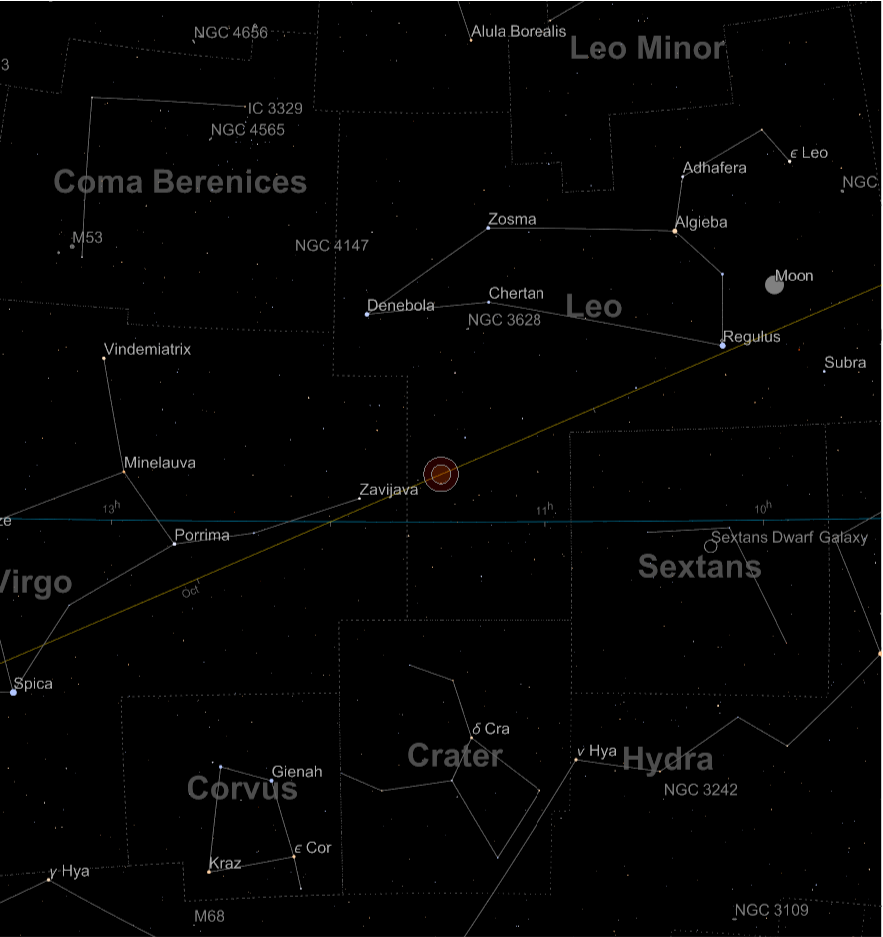
But on the night of March 13-14, 2025, the Moon will pass through this shadow. The outer part of the shadow is called the penumbra and it is very faint and nearly impossible to observe. Partial eclipse starts when the Moon touches the edge of the inner shadow, the umbra.
In[]:=
ResourceFunction["LunarEclipseStarChart"][DateObject[{2025,3,14,5,9,40},TimeZone->0]]
Out[]=
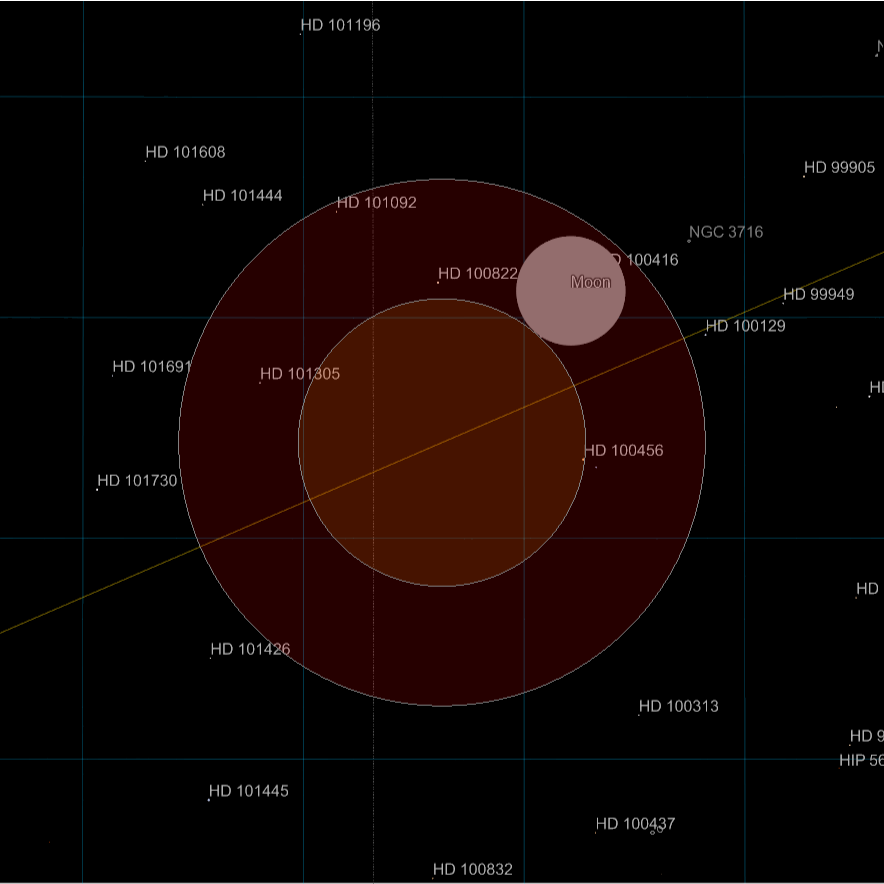
Totality begins when the lunar disk is fully contained within the umbra.
In[]:=
ResourceFunction["LunarEclipseStarChart"][DateObject[{2025,3,14,6,26,6},TimeZone->0]]
Out[]=
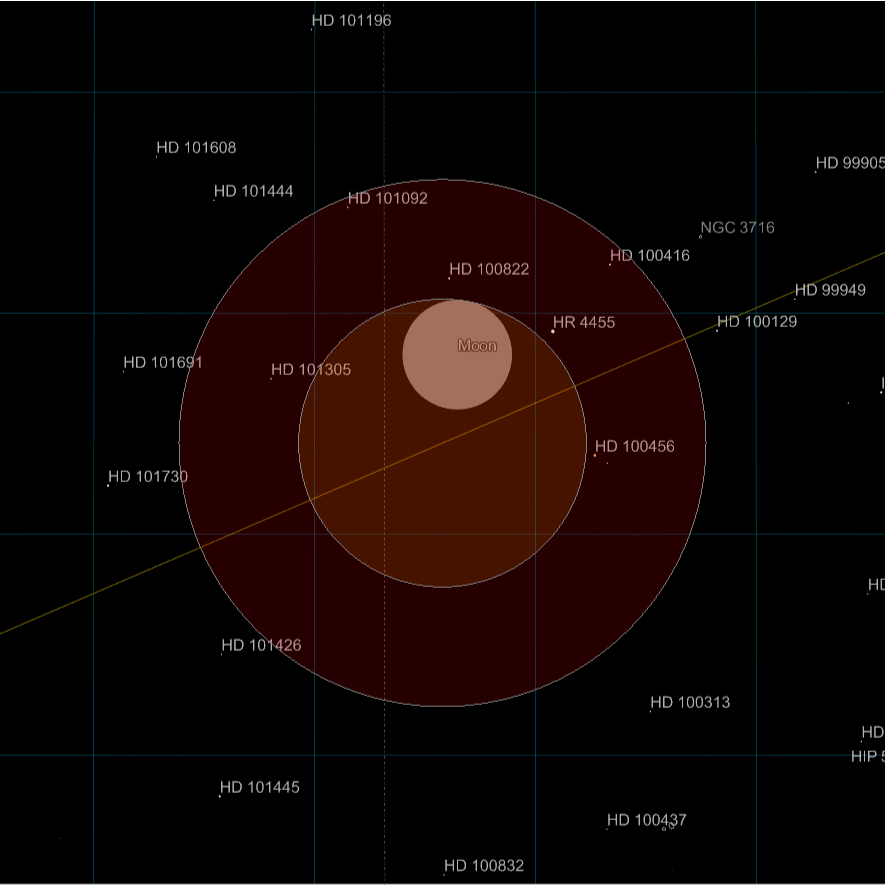
Maximum eclipse finds the Moon completely inside the umbra.
In[]:=
ResourceFunction["LunarEclipseStarChart"][eclipse]
Out[]=
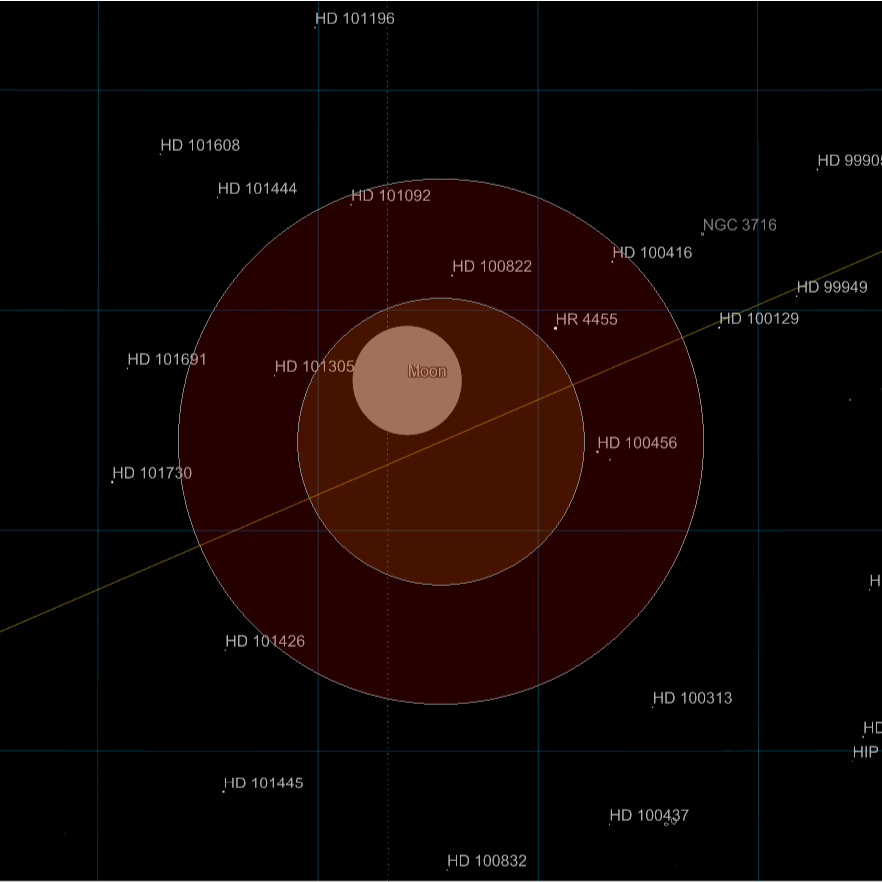
Totality ends when the lunar disk touches the edge of the umbra after maximum.
The final partial eclipse ends when the lunar disk completely leaves the umbra.
The progression of the Moon entering and leaving the eclipse can be easily seen by making a video.
One interesting note is that a lunar eclipse observed from Earth is a solar eclipse when observed from the Moon. The recent Blue Ghost Mission 1 and its Firefly lander was actually able to observe this solar eclipse. The view from Blue Ghost Mission 1’s landing site can be reproduced with the following.
This eclipse happens around midnight or after in the US central time zone. Hopefully the weather cooperates. If you are able to observe the lunar eclipse, pay attention to the color of the Moon when it is inside the umbra. Often, but not always, the Moon will turn a red color due to sunlight being refracted through the Earth’s atmosphere creating a complete “sunset” effect on the Moon, making it look red. However, this effect can vary and be anywhere from black to red depending on things like volcanic eruptions and the dust and ash in the air.
CITE THIS NOTEBOOK
CITE THIS NOTEBOOK
Total lunar eclipse of March 13-14, 2025: detailed phases timeline and Earth's shadow impact
by Jeffrey Bryant
Wolfram Community, STAFF PICKS, March 12, 2025
https://community.wolfram.com/groups/-/m/t/3415227
by Jeffrey Bryant
Wolfram Community, STAFF PICKS, March 12, 2025
https://community.wolfram.com/groups/-/m/t/3415227