Analysis of UBI for G7 Nations
Analysis of UBI for G7 Nations
UBI is a socioeconomic proposal of the funding of the entirety of the population of a nation via direct government checks, sufficient enough to keep the citizens of the nation above the national poverty line. It is considered a radical proposal, mainly due to the high costs, along with some protests related to loss of workers if they were able to live without working. However, it does have proponents, who say it would effectively end much poverty across the world and allow individuals to live a dignified life.
The G7 is a group of nations composed of 7 countries and the European Union, which represents about half of global wealth, 32-46% of the Gross World Product and 10% of the population. This block was taken for analysis specifically for this reason, as it represents most of the rich nations of the world, and for the sake of brevity, as extracting data about every nation would be nigh-impossible without a significant team working to validate such research, along with an unwieldy data size, making it difficult to effectively analyse. The European Union will not be easily quantified, hence it will not be included in this analysis.
For each nation in this list, the citizens of a nation currently resident in the nation are calculated, and based on either national or international poverty lines (dependent on discretion related to cost of living or lack of available data), the minimum payout of a government at this moment will be calculated, with a small commentary in relation to potentially achieving the price tag. A further project on this would be to calculate this based on standard inflation curves, and other factors, to provide a more accurate analysis.
United States of America
United States of America
Number of individuals eligible for UBI:
(Calculated via subtracting total population from estimate of foreign-born foreign nationals population)
(Calculated via subtracting total population from estimate of foreign-born foreign nationals population)
In[]:=
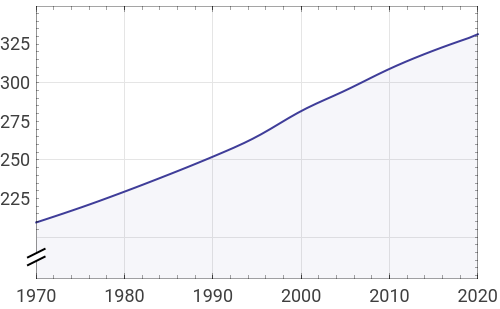
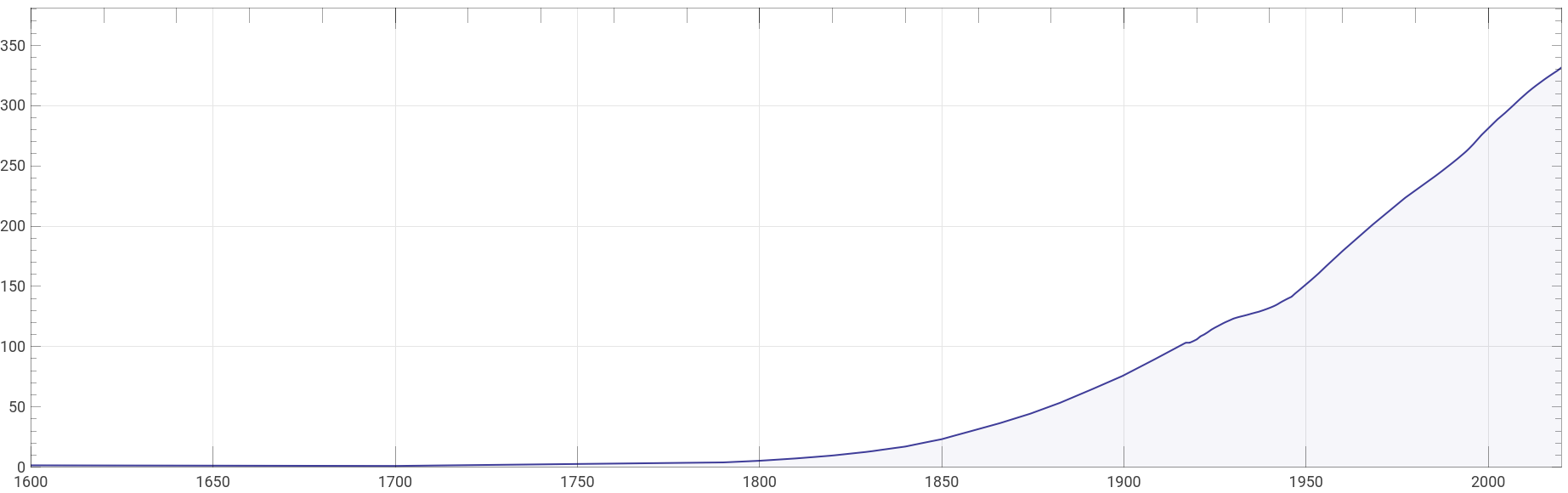
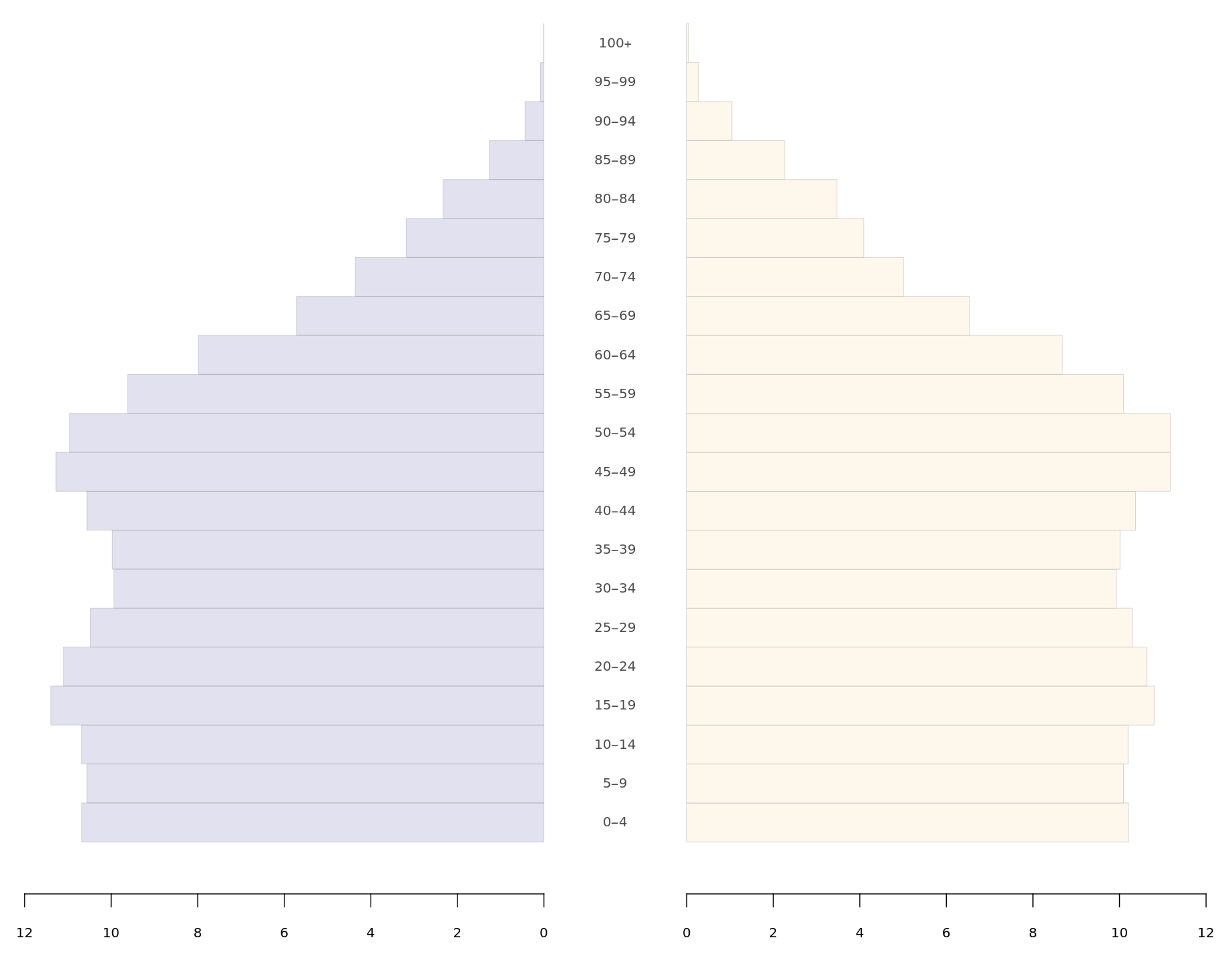
Population of the United States
In[]:=
pop=331900000-44900000
Out[]=
287000000
Total required amount of money (Sources from the Department of Health and Human Services):
In[]:=
moneyreq=((pop-(732600+1441600))*12880)+(732600*14820)+(1441600*16090)
Out[]=
3702608780000
In[]:=
(moneyreq/23320000000000)*100
Out[]=
185130439
11660000
In[]:=
N
185130439
11660000
Out[]=
15.8774
The current GDP of the United States is $25 trillion, roughly, with a 15.88% of GDP-required investment, with the highest-funded department, the Department of Defense, receiving roughly $800 billion. Of course, this price tag for UBI is not cheap, not to mention this is on a yearly basis, and not accounting for processing for a large population, political changes, and other bureaucracy involved with such stimuli. Establishment of such a program would mean the American government would possibly have to collaborate to an extent with states to partially subsidize the costs of UBI, if it were to be ever implemented. An alternative is using the IMF line, however, this is massively unrealistic for an individual to be able to live with such an income in a higher-cost-of-living environment such as the United States.
United Kingdom
United Kingdom
Number of individuals eligible for UBI:
(Calculated via subtracting total population from estimate of foreign-born foreign nationals population)
(Calculated via subtracting total population from estimate of foreign-born foreign nationals population)
In[]:=
Population of the United Kingdom who are British citizens
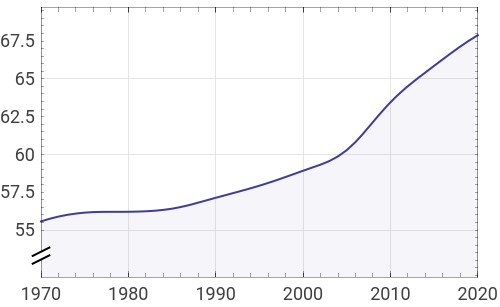
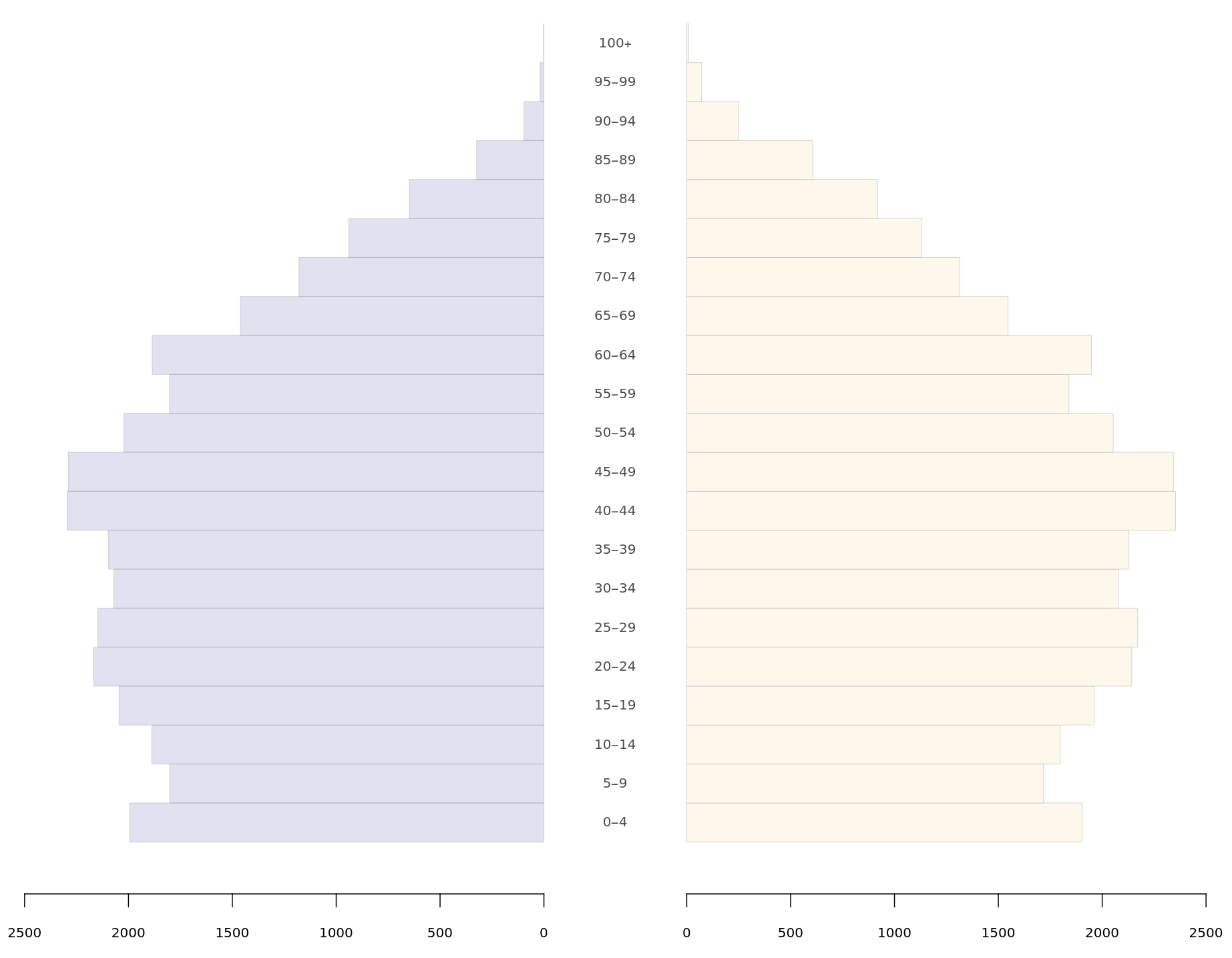
According to the British Office for National Statistics, there are about 6,013,000 people without British nationality currently living in the United Kingdom, leaving roughly 61 million individual to pay for.
This estimate, as a matter of brevity, will not include the UK’s numerous semi-autonomous holdings (British Overseas Territories) throughout the world such as Montserrat, Turks and Caicos, and others.
The United Kingdom considered the poverty line as a function of the income after housing costs as 60% below the median household income after housing costs. Therefore, we will have to derive a rough poverty line using average housing costs, inclusive of renting and other methods of housing acquisition.
According to the National Statistics data, the average cost is about £755 per month, which converts to about £9060 a year, with the median income being about £31400, so after deduction, and then 60% of the median income after removal would be £13,404 as the generalized cost of UBI per year for an individual in the UK. Of course, this would be a very generalized view, but without more data collection, it would be not possible to precisely calculate the cost. However, with this figure, we can produce a rough estimation.
The produced figure was £817.644 billion, of the UK is currently 3.131 billion. This means the percentage of GDP would be:
The cost of UBI, in totality, for the United Kingdom would not be particularly easy, and would require extreme restructuring of budget for it to be able to even remotely afford it.
Canada
Canada
Number of individuals eligible for UBI:
(Calculated via subtracting total population from estimate of foreign-born foreign nationals population)
(Calculated via subtracting total population from estimate of foreign-born foreign nationals population)
In[]:=
Population of Canada
According to the Census of 2021, there are 33.1 million Canadian citizens resident currently in Canada, thereby eligible for UBI.
The issue with producing a highly accurate UBI estimate is that the poverty line for Canada is provided for nearly each city and town of each size, and quantifying that by correlating it against the Census is a significant endeavor in data analysis. For the sake of brevity in this UBI analysis, I will be using an averaged poverty line, and accounting for families in Canada as some level of error correction.
Below is the data for the Market Basket Measure thresholds for the reference family:
The average Canadian family is 2.51 people. According to Statistics Canada, the square root of economic family size is the equivalence. Therefore, there is a conversion of the “square root of economic family size” as the conversion factor for the MBM value, subtracted by one, as if this is applied directly, a family of four will need double the MBM, which does not make sense in the case that MBM is a measure of a 4 member household. This factor will now be applied to every row.
The produced UBI required cash is then 853.7 billion Canadian dollars to provide an average family size in Canada UBI. Of course, this may not be wholly accurate, as stated before, due to the variety of factors. This would also mean that the percentage of GDP was:
This would mean that the majority of the GDP of Canada would be to give to the citizenry as UBI. Again, a political solution may be different, this is merely a number analysis.
France
France
Number of individuals eligible for UBI:
(Calculated via subtracting total population from estimate of foreign-born foreign nationals population)
(Calculated via subtracting total population from estimate of foreign-born foreign nationals population)
In[]:=
Population of France
The current resident citizenry of France is 59 million.
The poverty line in France is currently 1,041 Euros per month, leading to 12450 Euros in 2017, as estimated by Statista. Using this presumptive line, the UBI required would be:
The poverty line in France is currently 1,041 Euros per month, leading to 12450 Euros in 2017, as estimated by Statista. Using this presumptive line, the UBI required would be:
Therefore, the required cost for establishment of French UBI would be 7.35 billion Euros, requiring a value of 24.8% of investment of the GDP.
Germany
Germany
Number of individuals eligible for UBI:
(Calculated via subtracting total population from estimate of foreign-born foreign nationals population)
(Calculated via subtracting total population from estimate of foreign-born foreign nationals population)
In[]:=
Population of Germany
The poverty line, according to DW, is considered €1,148 per month, or €13,776 per year.
According to Destatis.de, there is about an 11.82 million person population holding foreign citizenships in Germany. Therefore, in rough approximation, there is a population of 72 million German citizens living in Germany itself.
Therefore, using these statistics provided, we can derive a UBI requirement of:
The required amount will be about 991 billion Euros, which is roughly 23% of the GDP of Germany, in order to provide UBI to all of its citizens currently resident in the nation.
Italy
Italy
Number of individuals eligible for UBI:
(Calculated via subtracting total population from estimate of foreign-born foreign nationals population)
(Calculated via subtracting total population from estimate of foreign-born foreign nationals population)
In[]:=
Population of Italy
The poverty line is 601 Euros per month, or 7,212 Euros per month for one person. There will be a presumption of only 1 person in unit, rather than the actual distribution. An extension of this short quantification should take into account of this.
There is an Istat estimation of 5.17 million foreign citizens living in Italy, leaving 55.3 million people eligible to receive an Italian UBI.
Therefore, the required value will be:
There is an Istat estimation of 5.17 million foreign citizens living in Italy, leaving 55.3 million people eligible to receive an Italian UBI.
Therefore, the required value will be:
A hypothetical Italian GDP would require 18.92% of the GDP to suffice, with a 399 billion Euro requirement in pure funding. In the G7, Italy has the lowest percentage of GDP investment to effectively implement it.
Japan
Japan
Number of individuals eligible for UBI:
(Calculated via subtracting total population from estimate of foreign-born foreign nationals population)
(Calculated via subtracting total population from estimate of foreign-born foreign nationals population)
In[]:=
Population of Japan
According to the Borgen Project, Japan’s poverty line can be defined as half of the current household median income.
The median income of an individual living in Japan is $45,601 USD, therefore, the definition of poverty line in this case would be $22,800 USD, roughly.
There were roughly 2.76 million registered foreign residents in Japan, therefore, the eligible population for Japanese UBI would be 123.34 million individuals at that particular amount.
The UBI evaluation returns 2.81 trillion as the required amount, amounting to 56.9% of the GDP of Japan.
Conclusion
Conclusion
As analysed by this basic quantification, the cost of UBI, even on the countries with comparatively higher GDPs and high qualities of life and freedom, would be required to invest extensive amounts into their programs, exclusive of any administrative costs. Of course, there may be errors, as some of the statistical works were summarized, rather than precisely accounted for, and any quantification later on would need to account, for example, regions such as Canada, and to correlate between the Census and the given statistics, or to more accurately provide regional statistics rather than using country-based generalizations, and the examination of other programs in alternate to programs such as the UBI.
I plan to extend this beyond this comparatively small dataset, and to more accurately assess costs of UBIs, and account for other social factors as well in further works.
I plan to extend this beyond this comparatively small dataset, and to more accurately assess costs of UBIs, and account for other social factors as well in further works.